
Mental math skills Normal Addition & Subtraction Worksheets for Ages 3-5
3 filtered results
Difficulty Level
Grade
Age
-
From - To
Subject
Activity
Standards
Boost your toddler's math abilities with our Mental Math Skills worksheets designed for ages 3-5! Focused on normal addition and subtraction, these engaging worksheets foster early numeracy through fun activities. Each worksheet features colorful visuals and child-friendly exercises that help children develop essential counting and problem-solving skills. As kids tackle simple math problems, they'll gain confidence and improve their cognitive abilities. Perfect for preschoolers at home or in the classroom, our resources encourage independent learning and active engagement. Discover a playful way to build a solid foundation in math with our thoughtfully designed Mental Math Skills worksheets today!
Favorites
With answer key
Interactive
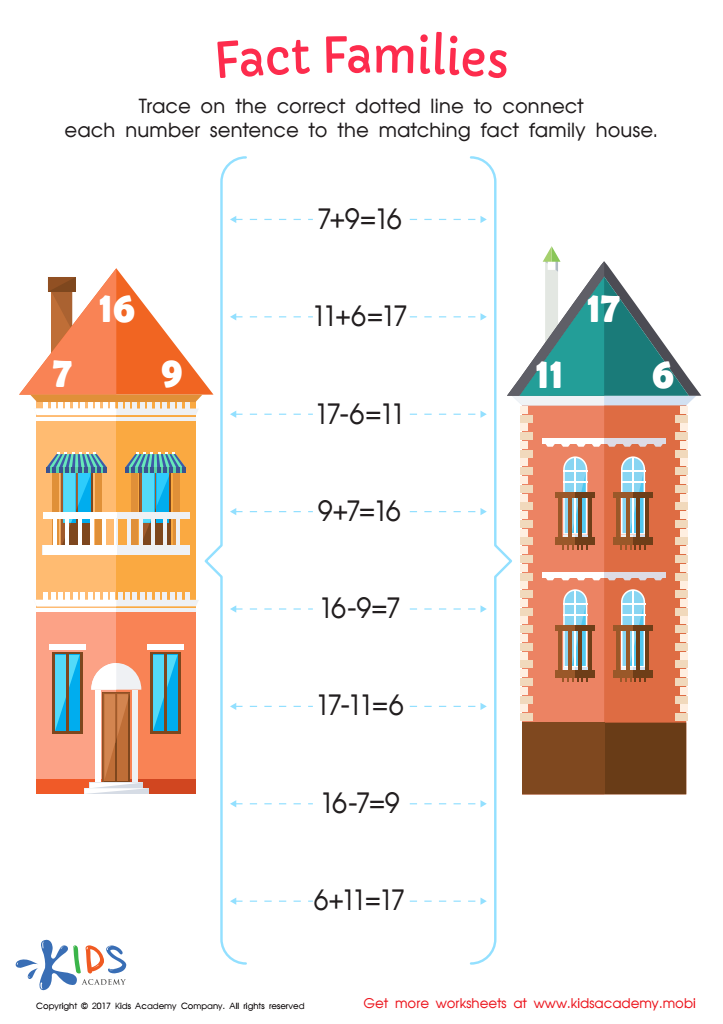
Fact Families — Add and Subtract Worksheet
Kids will love seeing how families of numbers "live" in their own houses!
 Assign to My Students
Fact Families — Add and Subtract Worksheet
Worksheet
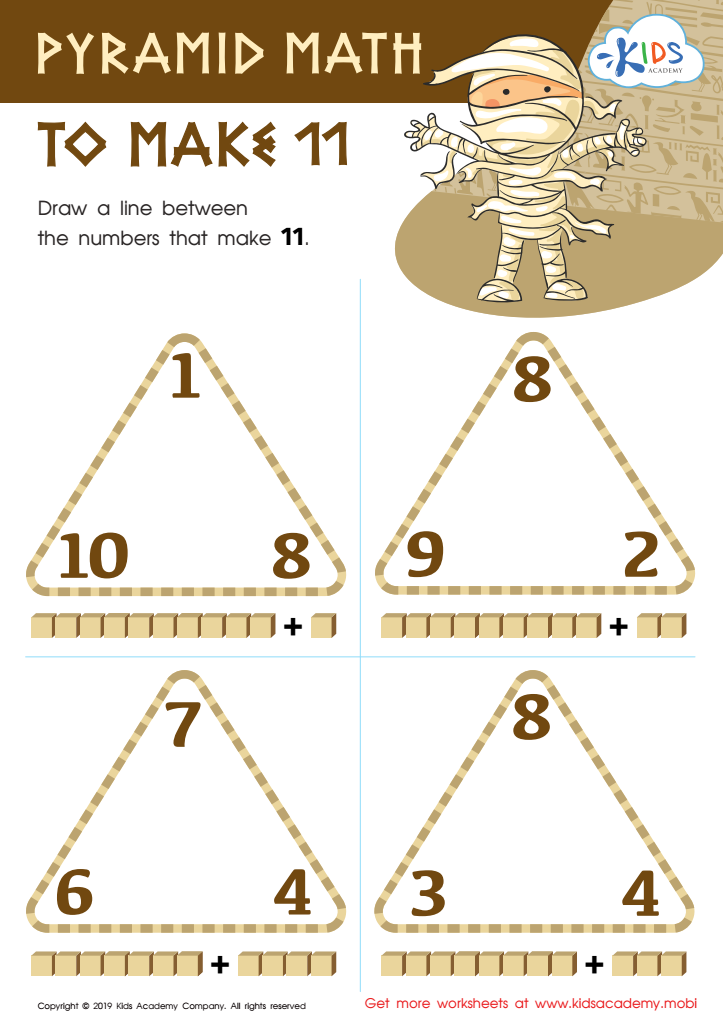
Pyramid Math to Make 11 Worksheet
Have your kids look at the picture of the Egyptian pyramids and tell you what they see. Then, help them do simple math by adding up the numbers in the pyramids and connecting those that make 11. This worksheet is perfect for teaching your kids about history, mathematics, and problem-solving.
Pyramid Math to Make 11 Worksheet
Worksheet
Join Kids Academy for Free
Who is primarily going to use this learning content?








Mental math skills, particularly in normal addition and subtraction, are crucial for children aged 3-5 as they lay the foundational understanding of mathematics. During this developmental stage, children are highly receptive to learning through play, stories, and hands-on activities. Introducing mental math fosters critical thinking and problem-solving abilities, helping children understand quantities, relationships, and basic arithmetic before they start formal schooling.
Parents and teachers should care about these skills because they significantly impact a child’s confidence and ability in math as they grow older. Early proficiency in addition and subtraction can set the stage for more complex mathematical concepts in later years. When children engage in mental math, they strengthen their cognitive functions, enhance memory capacity, and develop a positive attitude towards math.
Moreover, mental math activities often involve interactive and fun elements, which can improve parent-child or teacher-student relationships. Encouraging mental math can be woven into daily routines, making learning seamless and enjoyable. This early focus on math not only supports academic success but also provides essential life skills, preparing children to navigate real-world scenarios, such as budgeting or problem-solving in daily tasks. Thus, prioritizing mental math skills ensures a well-rounded educational experience for young learners.








