Counting skills Normal Geometry Worksheets for Ages 3-5
6 filtered results
-
From - To
Enhance your child's early math journey with our Counting Skills Normal Geometry Worksheets, designed specifically for ages 3-5! Our engaging materials combine essential counting practice with foundational geometry concepts in a fun and interactive way. Each worksheet encourages children to count shapes, identify patterns, and reinforce number recognition while fostering critical thinking skills. Colorful illustrations and kid-friendly activities captivate young learners, transforming math practice into an enjoyable adventure. Perfect for homeschooling, preschool, or supplementary learning, these worksheets help build confidence and ensure a solid grasp of basic math concepts. Start counting and exploring geometry with your little ones today!
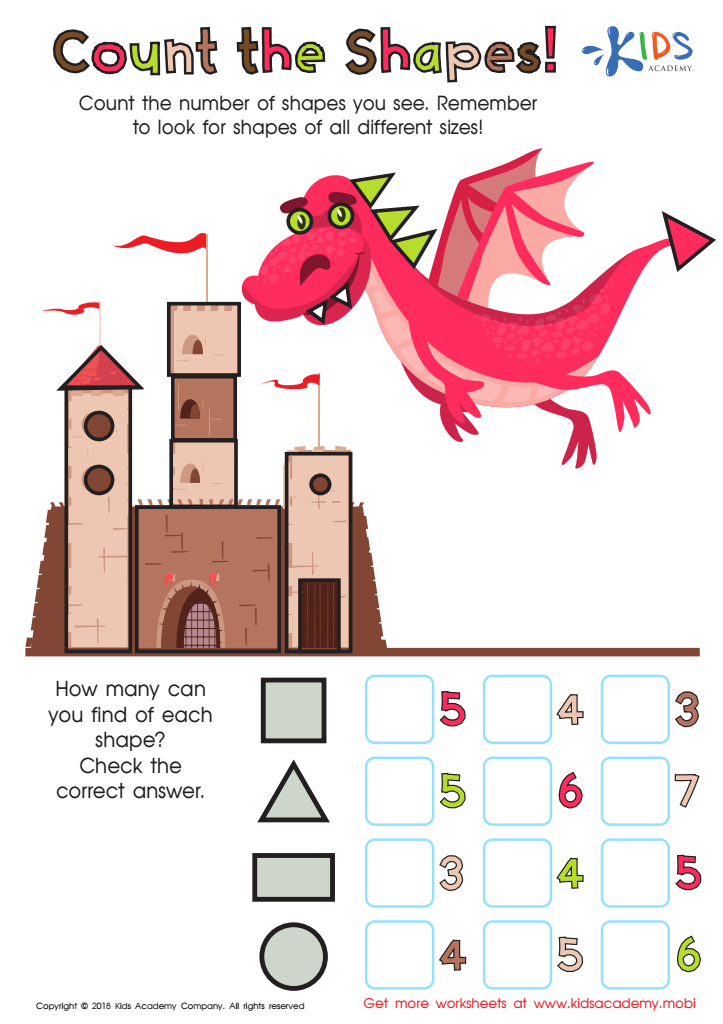
Count the Shapes Worksheet
 Assign to My Students











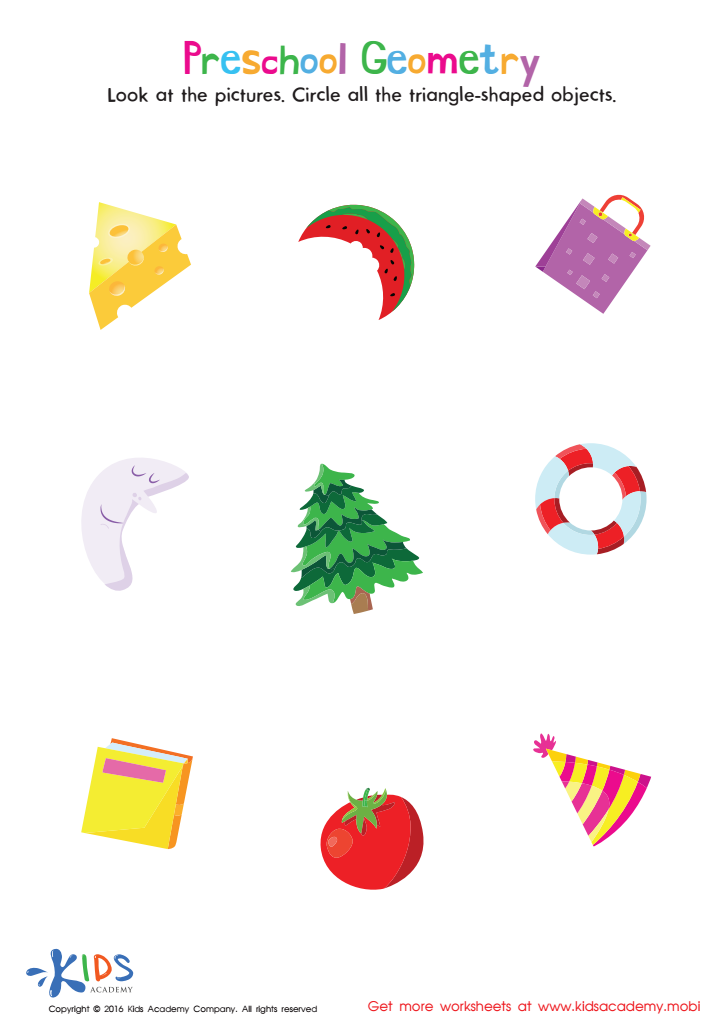
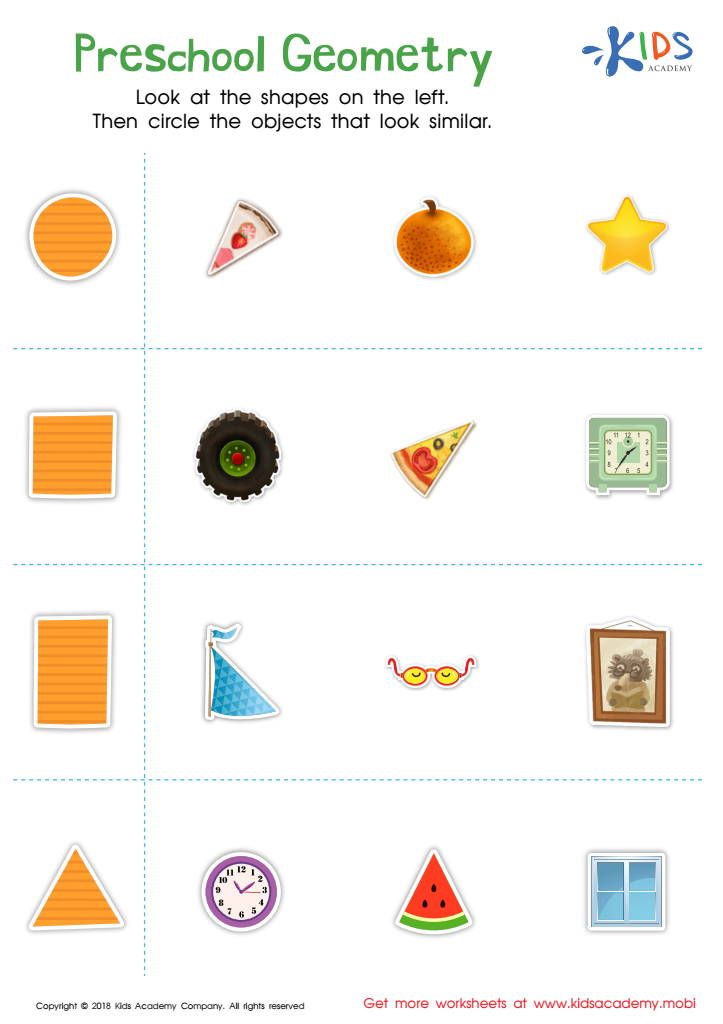
Preschool Geometry Worksheet
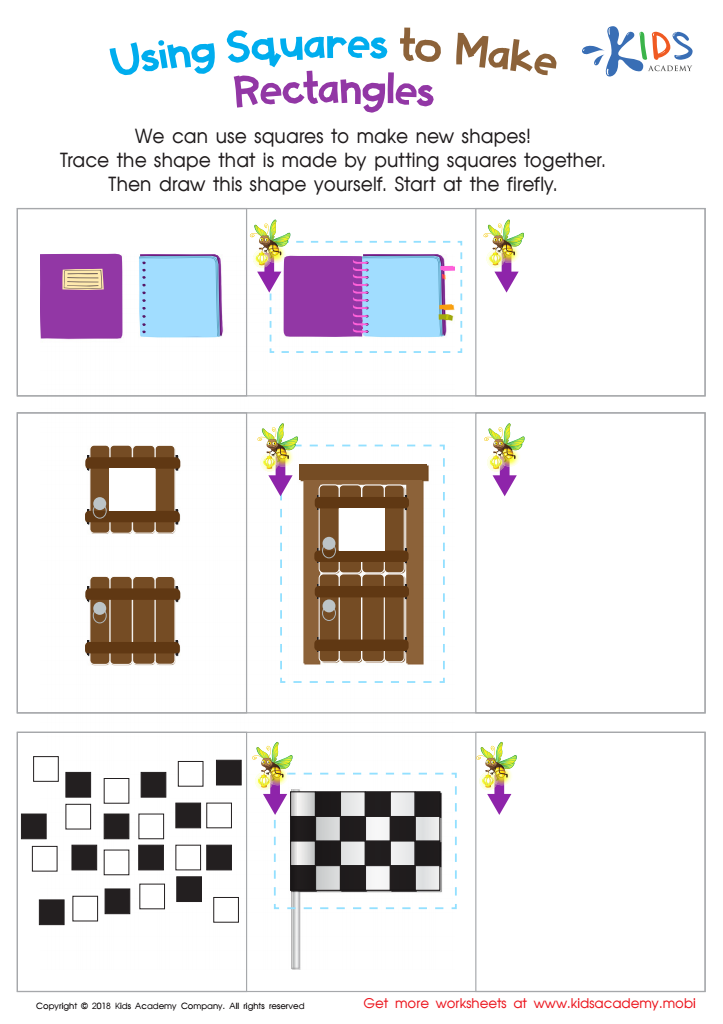
Using Squares to Make Rectangles Worksheet
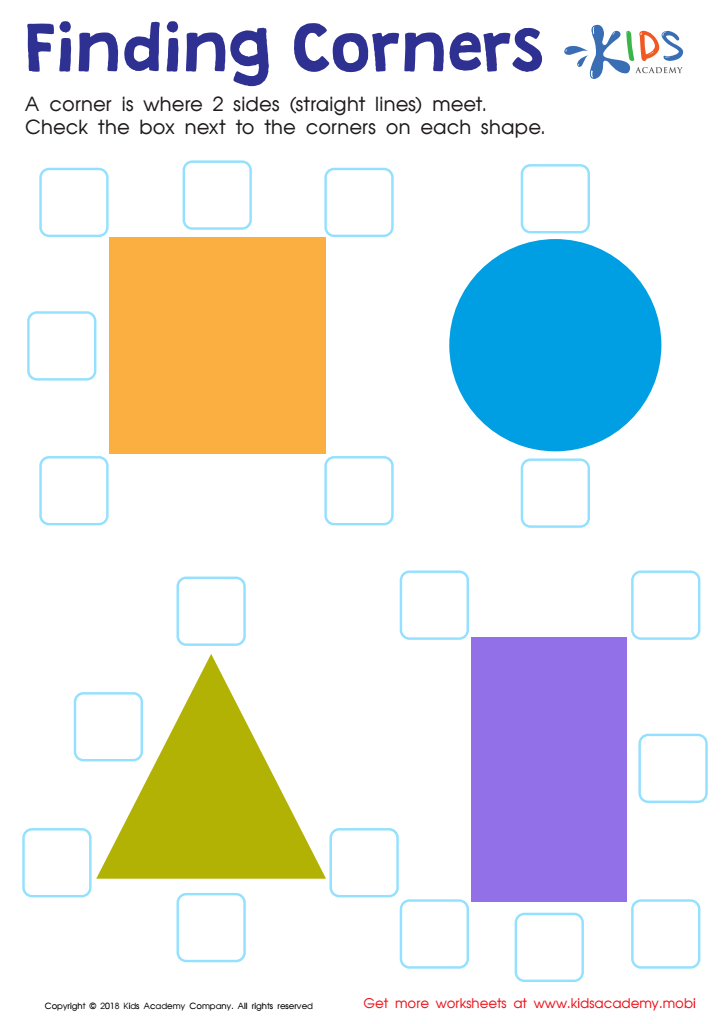
Finding Corners Worksheet
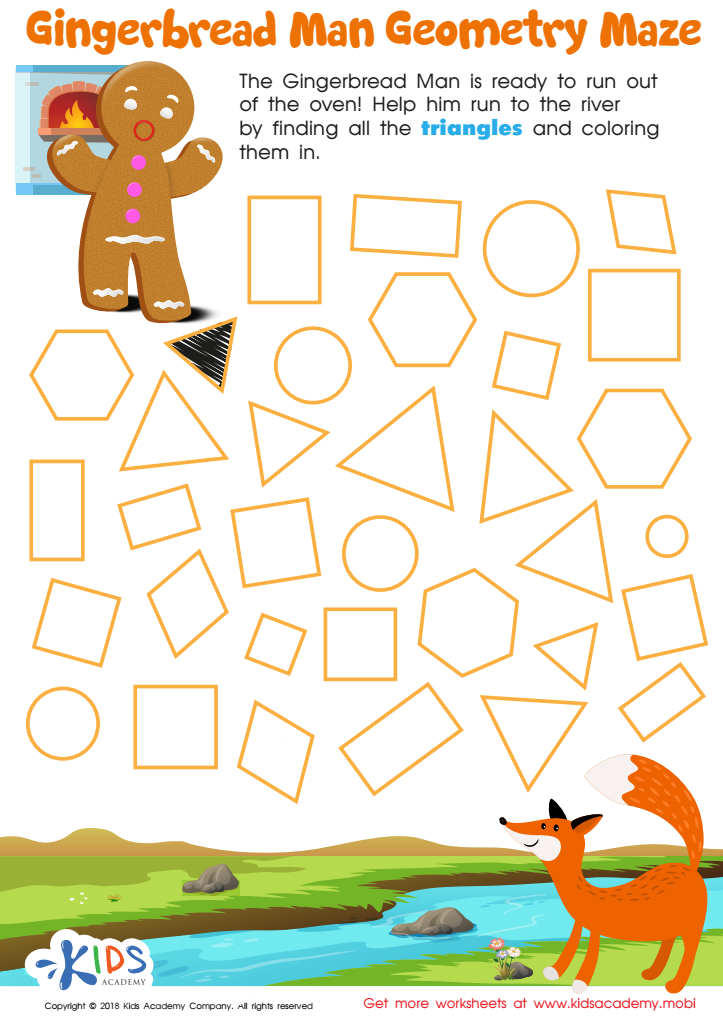
Gingerbread Man Geometry Maze Worksheet








Developing counting skills and a basic understanding of geometry in children aged 3-5 is crucial for their overall cognitive development. During these formative years, children are forming foundational literacy and numeracy skills that will serve as the bedrock for future learning.
Counting skills enhance a child's ability to recognize numbers, understand quantity, and develop important problem-solving abilities. When children learn to count, they are not just memorizing numbers; they are engaging in critical thinking, understanding patterns, and making connections between numerical concepts and real-world application.
Similarly, exposure to basic geometry helps children recognize shapes and spatial relationships, promoting observational skills and critical thinking. By identifying shapes in their surroundings and understanding concepts such as size and position, children not only develop an appreciation for the world around them but also strengthen their ability to follow directions and solve problems.
For parents and teachers, nurturing these skills through interactive play, engaging activities, and everyday discussions builds confidence, cultivates curiosity, and prepares children for more complex mathematical concepts in later years. Ultimately, prioritizing counting skills and geometry paves the way for academic success and lifelong learning, making it an essential focus for early childhood education.








