Matching skills Normal Geometry Worksheets for Ages 3-5
3 filtered results
-
From - To
Discover the perfect blend of fun and learning with our Matching Skills Normal Geometry Worksheets for Ages 3-5! Designed to enhance early math readiness, these engaging worksheets help young learners grasp basic geometry concepts through playful matching exercises. Ideal for preschool and kindergarten children, the activities boost fine motor skills and spatial awareness, laying a solid foundation for future mathematical learning. With vibrant illustrations and age-appropriate challenges, our worksheets make learning geometry an enjoyable experience. Download now from Kids Academy to inspire confidence and a love for math in your little ones!
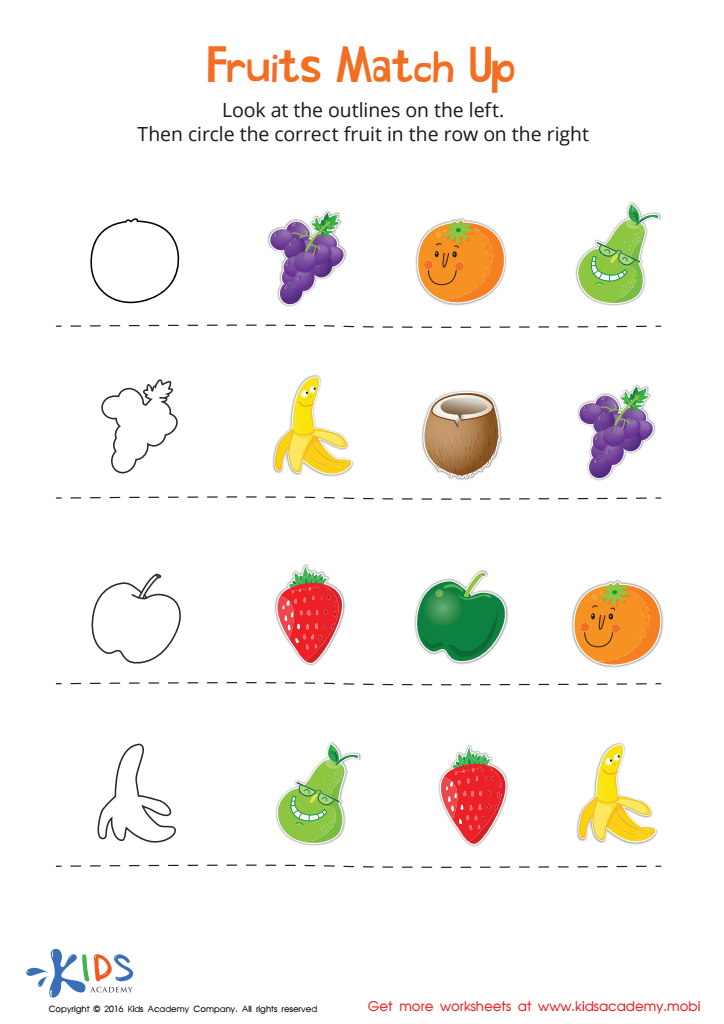
Fruits Match Up Worksheet
 Assign to My Students











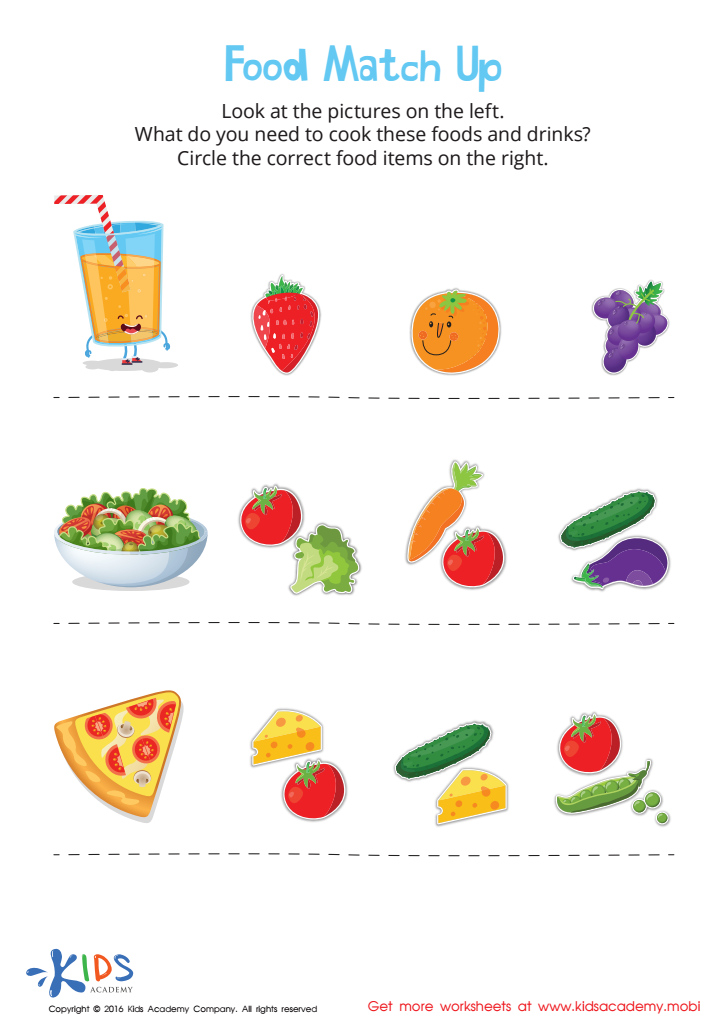
Food Match Up Worksheet
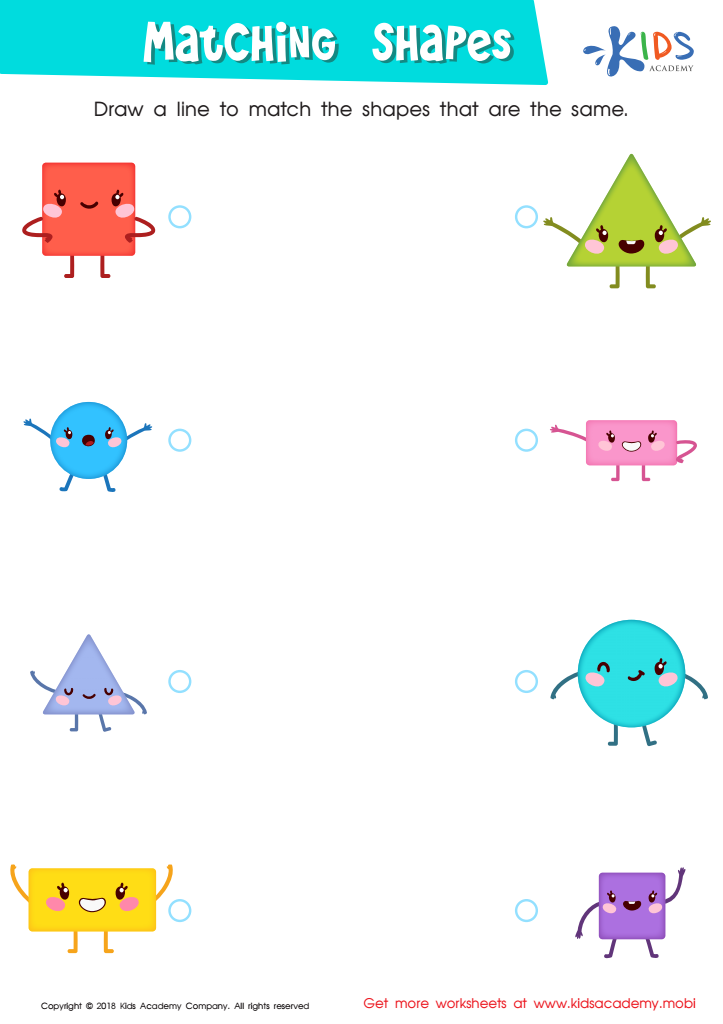
Matching Shapes Worksheet








Matching skills and basic geometry are foundational concepts that set the stage for broader cognitive development and academic success in young children aged 3-5.
Firstly, matching skills enhance cognitive abilities such as visual discrimination and pattern recognition. When children learn to match objects by shape, color, or size, they sharpen their observational skills and attention to detail. This precision aids in their ability to make connections and understand relationships between objects, essential for more complex problem-solving tasks in the future.
Basic geometry, on the other hand, introduces youngsters to the world of shapes—circles, squares, triangles, and more—cultivating an early understanding of spatial relationships. Recognizing shapes is not only crucial for mathematics; it also supports reading and writing skills. For example, many letters and numbers are comprised of basic shapes. Understanding these shapes can, therefore, assist in letter and number recognition.
Parents and teachers should prioritize these skills because they build a strong educational foundation. Engaging activities like shape sorting games, puzzle solving, and drawing shapes can make learning enjoyable and interactive. These fundamentals have lifelong benefits, promoting critical thinking and spatial awareness that are vital in various life aspects, from science and technology to everyday tasks like following a map or arranging furniture. Investing time in developing these skills now sets children on a path of curiosity, exploration, and academic achievement.








