
Logical thinking Normal Math Worksheets for Ages 3-5
3 filtered results
Difficulty Level
Grade
Age
-
From - To
Subject
Activity
Standards
Enhance your child's problem-solving skills with our collection of "Logical Thinking Normal Math Worksheets for Ages 3-5." These specially designed worksheets introduce preschoolers to foundational math concepts through engaging and playful activities. Children will develop critical thinking and logical reasoning as they navigate through colorful exercises that include patterns, sequences, and simple puzzles. Perfect for early learners, these worksheets inspire a love for math while building essential skills for future academic success. Parents and educators can easily incorporate these worksheets into daily learning routines to cultivate curiosity and a strong mathematical foundation in young minds.
Favorites
With answer key
Interactive
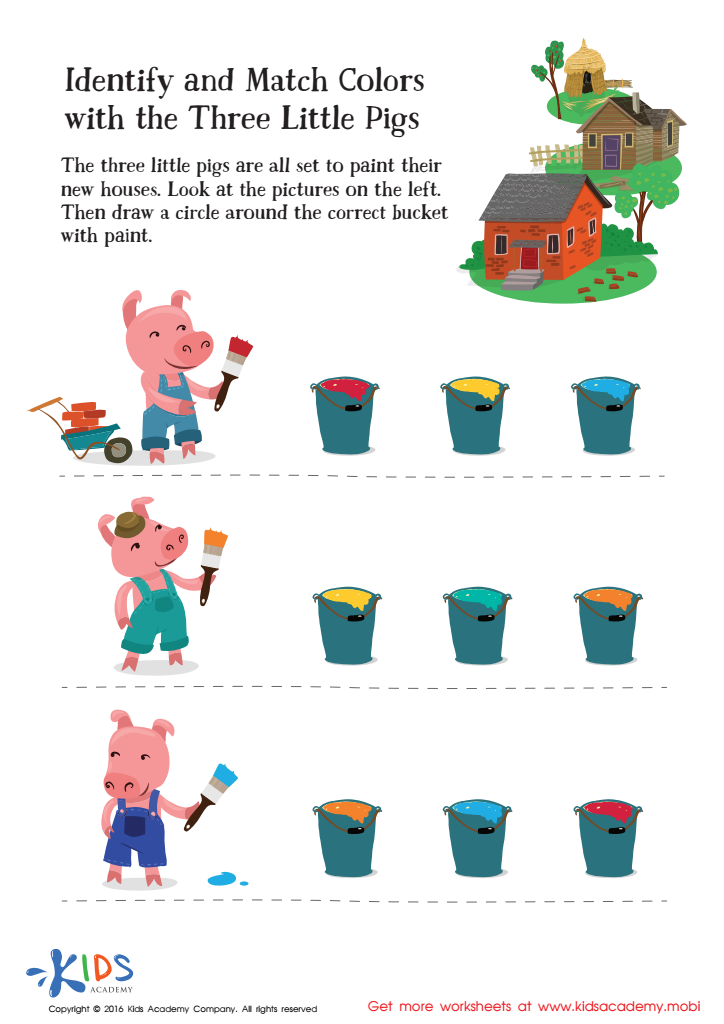
Fairy Tale Worksheet: Identify and Match Colors with Three Little Pigs
Help the 3 Little Pigs find the right color for their houses! This fun worksheet will have your child developing their problem solving and color recognition skills. It's a great way to start building the foundation for advanced logic skills. Plus, they'll love the Three Little Pigs coloring pages.
 Assign to My Students
Fairy Tale Worksheet: Identify and Match Colors with Three Little Pigs
Worksheet
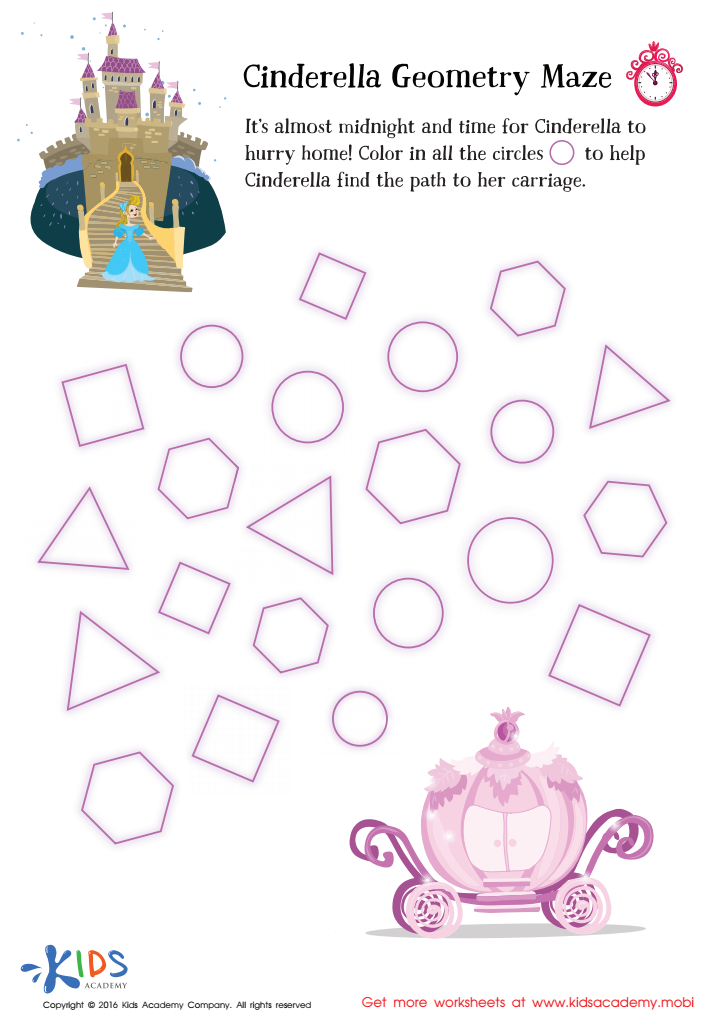
Cinderella Geometry Maze Worksheet
Help Cinderella hurry home! Your preschooler will have fun problem-solving and sorting shapes in this geometric maze. As they shade in the circles, they'll be helping their favorite princess reach her carriage on time. Not only that, but they'll strengthen their logic skills in the process. Get this and other fairy tale mazes to keep them entertained while learning.
Cinderella Geometry Maze Worksheet
Worksheet
Join Kids Academy for Free
Who is primarily going to use this learning content?








Parents and teachers should prioritize introducing logical thinking and basic math concepts to children ages 3-5 because these foundational skills play a critical role in their cognitive development and future learning. At this developmental stage, children's brains are highly receptive to new information, allowing them to form connections that will aid in problem-solving, critical thinking, and reasoning.
Logical thinking encourages children to process information systematically and make sense of the world around them. By developing these skills early, children learn how to approach problems, recognize patterns, and understand cause-and-effect relationships. This analytical mindset is essential for more complex math and science skills they will encounter in their later academic careers.
Normal math skills, such as counting, number recognition, and basic arithmetic, establish a solid groundwork for later mathematical proficiency. Early exposure helps demystify math, making it a fun and integral part of daily activities. Introducing concepts through play, such as sorting objects, storytelling with numbers, and simple puzzles, makes learning engaging and reinforces these skills naturally.
By valuing and nurturing logical thinking and math skills from a young age, parents and teachers can boost children's confidence, set them up for academic success, and promote a lifelong love of learning. This early intervention helps ensure that children are not only ready for school but equipped with the tools to excel in a variety of disciplines.








