Shape identification Normal Math Worksheets for Ages 3-5
5 filtered results
-
From - To
Unlock the world of shapes for your little learners with our Shape Identification Normal Math Worksheets! Designed specifically for children ages 3-5, these engaging and colorful activities help young minds grasp the basics of shapes and their characteristics. Perfect for preschoolers and kindergarteners, these worksheets improve fine motor skills and visual recognition while making learning fun. With a variety of tasks including shape tracing, matching, and coloring, this collection provides a solid foundation in early geometry concepts. Foster a love for learning and watch your child's confidence soar as they master shapes with ease!
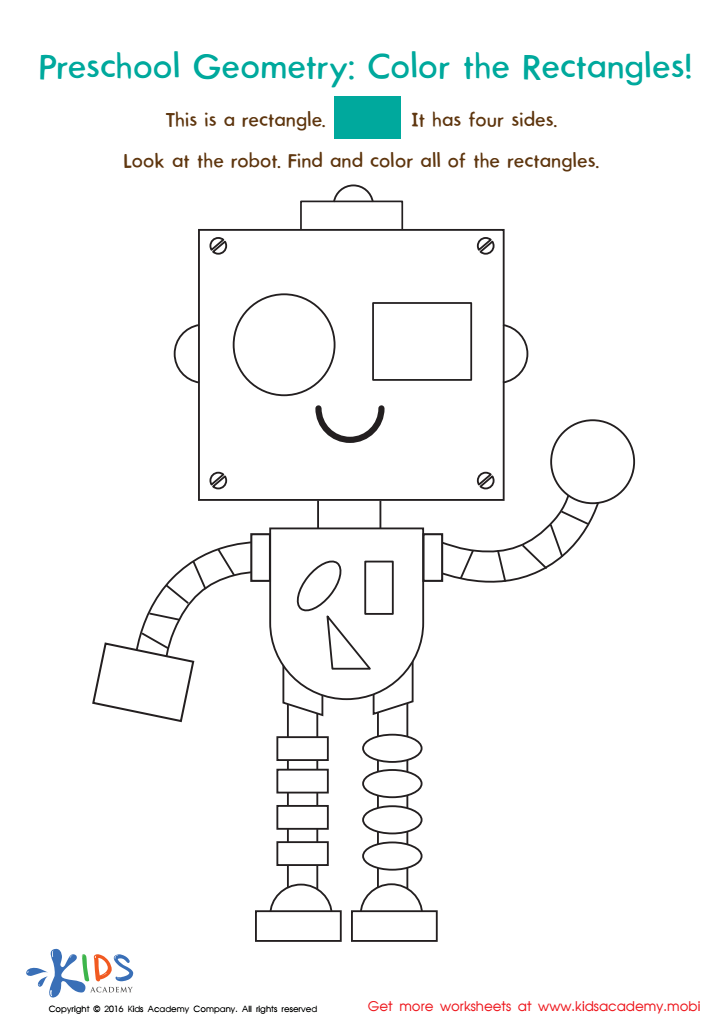
Geometry Worksheet
 Assign to My Students
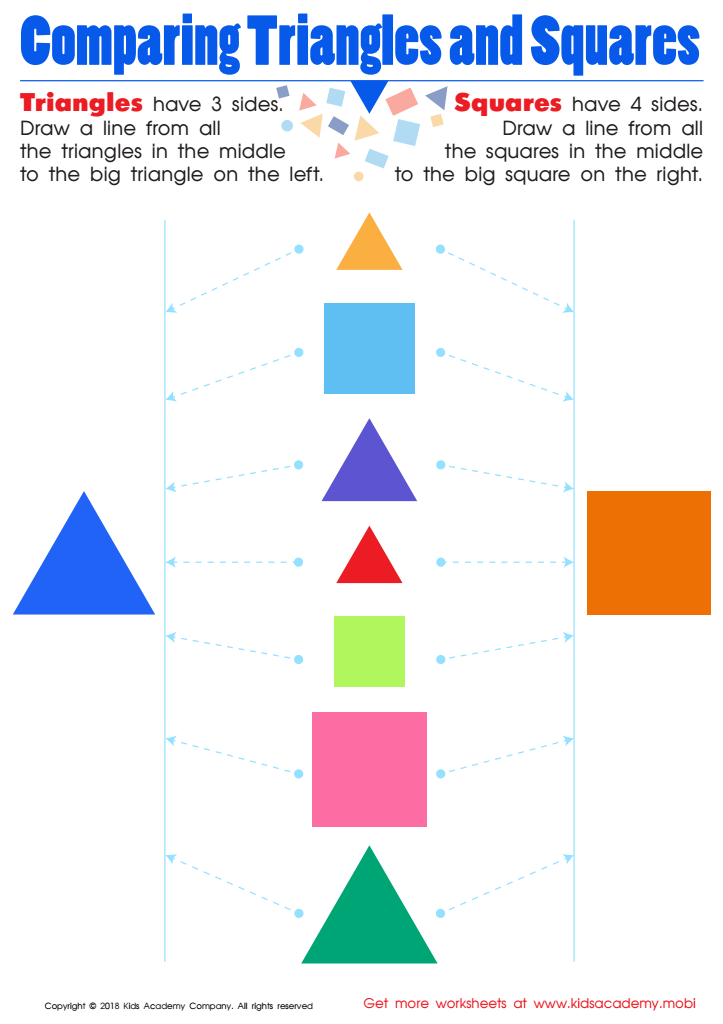
Comparing Triangles Squares Worksheet
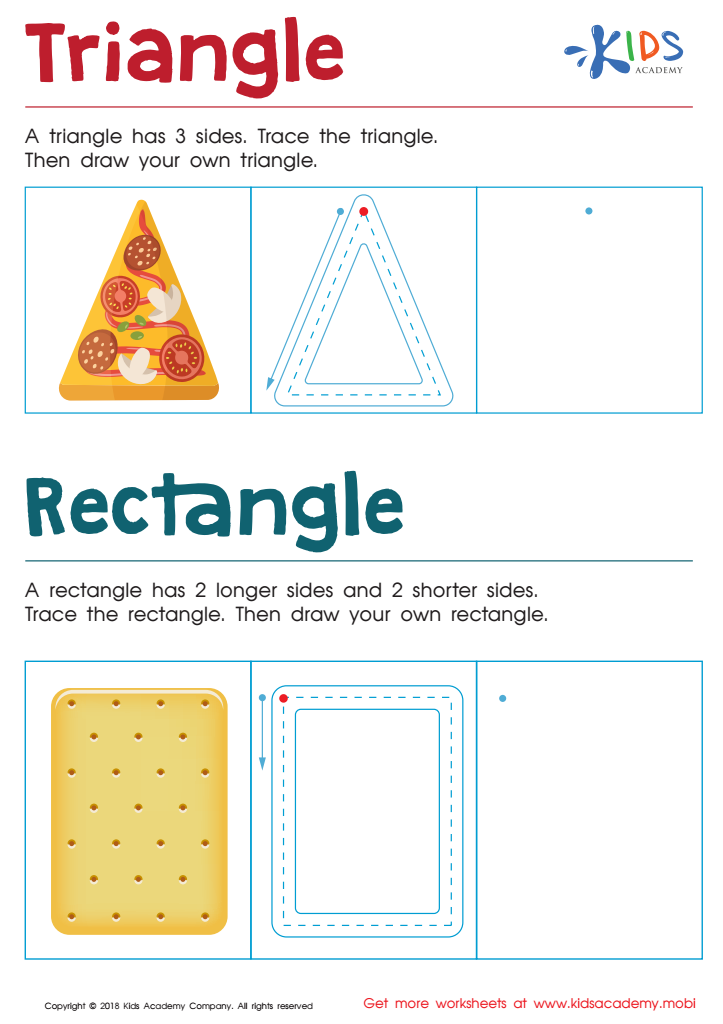
Triangle Rectangle Worksheet
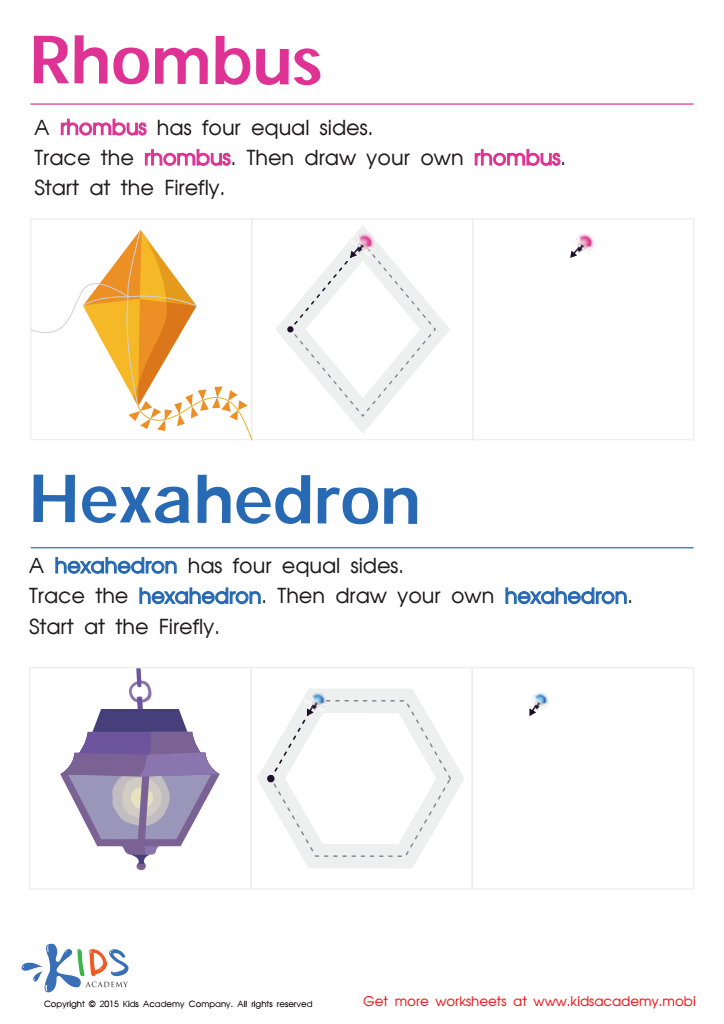
Draw a Rhombus And a Hexahedron Printable
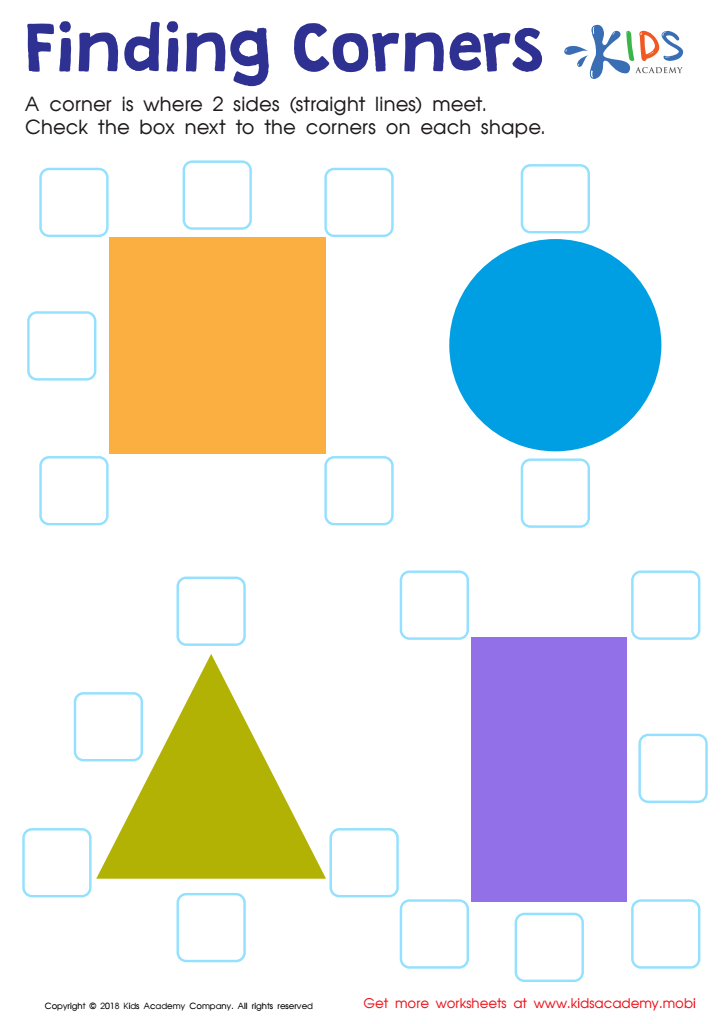
Finding Corners Worksheet








Shape identification in early childhood is a fundamental aspect of cognitive and mathematical development. For ages 3-5, recognizing and understanding shapes goes beyond merely preparing children for more complex math; it shapes their overall intellectual growth. Through shape identification, young learners enhance their spatial awareness—the ability to recognize and organize space around them—which is crucial for everyday tasks such as navigating their environment.
Parents and teachers should particularly care about this because early exposure to shapes fosters foundational skills such as problem-solving and critical thinking. Identifying shapes requires children to observe similarities and differences, categorize, and make judgments, which are essential cognitive processes. These skills are consistently built on as children move forward in their education, contributing to later success in subjects like geometry, science, and technology.
Shapes also provide a concrete basis for understanding more abstract concepts. When children can identify and manipulate shapes, they build a better understanding of numbers and spatial relations. For instance, they start to grasp that blending shapes can create patterns, which is a preliminary step towards comprehending sequences and numerical patterns.
Furthermore, mastering shape identification enhances fine motor skills because activities often involve drawing or constructing shapes, boosting hand-eye coordination. These activities can be both educational and enjoyable, encouraging a positive attitude towards learning from a young age. Engaging in shape-related tasks in a supportive, playful environment helps children build the confidence to tackle more challenging academic subjects later on.








