Subtraction practice Normal Math Worksheets for Ages 3-5
7 filtered results
-
From - To
Introduce your little learners to the world of subtraction with our engaging Normal Math Worksheets, designed specifically for ages 3-5. This collection of worksheets provides a fun and interactive way for young children to practice essential subtraction skills. Each worksheet features colorful illustrations and age-appropriate problems, ensuring an enjoyable learning experience. Perfect for both classroom use and at-home practice, these worksheets help strengthen early math foundations while encouraging problem-solving skills and number recognition. Foster a love for math and build confidence in your child's abilities as they subtract with ease. Download your free subtraction practice worksheets today!
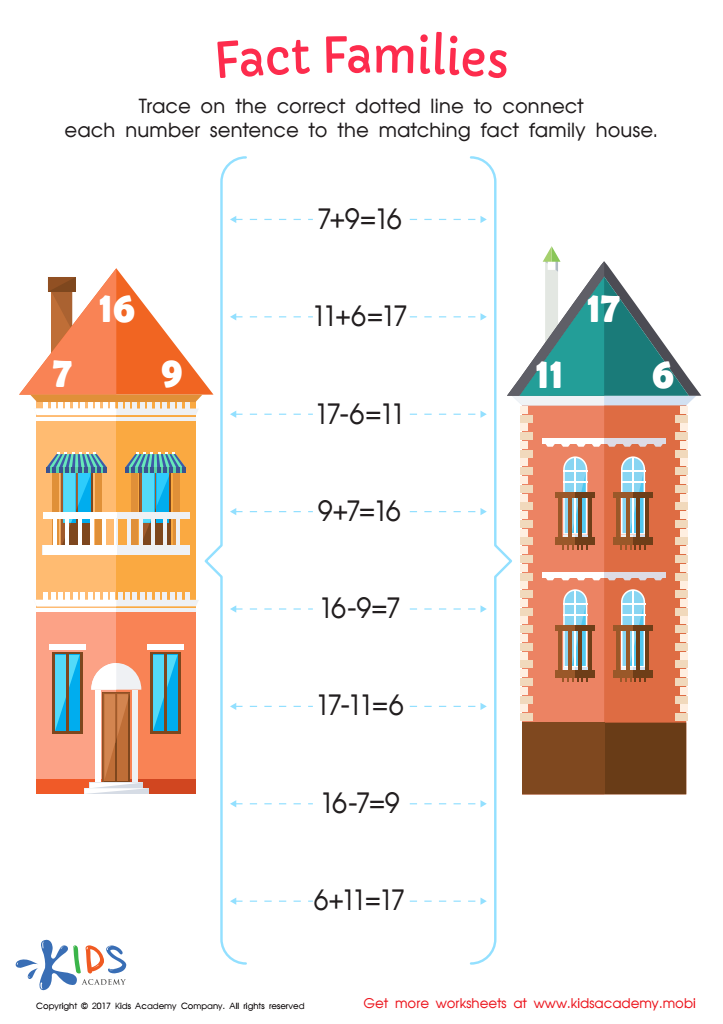
Fact Families — Add and Subtract Worksheet
 Assign to My Students
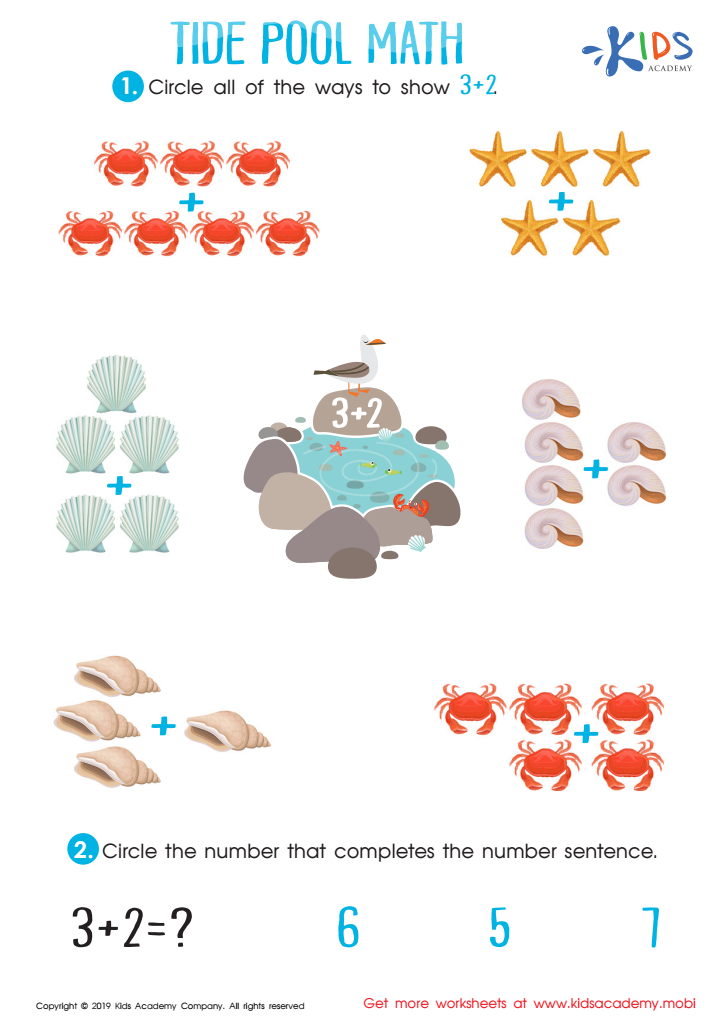
Tide Pool Math Worksheet
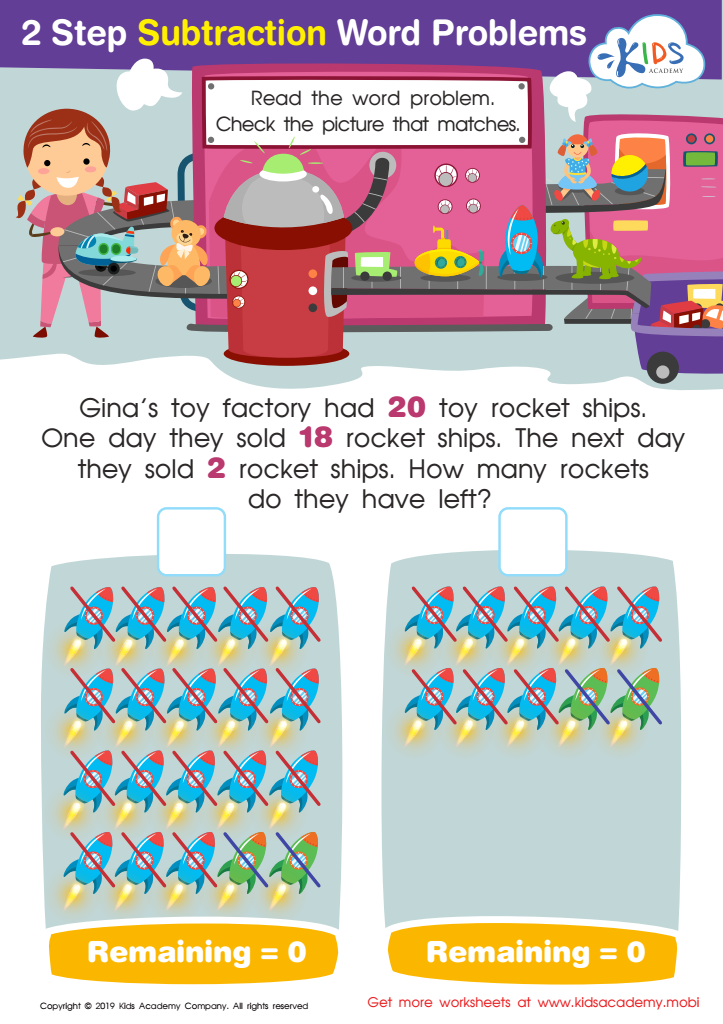
Step Subtraction Word Problems Worksheet
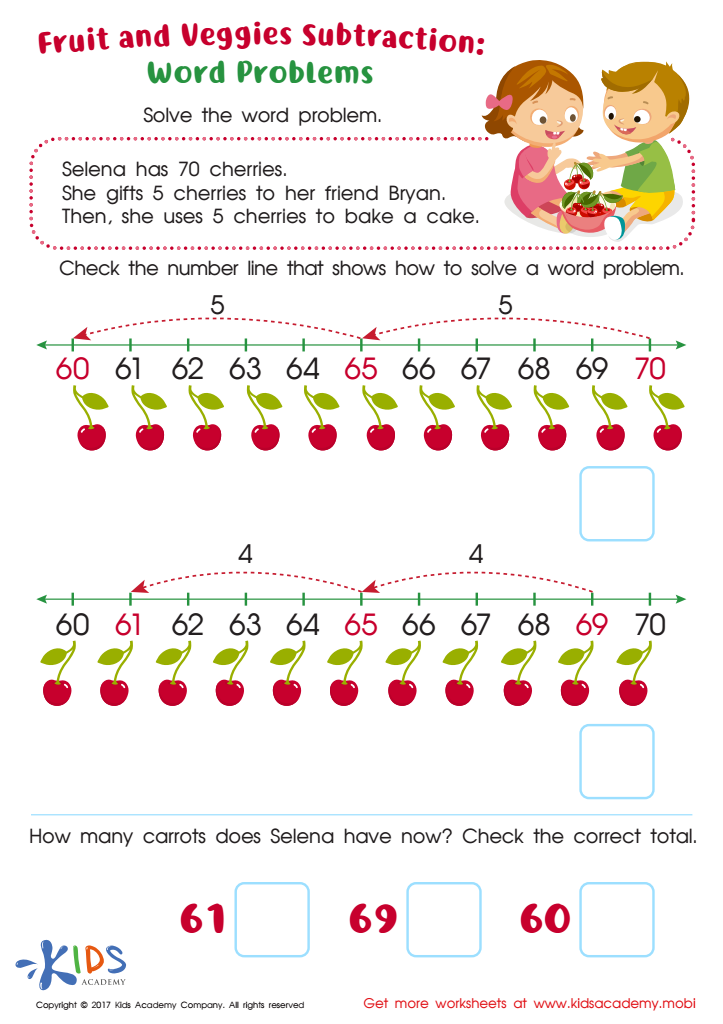
Subtraction Word Problems Free Printable
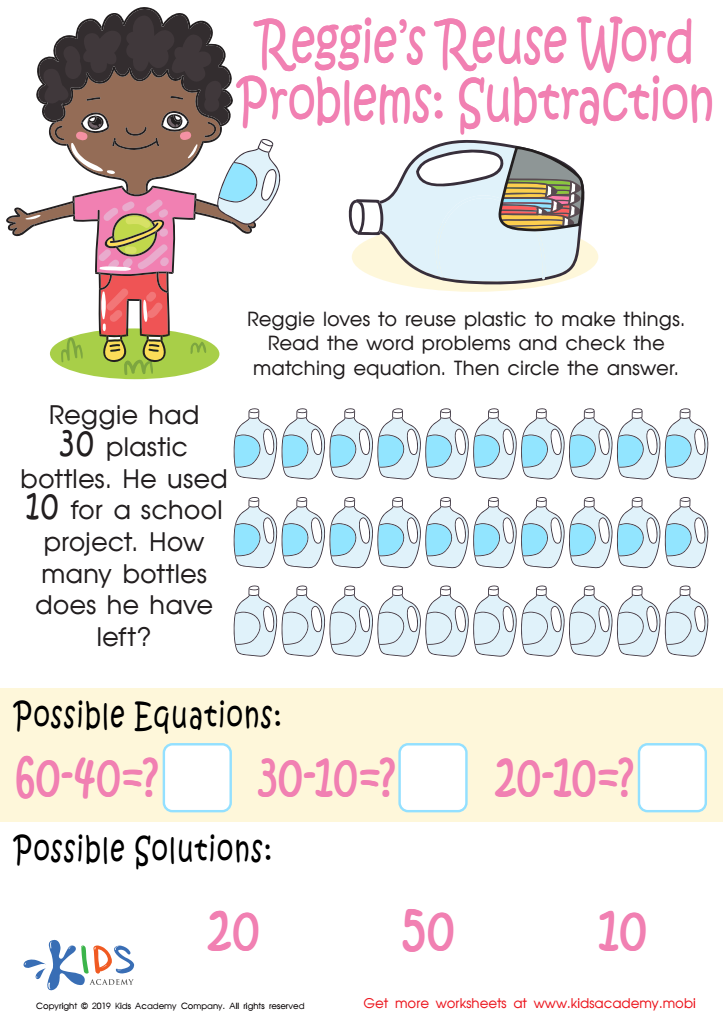
Reggie's Reuse Word Problems: Subtraction Worksheet
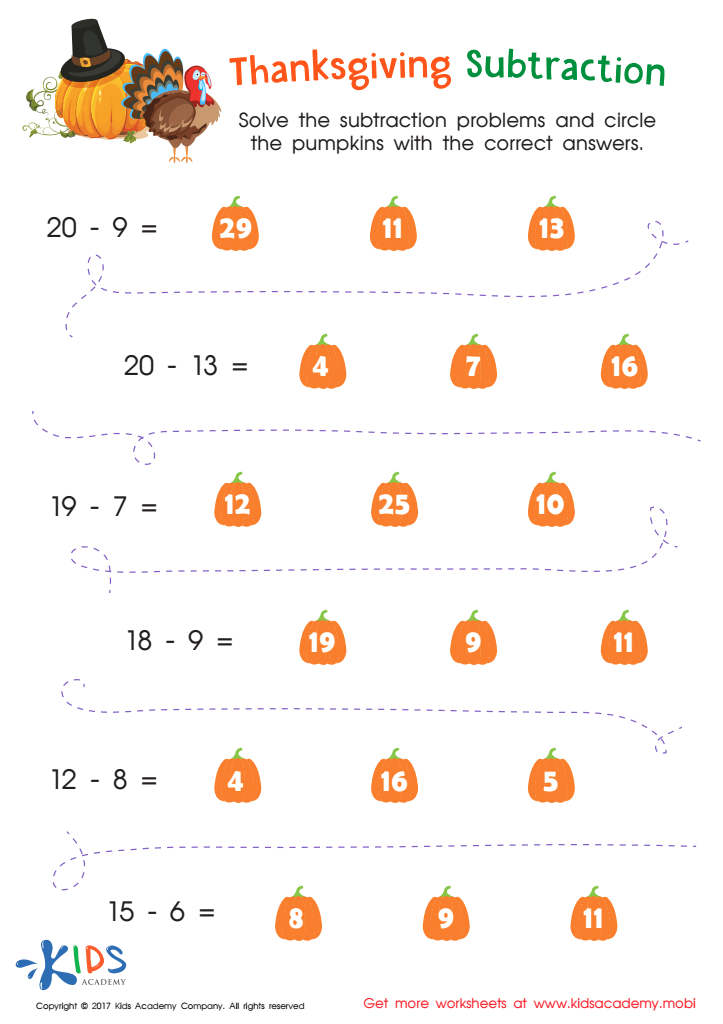
Thanksgiving Subtraction Substraction Worksheet

Ten in the Bed Worksheet







Subtraction practice in early math education is crucial for children aged 3-5 for several reasons. Firstly, it lays the foundation for mathematical understanding, as grasping subtraction concepts helps young learners develop number sense and cognitive skills. Early exposure helps children recognize that subtraction refers to taking away, enhancing their ability to solve problems in everyday situations.
Secondly, engaging in subtraction activities fosters critical thinking and improves fine motor skills when children interact with manipulatives like counters or blocks. These hands-on experiences make learning physical and tangible, boosting retention and enjoyment.
Moreover, consistent practice helps alleviate math anxiety, encouraging a positive relationship with numbers from a young age. When children routinely engage with subtraction, they gain confidence and a sense of accomplishment, which can motivate them to explore more advanced math concepts as they grow.
Additionally, collaborating with parents and teachers during subtraction activities strengthens their bond and promotes a collaborative learning environment. This support network helps reinforce the understanding that learning is a shared journey.
In summary, subtraction practice is essential for children's intellectual development, emotional growth, and building foundational skills necessary for future academic success. Parents and teachers should prioritize these activities to nurture a love for math early on.








