Understanding prepositions Normal Math Worksheets for Ages 3-5
3 filtered results
-
From - To
Unlock the potential of young learners with our "Understanding Prepositions Normal Math Worksheets" designed for ages 3-5. These engaging worksheets focus on helping children grasp the essential concept of prepositions through interactive and enjoyable activities. Aimed at developing foundational language skills while integrating math, these resources encourage critical thinking and sequencing understanding. With colorful illustrations and child-friendly prompts, students will learn about spatial relationships and basic math concepts simultaneously. Ideal for homeschoolers, preschool educators, and parents, these worksheets foster a love for learning while guiding children toward academic success. Explore the world of prepositions today and watch young minds flourish!
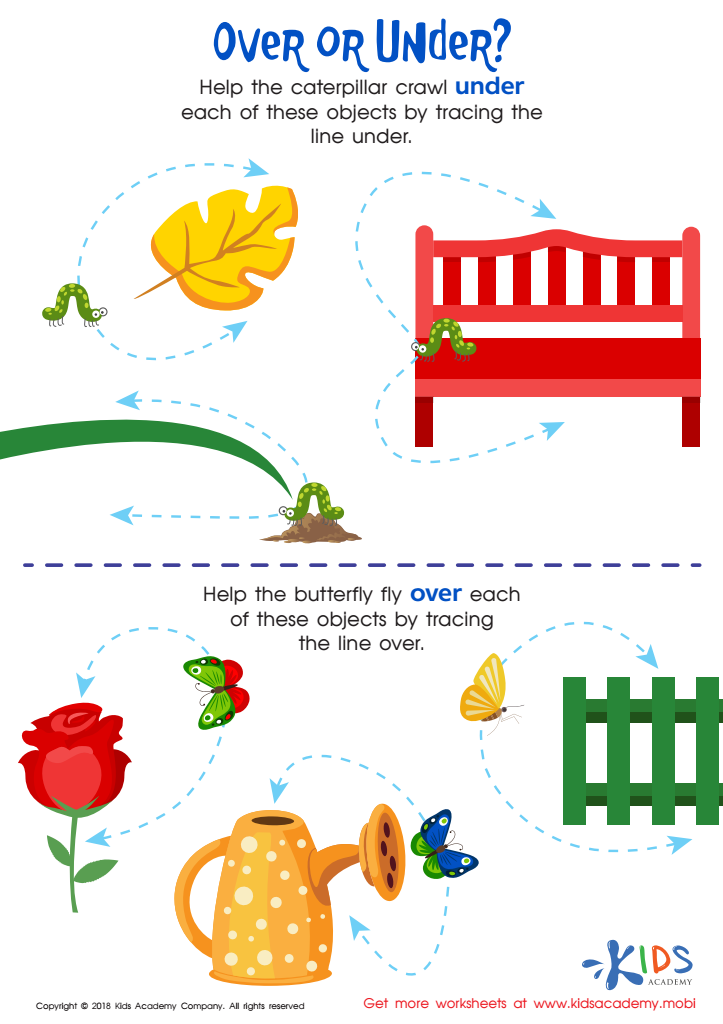
Over or Under? Worksheet
 Assign to My Students
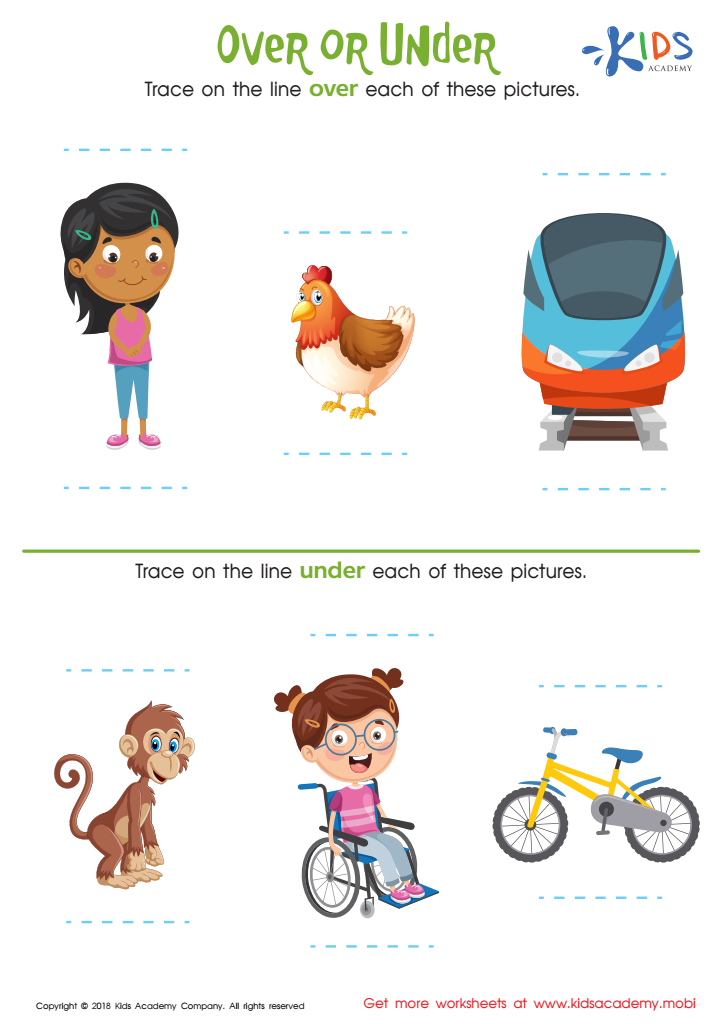
Over or Under Worksheet
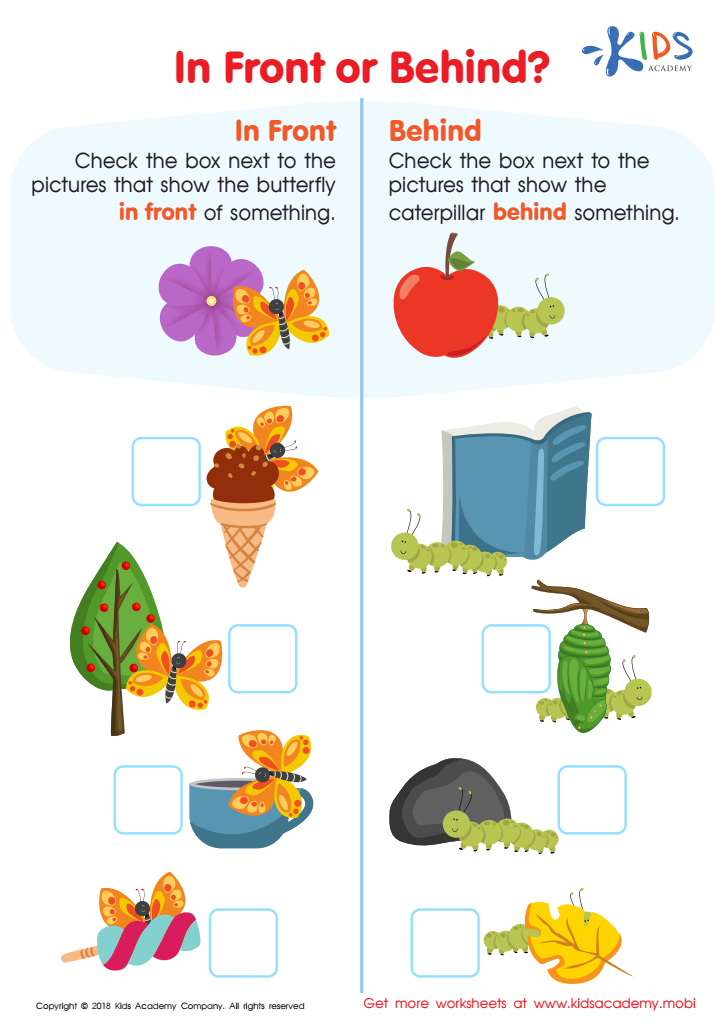
In Front or Behind Worksheet







Understanding prepositions is essential for young children as it lays the foundation for their language development and cognitive skills. For parents and teachers of children aged 3-5, focusing on prepositions in their learning journey is crucial for several reasons.
First, prepositions help children describe the location and relationships between objects, aiding their ability to communicate effectively. When children learn terms such as “in,” “on,” “under," and "between,” they gain the tools to express their observations and experiences, enhancing their vocabulary and comprehension.
Second, these concepts underpin mathematical understanding. Spatial awareness, which is strengthened by mastering prepositions, is critical for early math skills. Children learn to identify shapes, sizes, and quantities, and to understand concepts of addition and subtraction through practical experiences involving placement and arrangement.
Additionally, incorporating activities that involve prepositions creates engaging learning moments. For instance, using toys to describe where items are situated encourages interactive play and promotes social skills.
Thus, emphasizing preposition understanding in early education not only enriches language and communication but also bridges essential cognitive and mathematical skills necessary for future learning. Parents and teachers play a pivotal role in fostering this foundational knowledge, shaping the children’s overall developmental trajectory.








