Logical Reasoning Normal Word Problems Worksheets for Ages 3-5
4 filtered results
-
From - To
Introduce your little learners to essential cognitive skills with our "Logical Reasoning Normal Word Problems Worksheets for Ages 3-5." These engaging worksheets are designed specifically to develop young minds, fostering critical-thinking and problem-solving abilities. Tailored for preschoolers and kindergarteners, each worksheet combines simple math concepts with fun, relatable scenarios. Our visually appealing designs and age-appropriate language ensure that kids stay engaged while improving their logical reasoning skills. Perfect for both classroom and home use, these worksheets offer a balance of education and entertainment, helping kids build a strong foundation in math from an early age. Let's make learning fun and enriching!
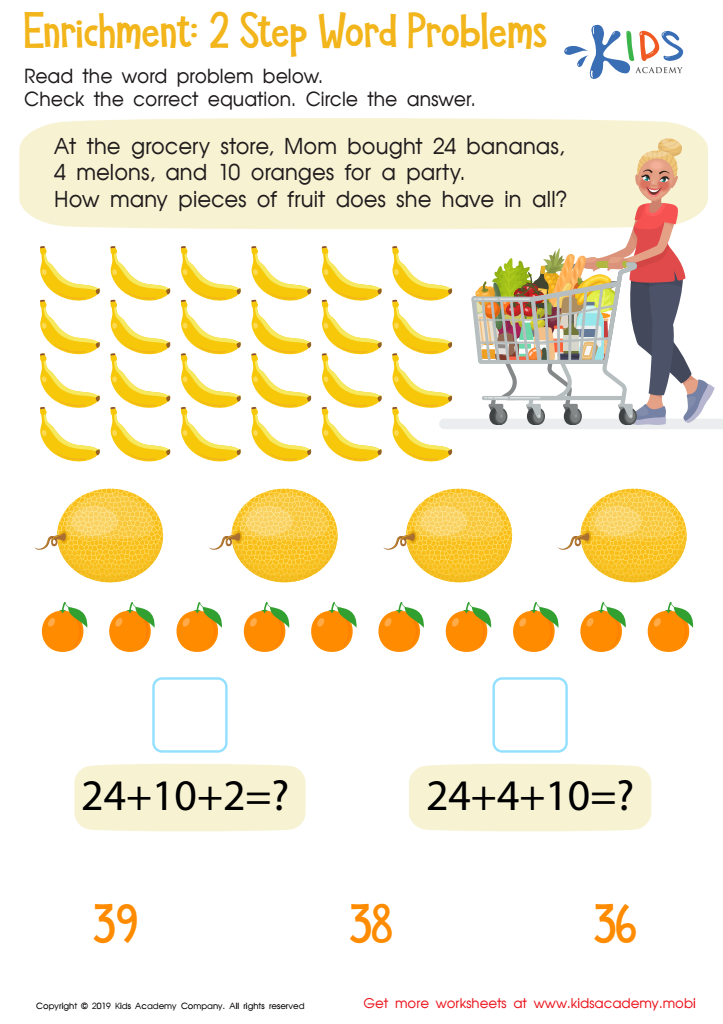
Enrichment -2 Step Word Problems Worksheet
 Assign to My Students
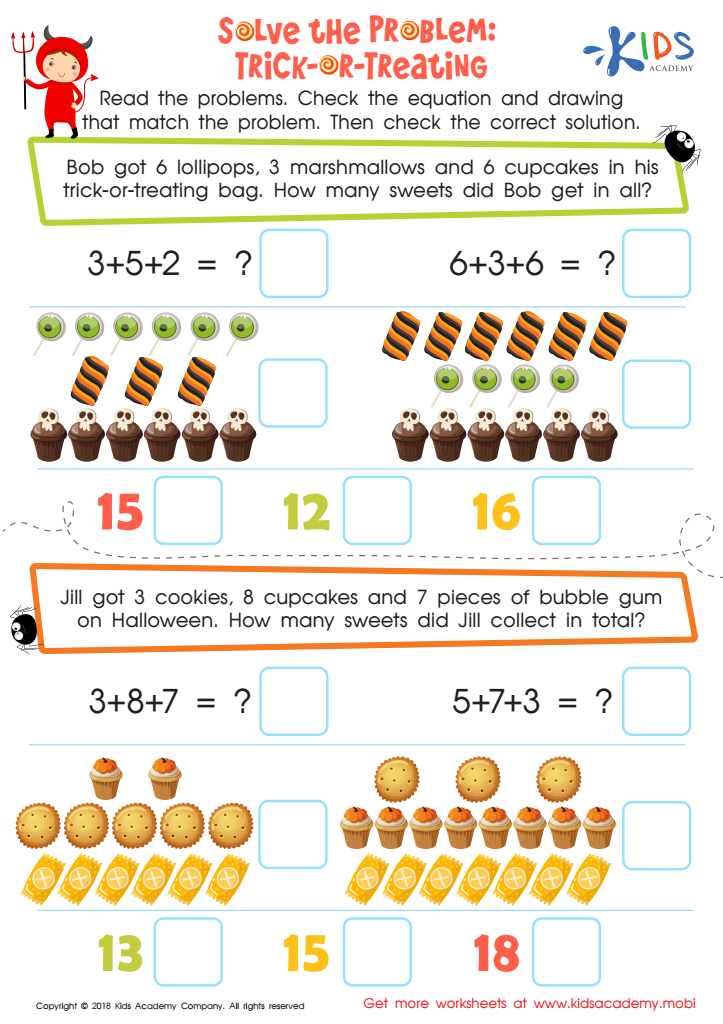
Solve the Problem: Trick–or–treating Worksheet
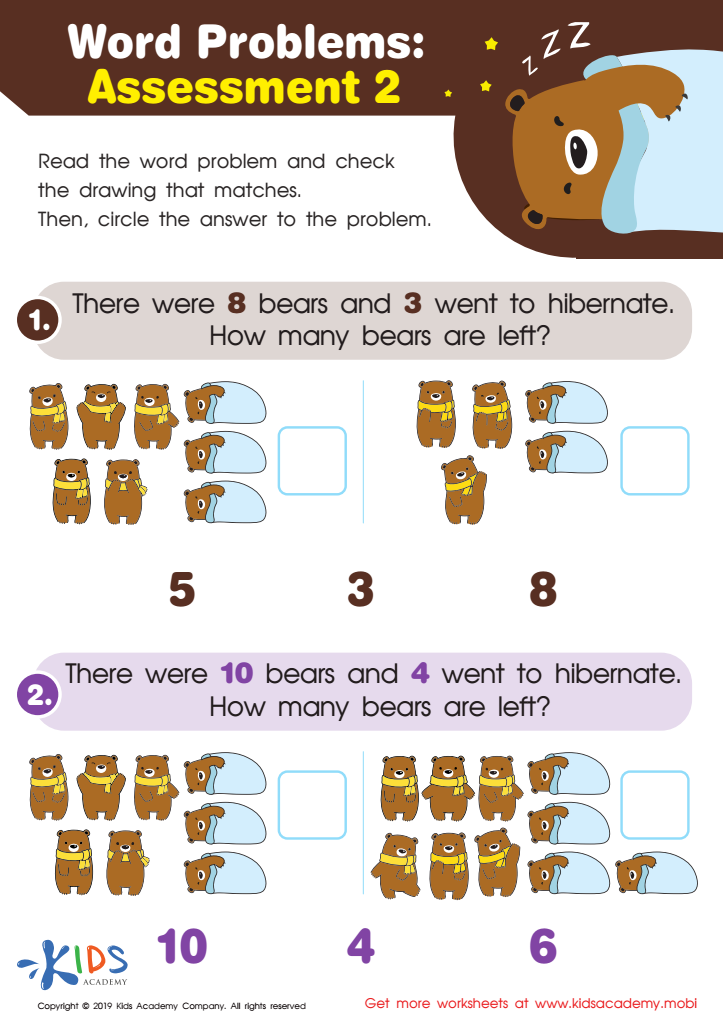
Word Problems: Assessment 2 Worksheet
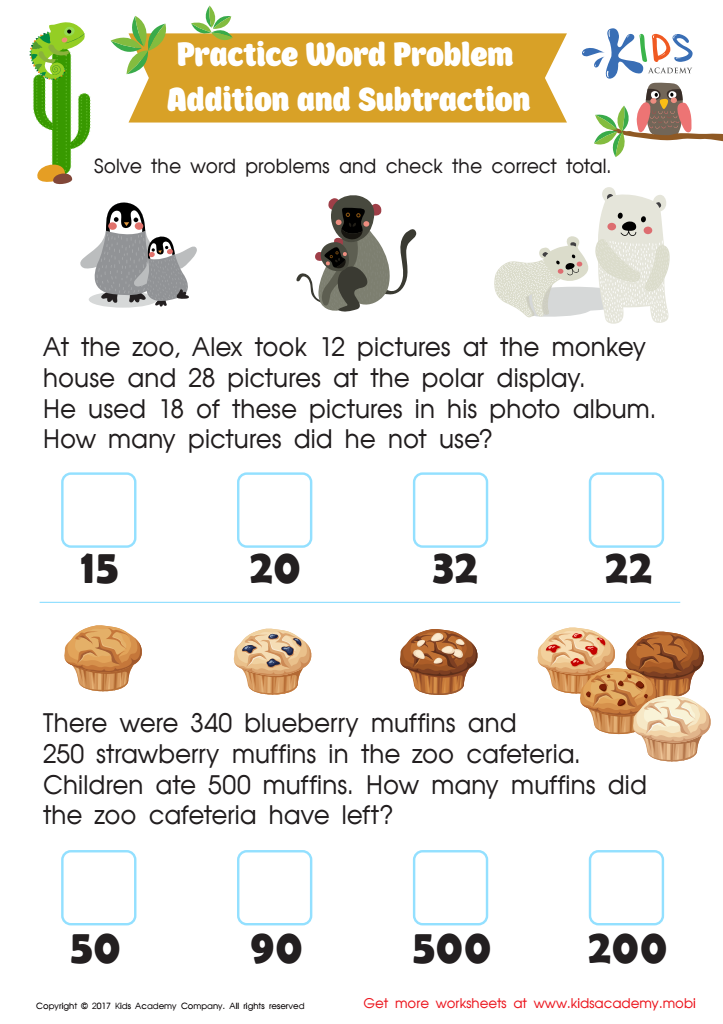
Addition and Subtraction: Word Problems Worksheet



.jpg)




Encouraging logical reasoning through word problems for children ages 3-5 is crucial because it lays the foundation for essential cognitive skills. At this formative age, young minds are remarkably receptive to new ways of thinking. Introducing logical reasoning helps develop critical thinking, problem-solving abilities, and decision-making skills. These are not just academic skills but life skills that children will use in various situations as they grow.
Engaging with word problems encourages children to think in structured and organized ways. It helps them to understand sequencing, cause and effect, and categorization - fundamental principles for later math and science learning. Word problems also improve language comprehension skills as children learn to follow and interpret verbal instructions, enhancing their listening and communication abilities.
Moreover, early exposure to logical reasoning fosters confidence and independence. When children solve problems on their own, it boosts their self-esteem and encourages a positive attitude towards learning and challenges. Parents and teachers should care because these skills support academic success across subjects and prepare children for future education phases, ensuring they are not only school-ready but life-ready too. Instilling these skills early sets a strong foundation for a child’s lifelong learning journey.








