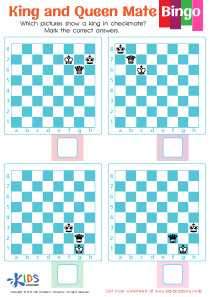
Chess strategy understanding Normal Chess Worksheets for Ages 3-6
3 filtered results
-
From - To
Unlock your child's potential with our "Chess Strategy Understanding" worksheets designed for ages 3-6! Enhance cognitive development through engaging, kid-friendly activities that introduce the rules and strategies of normal chess. Our printable worksheets focus on critical thinking, problem-solving, and strategic planning, making learning fun and interactive. With vibrant graphics and easy-to-follow instructions, these worksheets are perfect for young learners. Develop essential skills that set the foundation for future chess mastery. Join us at Kids Academy and watch your little one’s mind grow while having a great time exploring the fascinating world of chess!
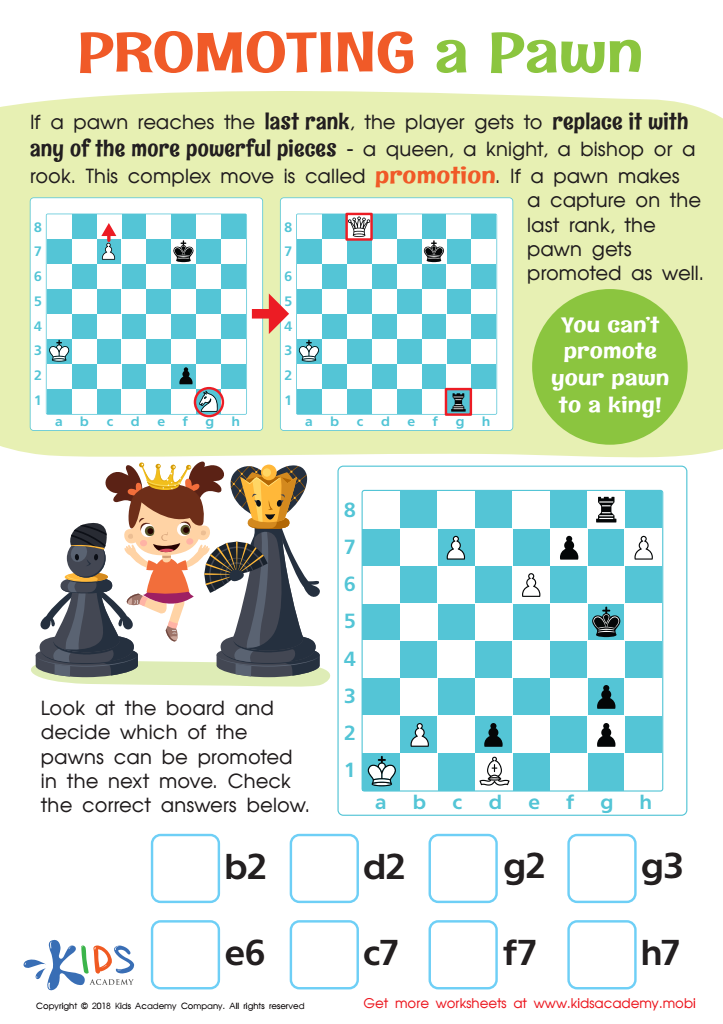
Promoting a Pawn Worksheet
 Assign to My Students
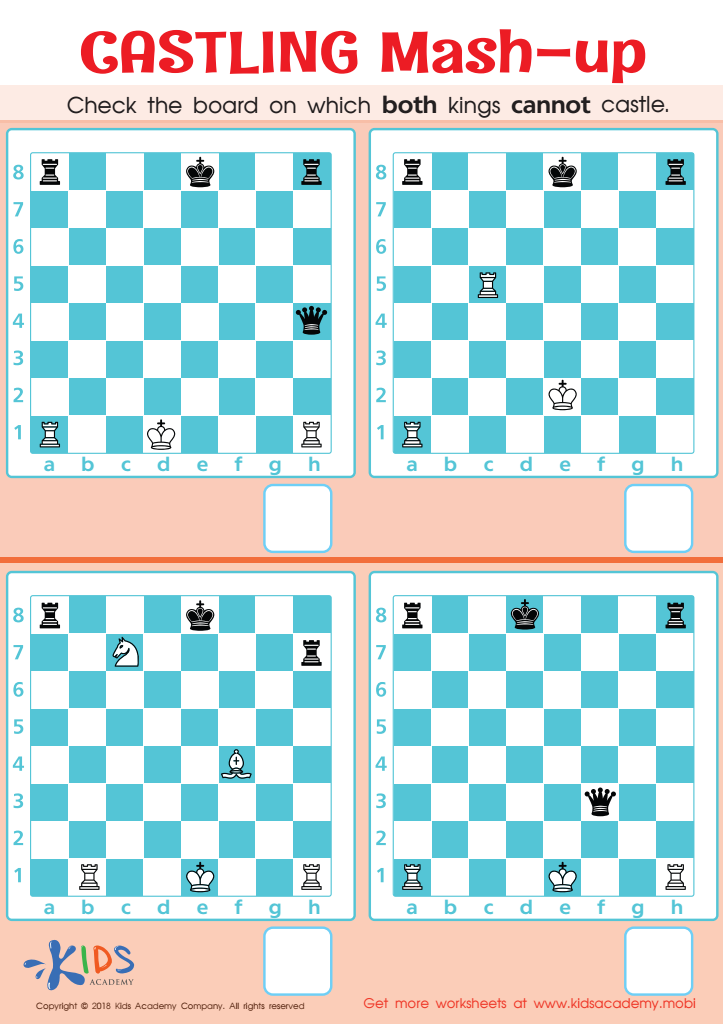
Castling Mash–up Worksheet
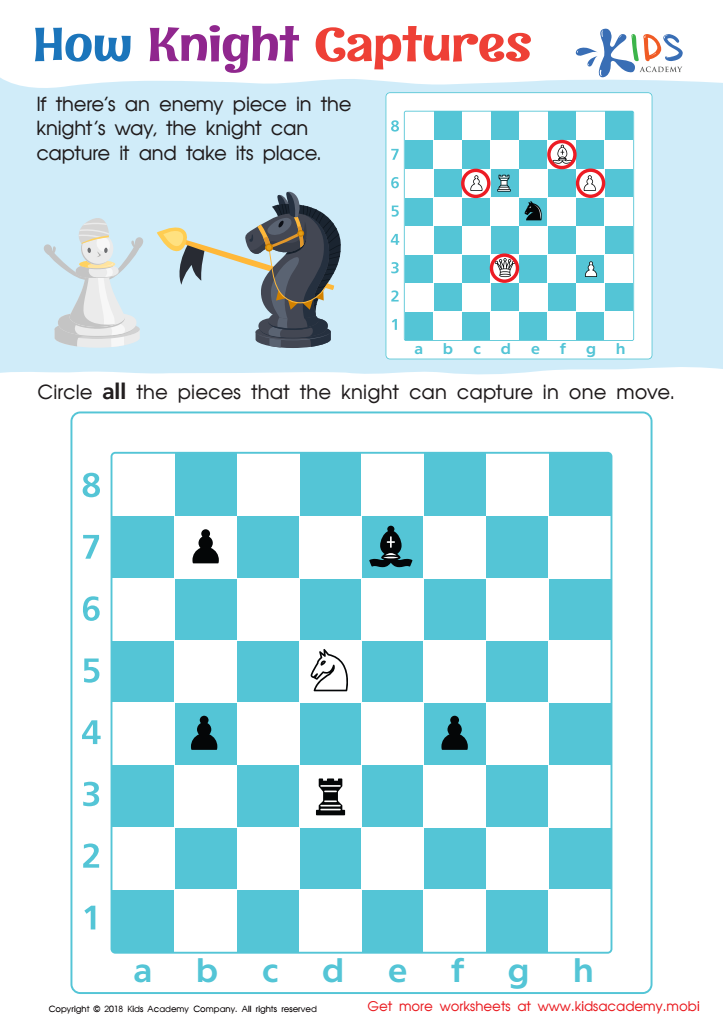
How Knight Captures Worksheet






Parents and teachers should care about introducing chess strategy to kids aged 3-6 because it offers numerous developmental benefits. Engaging in chess at an early age promotes critical cognitive skills, such as problem-solving, analytical thinking, and planning. The game's structure requires children to anticipate their opponent’s moves and develop strategies, which enhances foresight and decision-making abilities. These critical thinking skills are foundational for academic success across subjects like math and reading comprehension.
Chess also nurtures patience and concentration. Young children often find it challenging to focus for extended periods, but the captivating nature of a chess game can gradually build their attention span. Through repeated play, children learn the value of patience, understanding that thoughtful, well-considered moves are often more effective than impulsive actions.
Furthermore, chess facilitates emotional growth by teaching children how to cope with wins and losses. Learning to handle defeat gracefully and to celebrate victories modestly are crucial life skills for emotional resilience and sportsmanship. Additionally, playing chess offers social benefits, as it is often played with others, fostering interaction and respectful competition.
Incorporating chess into early education is not just about learning a game; it's about laying the groundwork for a well-rounded, strategic, and resilient mindset. Thus, investing in chess education can provide young children with a powerful toolkit for future success.