Cognitive Development Normal Chess Worksheets for Ages 3-6
4 filtered results
Difficulty Level
Grade
Age
-
From - To
Subject
Activity
Standards
Welcome to our engaging collection of Cognitive Development Normal Chess Worksheets designed specifically for children ages 3-6. These thoughtfully crafted resources introduce essential chess concepts in a fun and interactive way, fostering critical thinking, problem-solving, and strategic planning skills. Each worksheet encourages young learners to explore basic chess moves, recognize pieces, and develop their cognitive abilities through playful activities. Perfect for parents and educators, our worksheets provide a valuable tool for enhancing children's cognitive growth while introducing them to the timeless game of chess. Inspire their love for learning through creative play and watch their confidence flourish!
Favorites
With answer key
Interactive
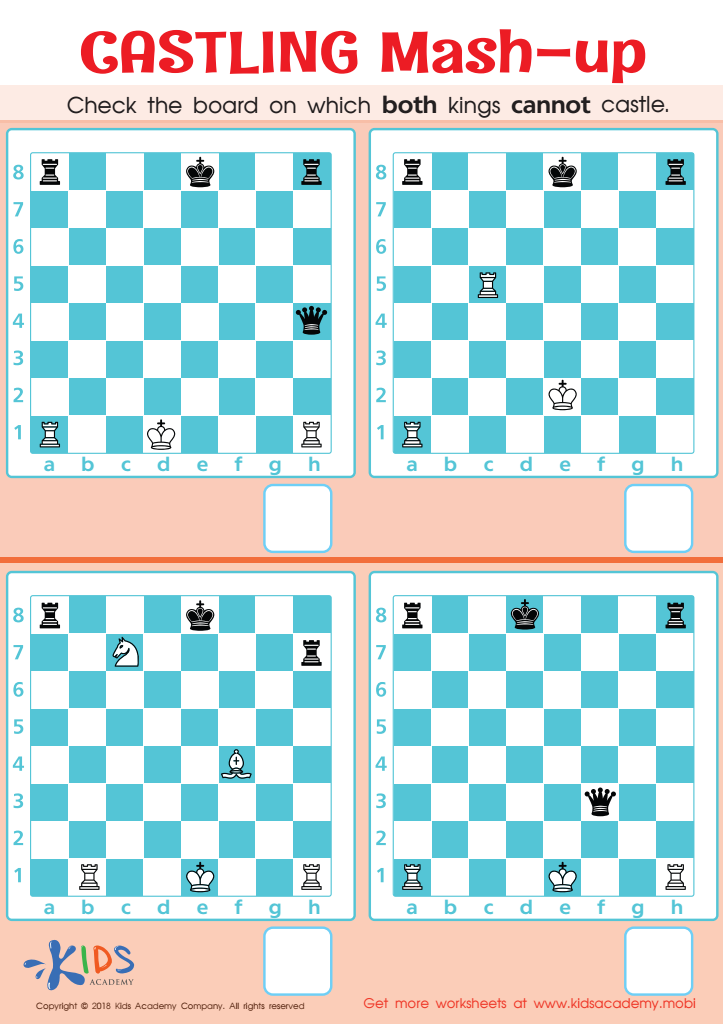
Castling Mash–up Worksheet
Before starting the worksheet, ensure your child understands castling in chess. If not, take time to explain it. Once they have a clear grasp of the rules, help them complete the exercise. Check the board to ensure that neither king can castle.
 Assign to My Students
Castling Mash–up Worksheet
Worksheet
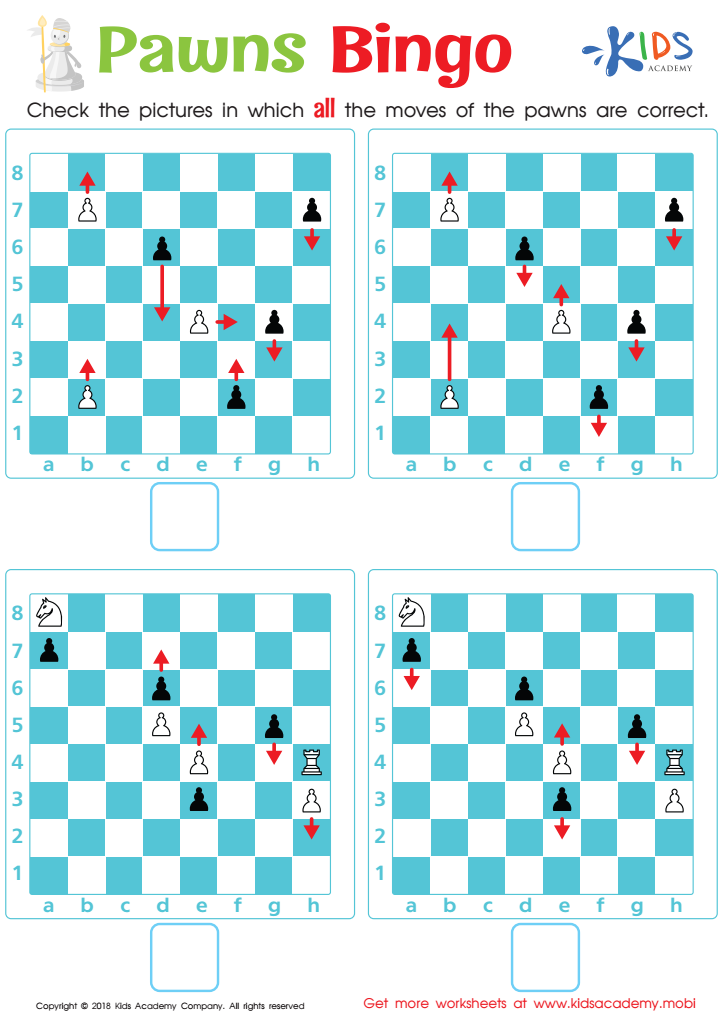
Pawns Bingo Worksheet
Test your students' knowledge of chess pawns. Present them with a worksheet featuring a picture, and ask them to identify the correct pawn moves. Afterward, they'll be better equipped to maneuver strategically on the chessboard.
Pawns Bingo Worksheet
Worksheet
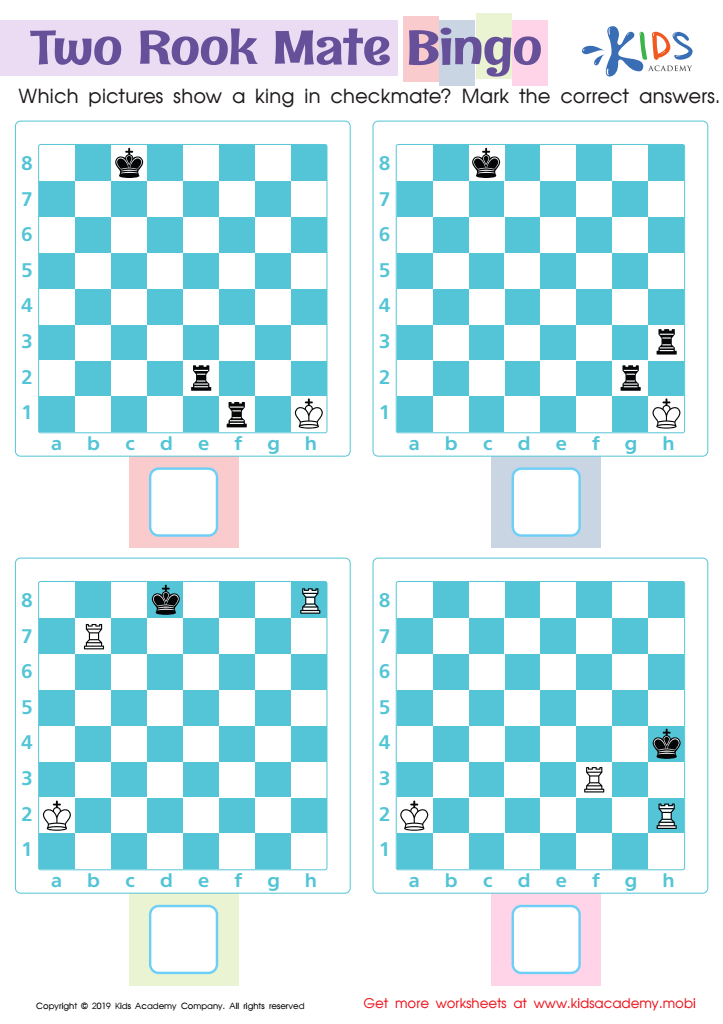
Two Rook Bingo Worksheet
Kids can have fun and strengthen their visual perception skills with Two Rook Mate Bingo. This worksheet challenges them to identify which chess boards show a king in checkmate using the Two Rook Mate strategy. Once they choose the correct one, they get the prize for checkmate! Playing chess helps kids with strategy, logic, and critical thinking.
Two Rook Bingo Worksheet
Worksheet
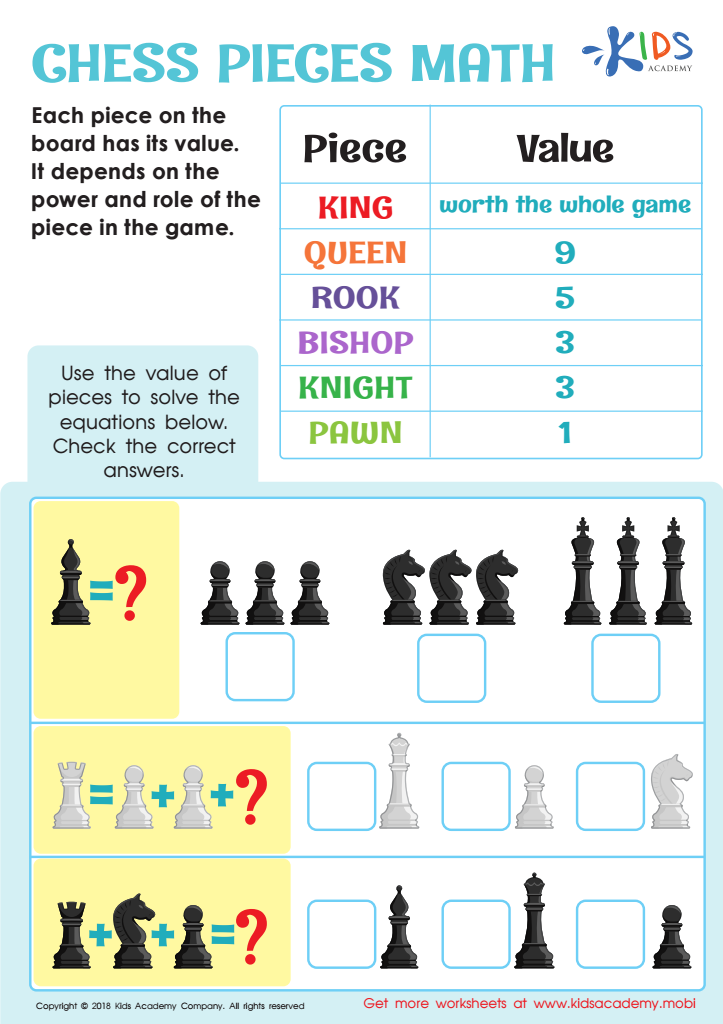
Chess Pieces Math Worksheet
Chess involves math! Each piece has its own value, from the king (worth the entire game) to the queen (9 points), varying according to their power and role. In the worksheet, your child must use these values to solve the equations at the bottom.
Chess Pieces Math Worksheet
Worksheet
Join Kids Academy for Free
Who is primarily going to use this learning content?







Cognitive development is crucial for children ages 3-6 as it lays the foundation for their thinking, problem-solving, and learning capabilities. Engaging young children in a structured activity like chess can significantly enhance their cognitive skills. Chess teaches important concepts such as strategic thinking, planning, and decision-making, encouraging children to think several moves ahead. It fosters critical thinking and enhances their ability to focus and concentrate.
Moreover, chess can improve memory and pattern recognition as children must remember the various moves and strategies. Through regular practice, they cultivate patience and resilience, learning to handle losses gracefully and celebrate successes modestly. This discipline contributes to healthy self-esteem and social skills, both gained from playing with peers or family members.
Parents and teachers should recognize that introducing chess at an early age not only boosts cognitive development but also promotes values like respect for opponents, sportsmanship, and good behavior. By investing time in activities like chess, they nurture curious, well-rounded minds equipped to tackle future educational challenges. Encouraging cognitive skills through chess helps prepare children for academic environments, fostering lifelong learners excited about exploration and discovery.