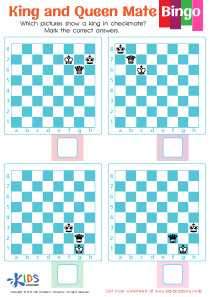
Understanding chess rules Normal Chess Worksheets for Ages 3-6
5 filtered results
Difficulty Level
Grade
Age
-
From - To
Subject
Activity
Standards
Introduce your young learners to the exciting world of chess with our printable worksheets designed for ages 3-6. Our 'Understanding Chess Rules' worksheets simplify the complexities of chess, ensuring that even the youngest players grasp the game’s fundamentals. These engaging activities help children learn the names and movements of chess pieces, basic strategies, and the importance of thinking ahead. Perfect for at-home learning or classroom use, our worksheets foster critical thinking, patience, and problem-solving skills. Embark on this educational journey and make learning chess a fun and rewarding experience for your little ones.
Favorites
With answer key
Interactive
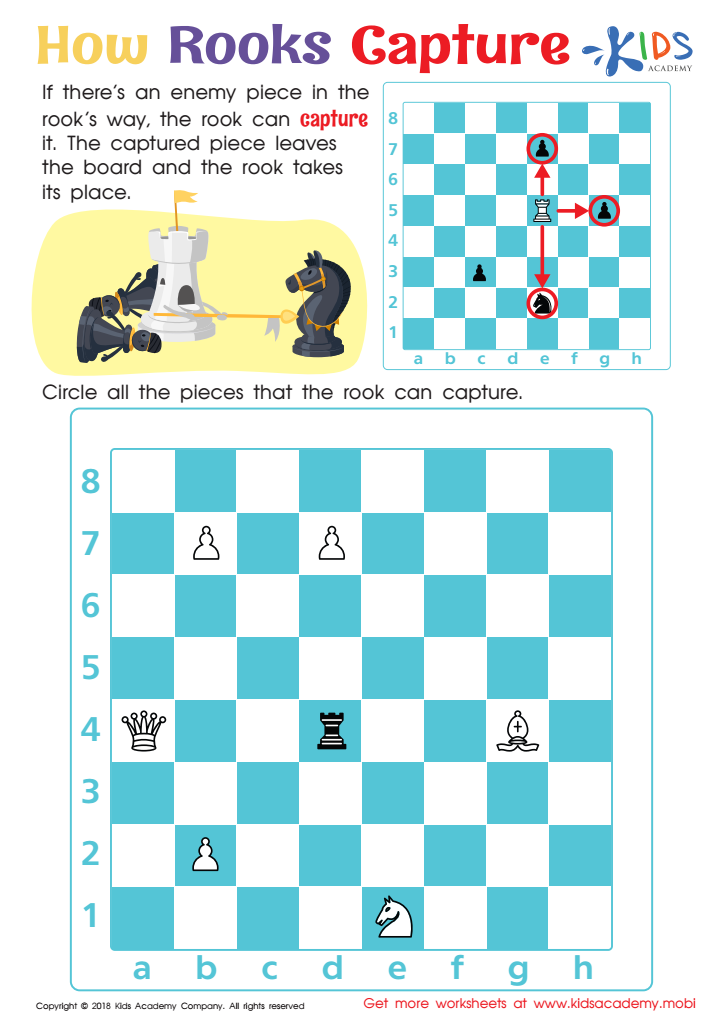
How Rooks Capture Worksheet
Chess is a game that requires skill, concentration and planning. Players must move their chess pieces strategically to capture pieces from their opponent. Do your kids know how to use the rook to capture pieces? Go through the worksheet with them and circle the pieces the rook can capture.
How Rooks Capture Worksheet
Worksheet
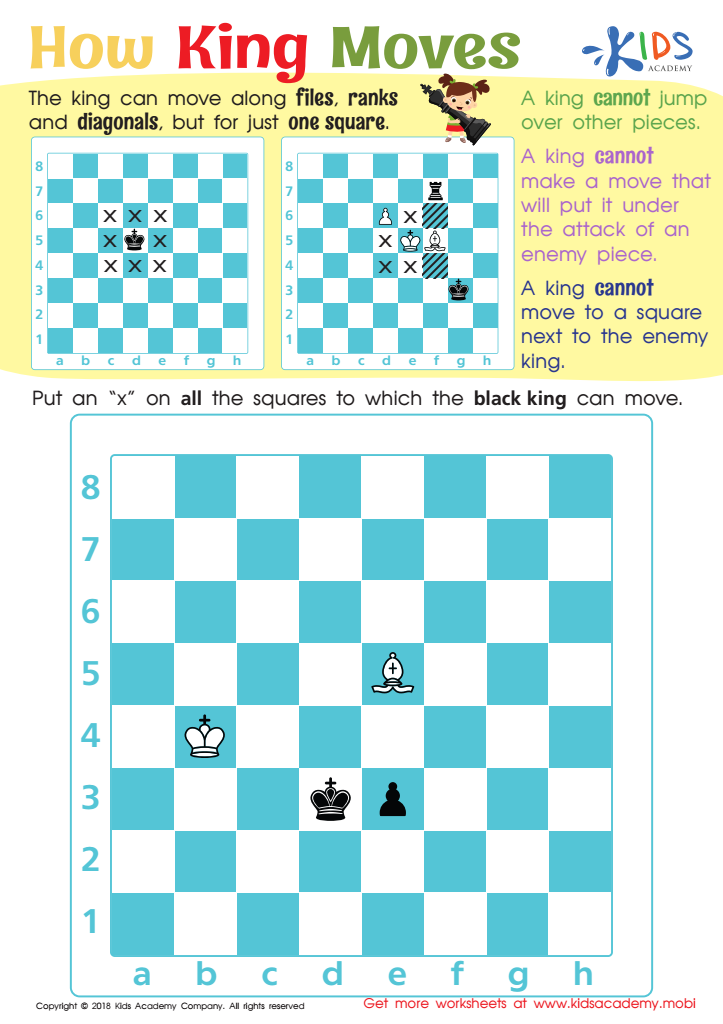
How King Moves Worksheet
Teach your kids the fundamentals of chess with this worksheet! The goal is to checkmate the opponent's king, so it must be protected at all times. The king moves along files, ranks, and diagonals (except one square at a time), and cannot move to a square next to the enemy king. Your kids will soon master the art of checkmate!
 Assign to My Students
How King Moves Worksheet
Worksheet
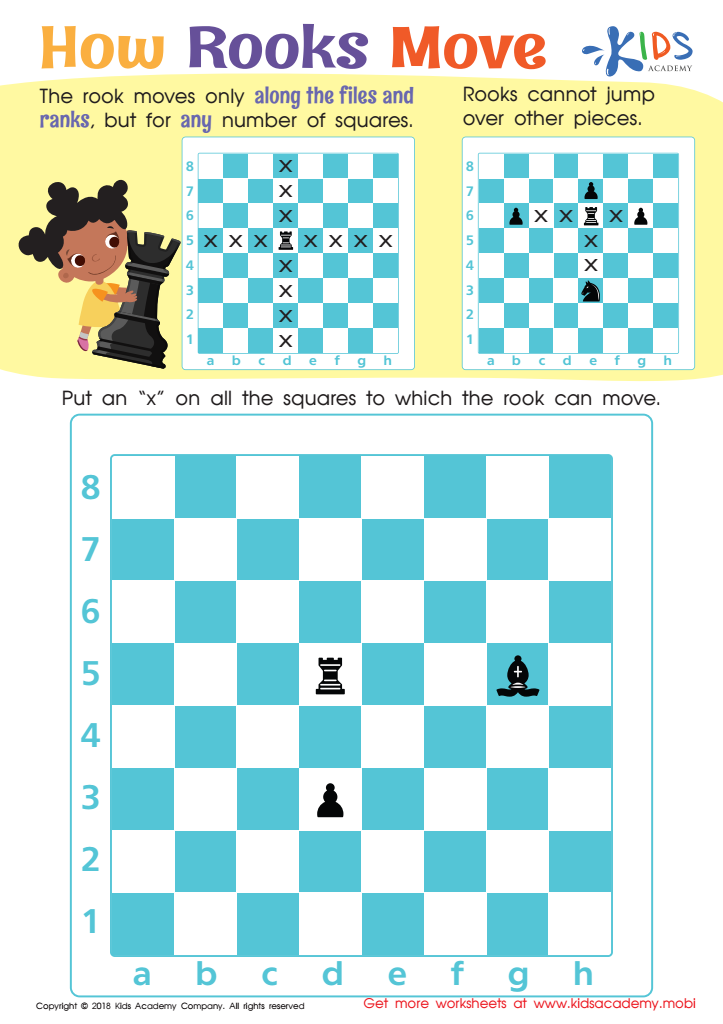
How Rooks Move Worksheet
Help your kids master chess with this worksheet! Explain how rook pieces move along ranks and files, and have them mark the squares it can move to. Note that it can't jump over other pieces. With your guidance, they'll soon understand the game they love.
How Rooks Move Worksheet
Worksheet
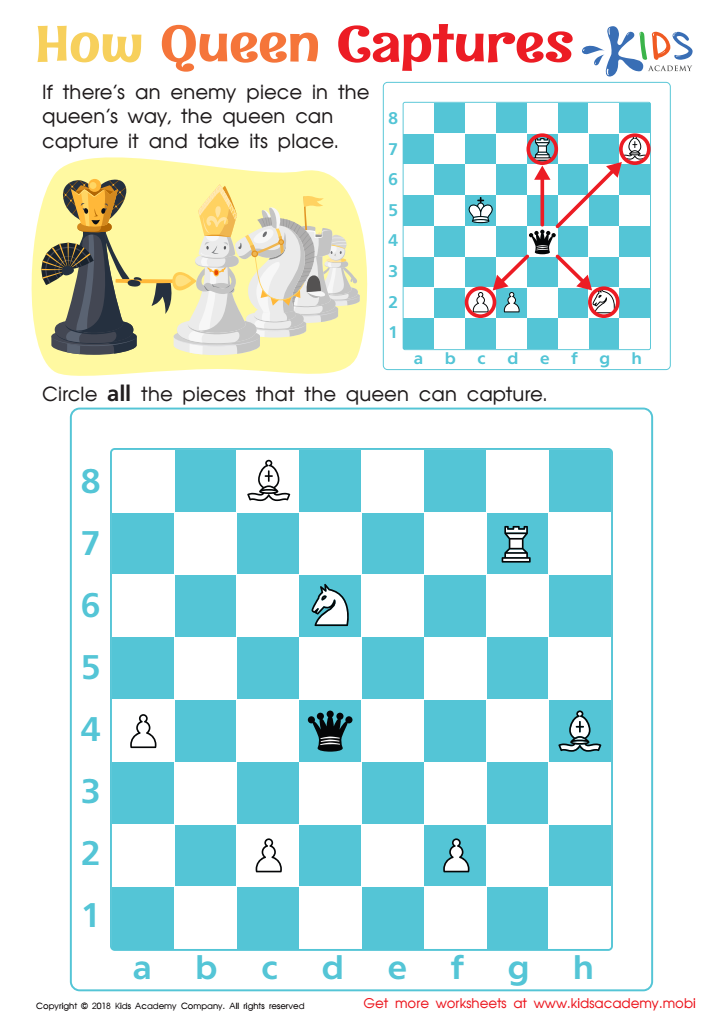
How Queen Captures Worksheet
Chess is a great game for sharpening math skills, strategic thinking, and knowledge of how each piece moves. If your child is interested, introduce them with this worksheet. It demonstrates how the queen can capture opposing pieces, such as another queen, and take their place.
How Queen Captures Worksheet
Worksheet
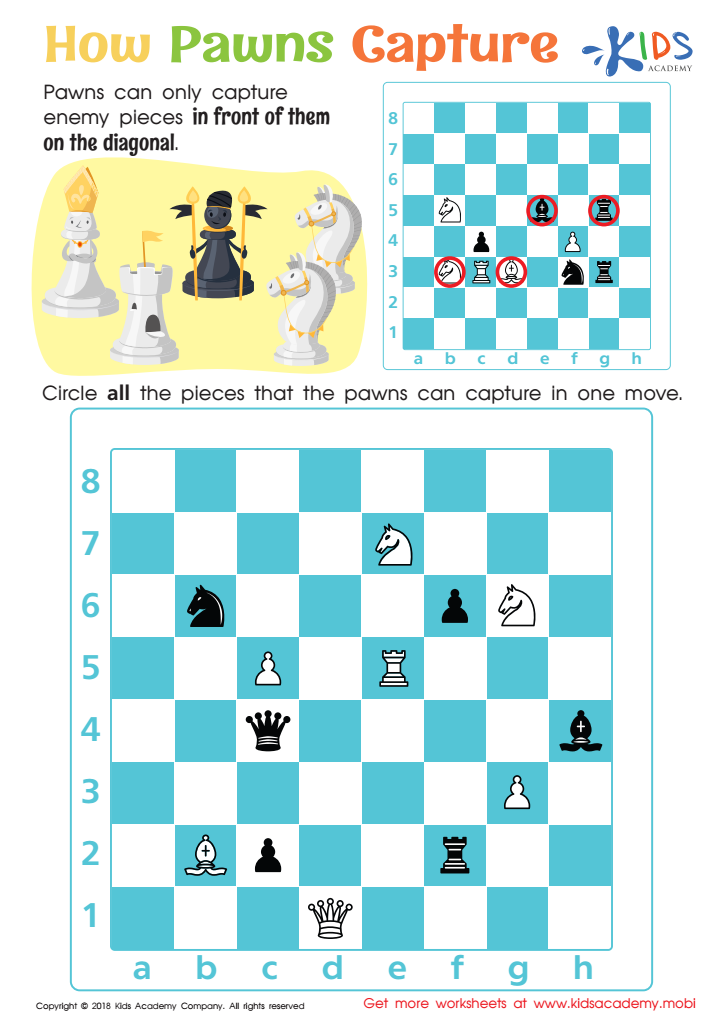
How Pawns Capture Worksheet
Ask your child to circle all the places a pawn can capture in one move on the diagonal. Pawns are limited in the moves they can make, but can still capture enemy pieces. This worksheet will help brush up on their knowledge of the rules of chess.
How Pawns Capture Worksheet
Worksheet
Join Kids Academy for Free
Who is primarily going to use this learning content?






Understanding chess rules and introducing normal chess to children aged 3-6 can have significant benefits, making it worthwhile for parents and teachers to care about. Firstly, chess enhances critical thinking and problem-solving skills. As young children learn to anticipate their opponent’s moves and strategize their own, they develop mental faculties that are critical for academic success.
Furthermore, engaging in chess strengthens cognitive abilities such as memory, attention, and spatial reasoning. Young children who play chess often show improved memory retention, as they have to remember and plan several moves ahead.
In addition to cognitive benefits, chess teaches valuable social skills and emotional intelligence. The game encourages patience, discipline, and fair play. Children learn that persistence is important and dealing with losses gracefully fosters resilience.
Chess also provides a structured yet creative environment for young minds to explore. It stimulates curiosity and promotes a love of learning through a playful medium. Introducing this game at an early age cultivates a mindset geared toward lifelong learning and intellectual exploration.
For parents and teachers, integrating chess into early education isn't just about mastering the game; it's about harnessing a powerful tool to support overall child development, laying a strong foundation for future academic and personal growth.