Basic geometry understanding Normal Worksheets for Ages 3-6
3 filtered results
-
From - To
Discover a world of shapes and spatial awareness with our "Basic Geometry Understanding Normal Worksheets" designed for children aged 3-6. These engaging worksheets are perfect for early learners, introducing essential geometric concepts through fun and interactive activities. Kids will explore shapes, learn to identify patterns, and develop their fine motor skills while participating in exciting exercises. Our carefully crafted resources foster critical thinking and problem-solving abilities, laying a strong foundation for future math skills. Suitable for both classroom and home learning, these worksheets help young learners build confidence in geometry while having fun! Start your geometric adventure today!
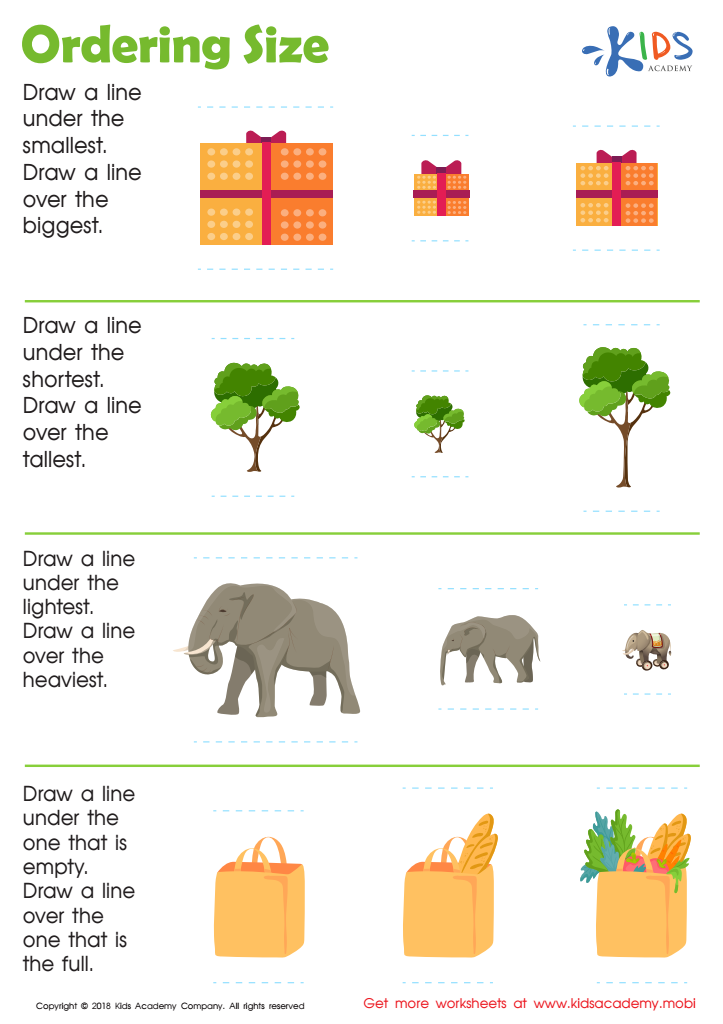
Ordering Size Worksheet
 Assign to My Students
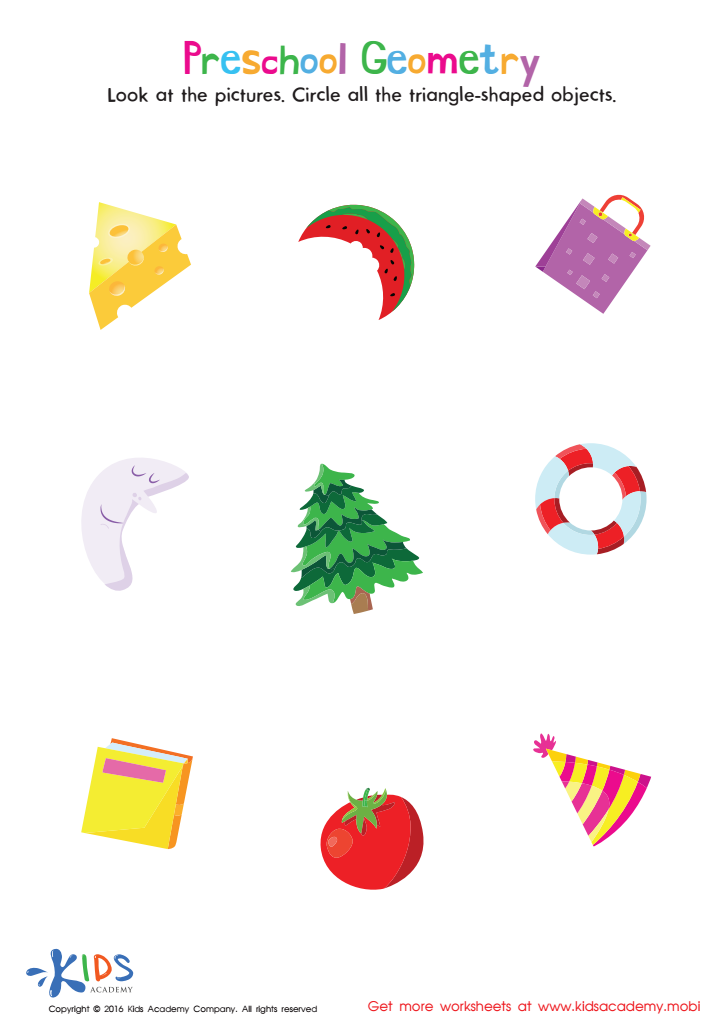
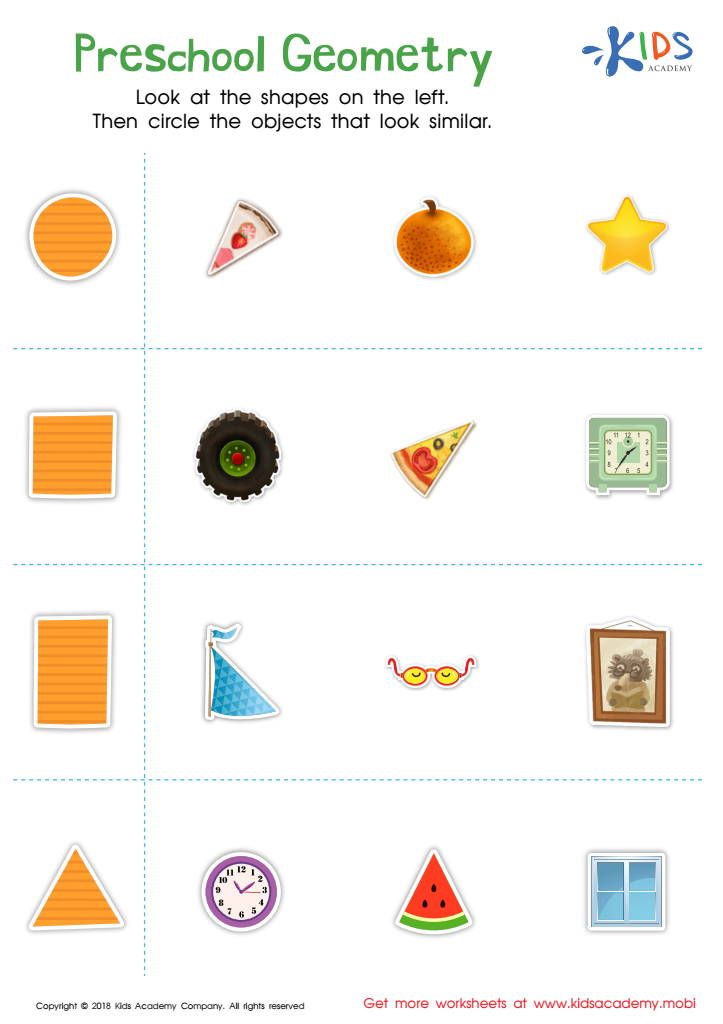
Preschool Geometry Worksheet






Understanding basic geometry is crucial for children ages 3-6 as it lays the foundation for their mathematical skills and overall cognitive development. During this formative stage, children start to recognize shapes and spatial relationships, which are essential building blocks in their learning journey.
Introducing geometric concepts helps young learners develop critical thinking and problem-solving skills. For instance, identifying shapes like circles, squares, and triangles boosts their visual perception, enhances memory skills, and fosters creativity. When children engage with geometry through play, they learn to categorize objects and understand their properties, promoting logical reasoning.
Furthermore, early geometry supports literacy as children learn to describe shapes and positions using appropriate vocabulary, sharpening their communication skills. It also integrates well with everyday activities, such as recognizing shapes in nature, architecture, or art, making learning relevant and engaging.
Parents and teachers should care about fostering this understanding because early math concepts predict later academic success. By nurturing children’s geometric awareness at this young age, we empower them to develop confidence, enthusiasm, and a positive attitude towards mathematics, setting them on a path toward lifelong learning. Ultimately, this foundational knowledge supports future growth in various subjects and life skills.








