Basic measurement concepts Normal Worksheets for Ages 3-6
3 filtered results
-
From - To
Introducing our "Basic Measurement Concepts Normal Worksheets" designed for children ages 3-6! These engaging worksheets help young learners explore essential measurement concepts in a fun and interactive way. Each activity encourages children to understand length, weight, size, and volume through colorful visuals and simple tasks that spark curiosity. Teachers and parents can easily access these printable resources to support early math skills and promote hands-on learning experiences. As kids measure, compare, and analyze everyday objects, they develop a strong foundation in measurement that will benefit their future educational journey. Start enhancing your child's learning today with our delightful worksheets!
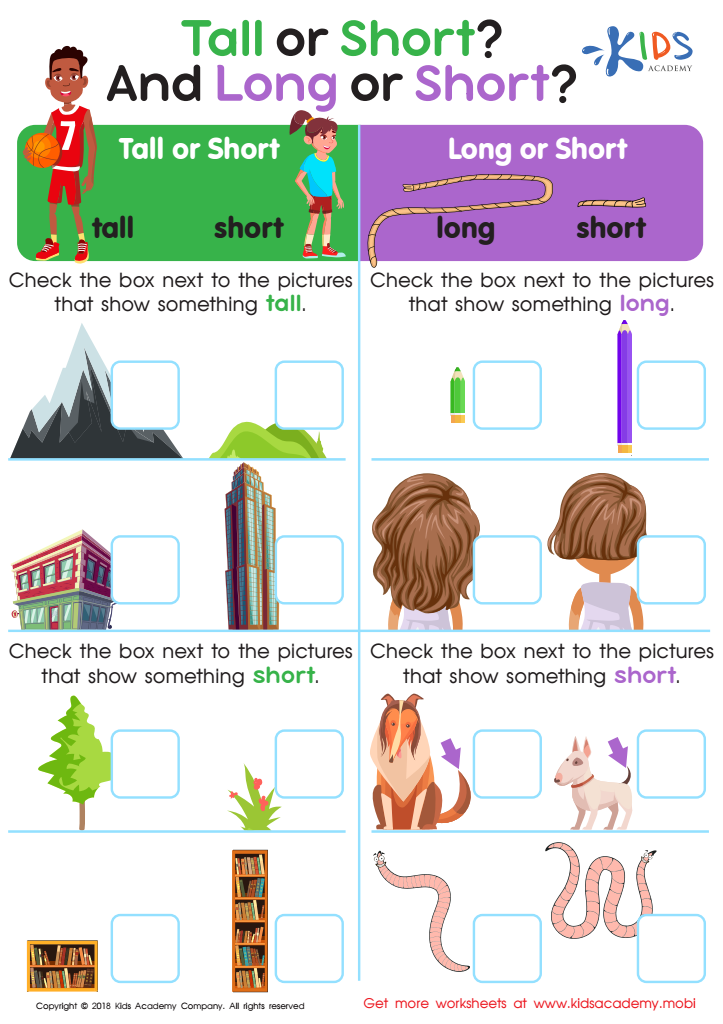
Tall or Short and Long or Short? Worksheet
 Assign to My Students
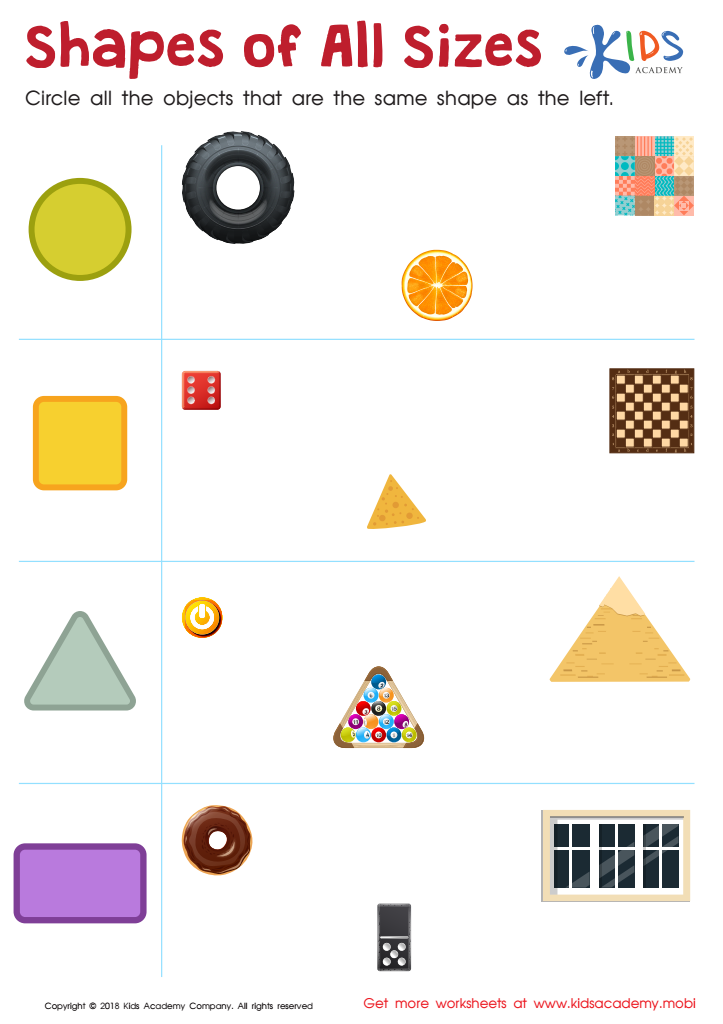
Shapes of All Sizes Worksheet
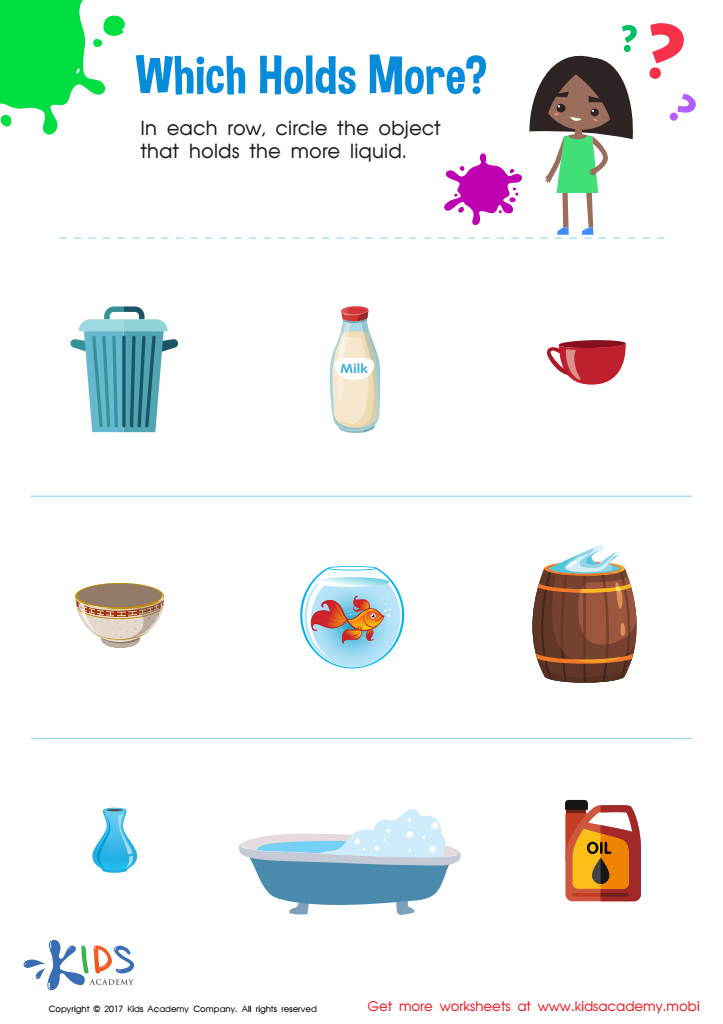
Which Holds More: Capacity Worksheet







Parents and teachers should care about basic measurement concepts for children ages 3-6 because early understanding of these concepts lays the foundation for later mathematical skills and critical thinking. At this age, children are naturally curious and eager to explore their environment, making it an ideal time to introduce measurement in fun and engaging ways.
Learning about measurement helps children develop essential skills such as comparing sizes, lengths, weights, and volumes, which are fundamental to problem-solving. For example, through activities like measuring ingredients while baking or comparing the heights of plants in a garden, children reinforce their number sense and spatial awareness. This hands-on learning fosters cognitive development, enhances language skills, and encourages them to articulate their observations and reasoning.
Additionally, familiarity with measurement concepts empowers children to make sense of the world around them, cultivating confidence and systematic thinking. This understanding also transitions into academic readiness as they move into elementary school, where these skills are further built upon. Ultimately, by prioritizing basic measurement concepts, parents and teachers set children on a path toward successful learning, promoting lifelong interest in mathematics and inquiry.








