Counting practice Normal Worksheets for Ages 3-6 - Page 2
27 filtered results
-
From - To
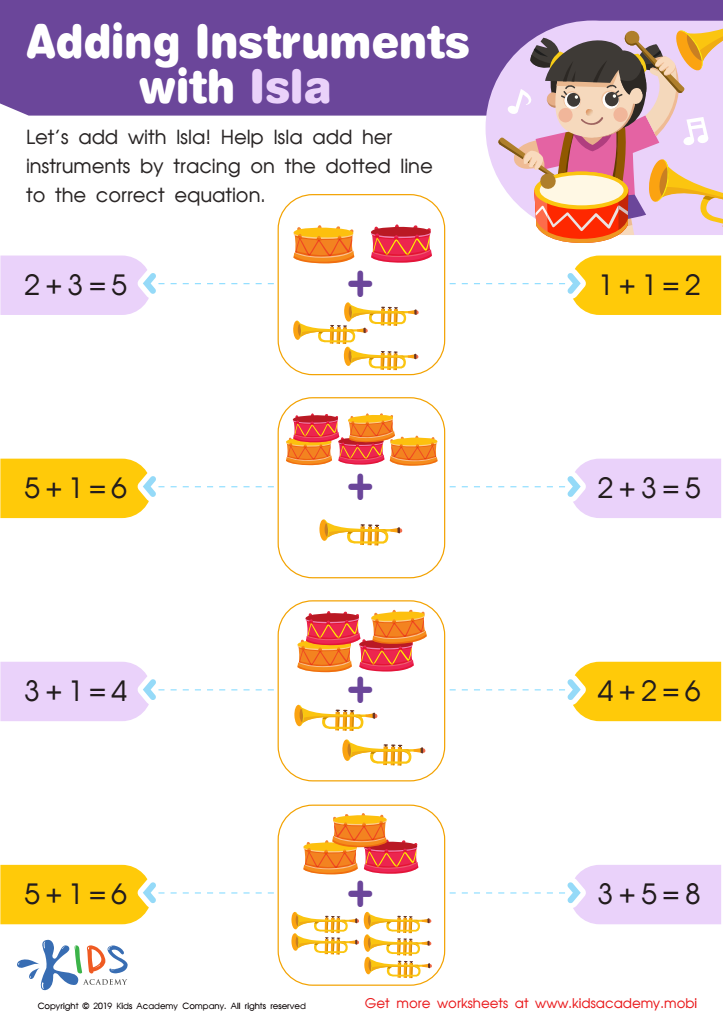
Adding Instruments with Isla Worksheet
 Assign to My Students
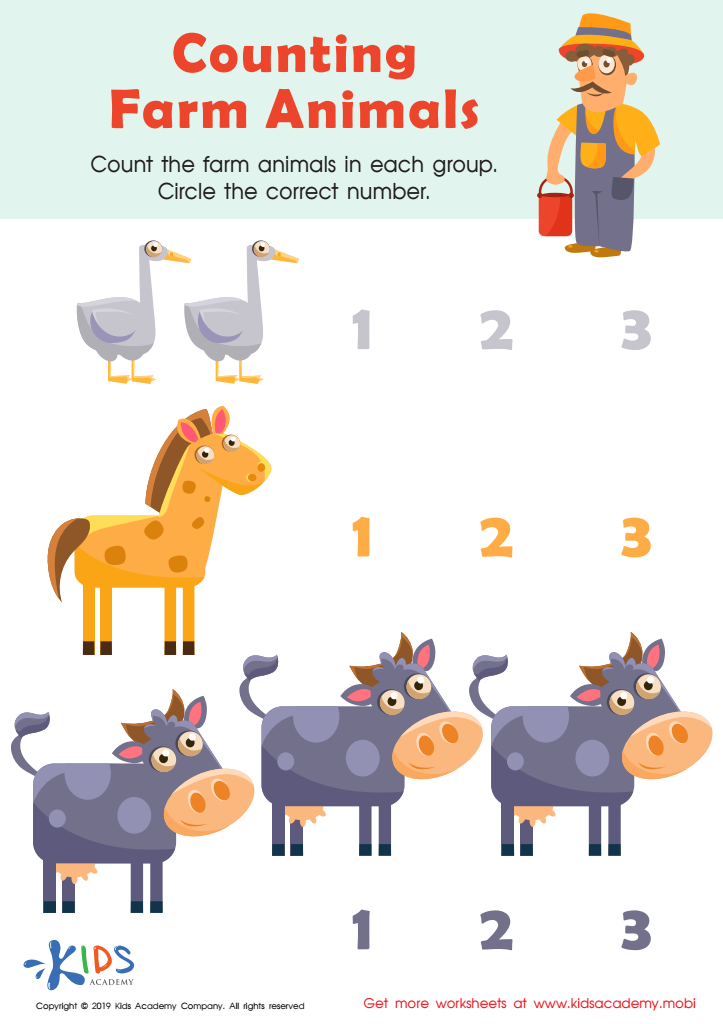
Counting Farm Animals Worksheet
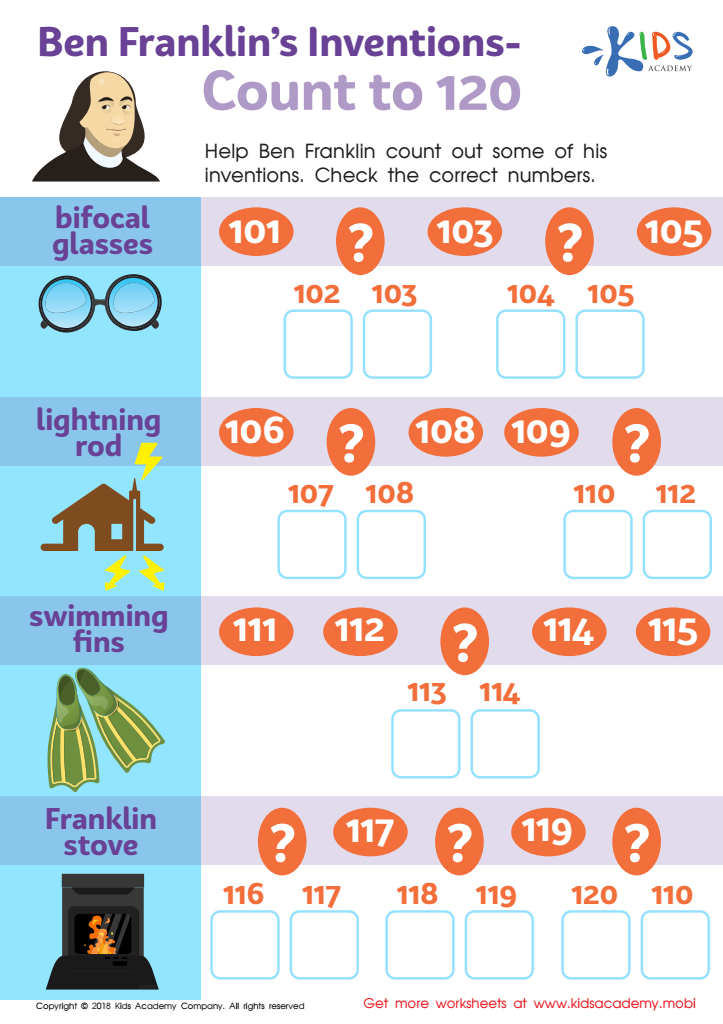
Ben Franklin’s Inventions – Count to 120 Worksheet



.jpg)




Counting practice is an essential foundational skill for children aged 3-6, playing a crucial role in their cognitive and academic development. At this early stage, children's brains are exceptionally receptive, making it the ideal time to introduce basic mathematical concepts. When parents and teachers focus on counting practice, they help children develop number sense, which is the ability to understand, relate, and connect numbers.
By regularly practicing counting, children learn to recognize patterns, understand the order and value of numbers, and begin to grasp more complex mathematical concepts such as addition, subtraction, and eventually multiplication. This early exposure to numbers builds confidence and reduces anxiety around math as children grow older.
Additionally, counting also aids in the development of fine motor skills. Engaging in activities that involve physical counting, like using fingers, toys, or drawings, enhances both their motor coordination and their ability to visually and physically interact with their environment.
Counting practice also supports language development as children learn the names of numbers, the sequence of counting, and how to articulate mathematical ideas. Overall, counting practice paves the way for future academic success, fostering a strong mathematical foundation that benefits children throughout their schooling and everyday life.








