Critical thinking development Normal Worksheets for Ages 3-6
4 filtered results
-
From - To
Enhance your child's critical thinking skills with our engaging Normal Worksheets designed for ages 3-6. These worksheets promote cognitive development through fun and interactive activities that encourage curiosity and problem-solving. Tailored to young learners, our resources feature colorful illustrations and age-appropriate challenges that stimulate logical reasoning and analytical thinking. Whether in the classroom or at home, these worksheets provide an effective way to lay the foundation for strong thinking skills. Explore a variety of exercises that cover patterns, comparisons, and decision-making, helping your child become more confident and independent thinkers. Watch them thrive as they build essential skills for lifelong learning!
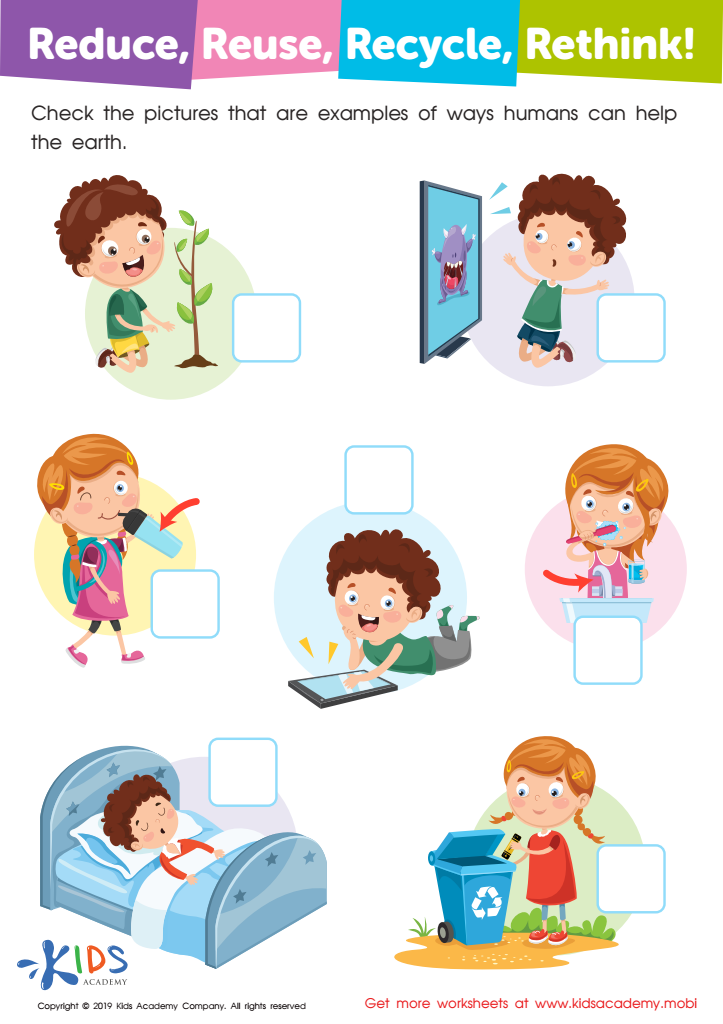
Reduce, Reuse, Recycle, Rethink Worksheet
 Assign to My Students
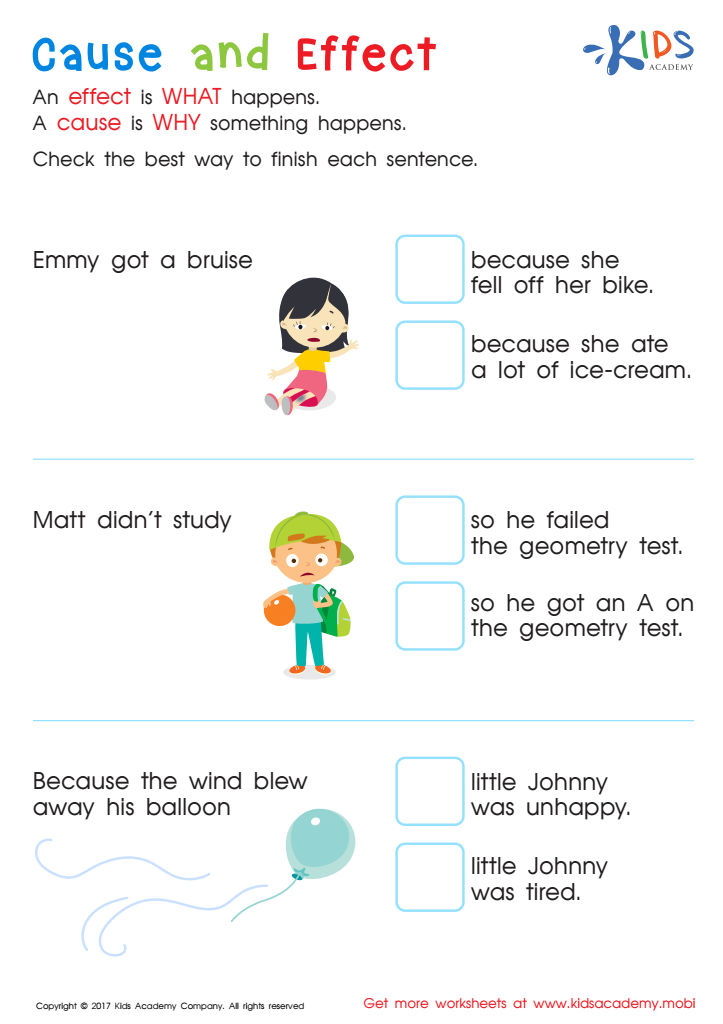
Cause and Effect Worksheet
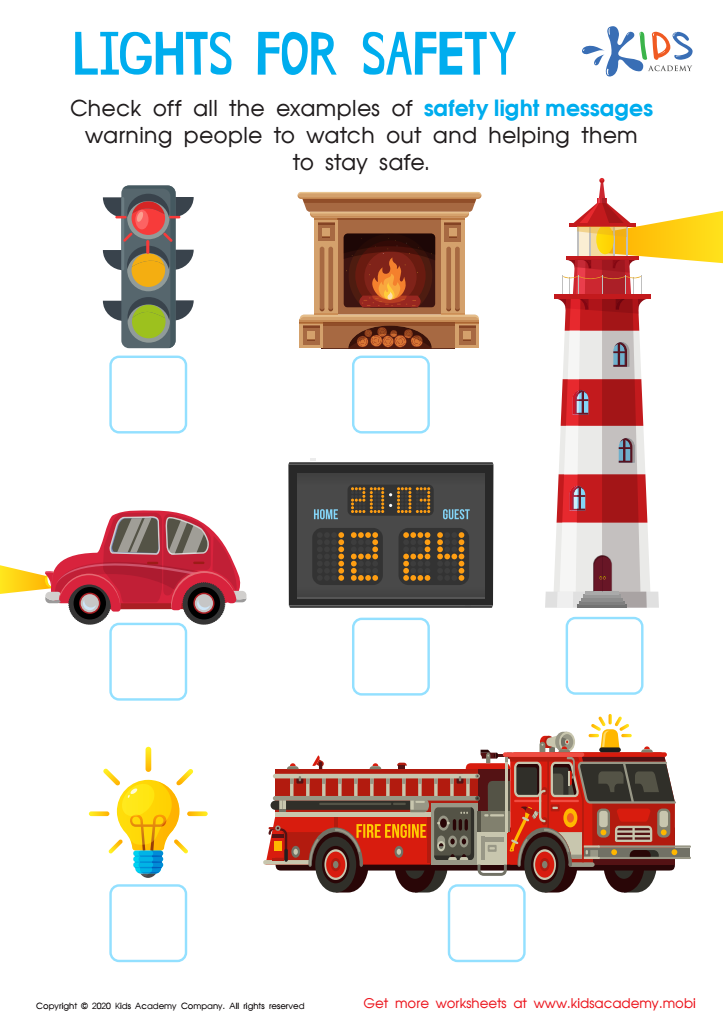
Lights for Safety Worksheet
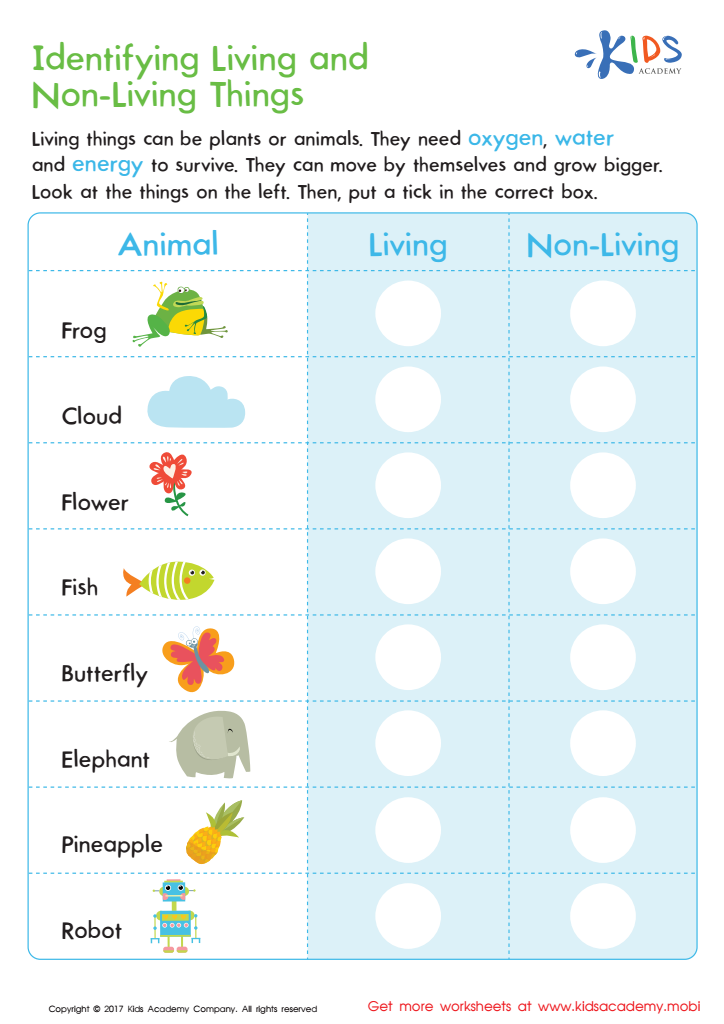
Identifying Living or Non–living Worksheet



.jpg)




Critical thinking development in children aged 3-6 is essential for several reasons. First, this early stage is crucial for cognitive development, as children start to engage with the world around them. Encouraging critical thinking helps them learn how to analyze situations, reason through problems, and make informed decisions. By nurturing these skills early on, parents and teachers lay a foundation for lifelong learning.
Moreover, children who think critically are better equipped to understand diverse perspectives and solve conflicts, essential social skills that contribute to their emotional intelligence. This fosters empathy and collaboration as they navigate relationships with peers.
Engaging in activities that promote critical thinking—like asking open-ended questions, encouraging curiosity, and facilitating play-based learning—can enhance children’s language skills and creativity. Furthermore, these practices help to motivate children to explore, ask “why,” and become independent thinkers.
In a world that changes rapidly and presents complex challenges, critical thinking skills become invaluable. Parents and teachers must prioritize this development to prepare children not only for academic success but also for thoughtful citizenship, adaptability, and resilience in the future. Fostering critical thinking in early childhood cultivates a generation of innovative and insightful individuals.








