Problem-solving practice Normal Worksheets for Ages 3-6
5 filtered results
-
From - To
Enhance your child's critical thinking skills with our "Problem-Solving Practice Normal Worksheets" designed specifically for ages 3-6. These engaging activities encourage young learners to tackle challenges and refine their logical reasoning while having fun! Your little ones will explore a variety of colorful, interactive worksheets that promote essential early learning skills, including pattern recognition, spatial awareness, and shape identification. Perfect for home or classroom use, our resources foster independent thinking and creativity, preparing kids for future academic success. Dive into the world of problem-solving and watch your child thrive as they learn to think critically and confidently tackle any challenge!
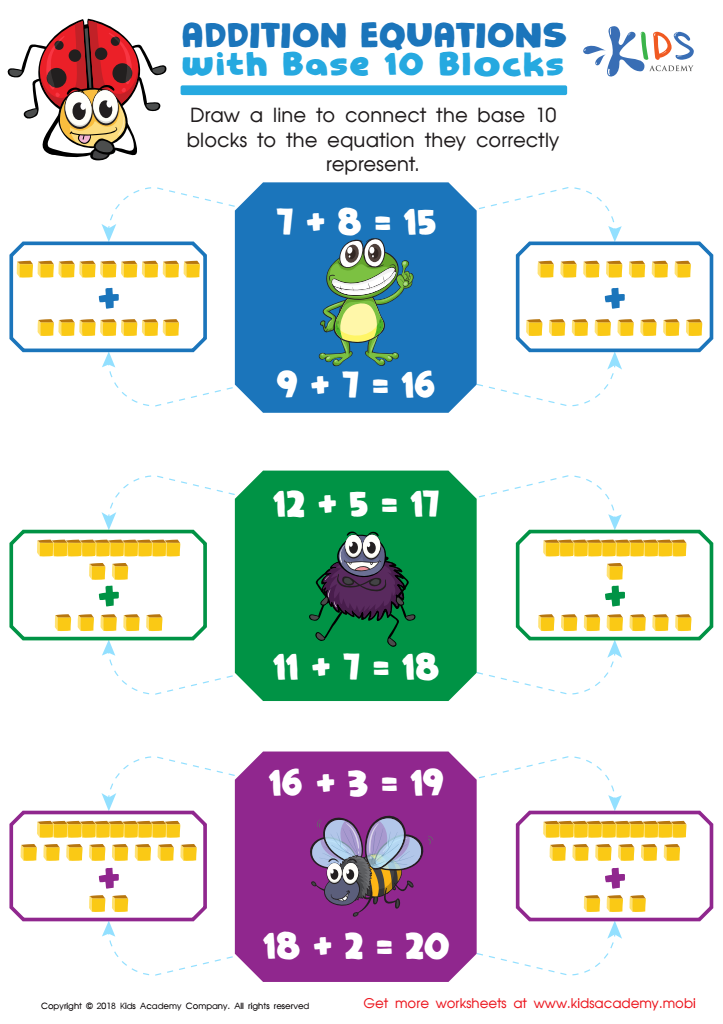
Addition Equations With Base 10 Blocks Worksheet
 Assign to My Students
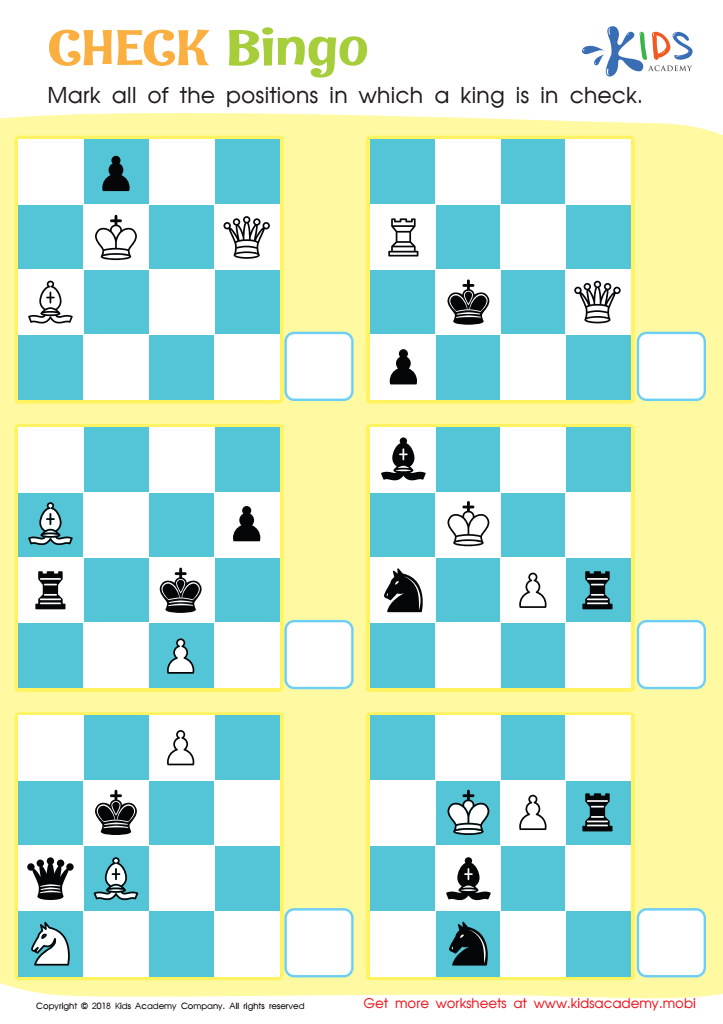
Check Bingo Worksheet
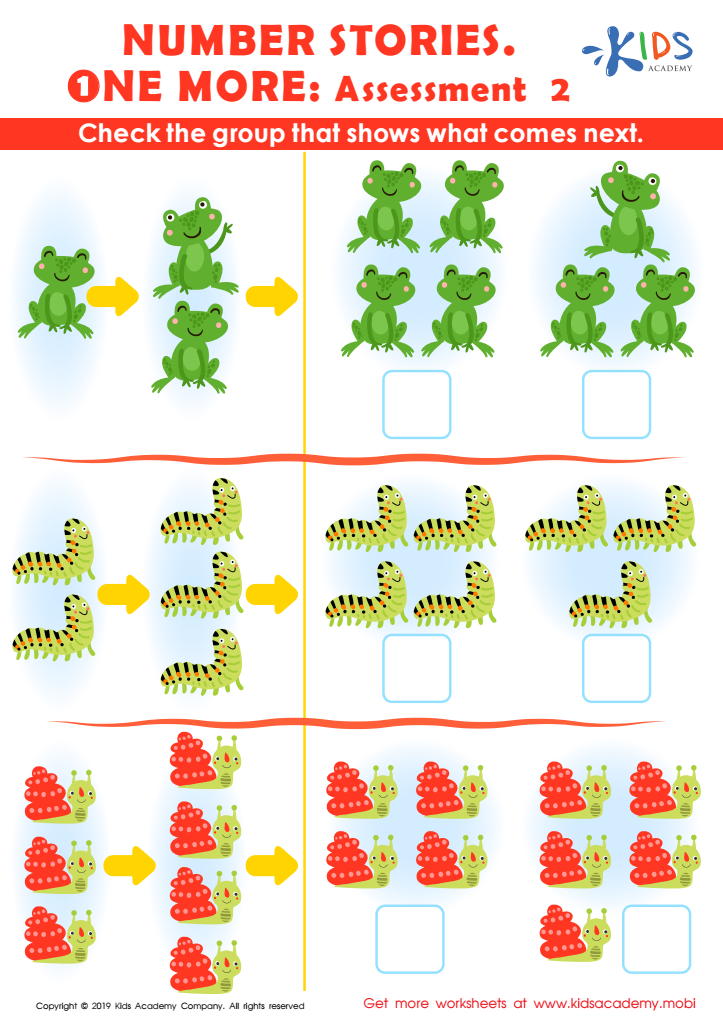
Number Stories One More – Assessment 2 Worksheet
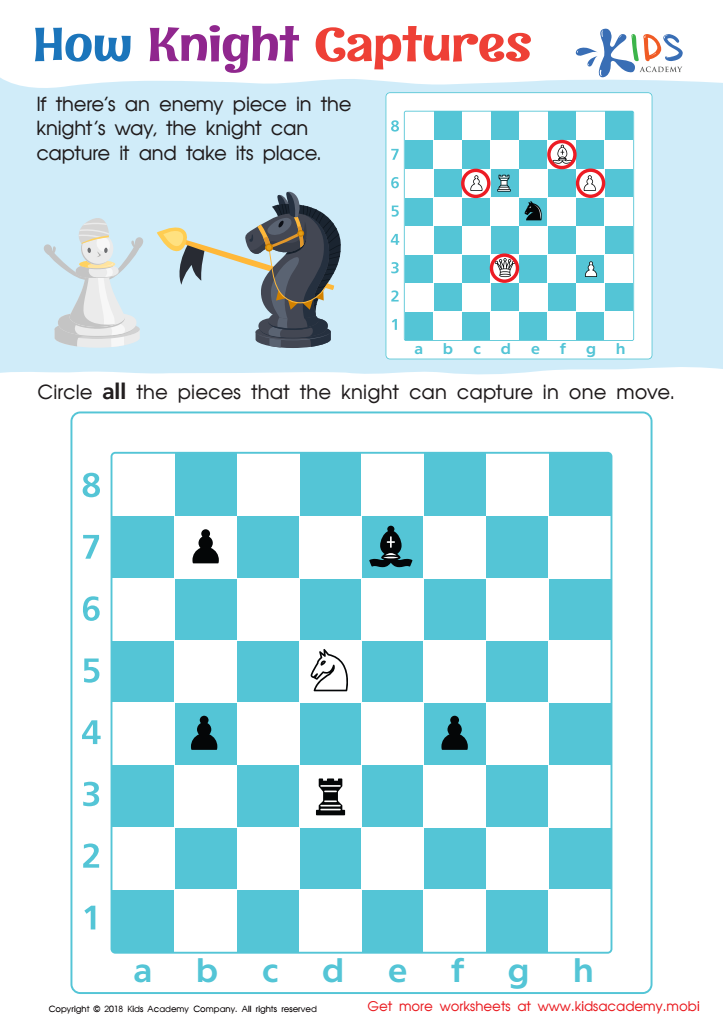
How Knight Captures Worksheet
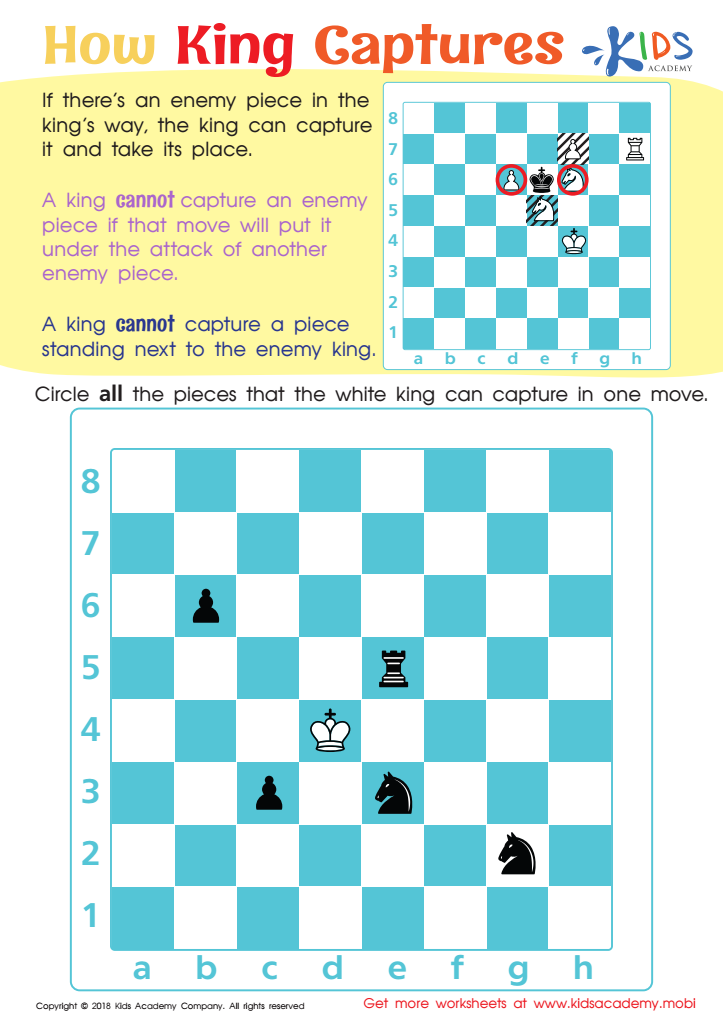
How King Captures Worksheet




.jpg)


Parents and teachers should greatly value problem-solving practice for children aged 3-6 as it lays the foundation for essential cognitive and social skills. At this age, children are naturally curious and eager to explore their environment. Engaging them in problem-solving activities nurtures critical thinking, creativity, and persistence.
Problem-solving enhances a child's ability to analyze situations, make decisions, and develop strategies, skills that are crucial not only in academics but also in everyday life. For example, finding ways to successfully build a structure with blocks or solve a simple puzzle requires children to think critically and adapt their strategies, fostering resilience and growth mindset.
Moreover, collaborative problem-solving encourages communication and teamwork. When children work together to solve a problem, they learn to listen to diverse perspectives, negotiate solutions, and empathize with others. This social interaction is crucial for their emotional development and helps build lifelong relationships.
Integrating problem-solving practice into daily routines, whether through play, discussions, or interactive storytelling, significantly enhances cognitive development. By prioritizing these skills, parents and teachers equip children with the necessary tools to navigate not only academic challenges but also societal ones as they grow.








