Science knowledge Normal Worksheets for Ages 3-6
4 filtered results
-
From - To
Discover our engaging Science Knowledge Normal Worksheets for ages 3-6, designed to inspire young minds and nurture a love for learning! Our worksheets cover a variety of scientific concepts such as animals, plants, weather, and the environment, tailored specifically for early learners. Each activity promotes critical thinking and hands-on exploration, making learning fun and interactive. With easy-to-follow instructions, bright illustrations, and stimulating challenges, children will gain foundational science skills while enhancing their creativity and curiosity. Perfect for classroom settings or homeschooling, these worksheets serve as a valuable resource for parents and educators in fostering a scientifically literate future generation.
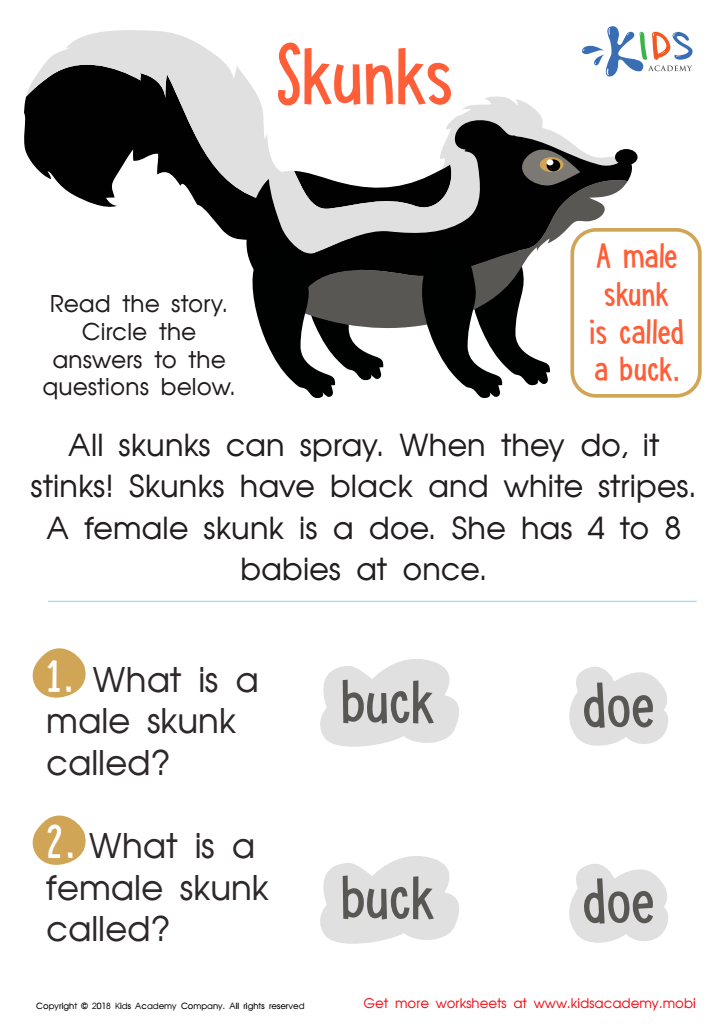
Skunks Worksheet
 Assign to My Students
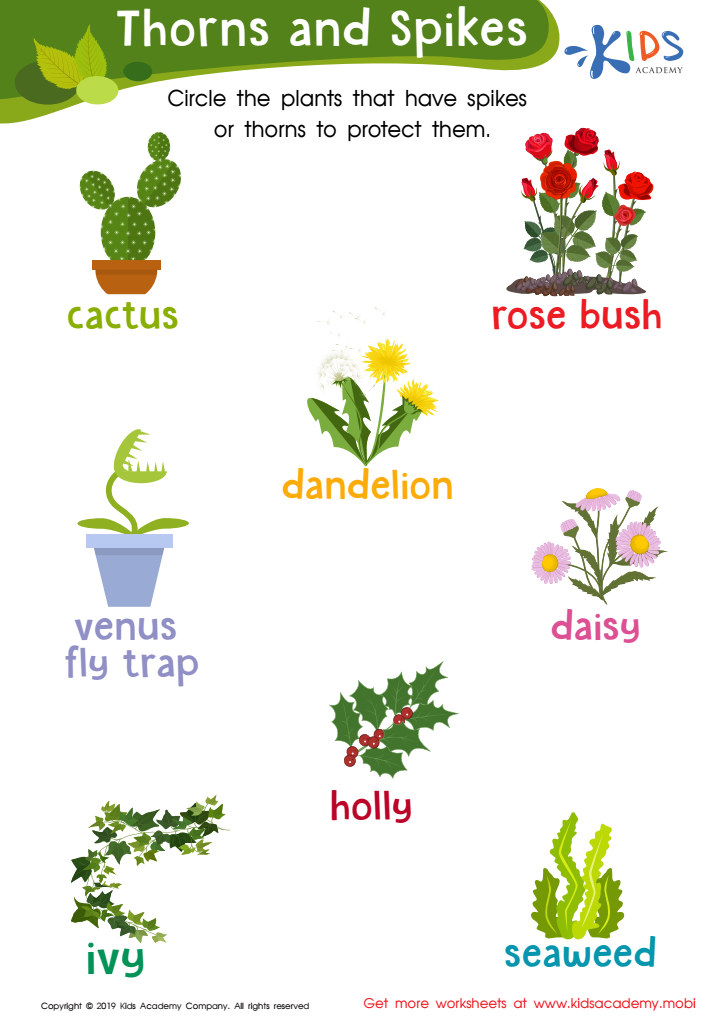
Thorns and Spikes Worksheet
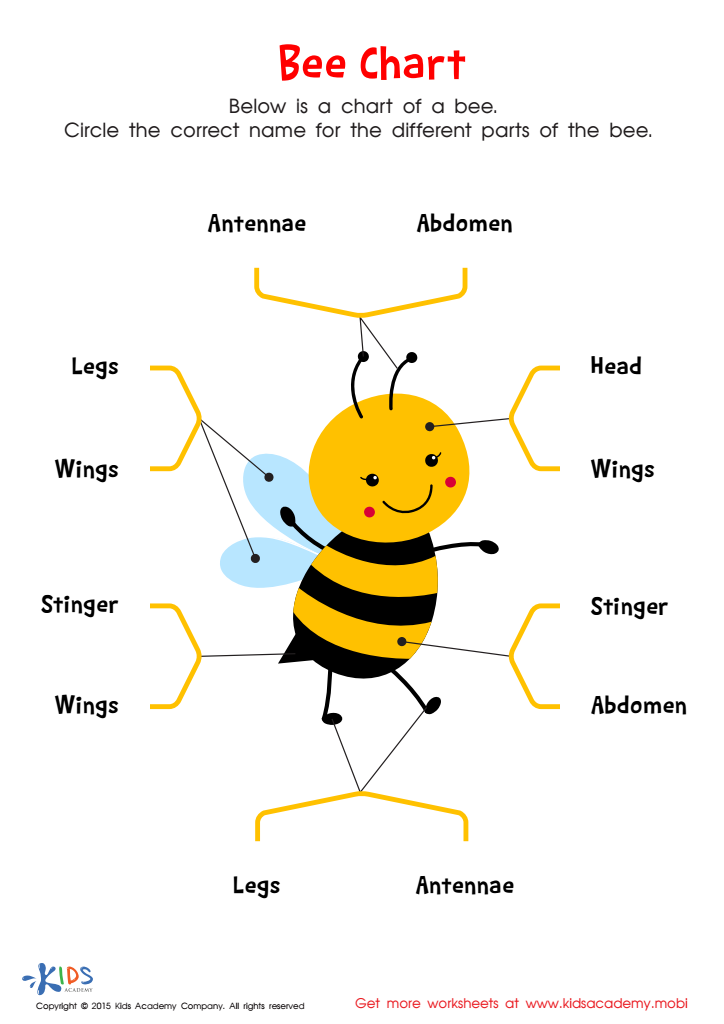
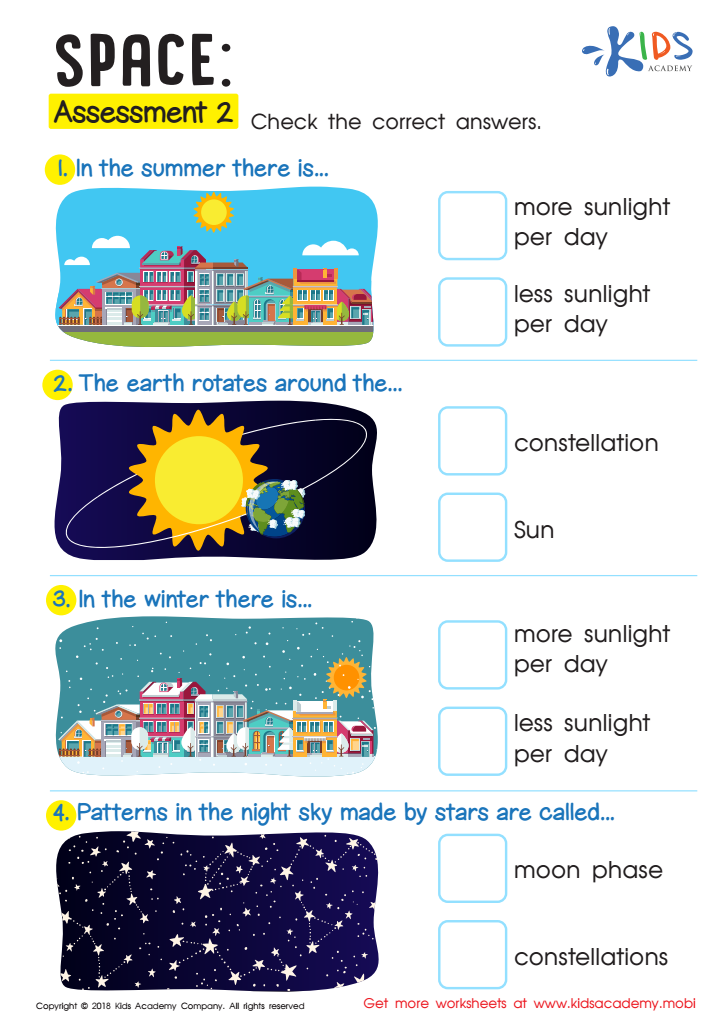
Space: Assessment 2 Worksheet








Parents and teachers should care about science knowledge for children aged 3-6 because early exposure to scientific concepts lays a foundational understanding of the world. At this young age, children are naturally curious and eager to explore, making it an ideal time to foster their scientific thinking. Engaging them in simple experiments and exploration encourages critical thinking, observation skills, and problem-solving abilities.
Science also promotes language development as children learn vocabulary related to their observations and experiences. For instance, discussing the properties of materials or the behavior of animals enriches their descriptive language skills. Additionally, science knowledge encourages creativity and imagination. When children learn to ask questions and seek answers, they develop an innovative mindset essential for future learning.
Moreover, integrating science into early education supports the development of lifelong learning habits. It helps instill a sense of wonder and inquiry, encouraging them to explore and make connections beyond the classroom. Education in science at an early age prepares children for success in various subjects as they grow, promoting a well-rounded education. Ultimately, nurturing a child's understanding of science during these formative years empowers them to become inquisitive and informed individuals in an increasingly complex world.








