Sound Association Normal Worksheets for Ages 3-6 - Page 2
27 filtered results
-
From - To
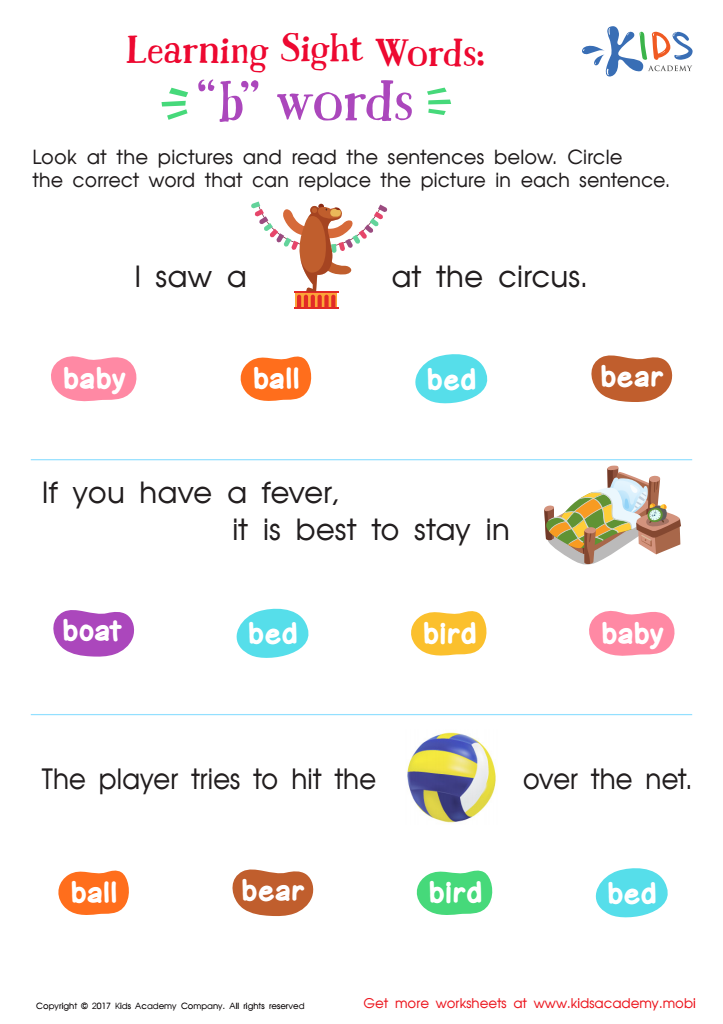
"B" Words Printable Sight Words Worksheet
 Assign to My Students
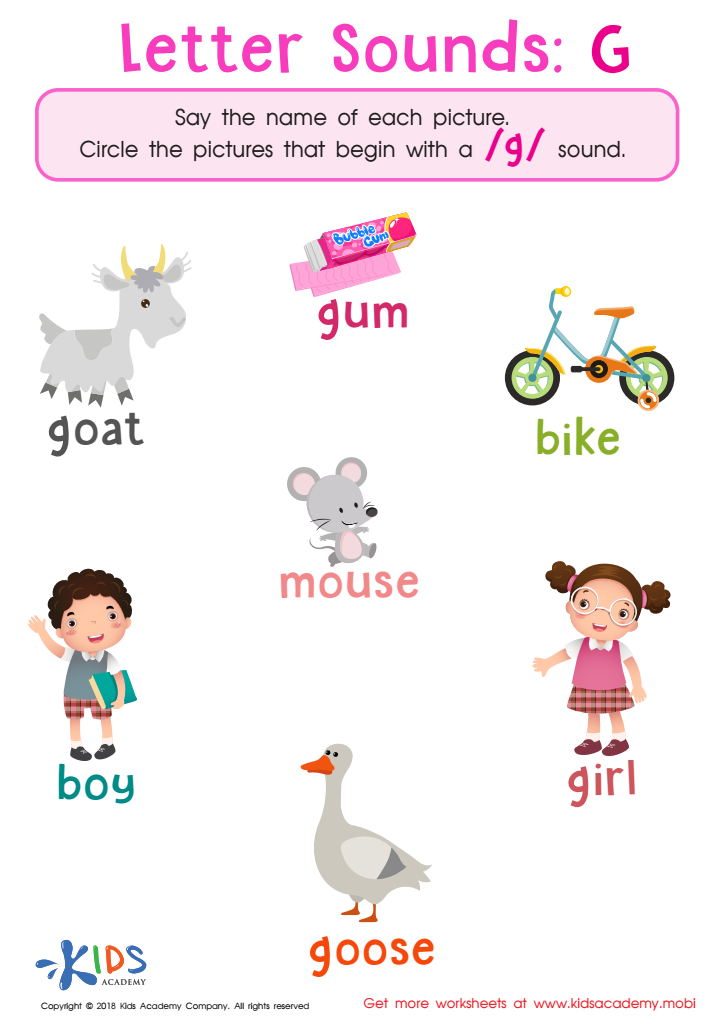
Letter G Sounds Worksheet
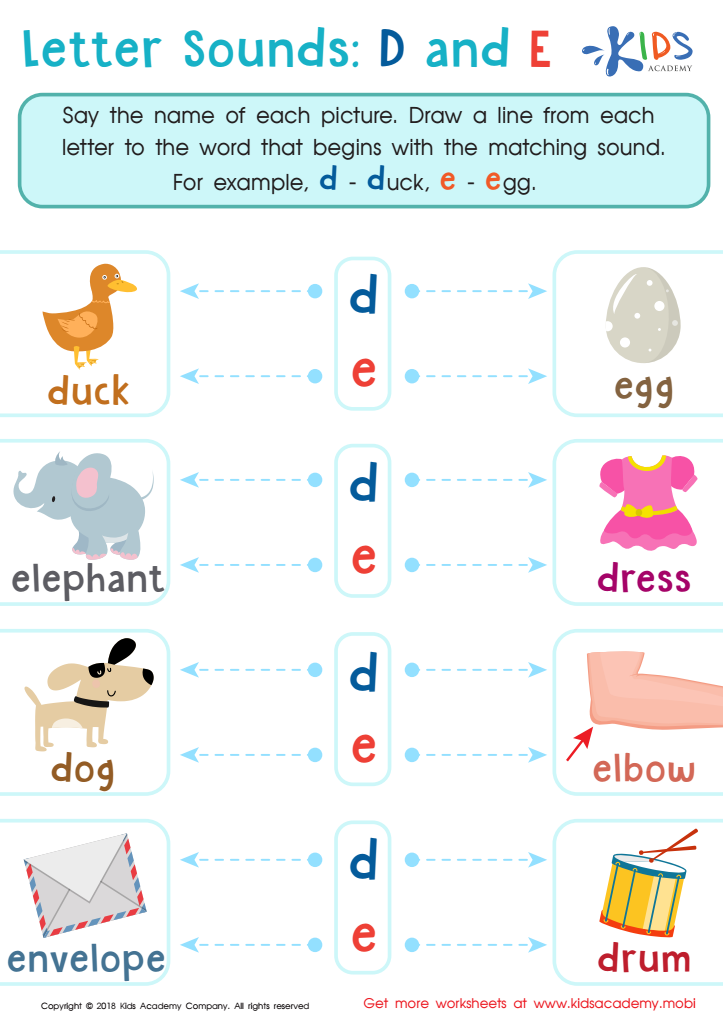
Letter D and E Sounds Worksheet







Sound Association Normal (SAN) is crucial for children aged 3-6 as it lays the foundation for literacy and communication skills. During this developmental stage, children are highly responsive to auditory stimuli, making it an ideal time for them to learn the associations between sounds and their corresponding letters or words.
Parents and teachers should care about SAN because it directly influences reading readiness. By encouraging sound recognition and linking sounds to letters, children enhance their phonemic awareness—a key predictor of future reading success. Activities like rhyming games, chanting, singing, and sound-matching games all stimulate children's ability to discern and manipulate sounds in language, enhancing their vocabulary and comprehension.
Moreover, a solid grasp of sound associations fosters children's confidence in their communication skills. When children can identify and produce sounds, they are better prepared to express their thoughts and needs verbally, which is essential for social interactions.
Additionally, a focus on SAN promotes cognitive development as it engages other areas of brain function, such as memory and auditory processing. By nurturing sound association during these formative years, parents and teachers are empowering children with essential skills that will benefit their educational journey and lifelong learning.








