Syllable identification Normal Worksheets for Ages 3-6
3 filtered results
-
From - To
Explore our engaging Syllable Identification Normal Worksheets designed for children aged 3-6! These interactive and fun worksheets help young learners develop essential phonemic awareness by breaking down words into syllables. Each activity is crafted to spark creativity and enhance cognitive skills while making learning enjoyable. Perfect for parents and teachers alike, our printable resources support early literacy development and boost confidence in language skills. With various activities including coloring, matching, and counting syllables, your child will master this key building block of reading. Get started today and watch your little ones thrive in their language journey!
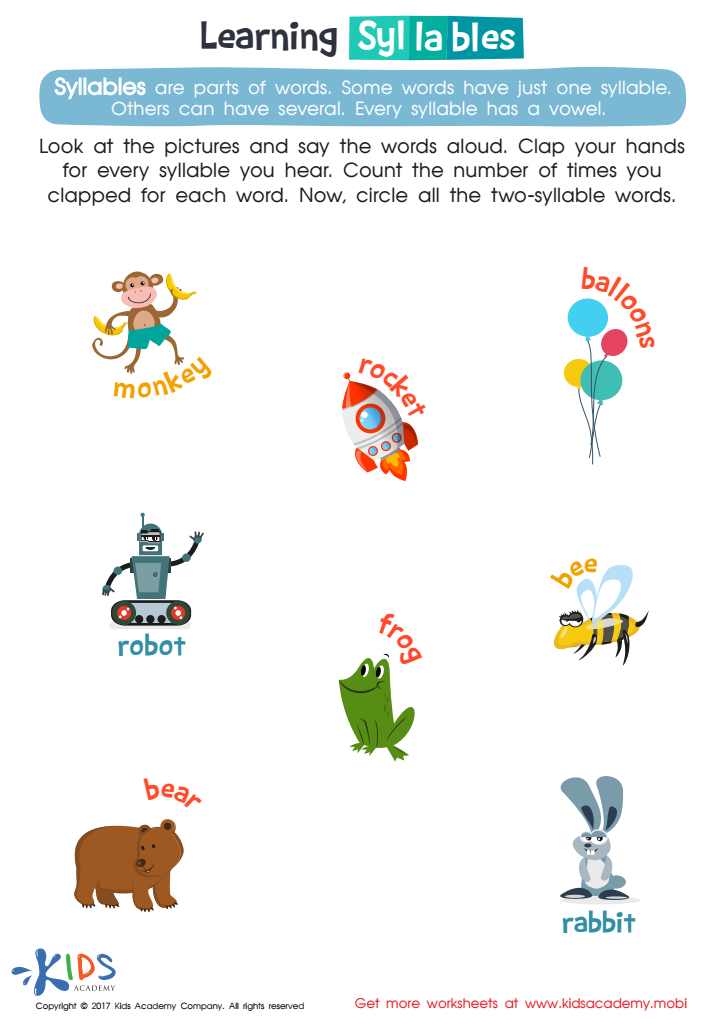
Learning Syllables Word Structure Worksheet
 Assign to My Students
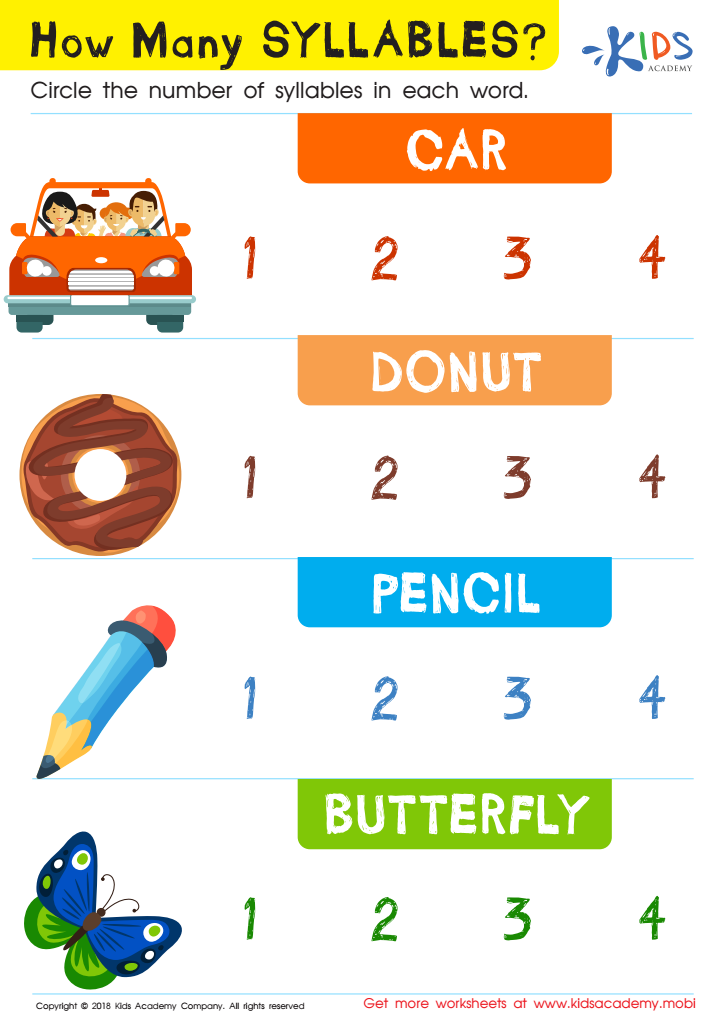
How Many Syllables? Worksheet
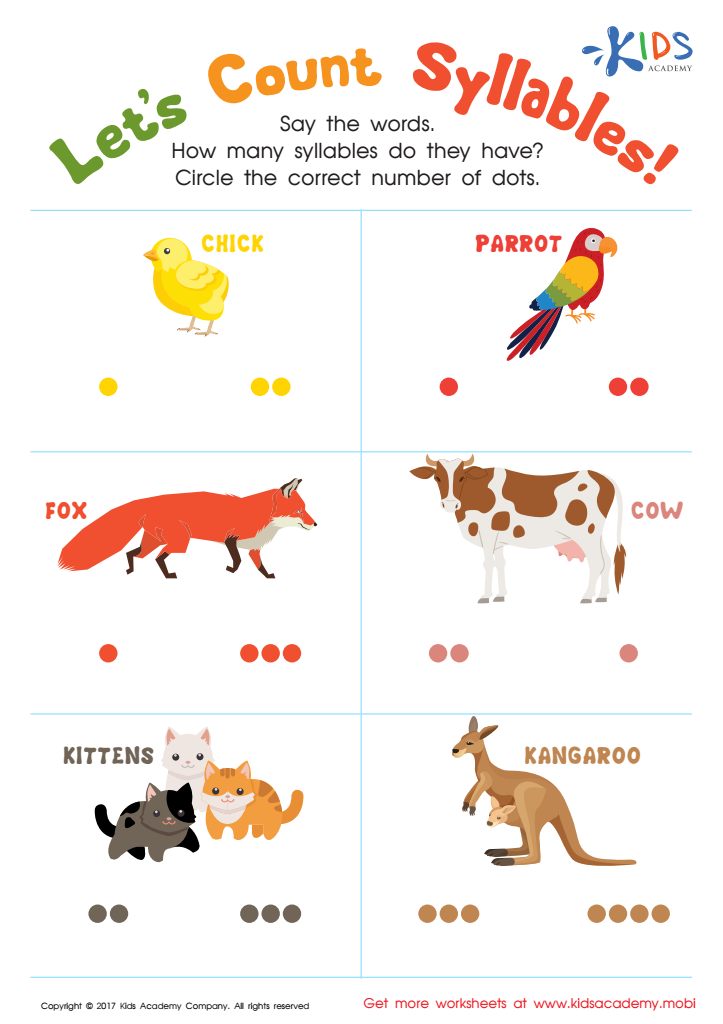
Lets Count Syllables Worksheet





Syllable identification is a crucial skill for early literacy development in children aged 3-6. It serves as a foundational element for reading and writing, aiding in phonological awareness, which is essential for recognizing words and constructing sentences. Teaching children to identify syllables helps them break words into manageable parts, making it easier to decode unfamiliar words and eventually contribute to their spelling skills.
Parents and teachers should care about this skill because it enhances children's language development and auditory skills, providing them with a strong basis for future academic success. Syllable recognition fosters improved vocabulary and comprehension, enabling young learners to engage more fully with reading materials.
Additionally, activities that emphasize syllable identification can make learning fun and interactive, reinforcing family bonding or strengthening teacher-parent connections. As children play games that involve clapping or tapping out syllables, they not only learn but also cultivate a love for language and storytelling. Supporting children in mastering syllable identification aligns with educational goals and helps prepare them for a more complex understanding of language as they progress through school, making it a critical area for both parents and educators to prioritize.








