Understanding prepositions Normal Worksheets for Ages 3-6
5 filtered results
-
From - To
Introduce young learners to the essential concept of prepositions with our engaging Normal Worksheets designed for ages 3-6. These colorful, interactive exercises help children grasp prepositional phrases through fun activities that reinforce their understanding of spatial relationships. Each worksheet encourages hands-on learning, allowing kids to connect words with pictures and real-world objects. Perfect for both classroom and at-home learning, our worksheets promote vocabulary development and critical thinking skills. Support your child’s early literacy journey as they explore words like "under," "over," and "beside" through play-based learning. Start enhancing your child’s communication skills today with our captivating preposition worksheets!
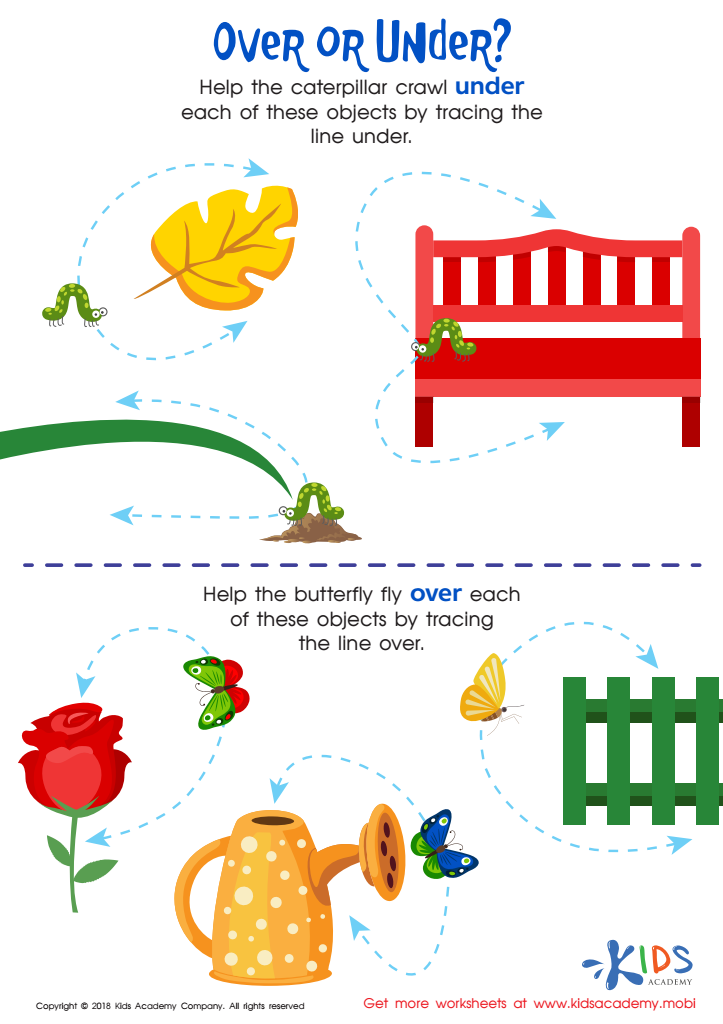
Over or Under? Worksheet
 Assign to My Students
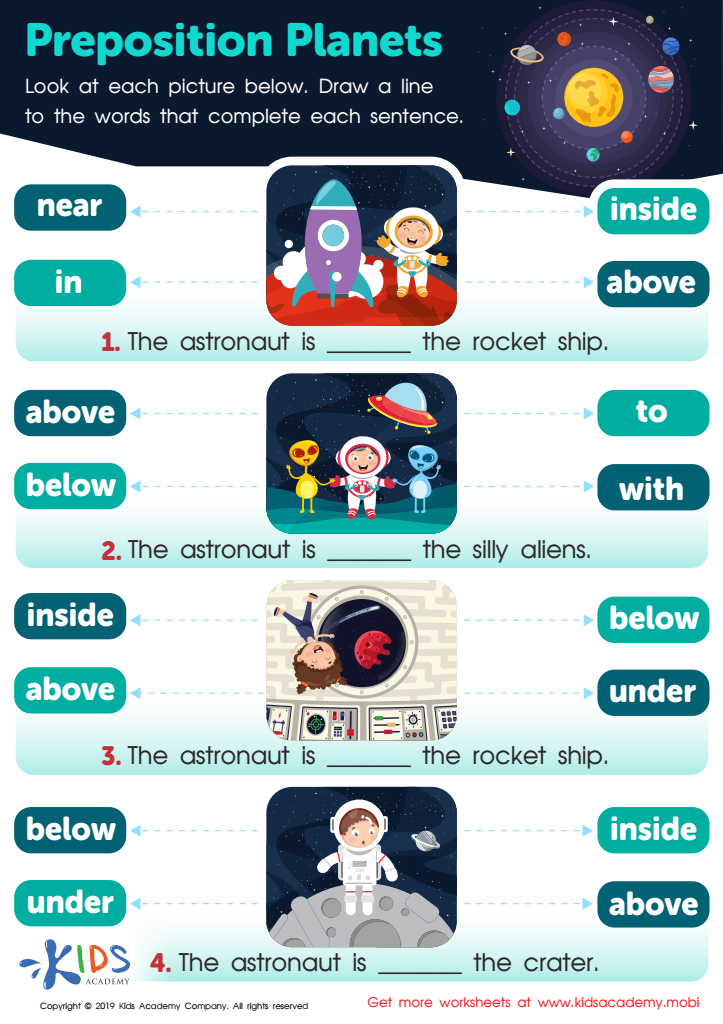
Preposition Planets Worksheet
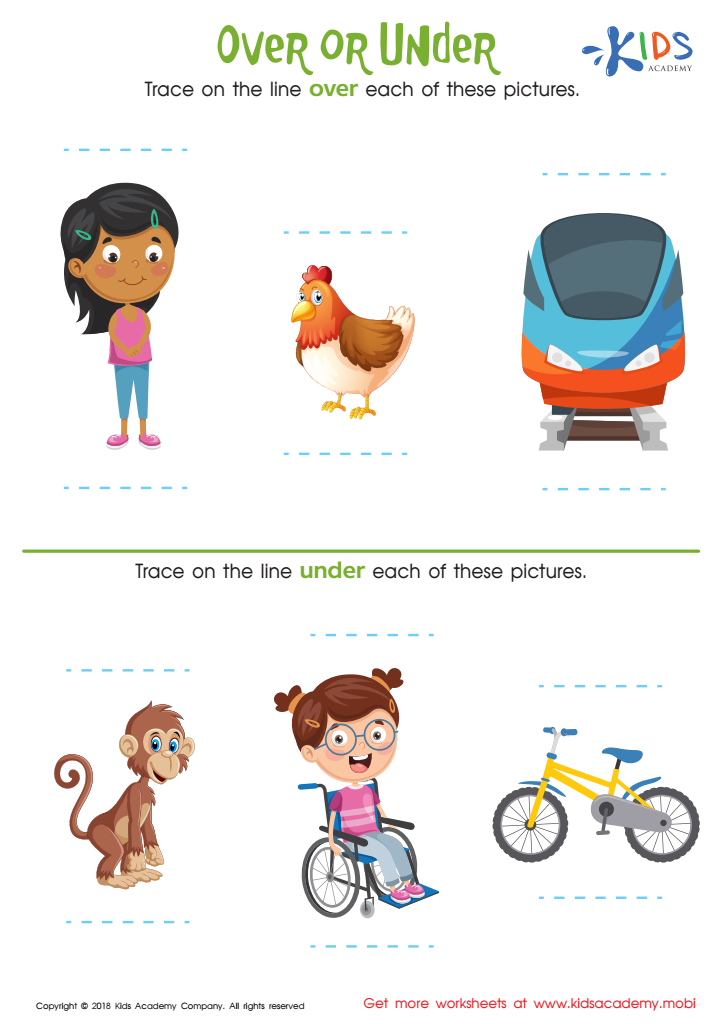
Over or Under Worksheet
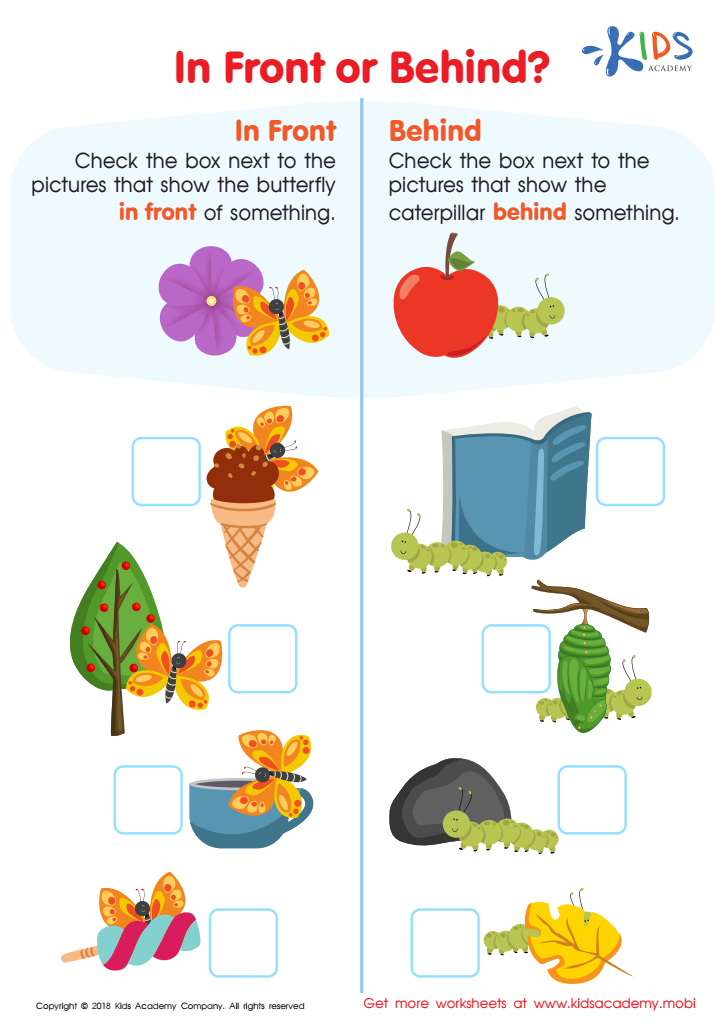
In Front or Behind Worksheet
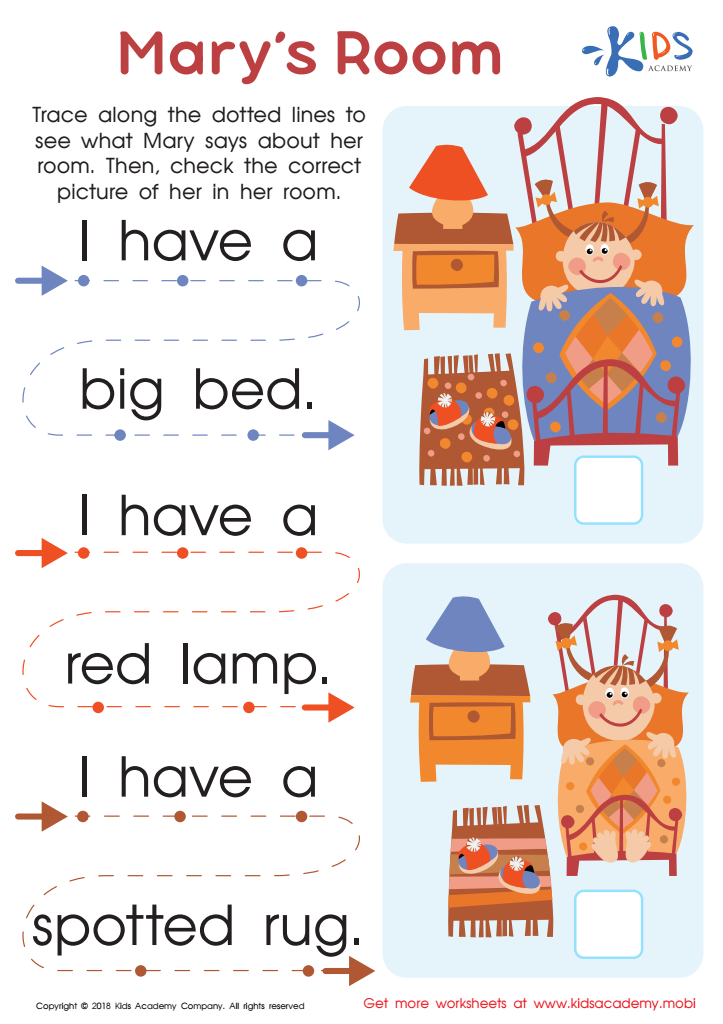
Mary's Room Worksheet






Understanding prepositions is essential for children aged 3-6 as it lays a critical foundation for language development and effective communication. Prepositions help children describe relationships between objects and ideas, promoting clear expression. For instance, saying "the cat is under the table" not only enhances vocabulary but also encourages spatial awareness and critical thinking.
Cognitively, mastering prepositions aids in following directions, which is vital for academic success. When children understand phrases like “next to” or “behind,” they can better interpret instructions given in classroom settings, leading to improved cooperation in group activities.
From a social-emotional perspective, understanding prepositions helps children articulate their feelings and experiences more clearly. When they can explain their surroundings and locations, children feel more confident in participating in conversations and playing with peers, thereby boosting their social skills.
For teachers and parents, introducing prepositions through interactive activities, storytelling, and real-life examples becomes a valuable tool in nurturing communication skills. Engaging with prepositions early can elevate a child's educational experience and set the stage for future academic achievement, making it crucial for educators and caregivers to prioritize this aspect of language learning.








