Uppercase identification Normal Worksheets for Ages 3-6
5 filtered results
-
From - To
Introduce your child to the exciting world of uppercase letters with our engaging Uppercase Identification Normal Worksheets, designed for children ages 3-6. These worksheets are tailored to build foundational literacy skills, helping young learners recognize and identify uppercase letters through enjoyable, interactive activities. Ideal for preschool and kindergarten students, each worksheet combines vibrant imagery and educational tasks to keep your child motivated and interested. Boost their confidence and prepare them for future reading success with our fun-filled, expertly crafted uppercase identification worksheets. Perfect for classroom use or home learning, these resources make early literacy development a joyful adventure!
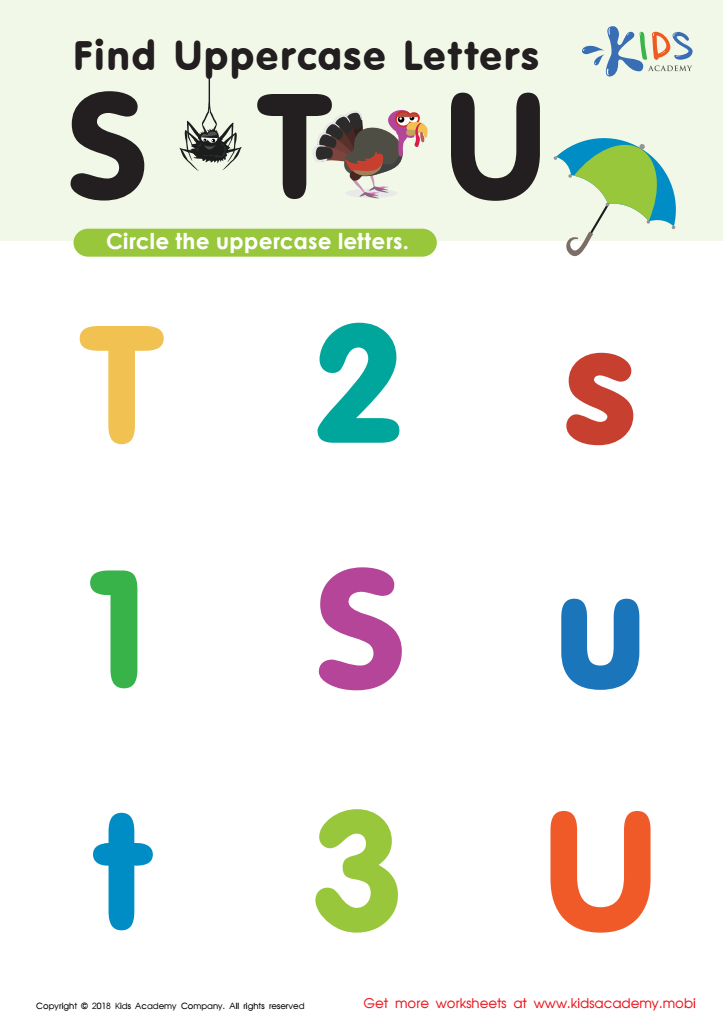
Find Uppercase Letters Worksheet
 Assign to My Students
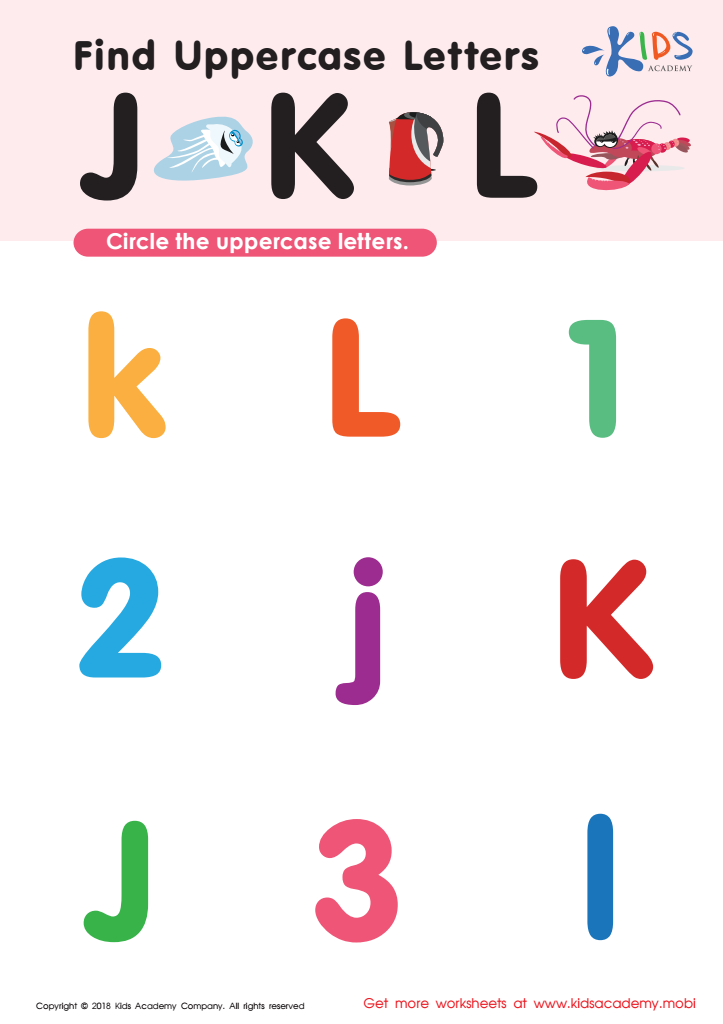
Find Uppercase Letters J, K, and L Worksheet
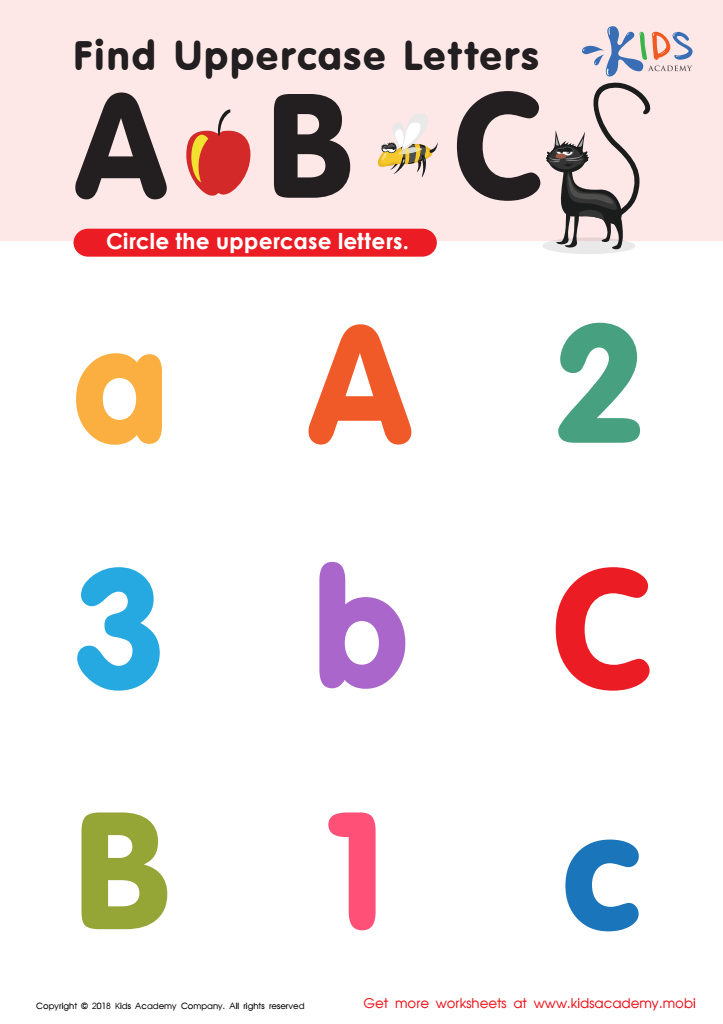
Find Uppercase Letters A, B, and C Worksheet
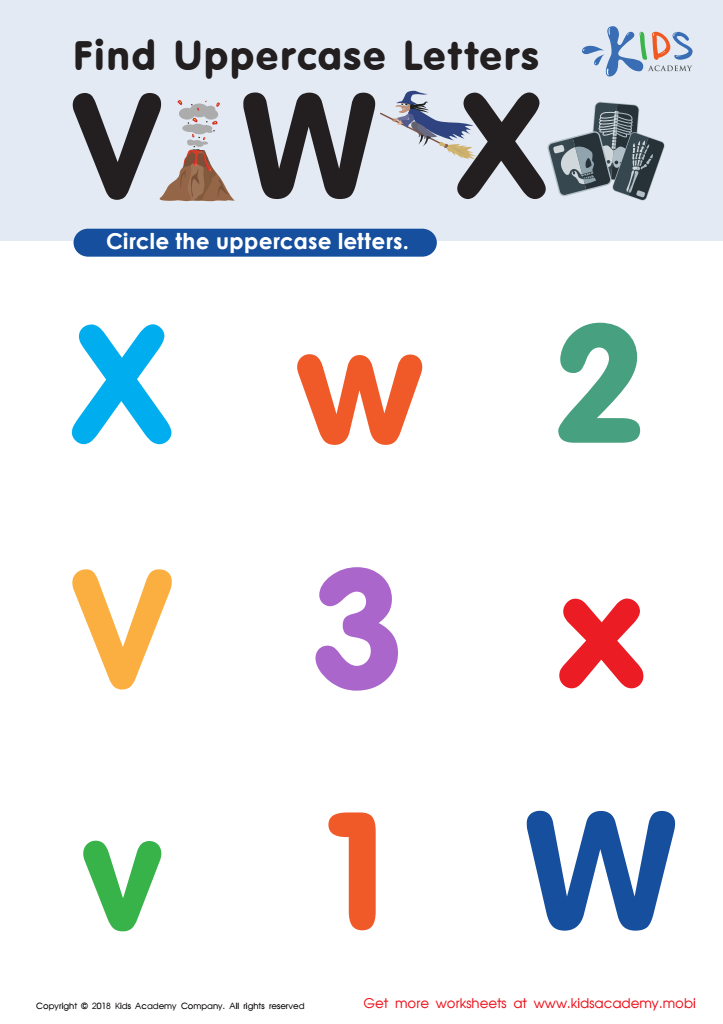
Find Uppercase Letters V, W, X Worksheet
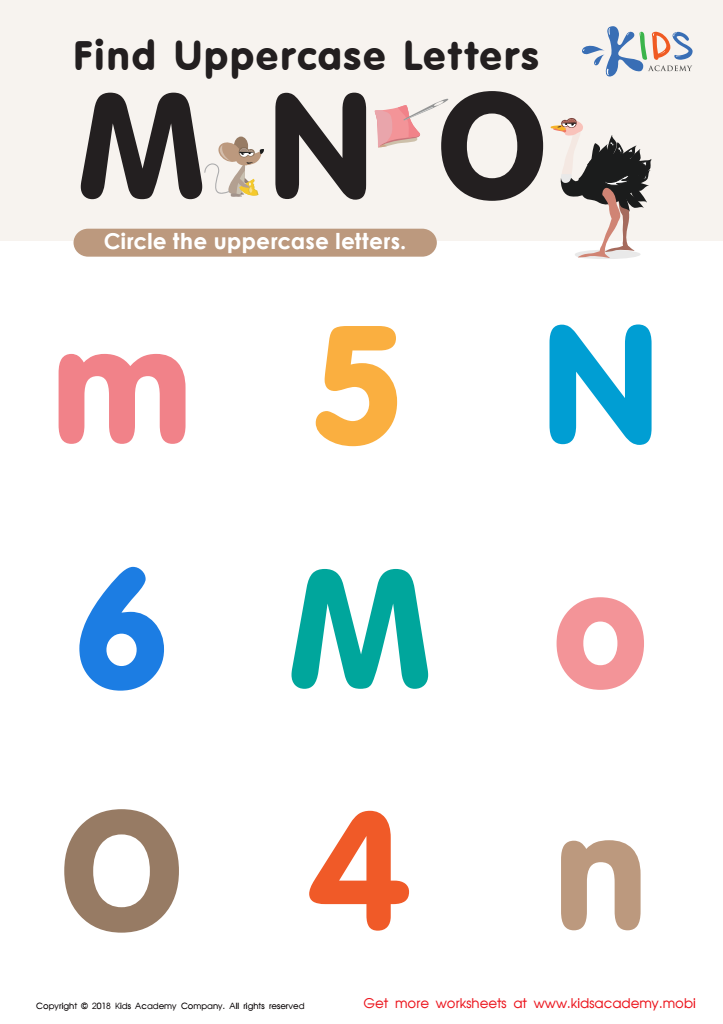
Find Uppercase Letters M, N, and O Worksheet








Uppercase identification for children aged 3-6 is crucial because it forms the foundation of their literacy skills. At this stage, children are in the early stages of language development and are beginning to recognize the alphabet, a key step towards reading and writing. Understanding uppercase letters can significantly boost a child's confidence and interest in learning.
For parents, caring about this skill means providing their children with the tools they need to succeed academically and in everyday communication. Studies show that early literacy skills are closely linked to later academic achievement, making early identification vital. Activities that highlight uppercase letters — such as reading books, playing letter games, and using alphabet toys — make learning fun and engaging while building essential cognitive skills.
For teachers, focusing on uppercase identification allows for a structured approach to literacy education. It sets a clear objective for students, ensuring they have a solid grasp of letters before moving on to more complex concepts like lowercase letters and phonetics. This method also assists teachers in identifying any early learning difficulties, allowing for timely intervention.
Overall, the ability to identify uppercase letters is more than just a milestone; it's a stepping stone for a child's entire educational journey, laying down the necessary groundwork for lifelong learning.








