Visual discrimination skills Normal Worksheets for Ages 3-6
5 filtered results
-
From - To
Boost your child's cognitive development with our engaging Visual Discrimination Skills Worksheets, perfect for ages 3-6. These carefully designed activities help young learners enhance their ability to identify differences and similarities in shapes, colors, and patterns, essential for reading and math readiness. Our fun, interactive resources make honing visual perception skills enjoyable, improving focus and attention to detail. Tailored to fit early childhood learning styles, these worksheets gradually build complexity, ensuring your child progresses confidently. Give your preschooler a head start in recognizing and differentiating visual cues with Kids Academy’s expertly crafted materials. Explore now and make learning exciting!
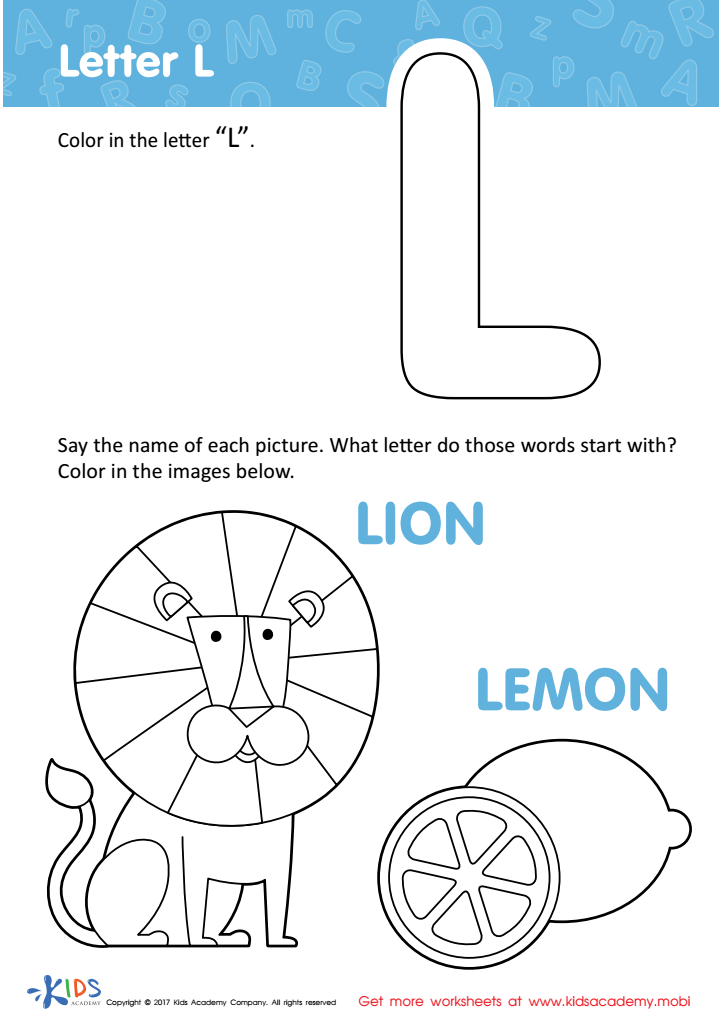
Letter L Coloring Sheet
 Assign to My Students
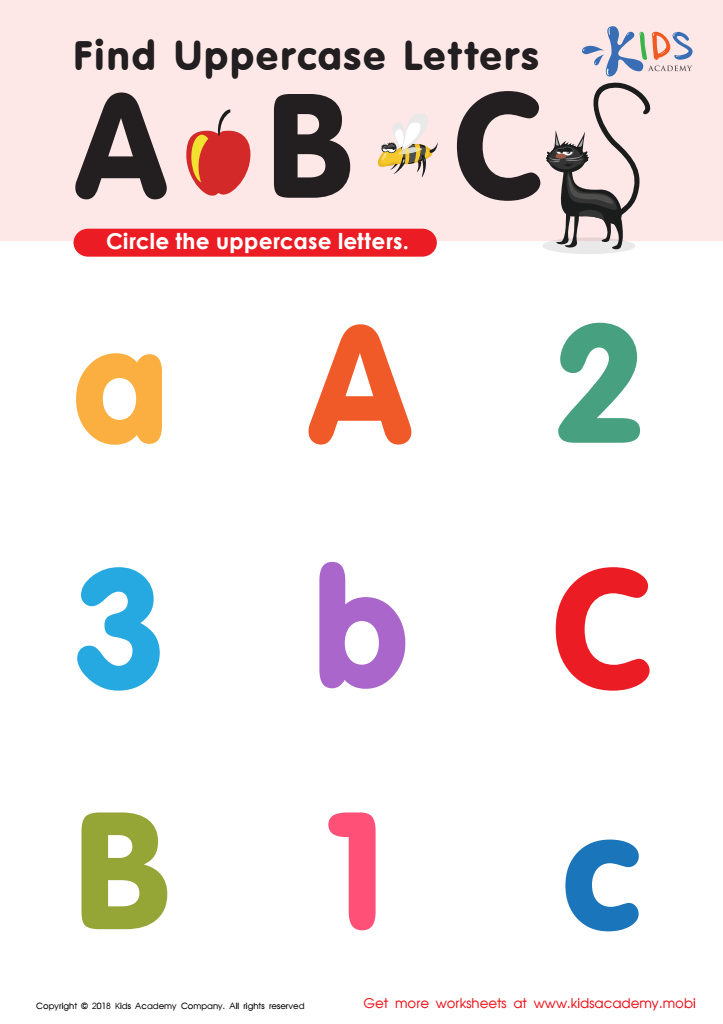
Find Uppercase Letters A, B, and C Worksheet
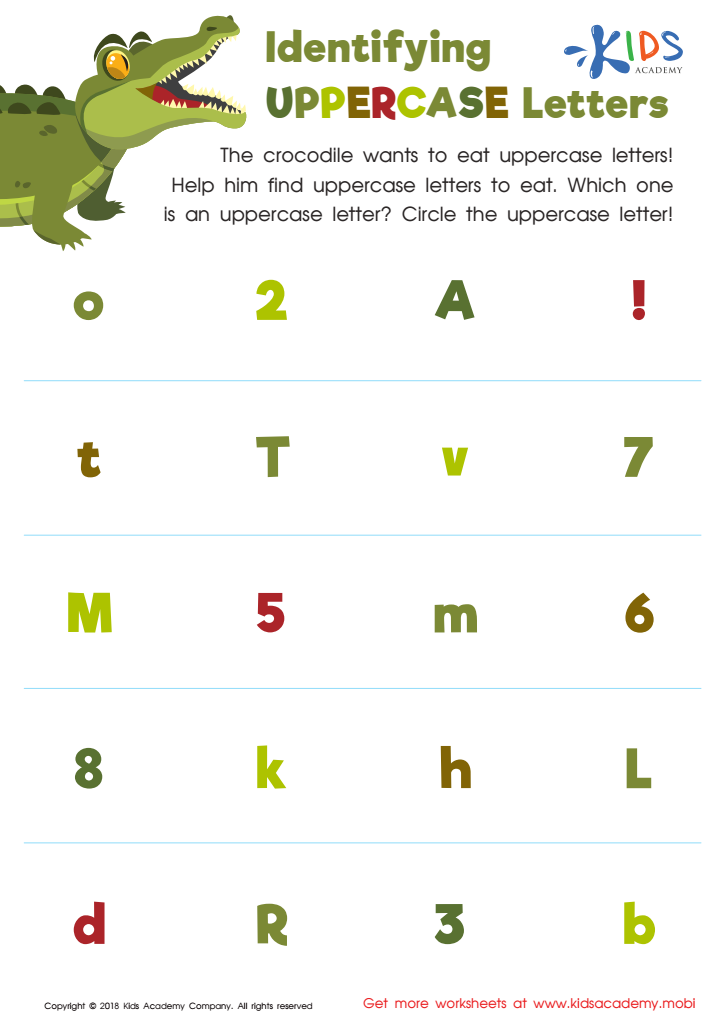
Identifying Uppercase Letters Worksheet
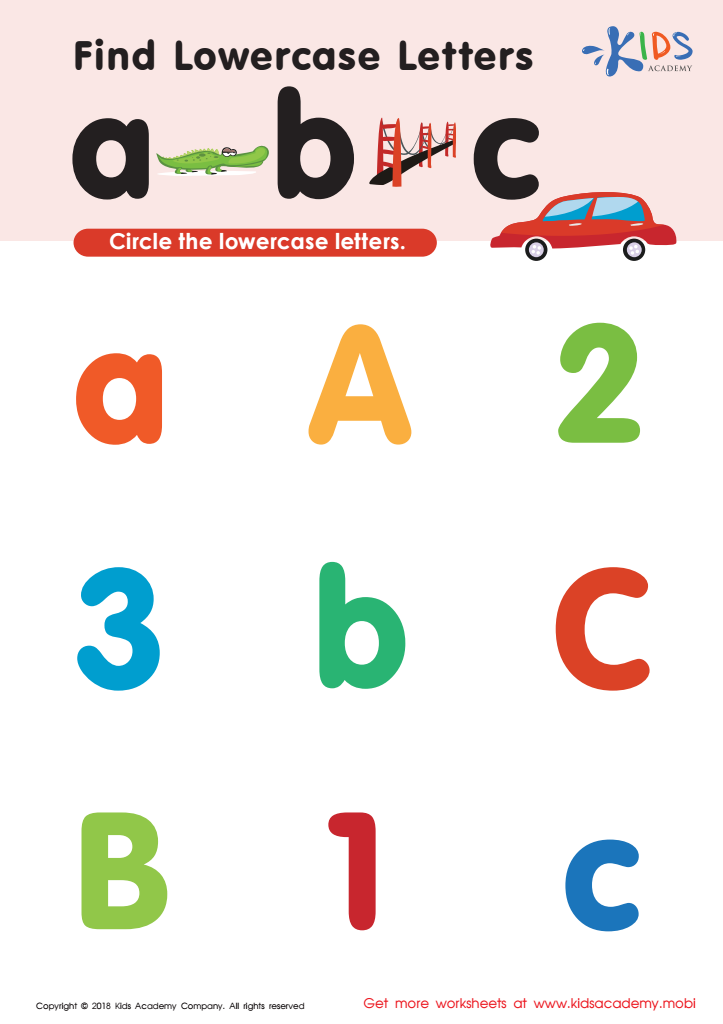
Find lowercase letters a b c Worksheet
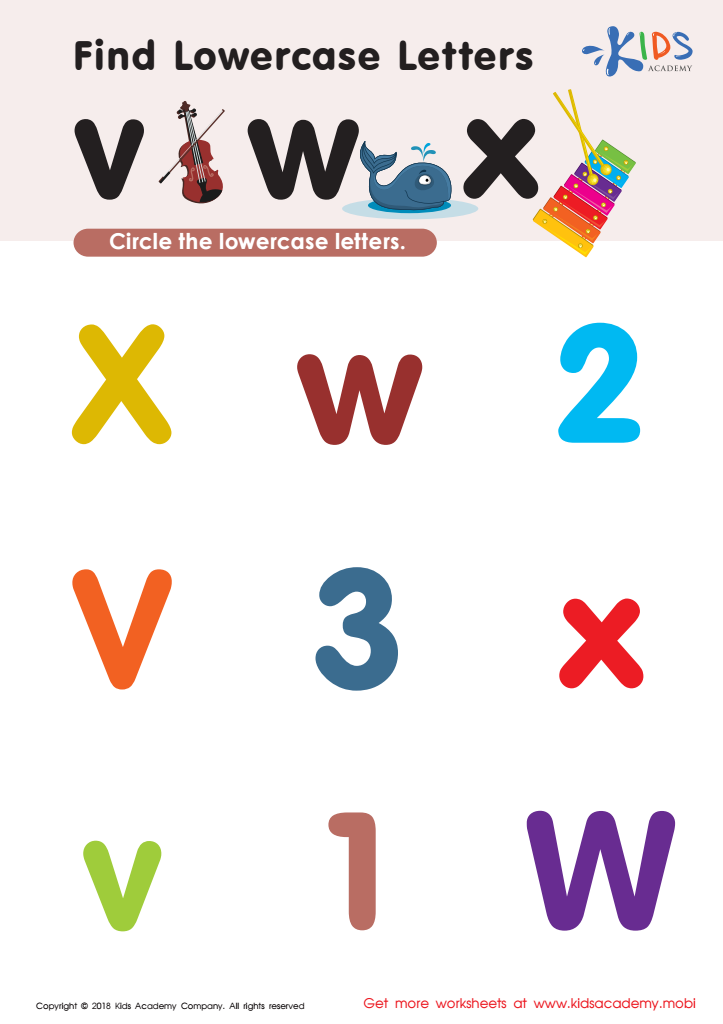
Find Lowercase Letters v w x Worksheet







Visual discrimination skills refer to the ability to recognize details in visual images, and they are crucial for children aged 3-6 because they lay the groundwork for many academic and everyday tasks. Proficient visual discrimination allows children to differentiate between letters, numbers, shapes, and patterns, which are essential skills for reading and mathematics.
At this age, children's brains are developing rapidly, making it an ideal time to hone these skills. If a child cannot distinguish between similar letters like "b" and "d" or "p" and "q," it can impede their reading and writing progress. Similarly, understanding the difference between visually similar numbers such as "6" and "9" is fundamental in numeracy.
In addition to academic benefits, visual discrimination skills are vital for daily activities such as identifying objects, navigating new environments, and even engaging in play. These skills help children interpret non-verbal cues, recognize familiar faces, and understand safety signals, contributing to their social and emotional development.
Parents and teachers should nurture these skills by providing activities like sorting games, puzzles, and matching exercises, which make learning both fun and effective. Early attention to visual discrimination can lead to greater confidence and academic success, ensuring a smoother transition into formal schooling.








