Pattern recognition Normal 2D Shapes Worksheets for Ages 3-6
3 filtered results
-
From - To
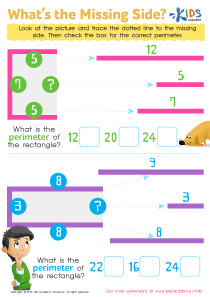
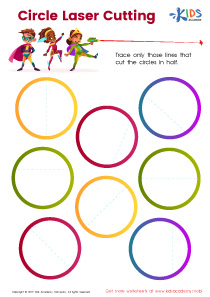
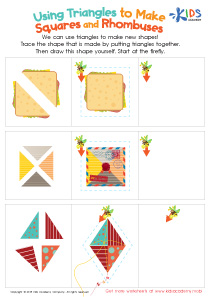
Unlock your child's mathematical potential with our engaging Pattern Recognition Normal 2D Shapes Worksheets, designed for ages 3-6. These fun and interactive worksheets help young learners identify and understand basic shapes, fostering critical thinking skills and enhancing visual perception. Through colorful illustrations and age-appropriate activities, children will explore patterns within 2D shapes, promoting early math skills in a playful way. Whether at home or in the classroom, these resources create a joyful learning experience. Empower your little ones to recognize, draw, and match shapes while building a strong foundational understanding of patterns. Download our worksheets today and watch their confidence grow!
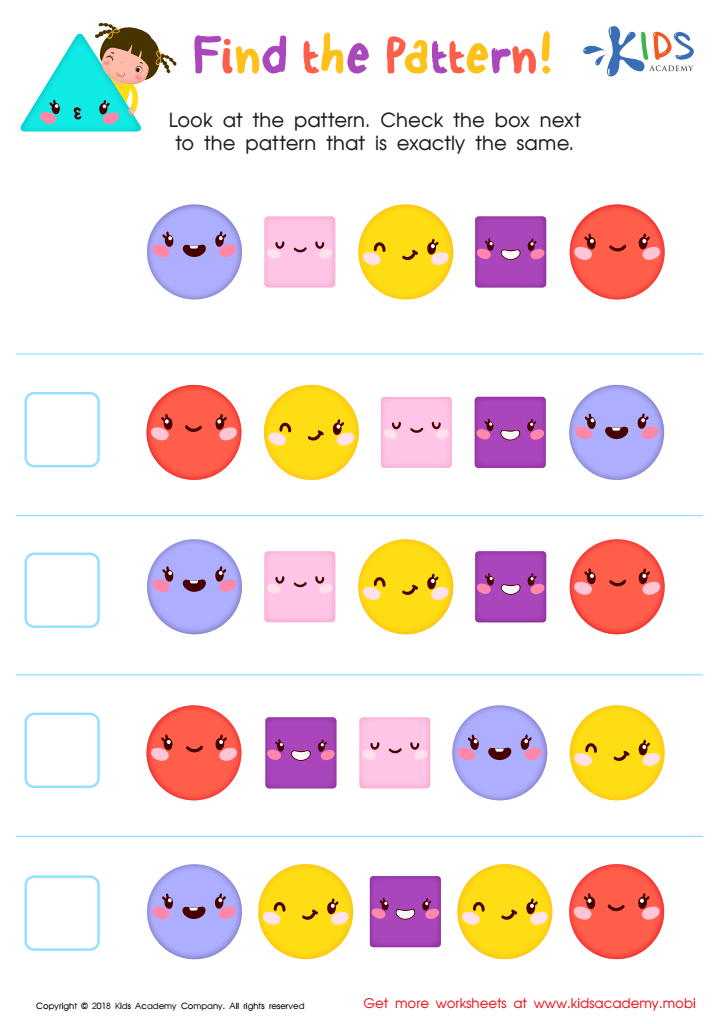
Find the Pattern Worksheet
 Assign to My Students











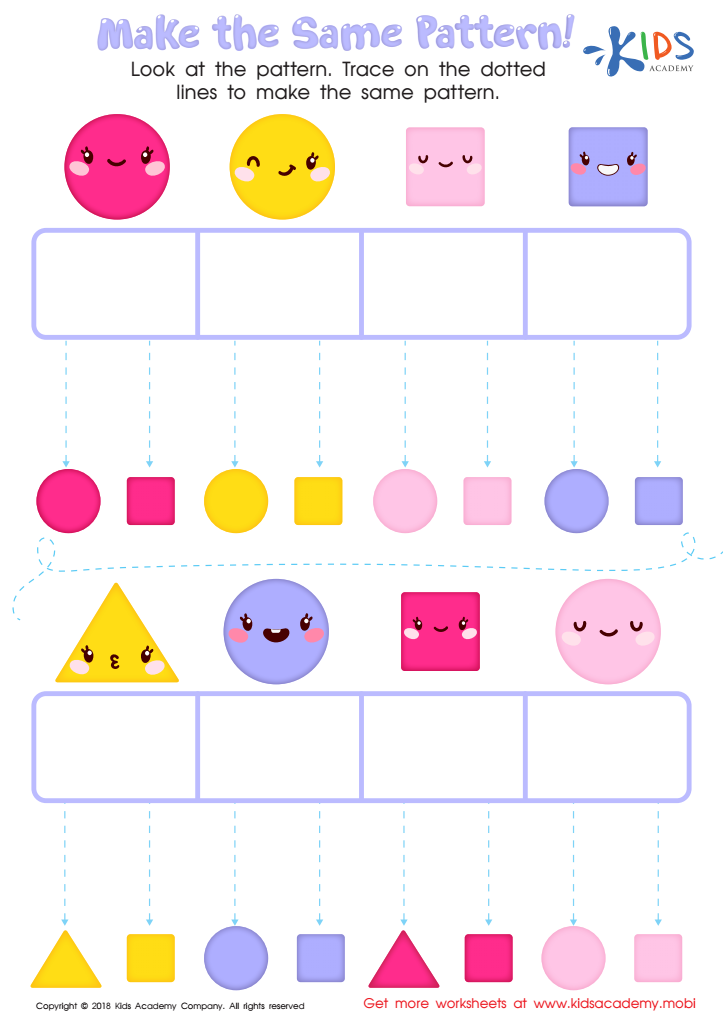
Make the Same Pattern Worksheet
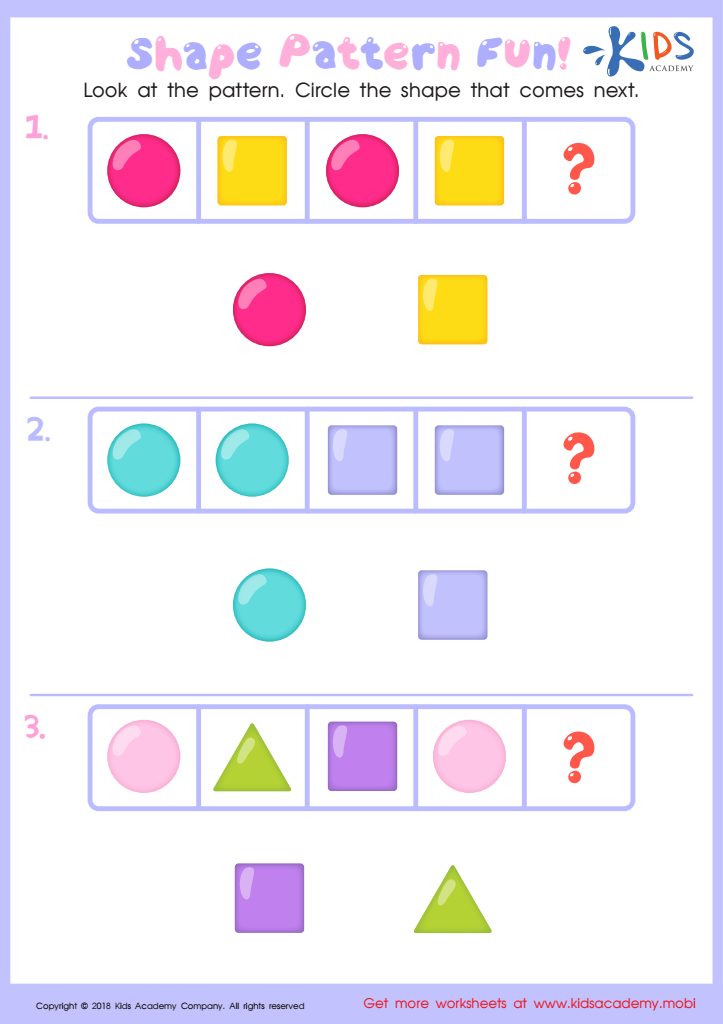
Shape Pattern Fun Worksheet








Pattern recognition and the understanding of normal 2D shapes play a crucial role in the cognitive development of children aged 3-6. At this stage, kids are naturally curious and eager to learn, making it an ideal time to introduce these foundational concepts. Recognizing patterns helps children develop critical thinking and problem-solving skills as they learn to identify relationships, sequencing, and predict outcomes based on familiar structures.
Moreover, mastering normal 2D shapes—such as circles, squares, and triangles—enables children to build their spatial awareness, essential for everyday activities like organizing objects, navigating spaces, and understanding geometry in later education. Activities involving 2D shapes also promote fine motor skills through tracing, cutting, and constructing, fostering hand-eye coordination.
Fostering early pattern recognition and shape understanding lays a strong foundation for mathematics and literacy development. It can enhance counting skills and prepare children for more advanced concepts that they will encounter in elementary school. By engaging in fun, shape-based games or activities, parents and teachers can create a stimulating learning environment that nurtures curiosity and a love for learning while helping children develop essential skills they will use throughout their lives.