Critical Thinking Normal Addition & Subtraction Worksheets for Ages 3-6
4 filtered results
-
From - To
Enhance your child’s early math skills with our "Critical Thinking Normal Addition & Subtraction Worksheets" designed for ages 3-6. These engaging worksheets spark curiosity and develop analytical abilities while teaching foundational arithmetic. Featuring colorful visuals and interactive problems, children can practice and apply addition and subtraction concepts in fun, creative ways. Our activities are crafted to promote critical thinking, enabling young learners to explore different strategies and solutions. Perfect for parents and teachers, these resources instill confidence and lay a strong groundwork for future math success. Get started today to nurture your child’s math journey with excitement and enthusiasm!
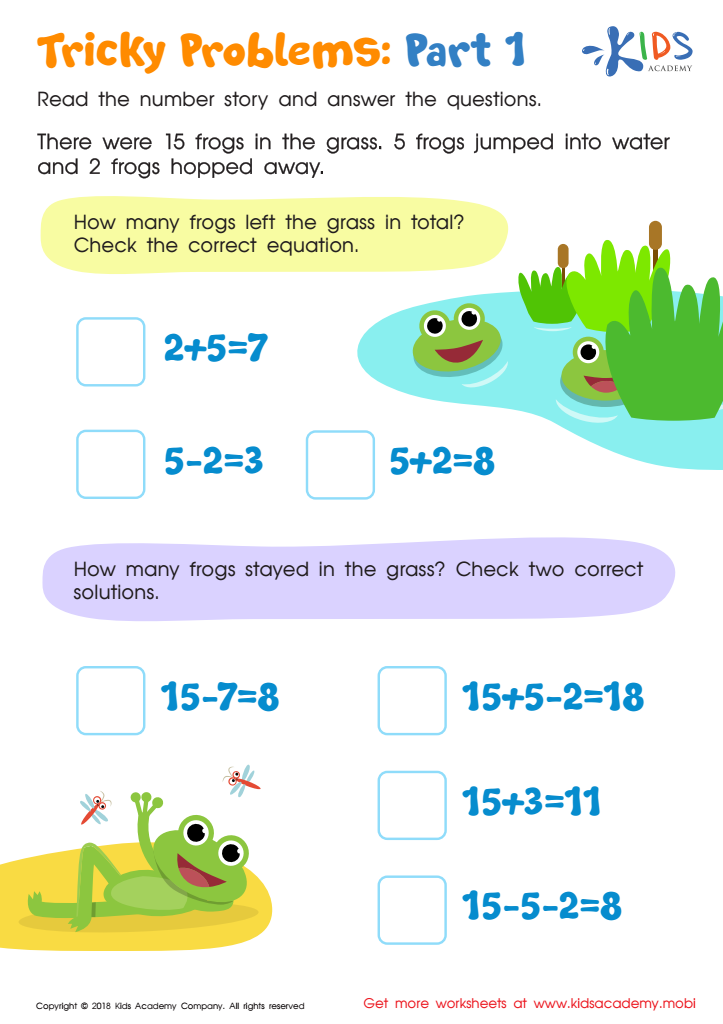
Tricky Problems Worksheet: Part 1
 Assign to My Students
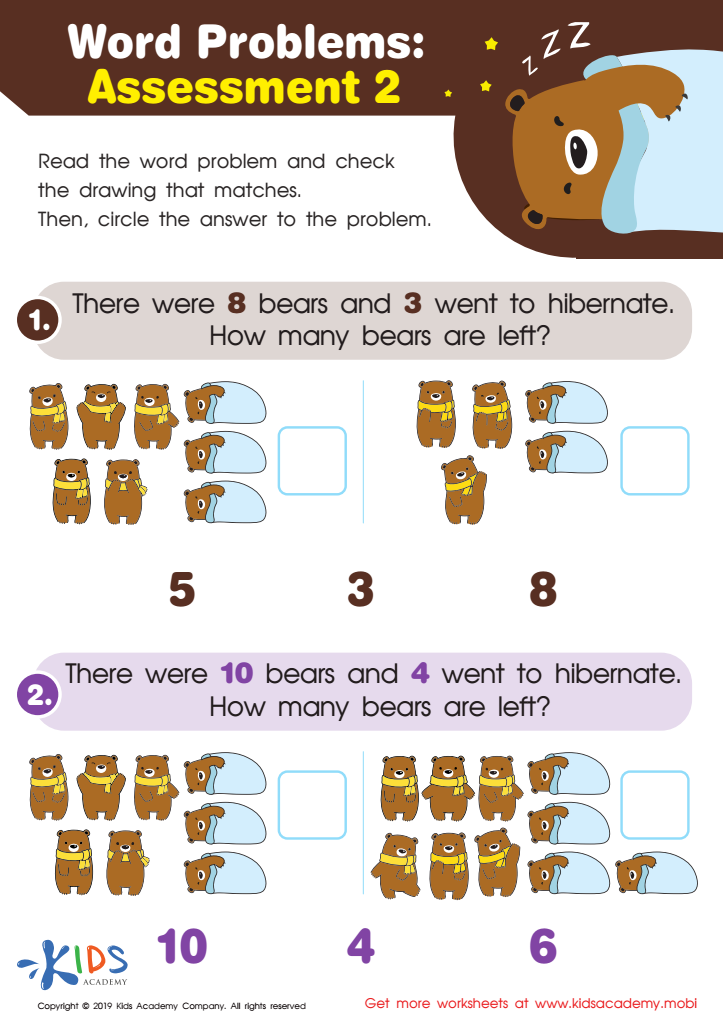
Word Problems: Assessment 2 Worksheet
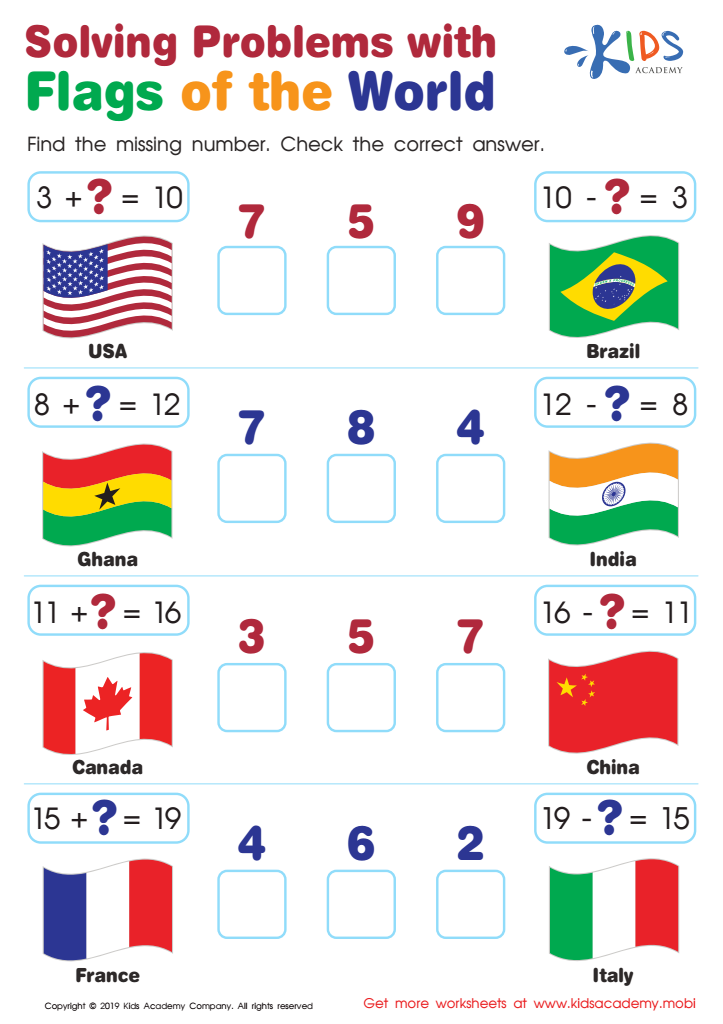
Solving Problems with Flags of the World Worksheet
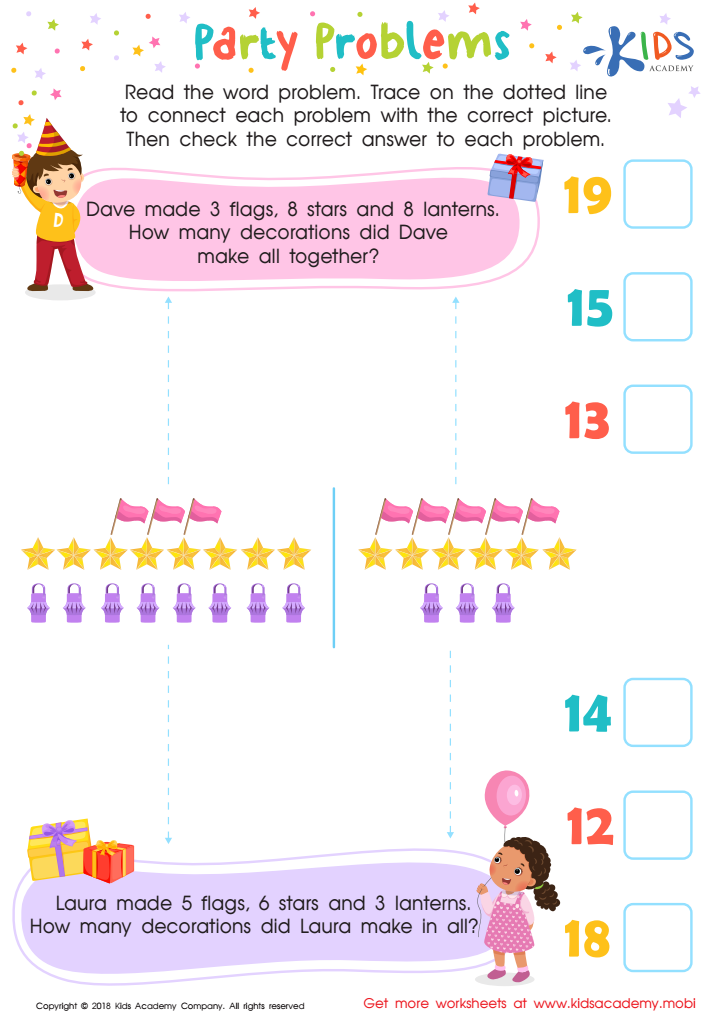
Party Problems Worksheet








Critical thinking skills are essential for young children, particularly in areas such as normal addition and subtraction. For parents and teachers of children aged 3-6, fostering these skills lays the foundation for mathematical understanding and problem-solving abilities that will serve children throughout their education and life.
Early introduction to critical thinking regarding basic math concepts nurtures children’s curiosity and promotes engagement with numbers in a meaningful way. At this age, children are capable of recognizing patterns, making predictions, and testing their ideas, so integrating fun, interactive activities that challenge their reasoning abilities can significantly enhance their cognitive development.
Additionally, building strong critical-thinking skills in mathematics helps children make connections between concepts, allowing them to understand not only how to perform addition and subtraction but also why these operations are important. This comprehension cultivates a positive attitude towards math and reduces anxiety about the subject in later years.
Furthermore, parents and teachers who emphasize critical thinking encourage children to express their thoughts, discuss solutions, and explore multiple methods of problem-solving. As a result, children become independent learners who are confident in tackling challenges, which is integral to their overall development and future academic success.








