Fine Motor Skills Normal Addition Worksheets for Ages 3-6
3 filtered results
-
From - To
Enhance your child's fine motor skills and early math abilities with our engaging Normal Addition Worksheets designed for ages 3-6. These worksheets provide a fun and interactive way to introduce basic addition concepts while helping little hands develop coordination and control. Perfect for home or classroom use, each worksheet features colorful graphics and simple addition problems that captivate young learners. By practicing these exercises, children improve not only their math skills but also their dexterity and concentration. Download and print our Worksheets today to make learning math a delightful experience for your little ones!

18 Candles Worksheet
 Assign to My Students
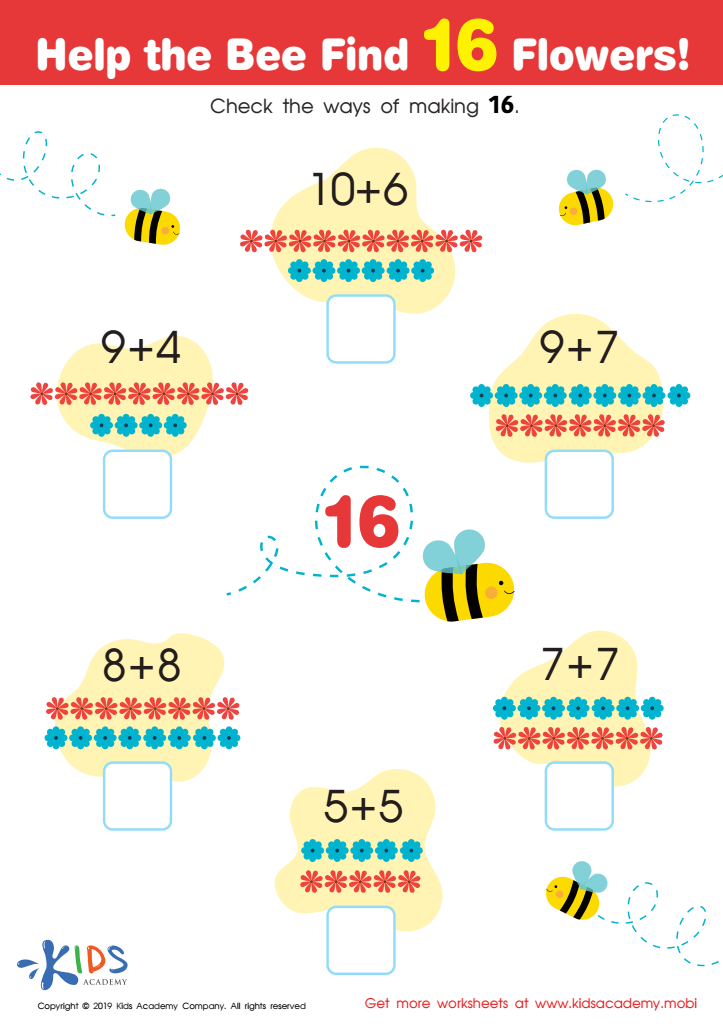
Help the Bee Find 16 Flowers Worksheet
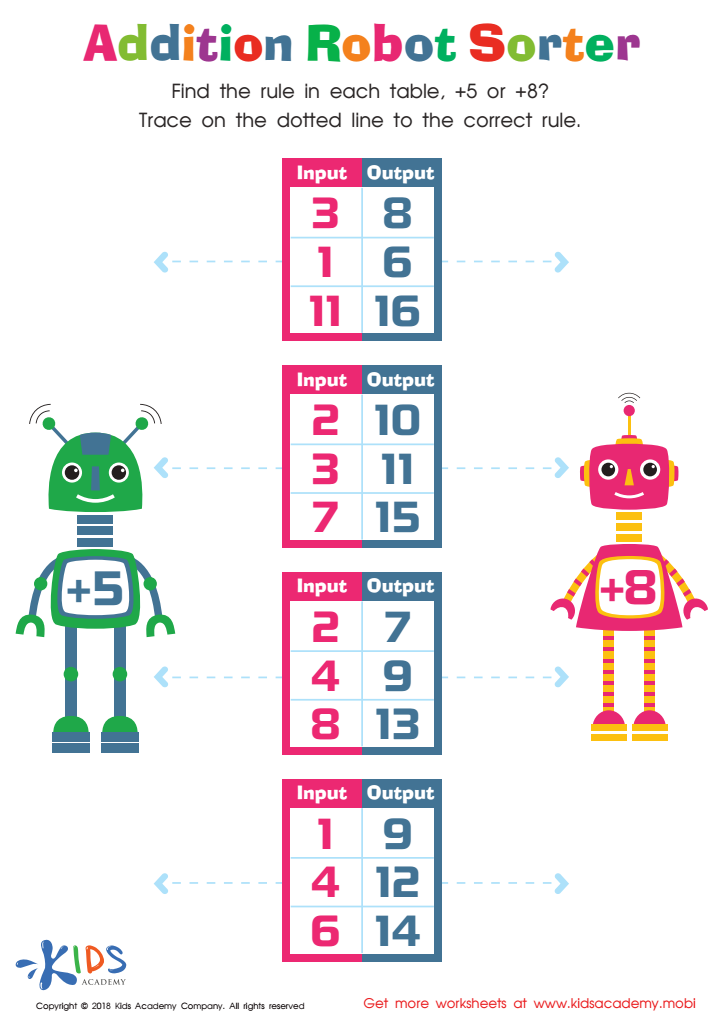
Addition Robot Sorter Worksheet








Fine motor skills are essential for young children's overall development, particularly in the early childhood years spanning ages 3 to 6. Parents and teachers should care about nurturing these skills because they form the foundation for more complex tasks and learning later on. Normal addition, as an essential cognitive and mathematical concept, is closely interconnected with the development of fine motor skills.
Children develop fine motor skills through activities that require hand-eye coordination and precision, such as drawing, cutting, and manipulating small objects. These activities contribute to concentration, patience, and creativity—all crucial elements in understanding and performing addition. When children engage in fine motor tasks, they enhance the dexterity and strength of their hands, which are necessary for holding pencils and manipulating counters, thereby aiding their arithmetic skills.
Furthermore, supporting the growth of fine motor skills can foster confidence and independence in children as they grow. Mastery of these skills enables them to experience success in early learning experiences, which can boost enthusiasm for math and learning overall. Therefore, parents and educators should prioritize fine motor development as it plays a vital role in establishing a solid foundation for cognitive competencies and promoting academic readiness in mathematics.