
Color recognition Normal Numbers Worksheets for Ages 3-6
4 filtered results
Difficulty Level
Grade
Age
-
From - To
Subject
Activity
Standards
Explore our exciting "Color Recognition Normal Numbers Worksheets" for children aged 3-6! Designed to seamlessly blend fun with learning, these engaging worksheets help young learners master the basics of number recognition along with color identification. Each activity fosters essential math and cognitive skills through a variety of cute, captivating, and vibrant exercises that keep kids entertained while they learn. Perfect for preschoolers and kindergartners, our worksheets cater to every child's learning pace, making the journey of math discovery delightful and stress-free. Download now for free and watch your child’s confidence grow as they conquer numbers and colors!
Favorites
With answer key
Interactive
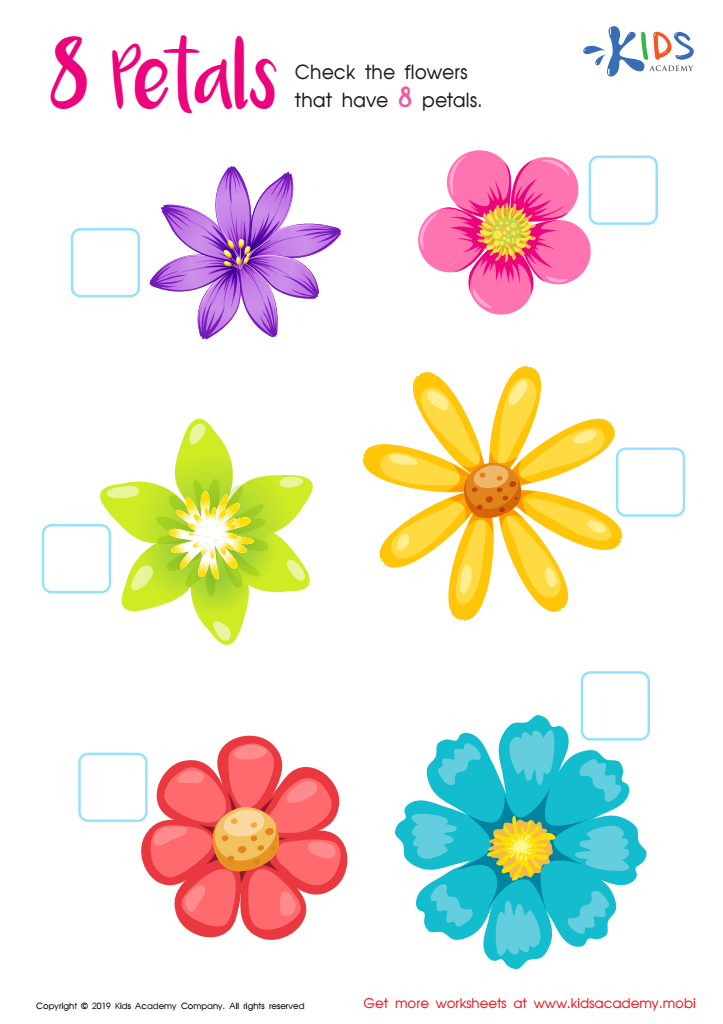
8 Petals Worksheet
Help your children master counting with this fun worksheet. It's filled with colorful flowers and they must count the petals and check the flowers with 8 petals. It's a great way to practice their counting skills and have some fun too!
 Assign to My Students
8 Petals Worksheet
Worksheet
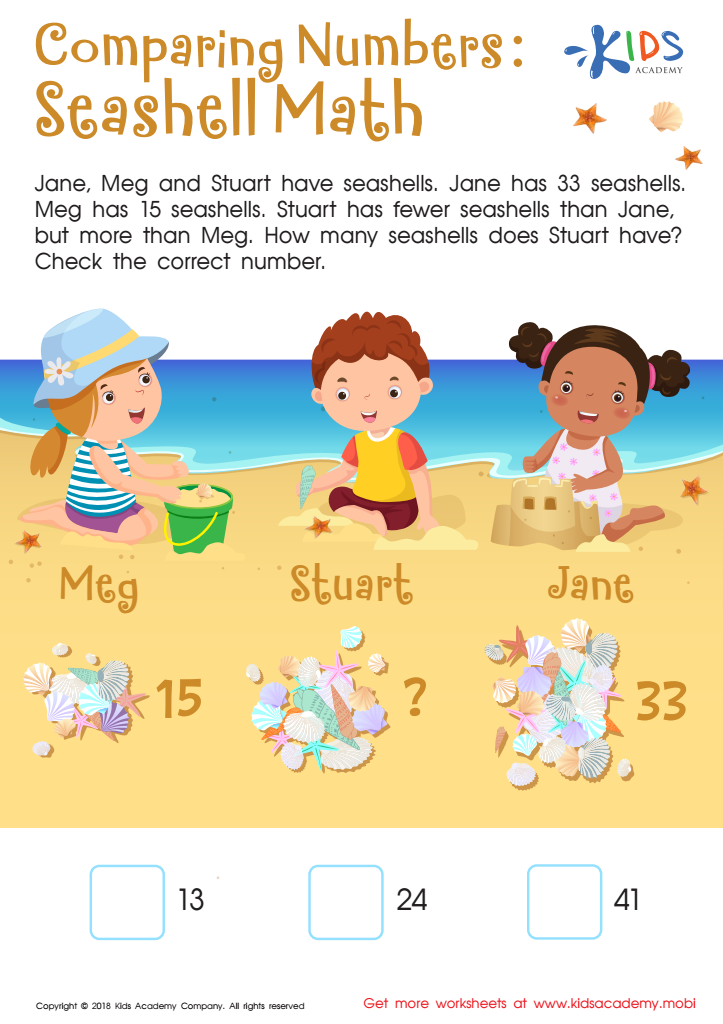
Seashell Collectors Worksheet
Bring beach fun into math with this printable worksheet! Carefully read the text with your child and figure out how many seashells Stuart has - more than Meg's, less than Jane's. Forget boring indoor math; your child won't want to miss out on this fun activity!
Seashell Collectors Worksheet
Worksheet
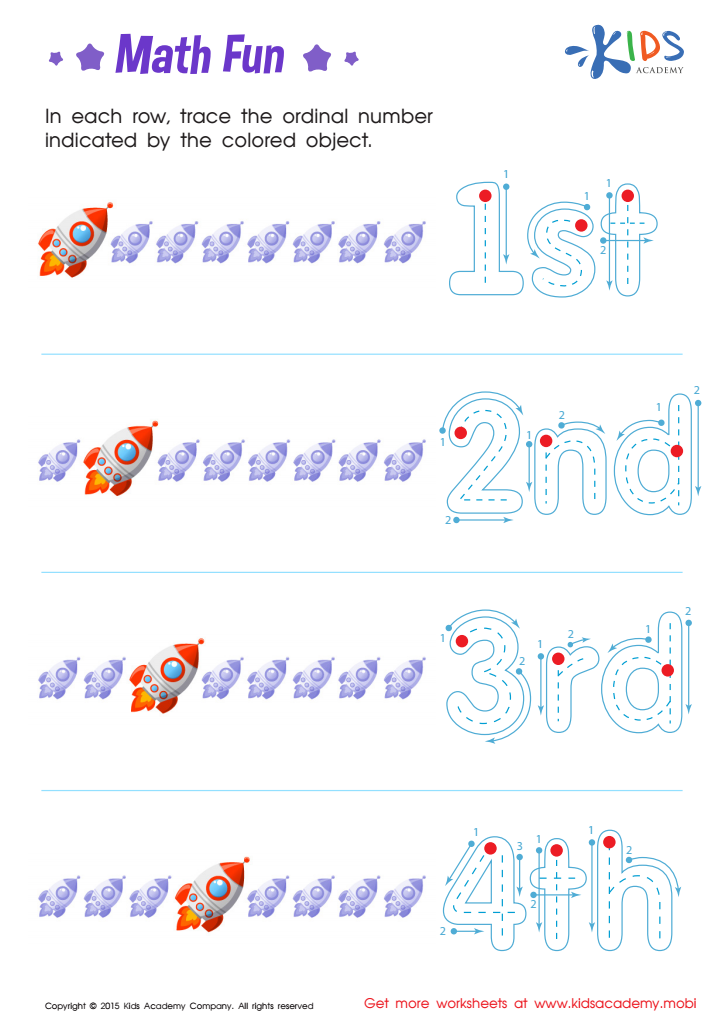
Ordinal Numbers: Math Fun Worksheet
Have fun learning ordinal numbers with our spaceship worksheet! Kids learn best while having fun and with repetition. Featuring vibrant spaceships, your child will understand placement, recognize and write ordinal numbers, and make connections. Understanding ordinal numbers leads to more advanced math concepts. Get your math whiz ready for preschool with our addition/subtraction worksheets! Have fun learning ordinal numbers and master them in no time!
Ordinal Numbers: Math Fun Worksheet
Worksheet
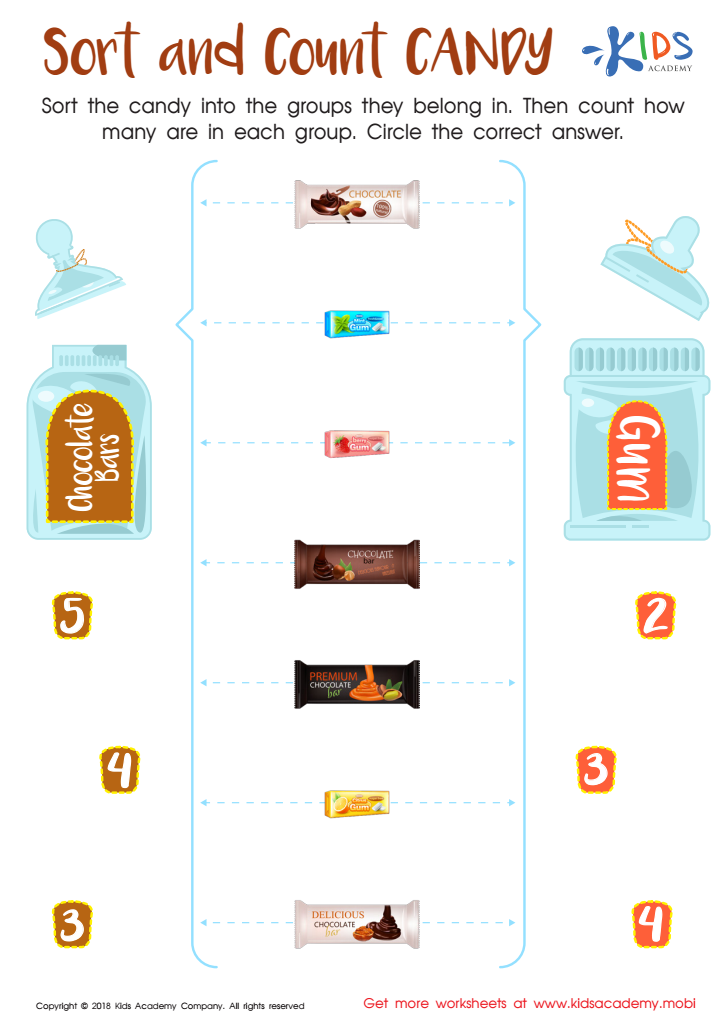
Sort and Count Candy Worksheet
Sort chocolate and candy with your kids! Help them use recognizable items and pictures to sort, practice counting with one-to-one representation, and develop their fine motor skills with the traceable lines. Download this free worksheet to get started. Yum!
Sort and Count Candy Worksheet
Worksheet
Join Kids Academy for Free
Who is primarily going to use this learning content?








Color recognition and early number skills form the cornerstone of a child's cognitive development in the crucial early ages of 3 to 6. During this formative period, understanding colors and numbers fosters a child's ability to interact meaningfully with their environment and lays the groundwork for more complex educational tasks.
Color recognition is not just about identifying different shades; it enhances language skills, categorization, and even emotional development. When children learn colors, they expand their vocabulary and make associations that help in other areas of learning. For instance, recognizing that apples can be red, green, or yellow sharpens their observational skills and attention to detail.
Similarly, early number skills, including counting and number identification, are vital. Numbers are foundational to nearly all aspects of daily life and future learning. A strong grasp of numbers aids in logical reasoning, problem-solving, and spatial awareness. It advances a child's ability to understand sequences, patterns, and concepts like more or less, providing mathematical sense that is crucial for academic success.
Thus, parents and teachers should prioritize these aspects to create a supportive and engaging learning environment. Incorporating colors and numbers into playful activities, reading sessions, and daily routines not only stimulates a child's interest but significantly strengthens foundational skills essential for later educational achievement.








