Discover our engaging Animal Recognition Normal Math Worksheets designed for children aged 3-6! These worksheets blend math and literacy in a fun, interactive way, helping young learners identify animals while developing essential counting and numerical recognition skills. Each worksheet features colorful, kid-friendly illustrations and age-appropriate activities that encourage critical thinking and boost confidence in early mathematical concepts. Perfect for parents and educators alike, our printable resources promote creativity and enhance learning experiences at home or in the classroom. Explore our collection today and make math a delightful adventure for your little ones as they discover the amazing world of animals!

Check out this FREE Trial Lesson on Math for age 3-6!

Sorting Objects into 3 Categories

Favorites
With answer key
Interactive
  • 3-6
  • Animal recognition
  • Math
  • Normal
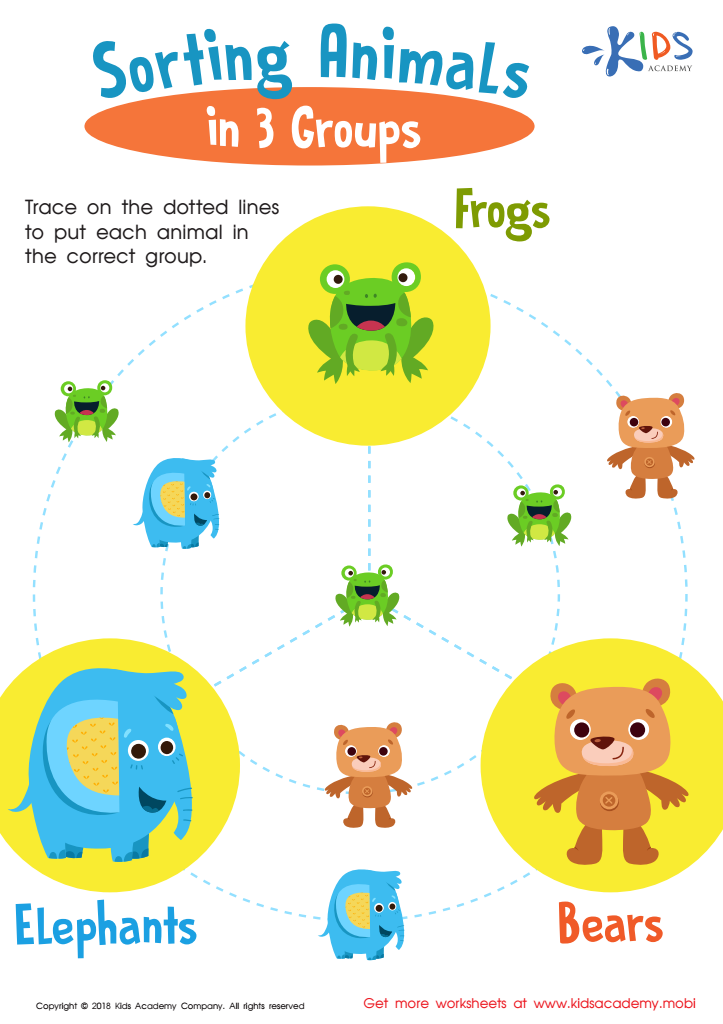
Sorting Animals in 3 Groups Worksheet

Sorting Animals in 3 Groups Worksheet

Let your kids practice and build skills for future Venn Diagrams with this PDF worksheet. They'll trace lines to match and group animals, and learn the differences and similarities of animals by categorizing with pictures and words. Plus, it's a great way to develop fine motor skills.
Sorting Animals in 3 Groups Worksheet
Worksheet
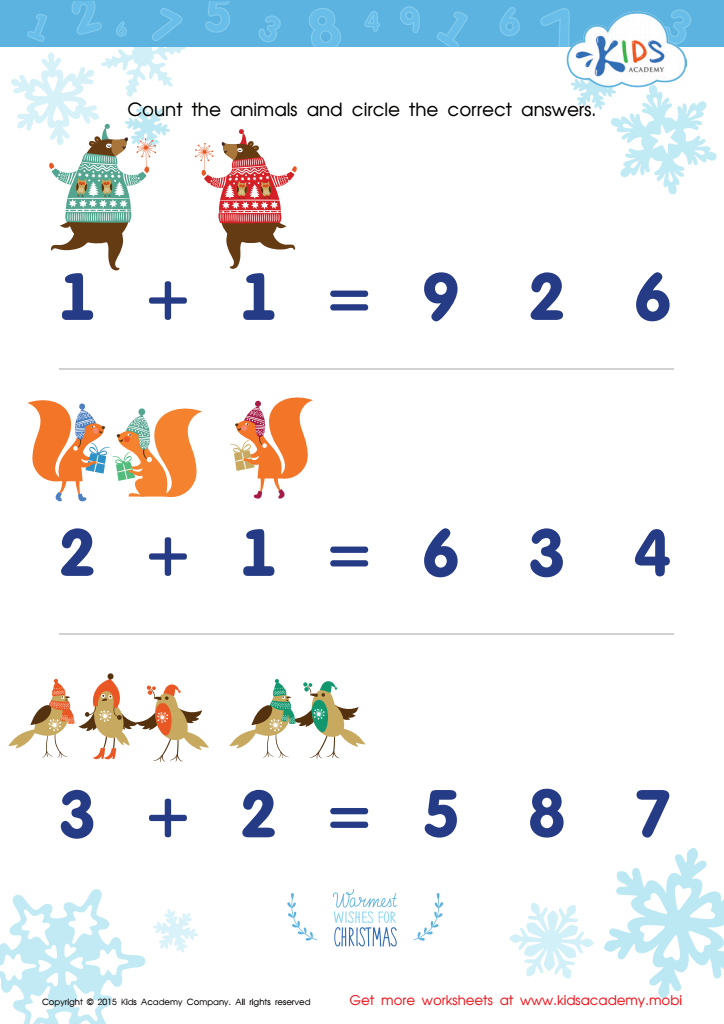
Math PDF Worksheet: Count Funny Animals

Count Funny Animals Worksheet

Get your kid in the Christmas spirit with this festive addition worksheet! They'll have fun counting the colorful animals and writing in the numbers. Our graphic layout makes it easy for them to visualize and solve the task. Print it out and help your kid keep their math skills sharp this winter with Kids Academy!
Count Funny Animals Worksheet
Worksheet
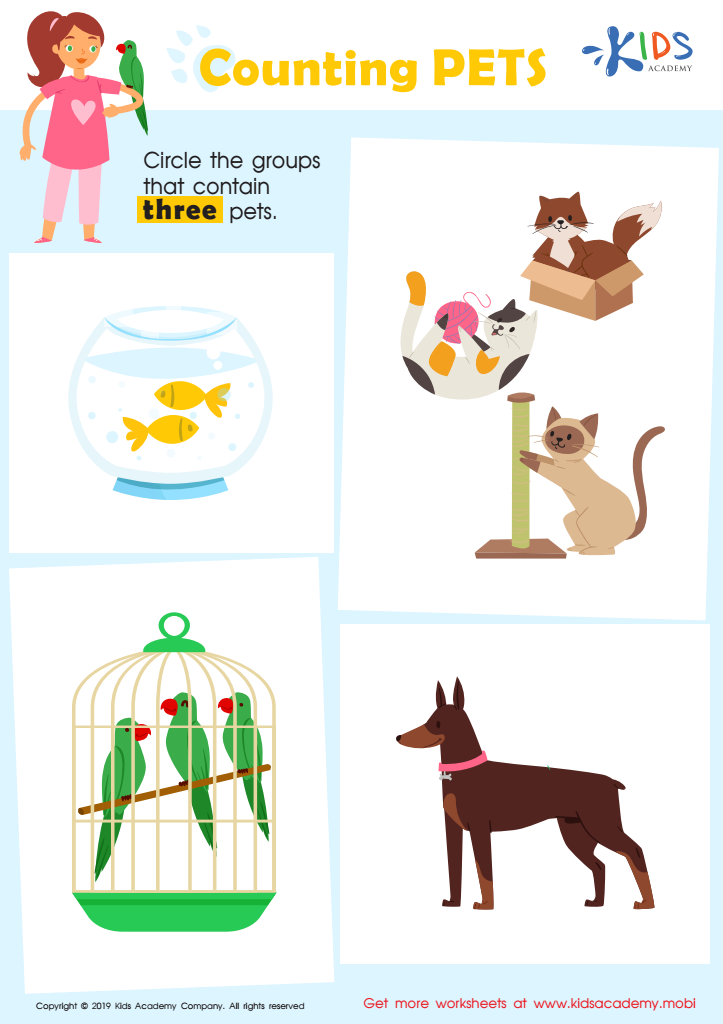
Counting Pets Worksheet

Counting Pets Worksheet

Kids adore their pets, making this free pet counting worksheet the perfect way to combine something they love with math skills. They'll count the number of pets, circle the pictures with three pets, and use one-to-one picture representation to help. This exercise will cultivate their learning and reinforce their love of animals!
Counting Pets Worksheet
Worksheet
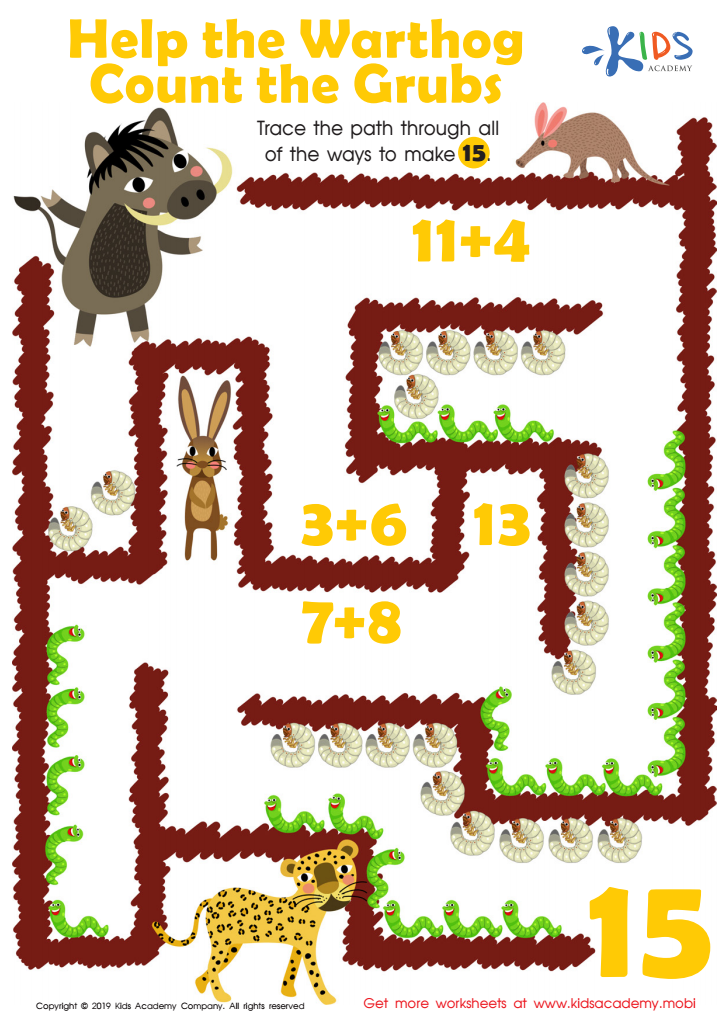
Help the Warthog Count the Grubs Worksheet

Help the Warthog Count the Grubs Worksheet

Test your kids' knowledge of wild animals. Ask them to name some they know, then have them identify the animals on this worksheet. If they can't, take the time to tell them the names. Finally, trace the warthog's path through the maze by solving the equations and going through paths that make 15.
Help the Warthog Count the Grubs Worksheet
Worksheet
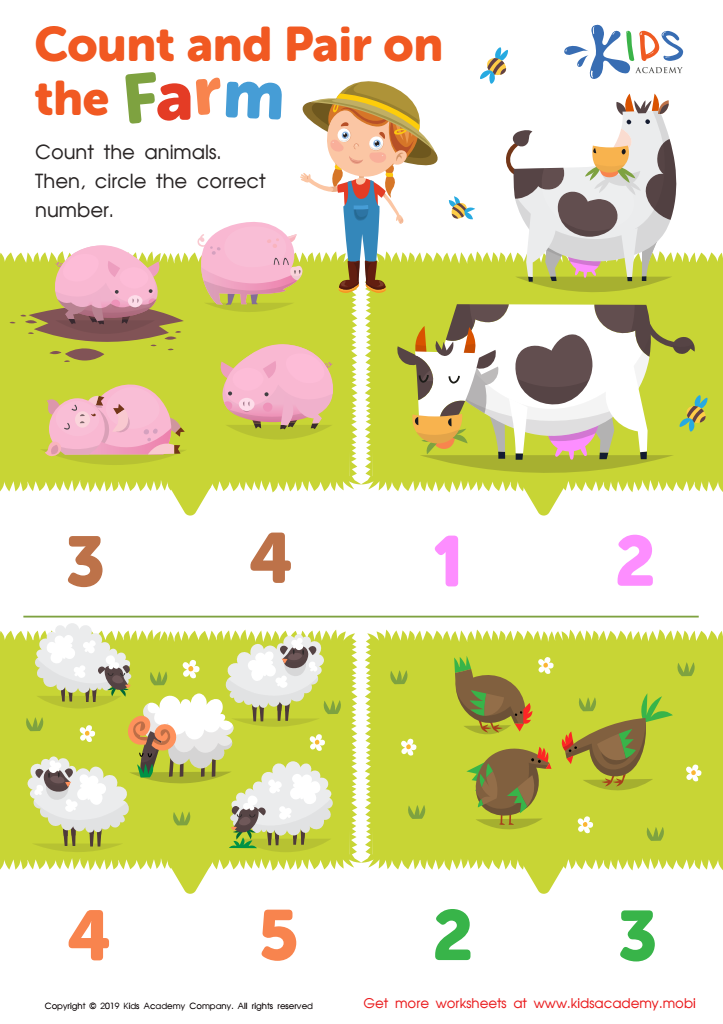
Count and Pair on the Farm Worksheet

Count and Pair on the Farm Worksheet

Farms are essential to our society: they grow food and crops, and raise animals for us to use. Kids can have a great time at a farm, engaging in activities like identifying animals, counting them, and circling the correct number. On this worksheet, ask your kids to try all three!
Count and Pair on the Farm Worksheet
Worksheet
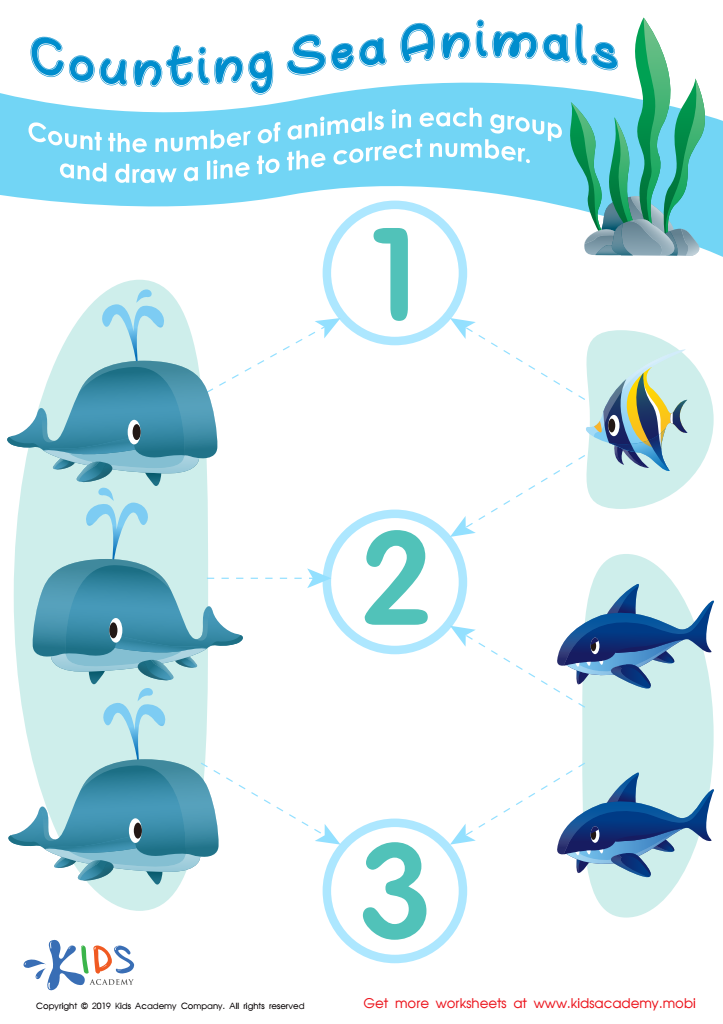
Counting Sea Animals Worksheet

Counting Sea Animals Worksheet

Kids adore sea creatures for their captivating, unknown nature. Let them use this free worksheet to practice counting, where they match numbers to groups of animals. Through traceable lines, they'll easily connect numbers to sea creatures and learn math with vibrant, underwater fun!
Counting Sea Animals Worksheet
Worksheet
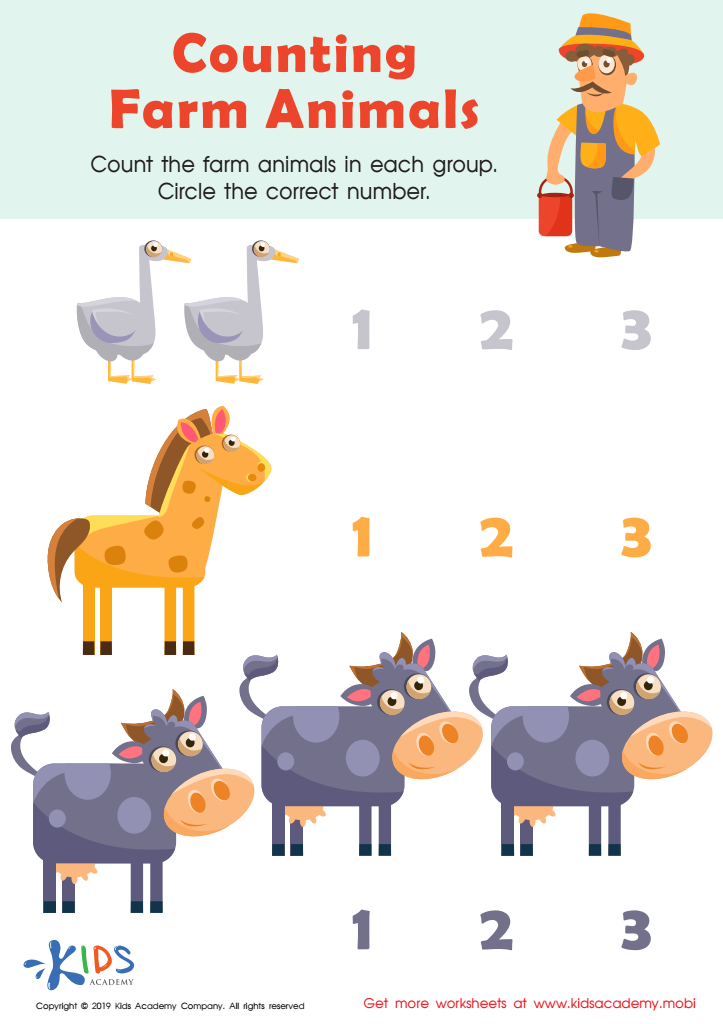
Counting Farm Animals Worksheet


Counting Farm Animals Worksheet

Kids love farms! That's why this free farm animals counting worksheet is great for building number sense and counting skills. Have your young mathematician count the pictures, then circle the corresponding number. It's a fun and meaningful way to practice counting.
Counting Farm Animals Worksheet
Worksheet


Animal recognition and basic math skills for ages 3-6 play a crucial role in early childhood development. During these formative years, children are like sponges, eagerly absorbing information from their surroundings. Teaching them to recognize animals enhances their cognitive and observational skills. It fosters curiosity about the natural world, encouraging empathy towards living creatures and promoting a sense of responsibility for the environment.

Incorporating animal recognition into normal math activities introduces young learners to foundational calculations in a fun and relatable context. For instance, counting animals in a picture or grouping them by type can make math engaging and intuitive. This approach not only strengthens numeracy skills but also solidifies their understanding of categories, measurements, and patterns.

Furthermore, these skills help develop critical thinking and problem-solving abilities. Teachers and parents should care about this integration because it aligns with children’s developmental needs and interests, making learning enjoyable and impactful. By nurturing these aspects early on, we lay the groundwork for lifelong learning, emotional intelligence, and a strong awareness of biodiversity, ultimately shaping well-rounded individuals who can navigate the world around them more effectively.