Comparison Skills Normal Math Worksheets for Ages 3-6
3 filtered results
-
From - To
Explore our engaging Comparison Skills Normal Math Worksheets designed for children aged 3 to 6! These worksheets provide a fun and interactive way for young learners to develop essential comparison skills. Through enjoyable activities, kids will learn to identify differences and similarities by comparing sizes, quantities, and more. Each worksheet promotes critical thinking and enhances early math skills while fostering a love for learning. Perfect for home or classroom use, these resources will support educational growth in a playful manner. Download now and watch your child build confidence in their math abilities while enjoying the learning process!
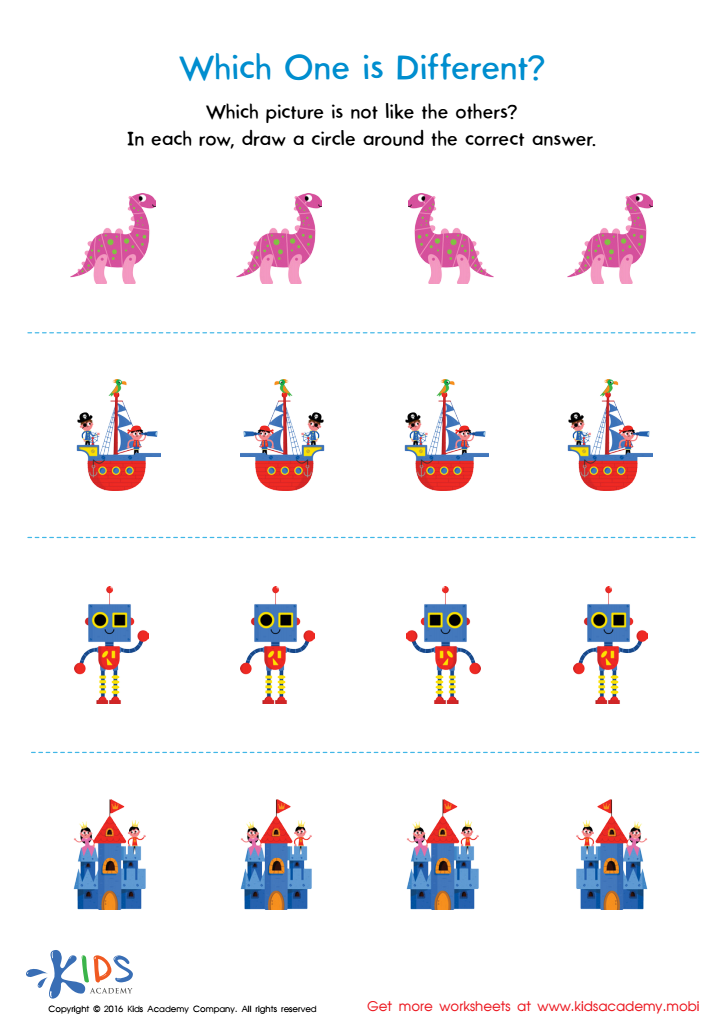
Which One Is Different Worksheet
 Assign to My Students
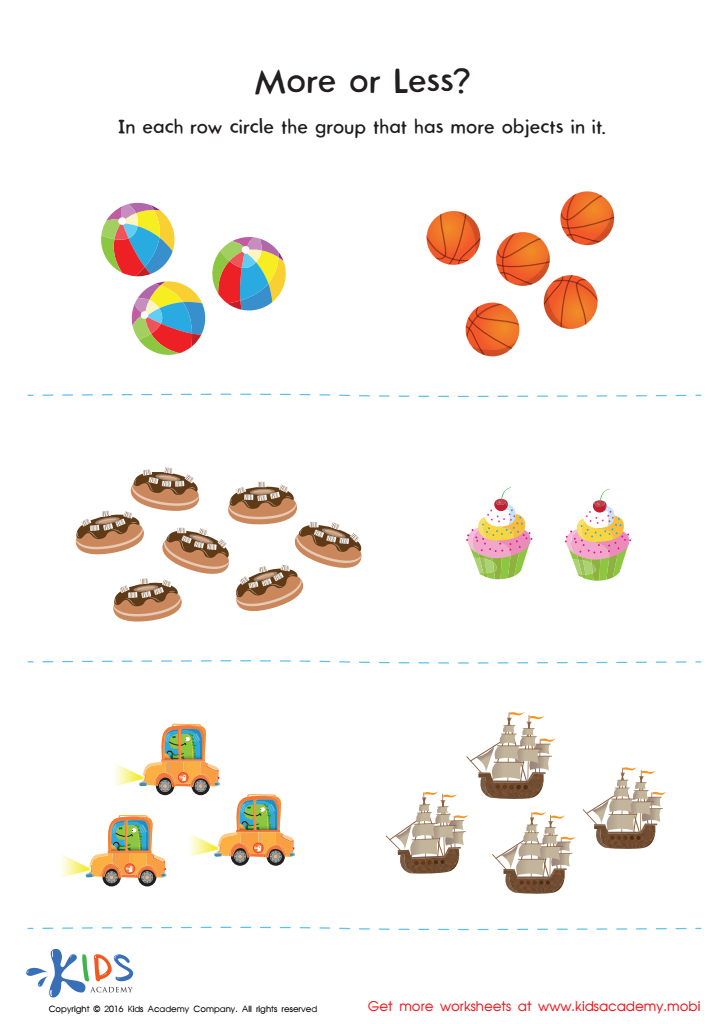
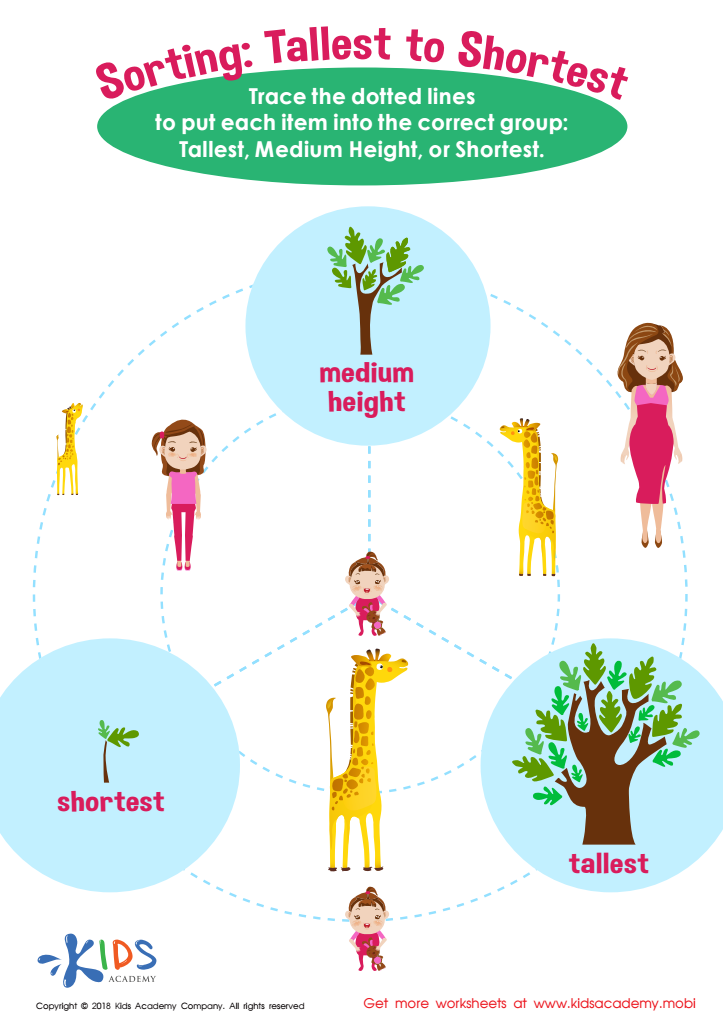
Sorting: Tallest to Shortest Worksheet







Comparison skills in early math education are crucial for children aged 3-6 as they lay the foundation for more complex mathematical concepts later on. At this developmental stage, children are naturally curious and eager to learn about the world around them; teaching them how to compare quantities, sizes, and lengths nurtures this curiosity.
When children engage in comparison activities, they develop critical thinking skills as they learn to analyze differences and similarities. For instance, they may compare the number of apples to oranges, grasping the concept of more and less, which enhances their understanding of quantity.
Furthermore, comparison skills support cognitive development by fostering problem-solving abilities and logical reasoning. These skills are not only vital in mathematics but also in everyday life decisions, helping children make informed choices.
For parents and teachers, fostering these skills means investing in a child's future academic success. When children master comparison skills early on, they are better equipped to tackle more advanced math concepts and apply these skills across various disciplines. Teaching these skills in engaging, playful ways ensures children maintain enthusiasm for learning, setting a positive tone for their educational journey.








