Math problem-solving Normal Math Worksheets for Ages 3-6
3 filtered results
-
From - To
Introduce young learners to the exciting world of math with our "Math Problem-Solving Normal Math Worksheets for Ages 3-6". Specifically designed to foster early cognitive development, these engaging worksheets help children build essential math skills through fun and interactive exercises. Each worksheet is crafted to improve problem-solving abilities, enhance logical thinking, and boost number recognition. Ideal for preschoolers and kindergarteners, our colorful and child-friendly sheets encourage playful learning that keeps little minds active and curious. Support your child's educational journey with our top-notch resources, making math both enjoyable and rewarding for young explorers.
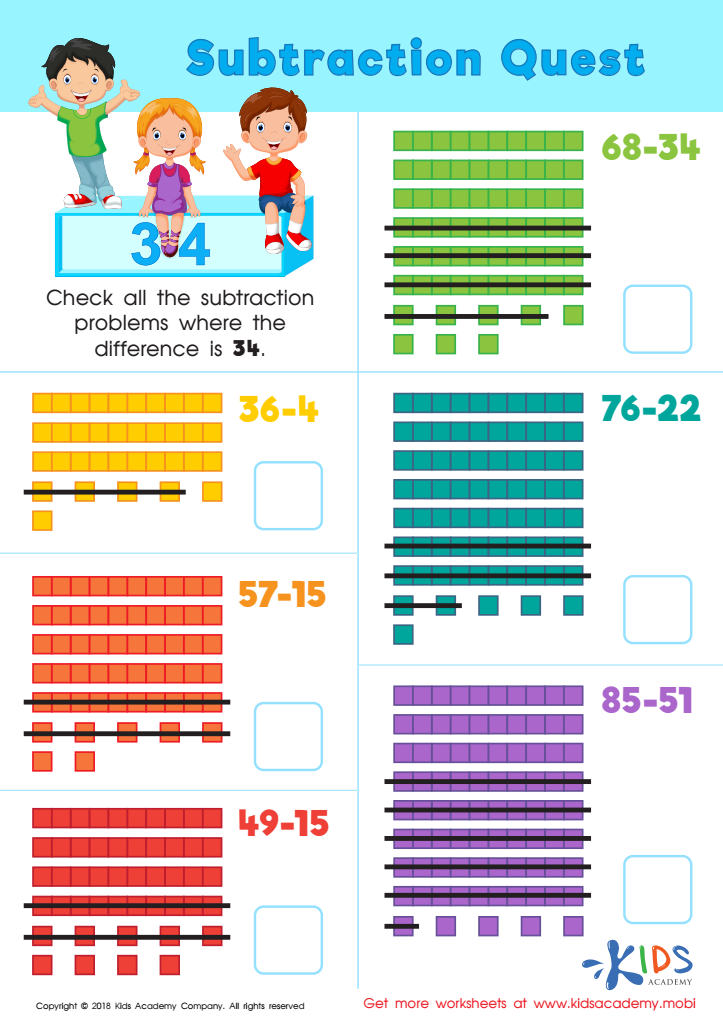
Subtraction Quest Worksheet
 Assign to My Students
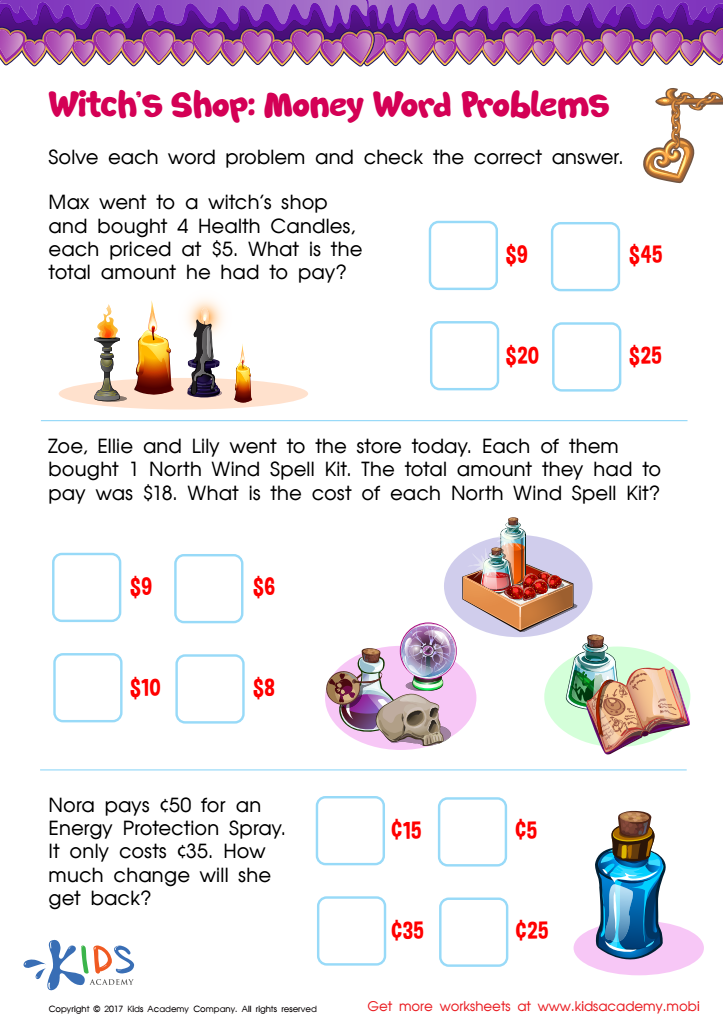
Money Word Problems Printable
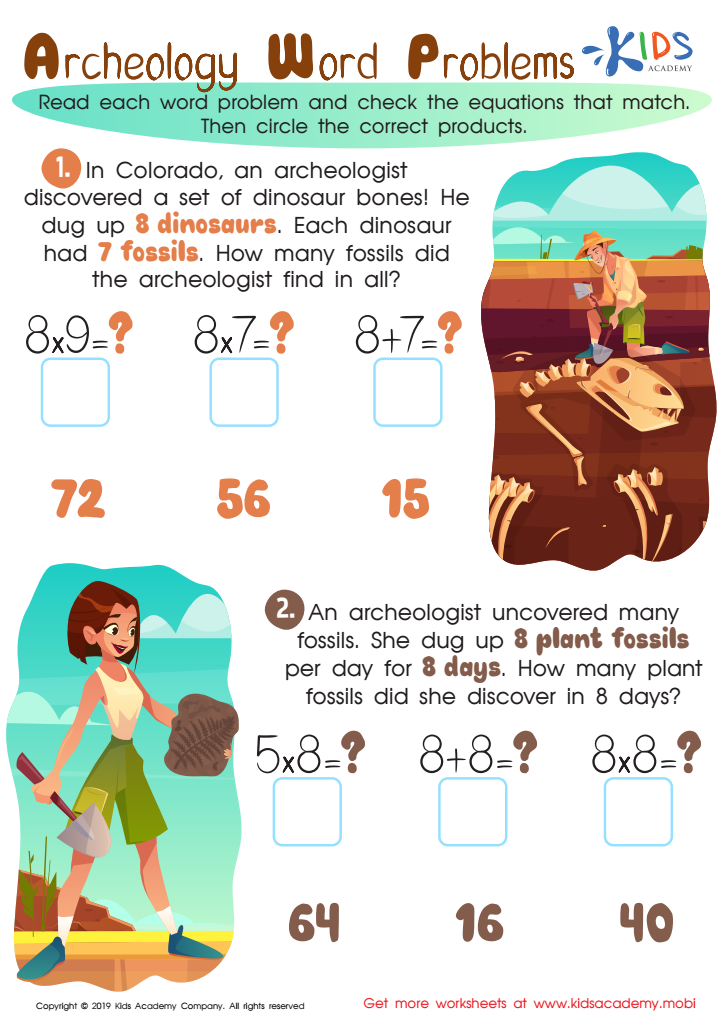
Archeology Word Problems Worksheet








Introducing young children to math problem-solving between the ages of 3 to 6 lays a crucial foundation for their cognitive development and academic success. During these formative years, children's brains are highly receptive to new information and learning experiences. Engaging in math problem-solving activities helps develop critical thinking, logical reasoning, and early numeracy skills, which are indispensable in everyday life.
Parents and teachers play a vital role in facilitating these early math experiences. By encouraging activities such as counting objects, recognizing patterns, or solving simple puzzles, children can start developing a positive attitude towards mathematics. This early exposure helps demystify math, making it a fun and integral part of their world rather than a daunting subject.
Furthermore, early math skills are not just limited to future academic success in math alone. Research has shown that early math proficiency is a strong predictor of later reading abilities and overall school readiness. Problem-solving activities also promote perseverance and patience, as children learn to tackle challenges and figure out solutions.
Incorporating problem-solving into everyday routines can be simple and engaging. Playing with building blocks, cooking with measurements, or sorting toys involves basic aspects of mathematics. These experiences not only make learning intuitive but also foster a lifelong curiosity and respect for the subject. Therefore, parents and teachers should wholeheartedly support and integrate these foundational math skills into early childhood education.








