Understanding fact families Normal Math Worksheets for Ages 3-6
3 filtered results
-
From - To
Explore the engaging world of understanding fact families with our Normal Math Worksheets, designed for children ages 3-6. These worksheets provide a fun and interactive way to introduce young learners to essential math concepts, helping them develop a strong foundation in addition and subtraction relationships. By working through colorful and age-appropriate activities, kids will grasp the concept of fact families, fostering critical thinking and problem-solving skills. Perfect for at-home learning or classroom use, our worksheets promote hands-on learning and playful exploration of numbers. Begin your child's math journey today and watch them thrive with confidence in their arithmetic abilities!
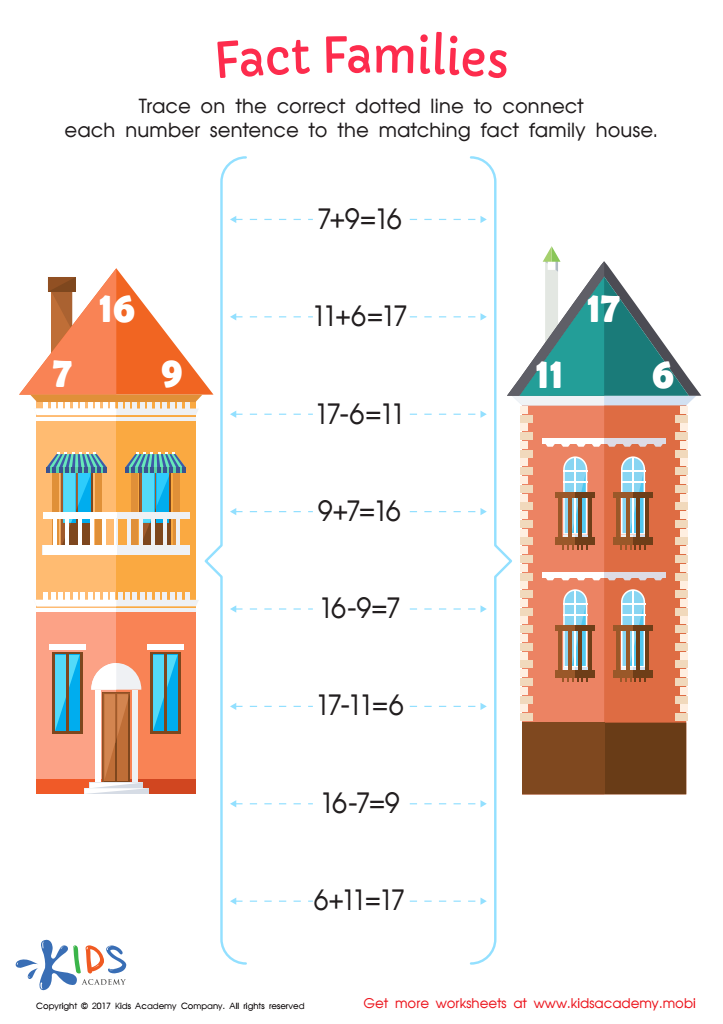
Fact Families — Add and Subtract Worksheet
 Assign to My Students
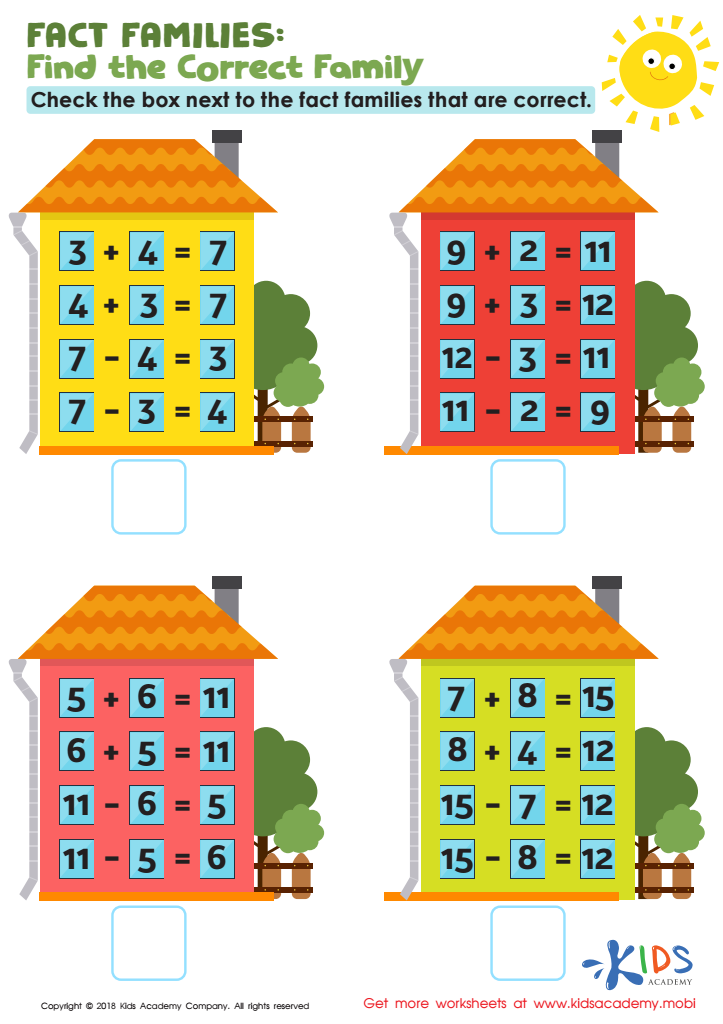
Fact Families: Find Correct Family Worksheet
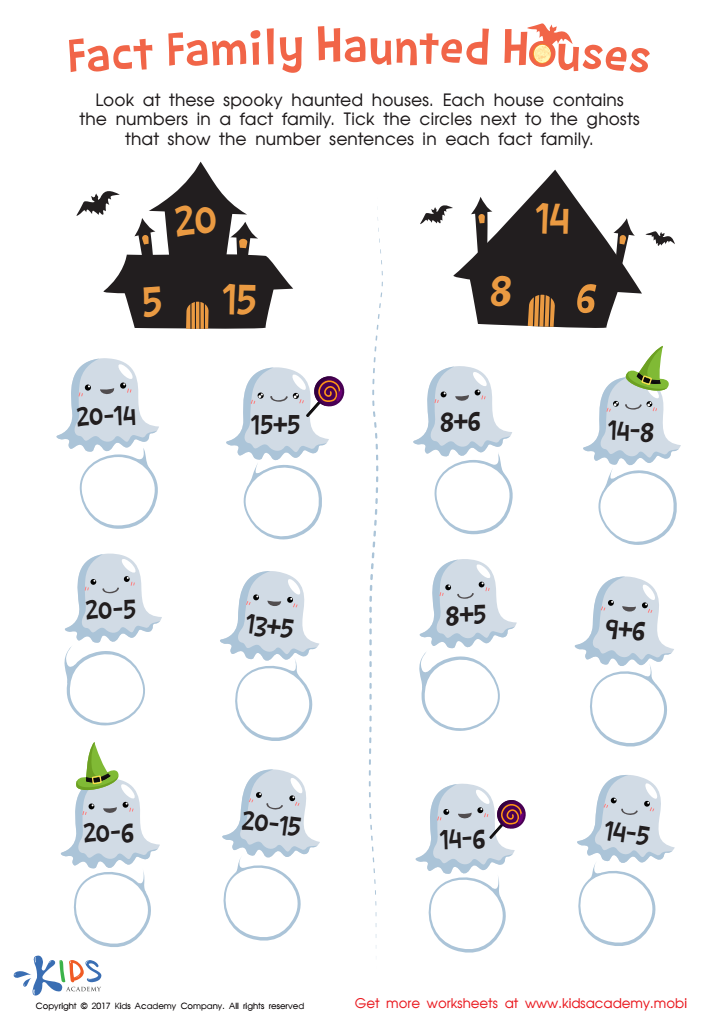








Understanding fact families is crucial for young learners aged 3-6, as it lays the foundation for essential math skills. Fact families help children grasp the relationship between addition and subtraction. For example, the numbers 2, 3, and 5 can be part of a fact family illustrating that 2 + 3 = 5 and 5 - 3 = 2.
Learning about fact families develops critical thinking and number sense, allowing children to see numbers in context rather than in isolation. This understanding fosters flexibility with numbers, promoting fluency as they progress into more complex math concepts. Additionally, recognizing patterns in numbers encourages problem-solving skills, essential for their overall academic growth.
Parents and teachers play a pivotal role in facilitating this learning. Through engaging activities like games or visual aids, they can enhance children's enjoyment of math, fueling a positive attitude towards the subject. Early exposure to these concepts can result in improved confidence and a stronger mathematical foundation as children advance in their education.
In short, understanding fact families cultivates essential skills in young learners that not only support their current learning but equip them for future academic success, making it a priority for parenting and teaching practices.








