Understanding Quantities Normal Math Worksheets for Ages 3-6
3 filtered results
-
From - To
Explore our "Understanding Quantities" math worksheets designed specifically for children ages 3-6. These engaging, printable activities help young learners grasp fundamental concepts of quantities, enhancement number recognition, and basic addition skills. With fun visuals and interactive exercises, each worksheet supports skill development while keeping students motivated. Ideal for both classroom use and at-home learning, they encourage critical thinking and help build a solid foundation in early math. Our resources are aligned with educational standards, ensuring children receive quality instruction tailored to their age group. Dive into the joyful world of numbers and quantities today!
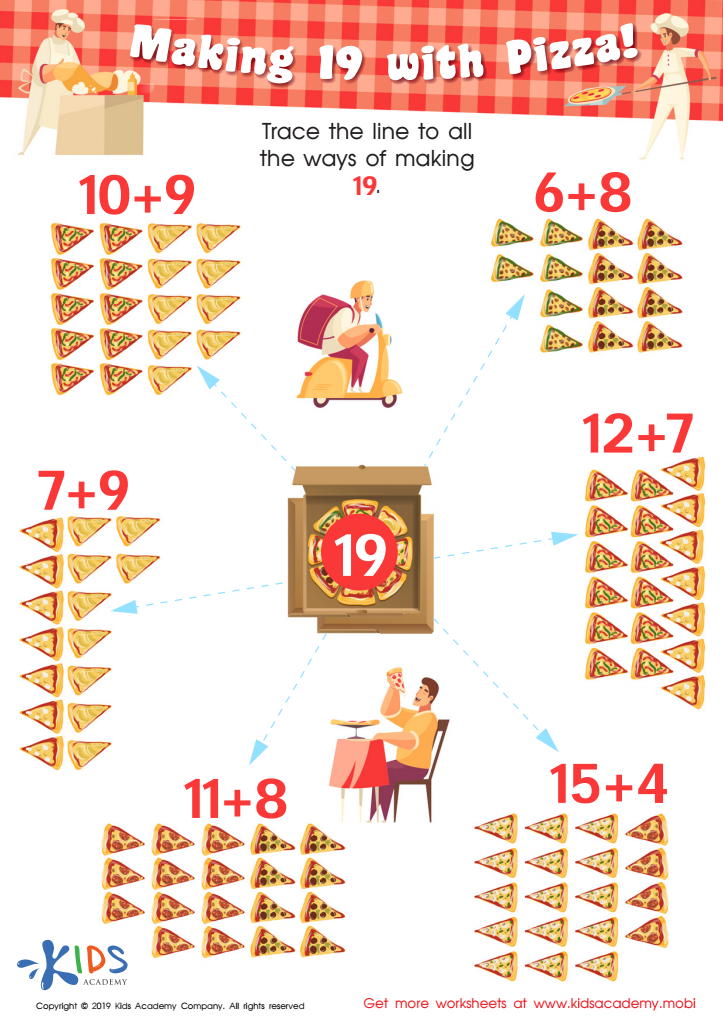
Making 19 with Pizza! Worksheet
 Assign to My Students
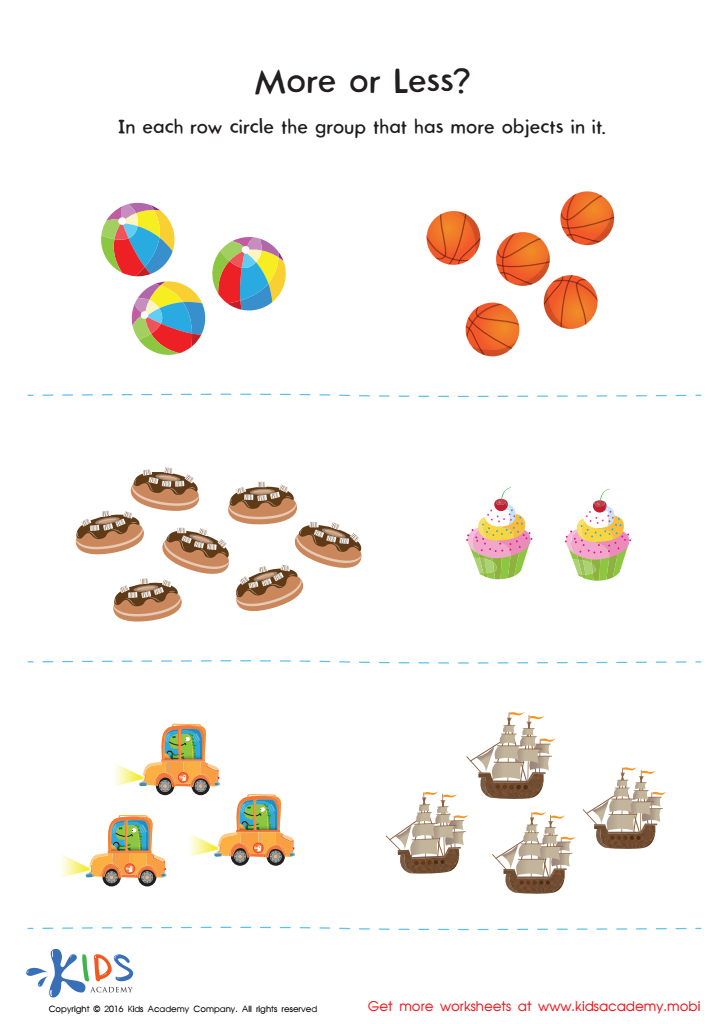
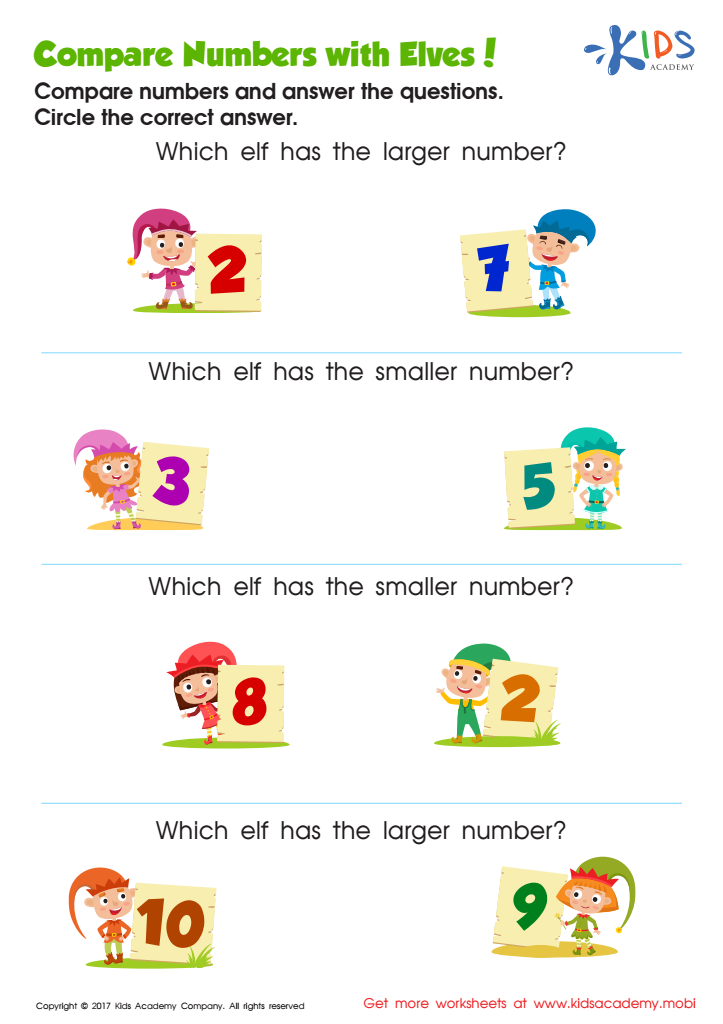
Comparing Numbers Worksheet for Kindergarten







Understanding quantities is a foundational element of early math learning for children aged 3-6. This developmental stage is crucial, as preschool and kindergarten years set the tone for future mathematical understanding. Parents and teachers should care about instilling this concept because it goes beyond mere counting; it fosters critical reasoning skills and enhances cognitive development.
When children grasp quantities, they learn to compare, combine, and separate groups, which is vital for building a strong mathematical foundation. This understanding promotes problem-solving skills they will use throughout their academic journey and in everyday life. Engaging with quantities through play and hands-on activities makes learning enjoyable, helping to sustain children's interest in math.
Additionally, early numeracy skills correlate with later academic success and bolster self-esteem, as children experience achievement through their understanding. By focusing on quantities, parents and teachers empower children to develop a conceptual understanding of numbers, paving the way for more complex mathematical concepts in the future. As educators and caregivers nurture these skills, they contribute to creating a generation of confident and competent math learners, laying a sustainable groundwork for lifelong learning.








