
Critical Thinking Normal Matching Worksheets for Ages 3-6
4 filtered results
Difficulty Level
Grade
Age
-
From - To
Subject
Activity
Standards
Discover our engaging "Critical Thinking Normal Matching Worksheets" designed for children aged 3-6! These worksheets are perfect for young learners to enhance their critical thinking skills through fun and interactive matching exercises. By connecting items, identifying similarities and differences, and recognizing patterns, your child will develop essential cognitive abilities while enjoying the process of learning. Each worksheet is visually appealing and age-appropriate, making them an effective educational tool that sparks curiosity. Foster a love for learning and empower your child's intellectual growth with our thoughtfully curated critical thinking resources. Get started today and watch your child thrive!
Favorites
With answer key
Interactive
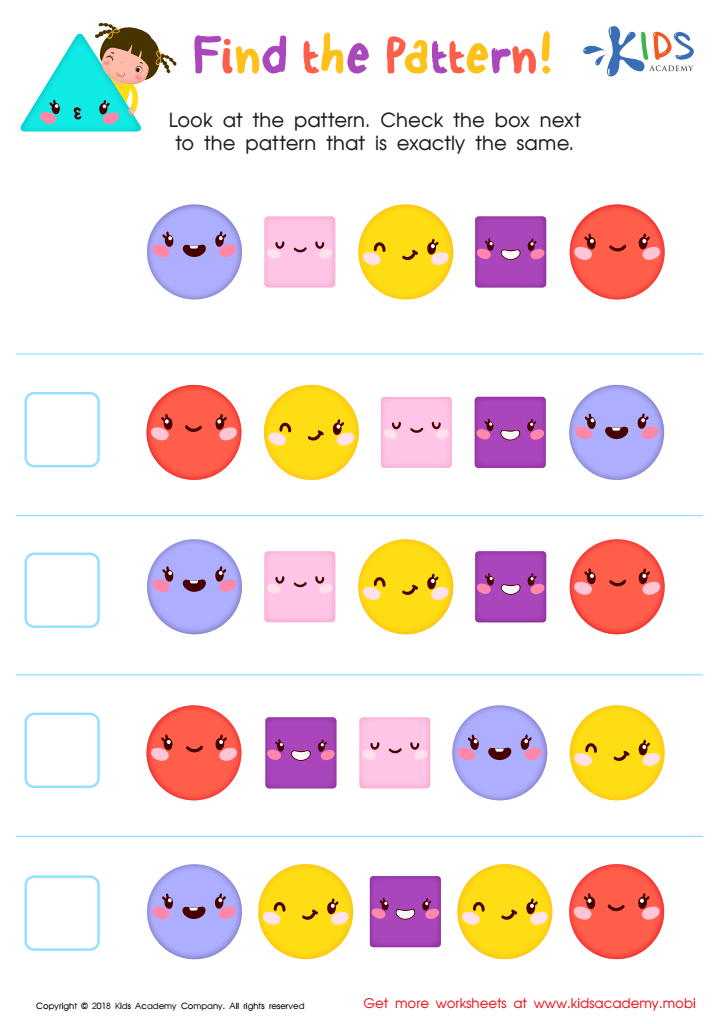
Find the Pattern Worksheet
This colorful pattern worksheet is perfect for testing your kids' pattern recognition. The bright colors will keep them engaged, while they check the box next to the pattern that is the same. Ask your kids to identify the colors used and see how well they can spot similarities!
 Assign to My Students
Find the Pattern Worksheet
Worksheet
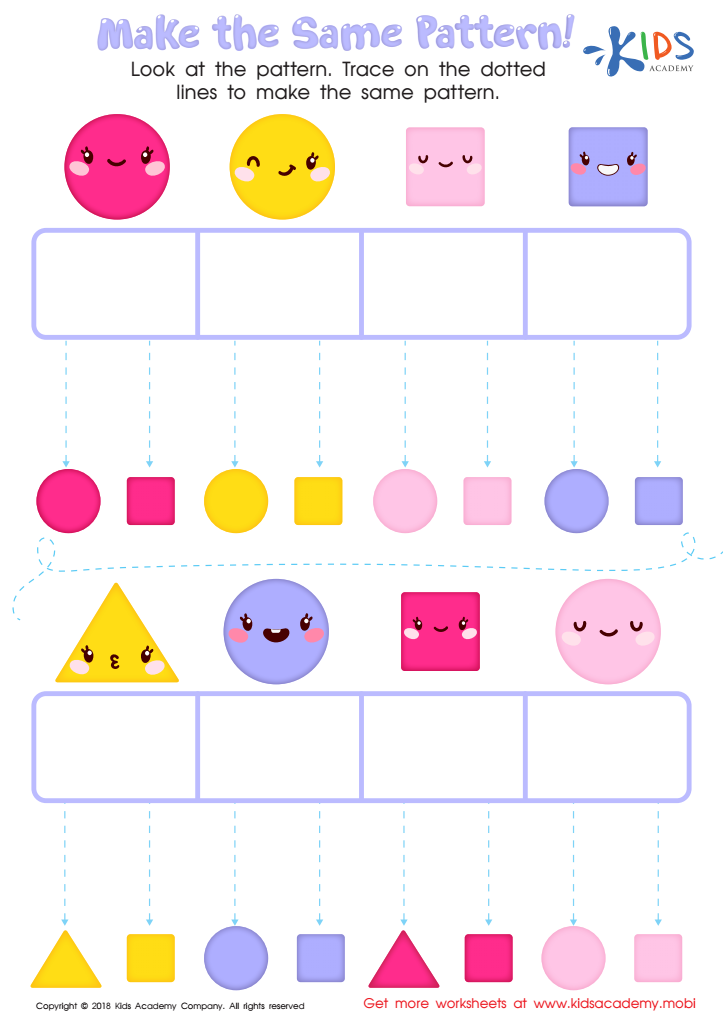
Make the Same Pattern Worksheet
Help your child look at the patterns in the tracing sheet and guide them to trace the dotted lines to match the shapes. This exercise tests their ability to copy pictures correctly, so emphasize the importance of paying attention to the instructions and details.
Make the Same Pattern Worksheet
Worksheet
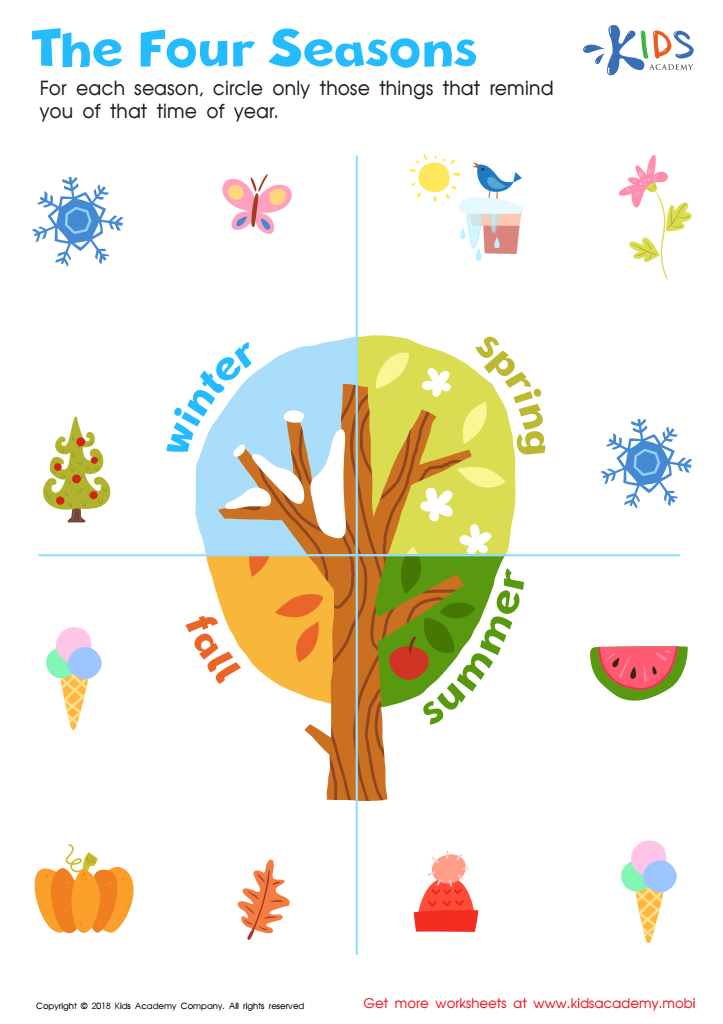
The Four Seasons Worksheet
Tell your child to circle things that remind them of each season. The tree has four squares, one for each season. Some things in each square match the season, others don't. Ask if any are out of place. Help them circle only items that remind them of that season.
The Four Seasons Worksheet
Worksheet
Join Kids Academy for Free
Who is primarily going to use this learning content?








Critical thinking skills are essential for the development of young children, particularly those aged 3-6. This stage is a pivotal period where cognitive, social, and emotional skills emerge. Implementing activities like Critical Thinking Normal Matching helps nurture these skills, allowing children to engage in higher-order thinking, asking questions, and making connections.
Parents and teachers should care about promoting critical thinking because it encourages curiosity and creativity. Through matching games, children learn to identify patterns, categorize information, and solve problems, laying the foundation for academic success. As children navigate these activities, they build confidence in their ability to think independently, leading to enhanced decision-making skills and resilience.
Moreover, critical thinking fosters social skills through collaborative problem-solving, as children often work in pairs or small groups. Each child's perspective contributes to a deeper understanding of the world around them.
In a rapidly changing society, teaching these skills early prepares children for future challenges, as they learn to analyze information, evaluate evidence, and form reasoned conclusions. Ultimately, investing time in fostering critical thinking in early childhood promotes life-long learning and adaptability, ensuring that children are not just passive consumers of information but active contributors to their communities.








