Mathematical reasoning Normal Subtraction Worksheets for Ages 3-6
4 filtered results
-
From - To
Explore our engaging Mathematical Reasoning Normal Subtraction Worksheets designed specifically for children aged 3-6! These worksheets promote critical thinking and problem-solving skills while introducing young learners to the fundamentals of subtraction. With a variety of fun and interactive activities, children will strengthen their understanding of mathematical concepts in a playful manner. Our worksheets encourage independence and confidence in early learners as they practice essential subtraction skills through visuals and hands-on tasks. Perfect for teachers and parents alike, these resources make learning subtraction enjoyable and foundational for future mathematical success. Download and start fostering your child's mathematical reasoning today!
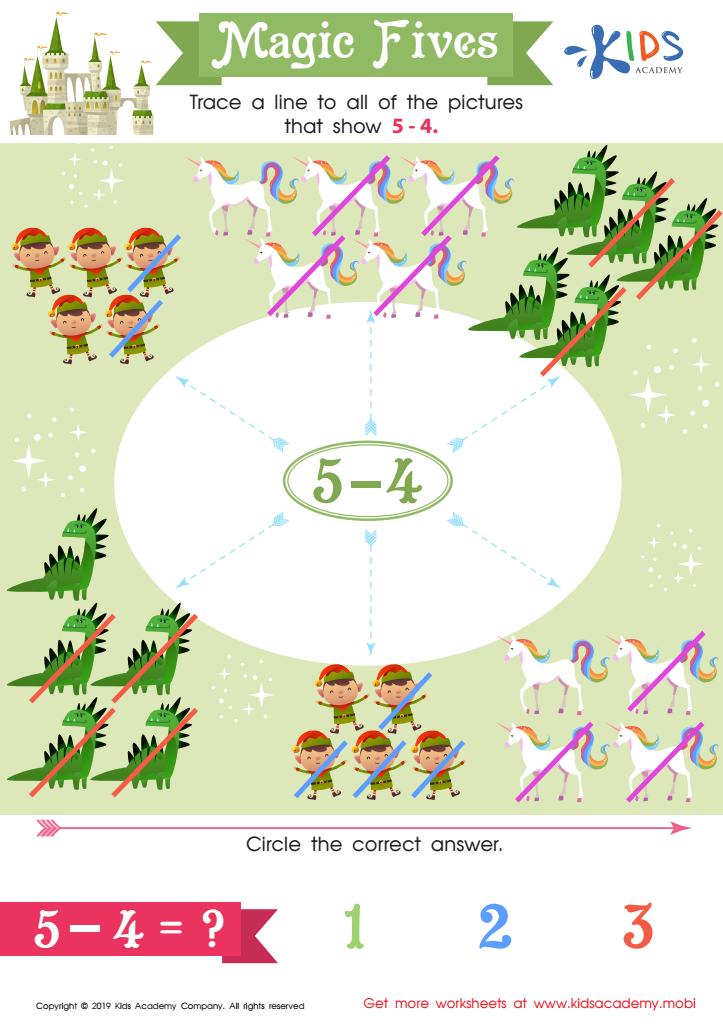
Magic Fives Worksheet
 Assign to My Students
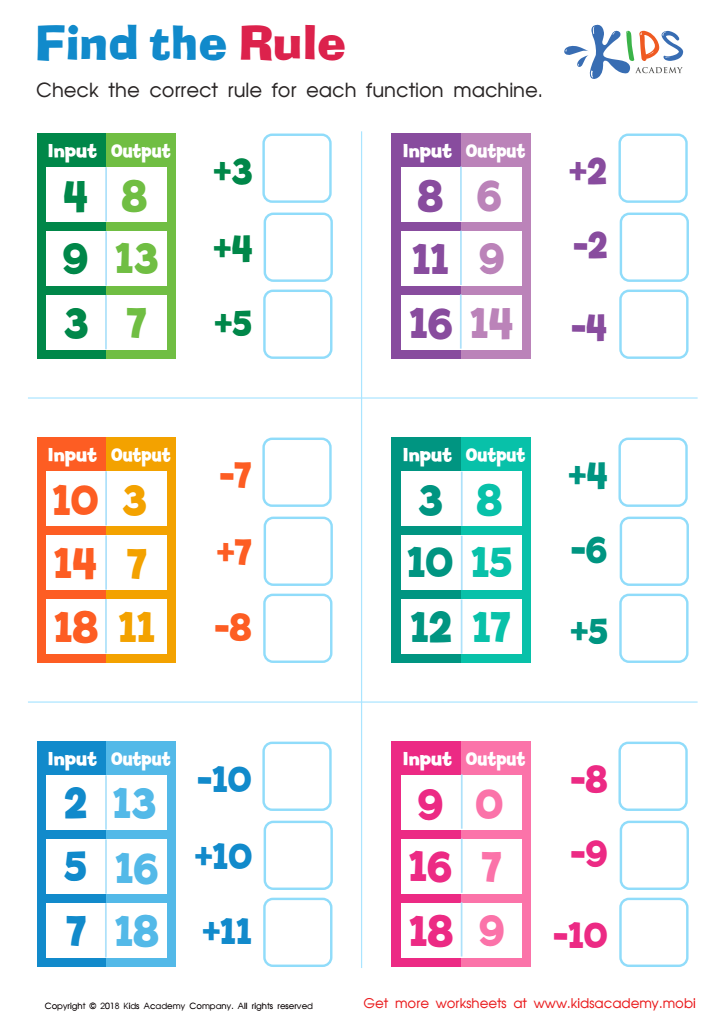
Find the Rule Worksheet
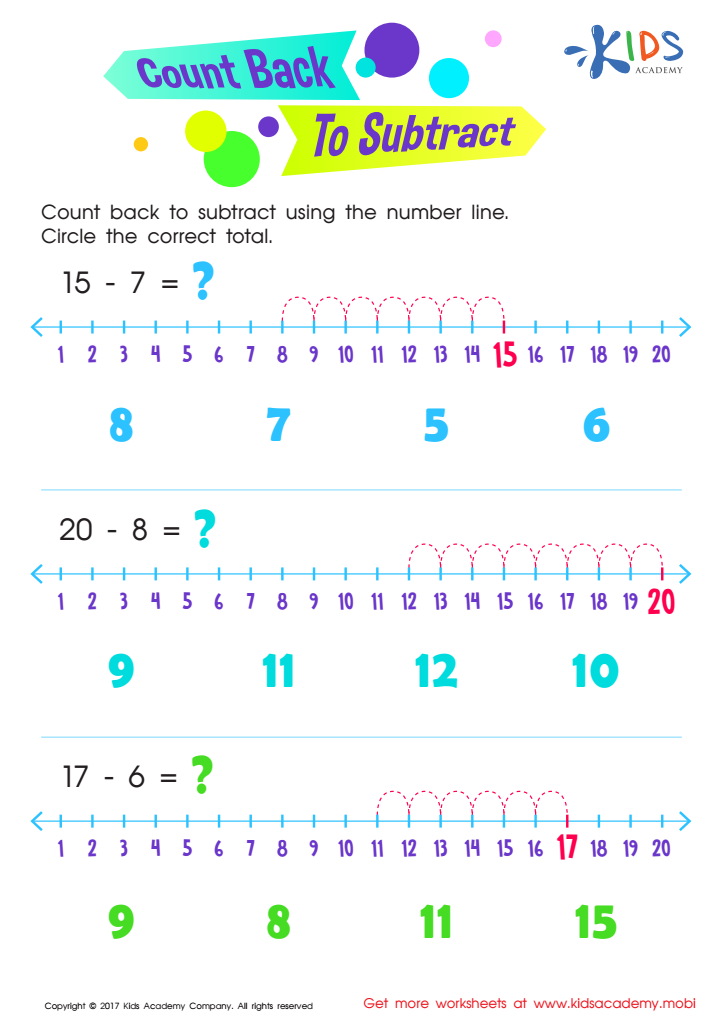
Count Back to Subtract Substraction Worksheet
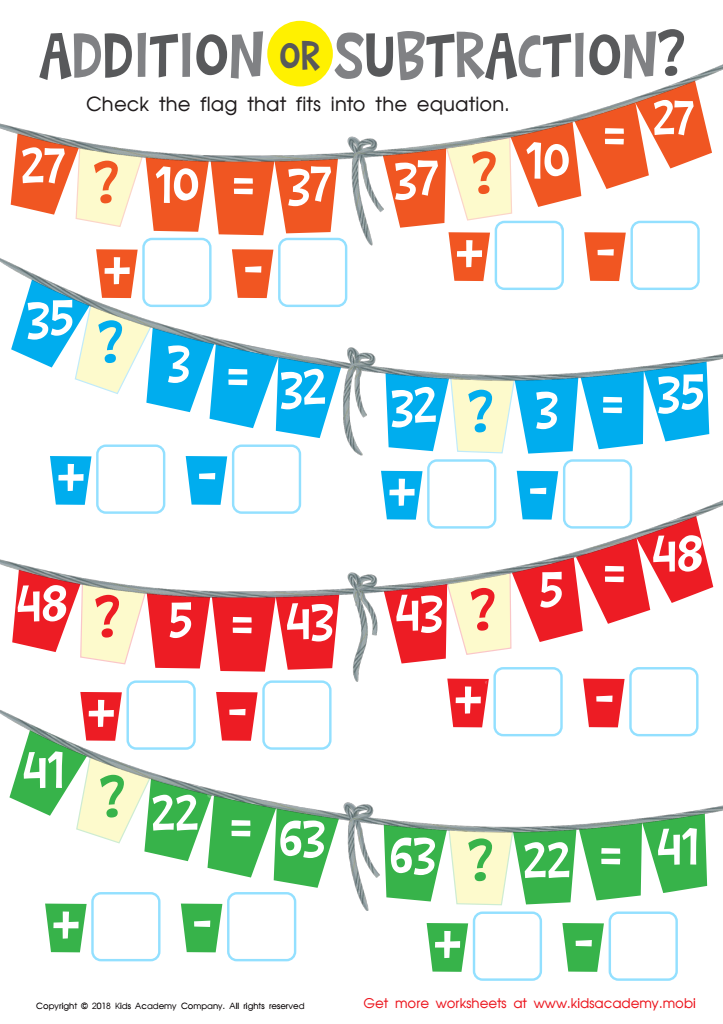
Addition or Subtraction? Worksheet








Mathematical reasoning in early childhood, particularly regarding normal subtraction, is crucial for various reasons. For parents and teachers, fostering this skill in children aged 3-6 lays the foundation for future mathematical understanding. Normal subtraction helps young learners develop critical thinking and problem-solving abilities. By grasping subtraction concepts early, children improve their ability to understand more complex operations later in their education.
Engaging children with subtraction in playful and relatable contexts encourages a positive attitude towards mathematics. Activities like counting objects and simple games provide hands-on experiences, promoting curiosity and enjoyment in learning. This early exposure not only boosts mathematical confidence but also enhances language development as children articulate their thought processes and reasoning.
Moreover, early subtraction supports cognitive development by promoting logical thinking. Recognizing the relationship between parts and wholes is essential for a child's overall mathematical comprehension. Parents and teachers can build these skills through interactive activities that integrate subtraction with everyday experiences, such as sharing snacks or playing with toys.
Ultimately, supporting mathematical reasoning in early childhood fosters a solid foundation for lifelong learning and equips children with essential skills to navigate a world increasingly reliant on mathematics and logical reasoning. Investing in these skills enriches children's educational journey.