Filters

6 filtered results

Clear all filters
Favorites
With answer key
Interactive

6 filtered results

Difficulty Level

Grade


Enhance your child's cognitive development with our printables specifically designed for ages 3-6. Our Building Vocabulary Worksheets engage young learners in fun, interactive ways to expand their language skills. These worksheets focus on key concepts such as word recognition, categorization, and phonetics, fostering essential cognitive abilities. Each activity is designed to be age-appropriate, ensuring that your child not only learns but enjoys the process. Perfect for parents and educators, these resources can easily be incorporated into daily routines or classroom activities. Support your child's early learning journey and watch their vocabulary bloom with our expertly crafted worksheets. Start exploring today!

Check out this FREE Trial Lesson on Building Vocabulary for age 3-6!

Demonstrate Understanding of Frequently Occurring Verbs and Adjectives by Relating Them to Their Opposites

Favorites
With answer key
Interactive
  • 3-6
  • Cognitive Development
  • Building Vocabulary
  • Normal
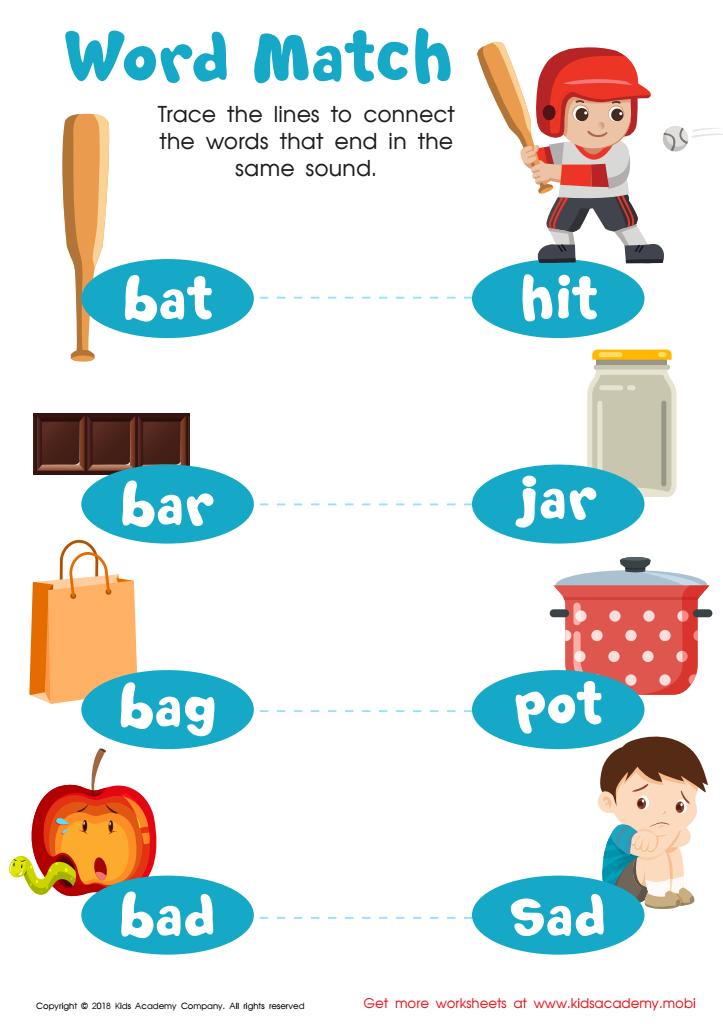
Word Match Reading Worksheet

Word Match Reading Worksheet

This printout helps children learn to read fluently by connecting words with the same sound. Colorful pictures aid understanding and context for kindergarten-level students. Tracing lines, they learn to identify the sounds made by letters of the alphabet and deepen their knowledge of phonics.
Word Match Reading Worksheet
Worksheet
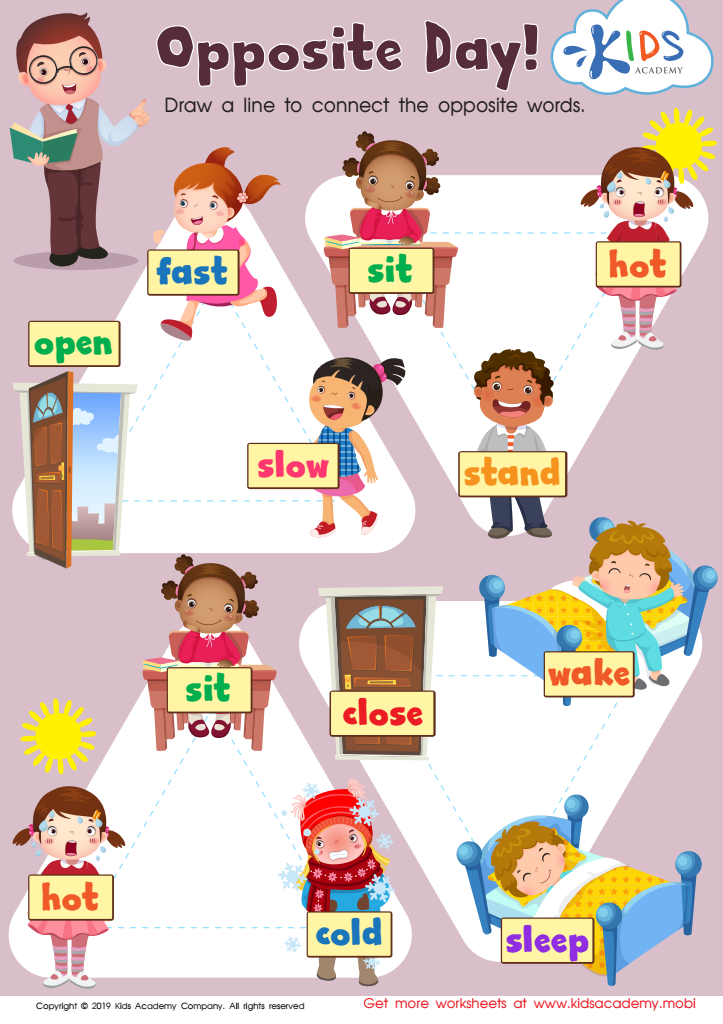
Opposite Day Worksheet

Opposite Day Worksheet

Early learners need to know about opposites to improve their higher-order thinking and critical thinking. This fun worksheet helps them understand the concept, practice opposite words, read high-frequency words and work on fine motor skills. Download the traceable PDF to get started.
Opposite Day Worksheet
Worksheet
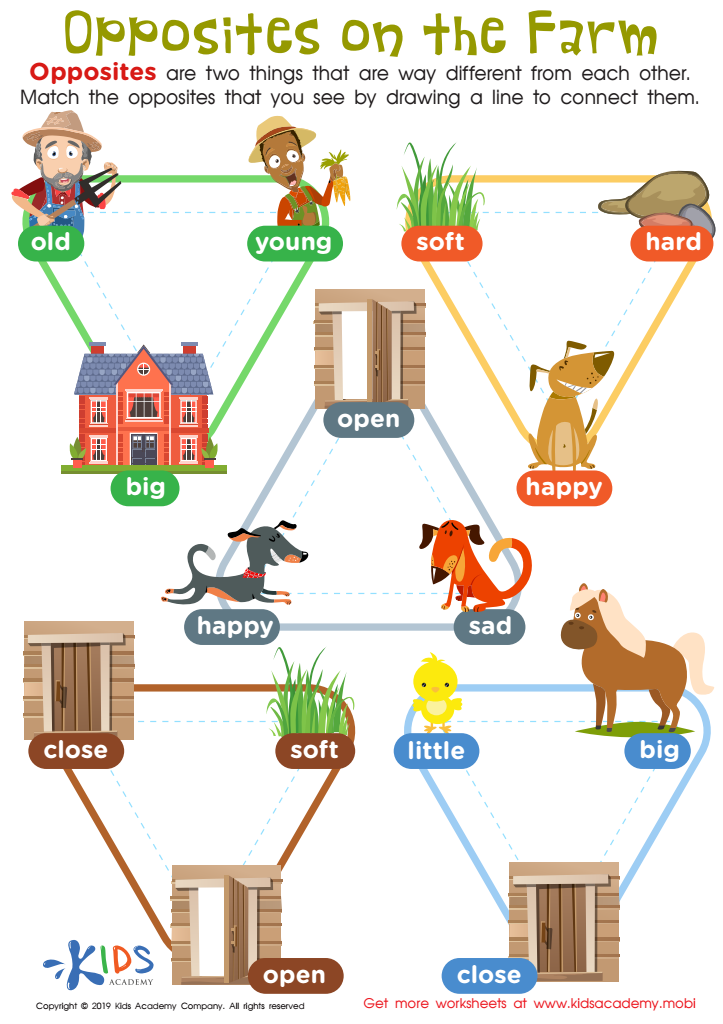
Opposites on the Farm Worksheet

Opposites on the Farm Worksheet

Teaching children the concept of opposites is important for their development. This worksheet offers a fun way to practice. Kids can use traceable lines to match farm imagery with pairs of opposites. It's a great way to help them compare and contrast, a key skill for reading, math, writing and more.
Opposites on the Farm Worksheet
Worksheet
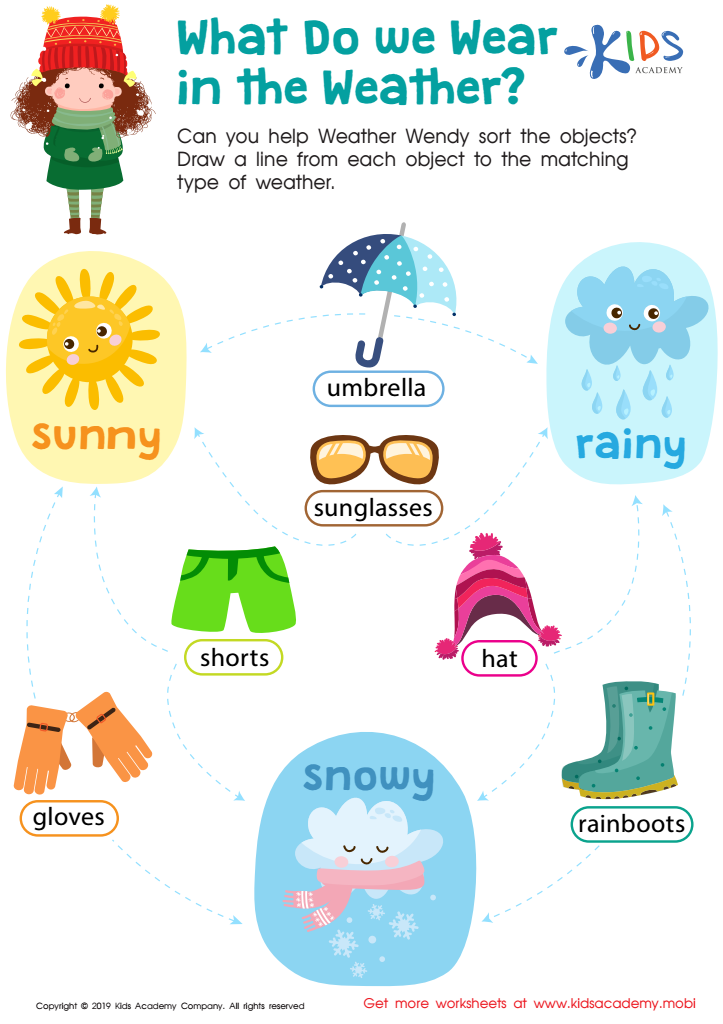
What Do We Wear in the Weather? Worksheet

What Do We Wear in the Weather? Worksheet

This worksheet boosts young learners' everyday vocab with fun high-frequency weather words. They'll see and match familiar pictures to the words they read. Plus, it helps them develop fine motor skills. Perfect for preschoolers.
What Do We Wear in the Weather? Worksheet
Worksheet
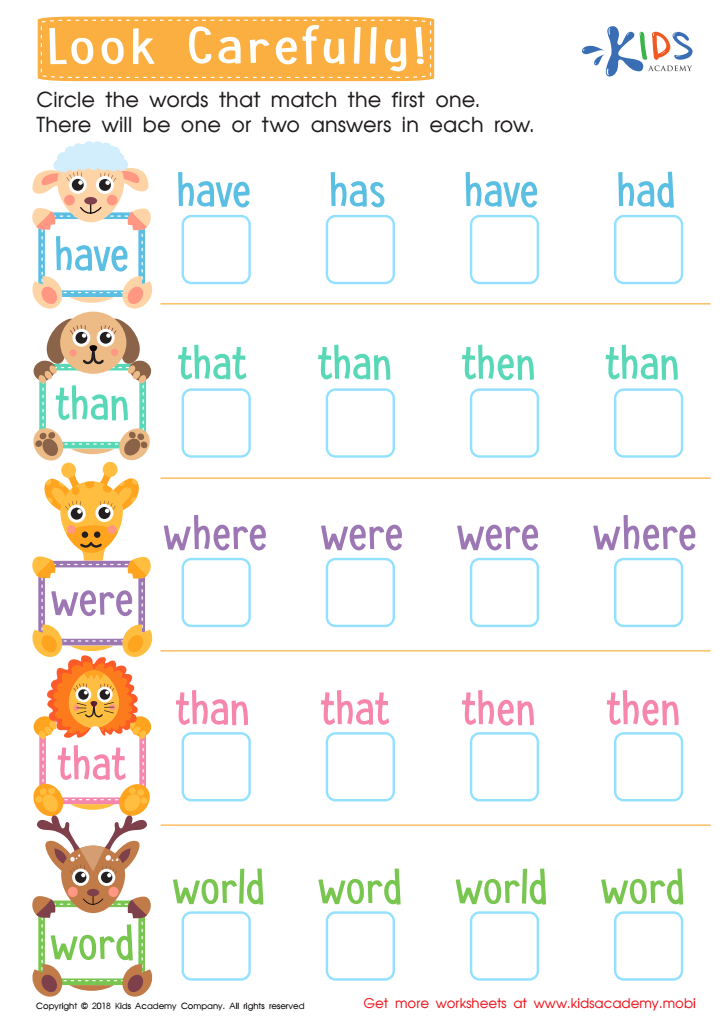
Look Carefully Worksheet

Look Carefully Worksheet

It's crucial to teach kids to identify sight words and become fluent readers. This free worksheet helps make it simpler for kids to learn the similarities and differences between similar words. They'll get practice by looking at the box word and selecting the one that matches from the row.
Look Carefully Worksheet
Worksheet
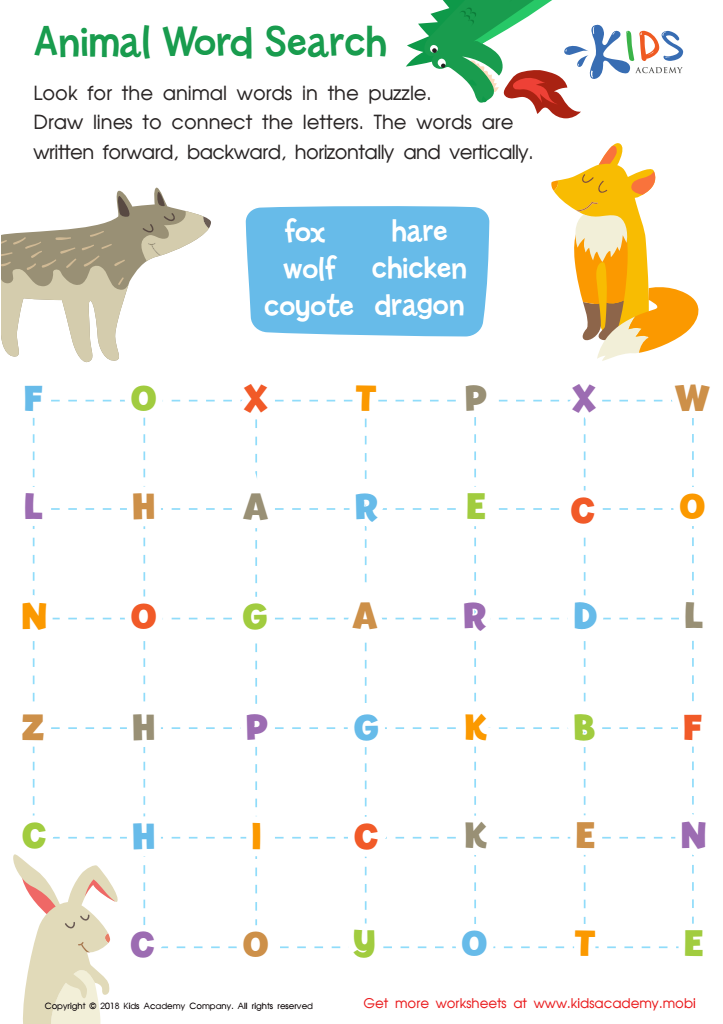
Animal Word Search Worksheet


Animal Word Search Worksheet

Students can have fun and strengthen spelling and vocabulary skills with this word search worksheet. Search for animal words and circle the letters in the puzzle. Words can be found forwards, backwards, horizontally or vertically, providing a great challenge to foster critical thinking skills. An enriching activity for all ages!
Animal Word Search Worksheet
Worksheet


Cognitive development and vocabulary building are crucial aspects of early childhood education between the ages of 3 and 6. During this period, children experience rapid brain growth, making it an ideal time for them to acquire language skills that form the foundation for effective communication and learning. When parents and teachers prioritize vocabulary development, they foster children's ability to think critically, express themselves, and engage with the world around them.

First, a rich vocabulary enhances cognitive skills, enabling children to categorize information, solve problems, and understand complex concepts. This foundational language knowledge is integral for literacy development, as it prepares them for reading and writing later in life.

Moreover, strong vocabulary skills support emotional and social development. Children who can articulate their feelings and thoughts engage better with their peers, leading to improved relationships and collaboration skills.

Teachers and parents should engage children in diverse and enriching conversations, read a variety of books, and introduce new words in playful contexts. These practices build confidence and motivation in language use. Ultimately, investing time in vocabulary development ensures that children are equipped with the essential skills needed for lifelong learning and success.