Analytical skills Normal Reading Worksheets for Ages 3-6
5 filtered results
-
From - To
Enhance your child's critical thinking with our Analytical Skills Normal Reading Worksheets for Ages 3-6 at Kids Academy. Designed to develop young minds, these engaging worksheets are perfect for promoting early literacy and comprehension. Our resources help children identify patterns, understand sequences, and build foundational analytical skills through fun, age-appropriate activities. Incorporating vibrant illustrations and interactive exercises, these worksheets ensure an enjoyable learning experience while fostering cognitive growth. Whether at home or in the classroom, Kids Academy's reading worksheets are a valuable tool for early education. Start your child's journey to becoming a proficient reader and thinker today!
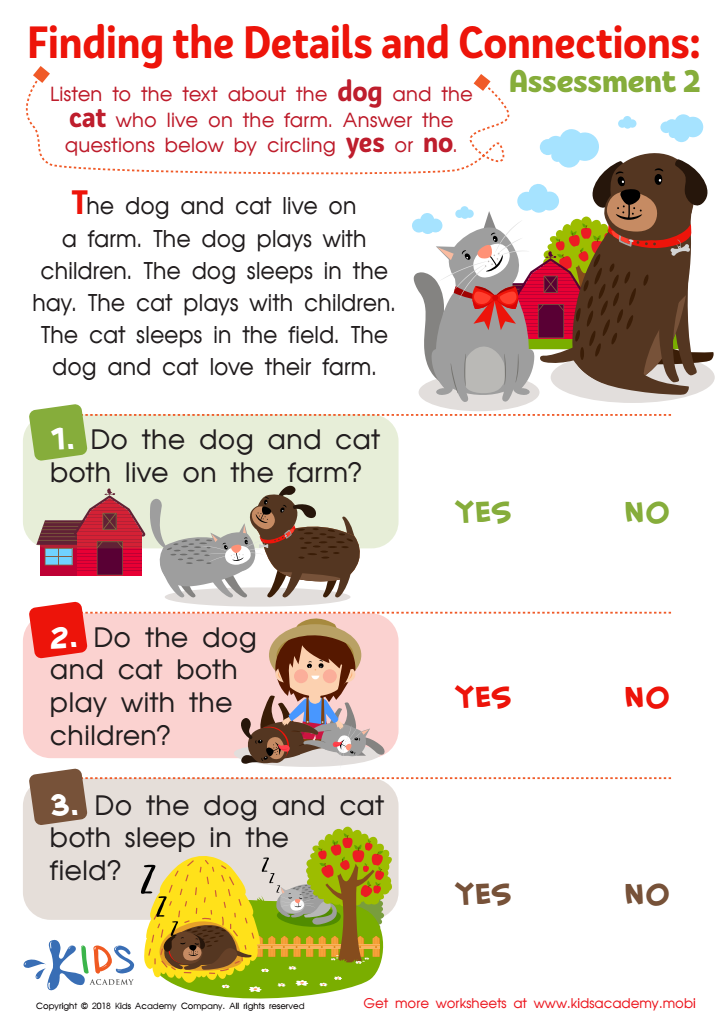
Finding the Details and Connections: Assessment 2 Worksheet
 Assign to My Students
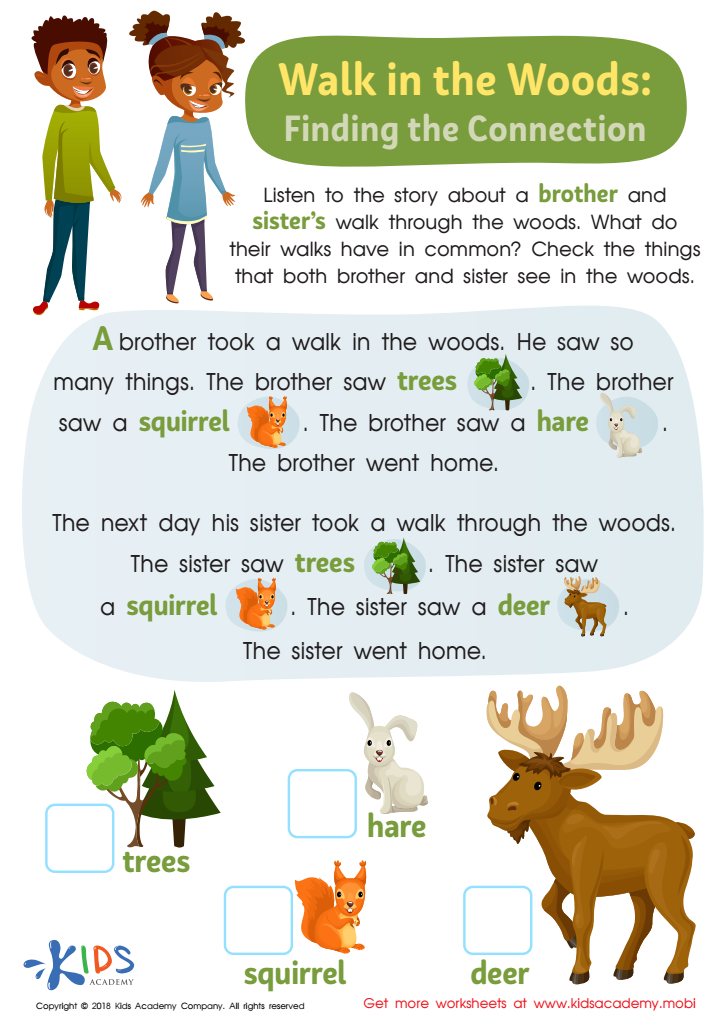
Walk In the Woods: Finding Connections Worksheet
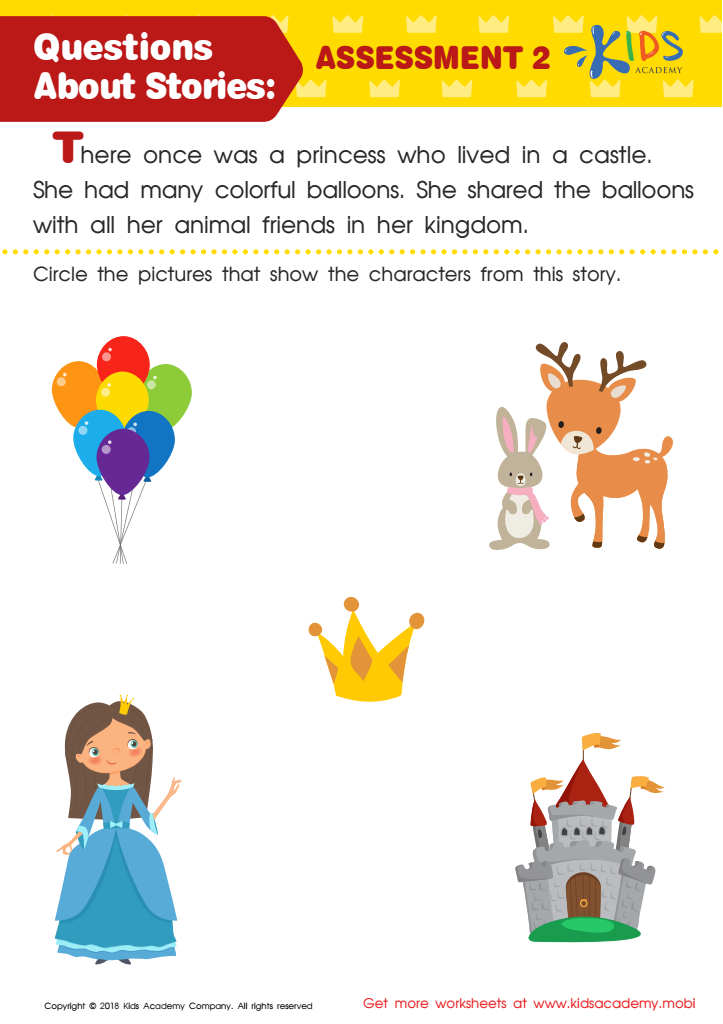
Questions About Stories: Assessment 2 Worksheet
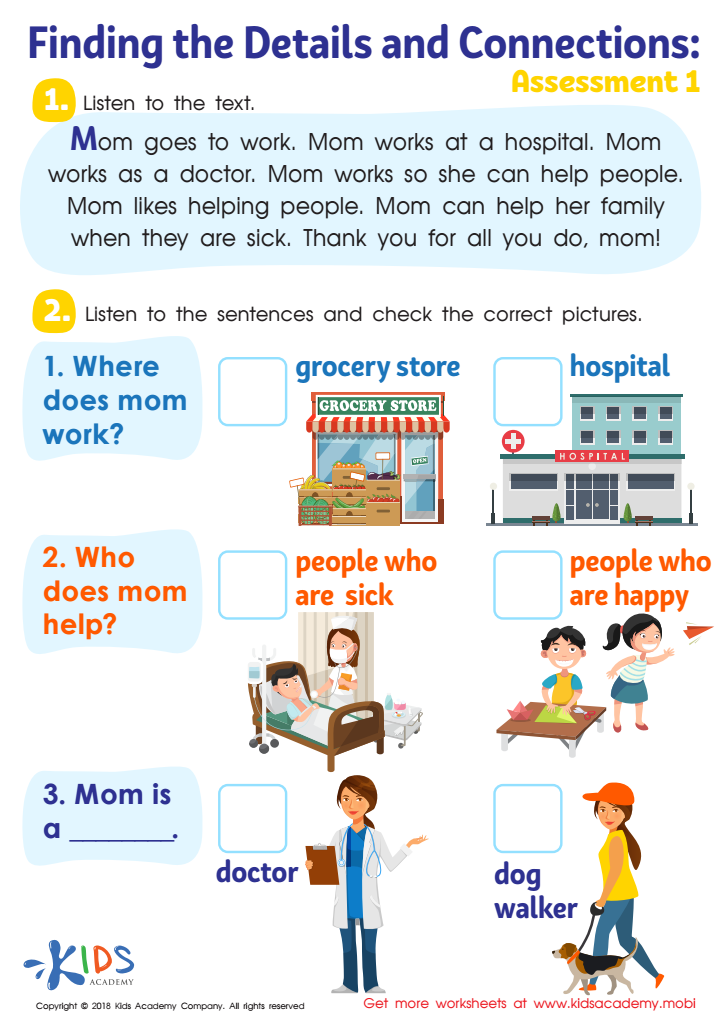
Finding the Details and Connections: Assessment 1 Worksheet
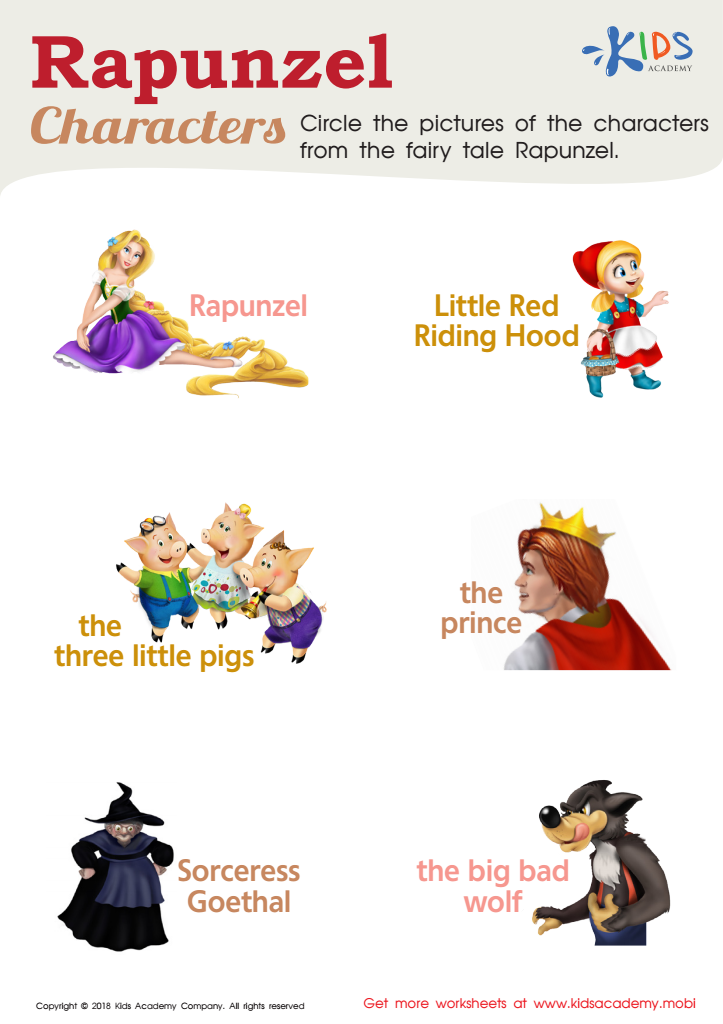
Rapunzel Characters Worksheet








Analytical skills and normal reading are crucial components of early childhood development for ages 3-6. During these formative years, the brain is highly receptive, making it an optimal time for cultivating fundamental abilities that form the foundation of future learning.
Analytical skills enable young children to understand relationships between ideas, solve problems, and think critically. When encouraged through engaging activities, like simple puzzles or questioning during storytelling, kids learn to analyze patterns, develop reasoning abilities, and enhance their memory. These skills underpin not only academic success but also everyday decision-making and social interactions.
Normal reading experiences, on the other hand, play a vital role in cognitive and linguistic development. Regular exposure to reading builds vocabulary, comprehension, and attention span. Even simple activities, like being read to or exploring picture books, ignite a love for learning, enhance imagination, and introduce kids to new concepts and cultures.
By fostering analytical skills and a love for reading, parents and teachers empower children with tools that are echoed throughout their educational journey and beyond. These early investments result in improved problem-solving abilities, better communication, and a lifelong enthusiasm for learning, setting a strong stage for future success. In essence, these foundational skills are pivotal in shaping well-rounded, capable, and intellectually curious individuals.








