Comprehension skills Normal Reading Worksheets for Ages 3-6
6 filtered results
Difficulty Level
Grade
Age
-
From - To
Subject
Activity
Standards
Boost your child's reading proficiency with our engaging Comprehension Skills Normal Reading Worksheets, designed specifically for ages 3 to 6. These worksheets feature age-appropriate content that encourages young learners to understand and interpret text, enhancing their critical thinking abilities. Through fun activities, children will explore stories and answer questions, helping them develop essential comprehension skills. Our resources are perfect for both classroom and home use, promoting language development in early learners. Cultivate a love for reading and ensure your child builds a strong foundation with our comprehensive and interactive worksheets. Dive into a world of literacy and watch their skills flourish!
Favorites
With answer key
Interactive
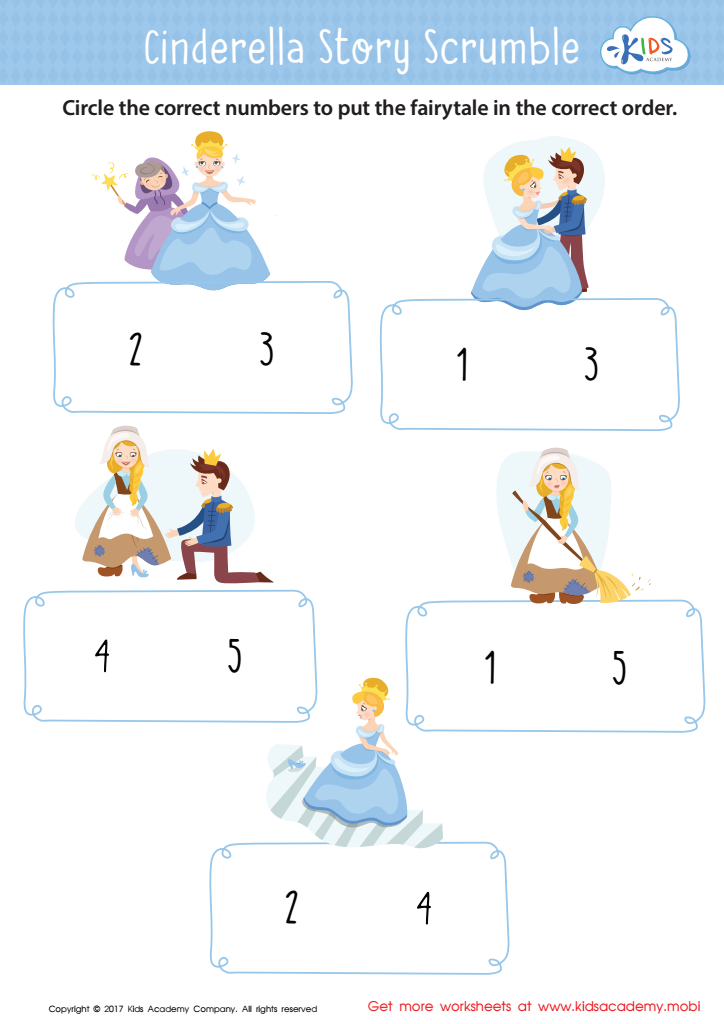
Cinderella Story Sequencing Worksheet
This worksheet helps strengthen reading comprehension skills by getting your child to remember key moments from the Cinderella story. They'll be asked to place pictures in the right order to tell the story.
 Assign to My Students
Cinderella Story Sequencing Worksheet
Worksheet
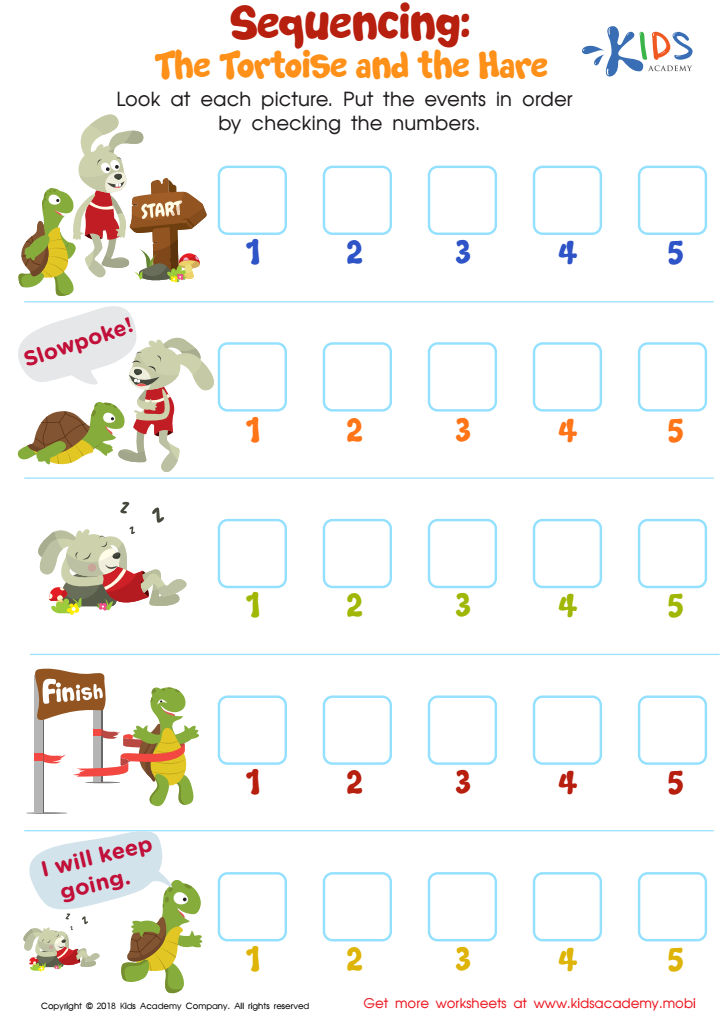
Sequencing: The Tortoise and the Hare Worksheet
Help your child become an independent reader and critical thinker with a sequencing worksheet from Kids Academy! Have them read the classic tale of the tortoise and the hare and use the accompanying worksheet to check their understanding of the story's sequence of events. Have kids identify the correct order of events by selecting the box next to the correct number for each image!
Sequencing: The Tortoise and the Hare Worksheet
Worksheet
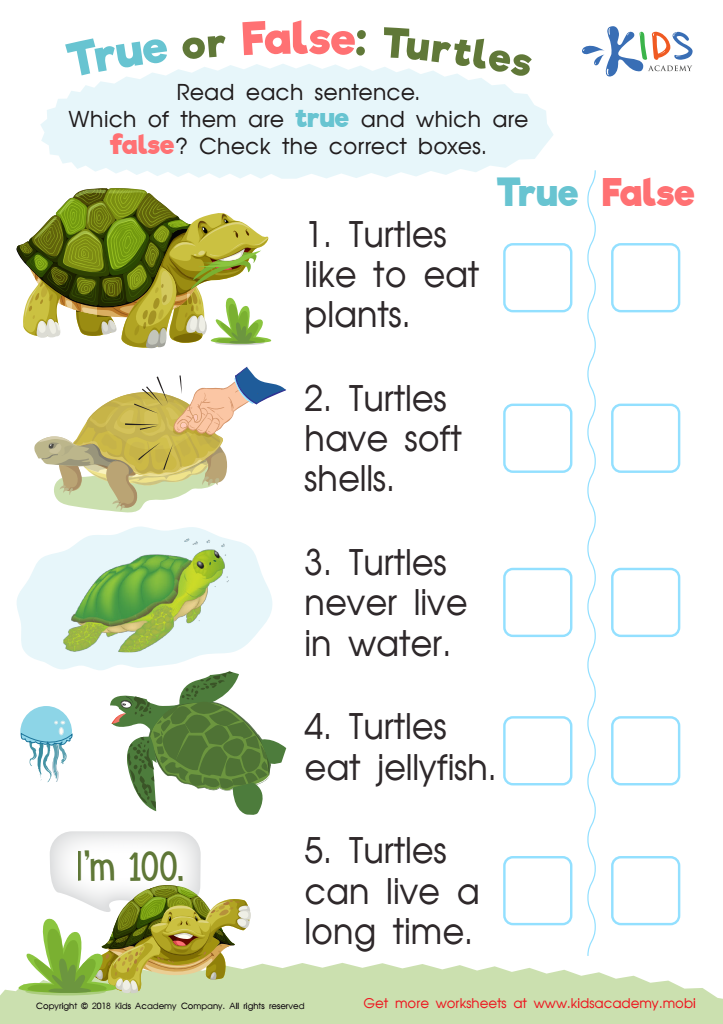
True or False: Turtles Worksheet
Print this free downloadable worksheet to strengthen your child's reading comprehension. Assist them to read each sentence and recall facts about turtles. Check true or false for each statement to verify their knowledge. Perfect for early learners!
True or False: Turtles Worksheet
Worksheet
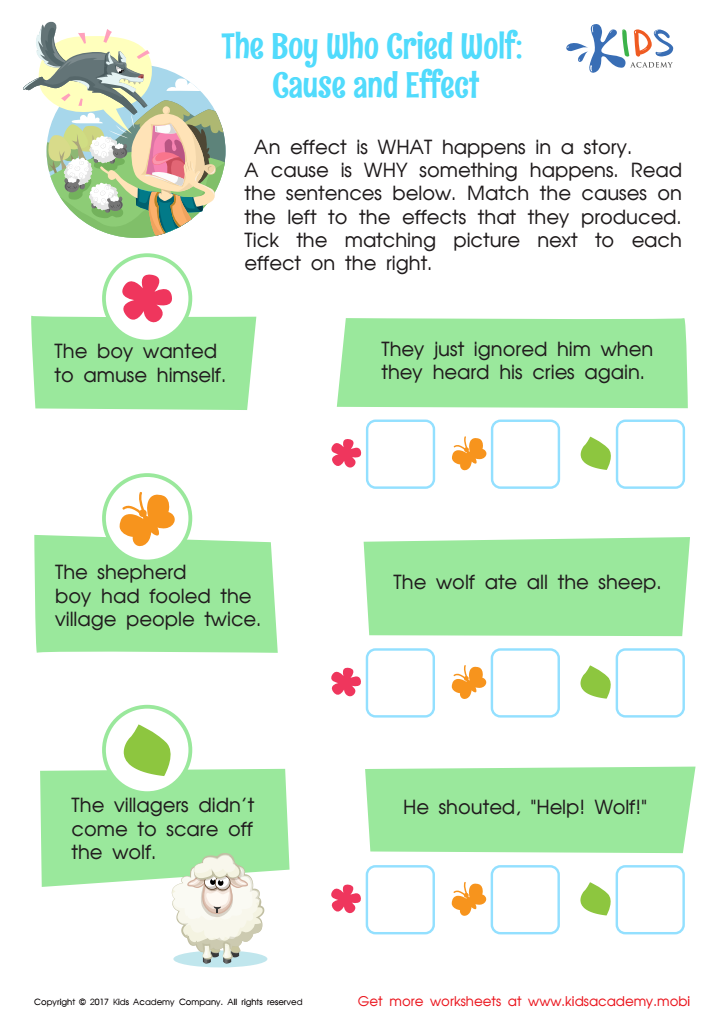
The Boy Who Cried Wolf: Cause and Effect Worksheet
With classic stories and fables, learning reading comprehension is easy - and fun!
The Boy Who Cried Wolf: Cause and Effect Worksheet
Worksheet
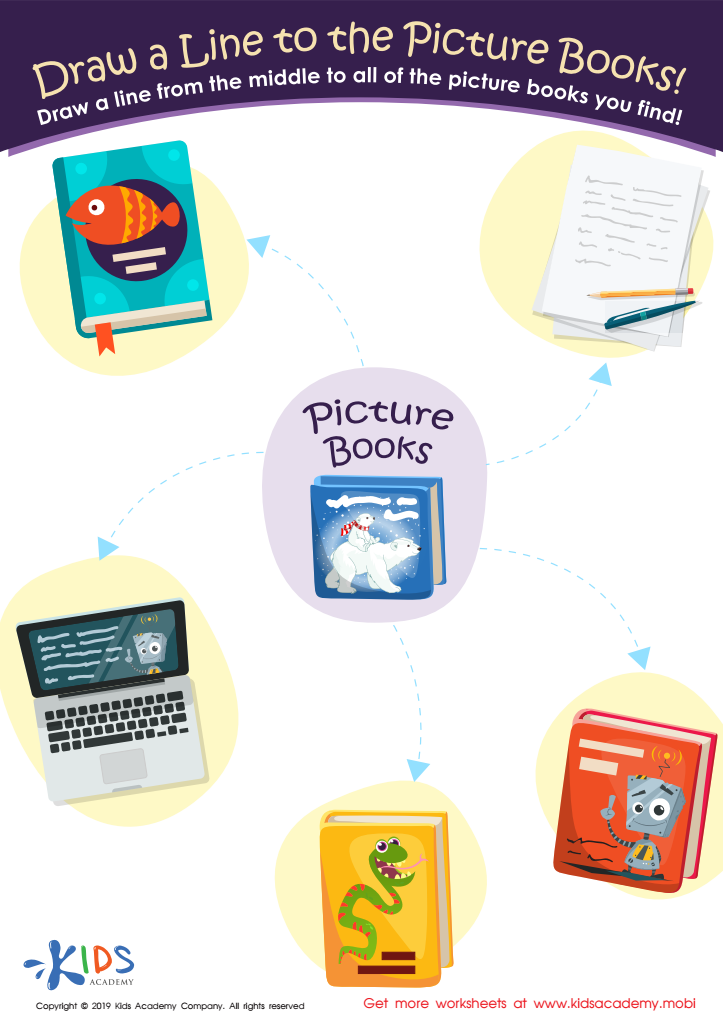
Draw a Line to the Picture Books Worksheet
Encourage your students to read and explore with this fun exercise! They'll draw a line from the word 'picture books' to the five objects. Picture books are exciting, with stories and colorful images. Make story time even more enjoyable with this worksheet!
Draw a Line to the Picture Books Worksheet
Worksheet
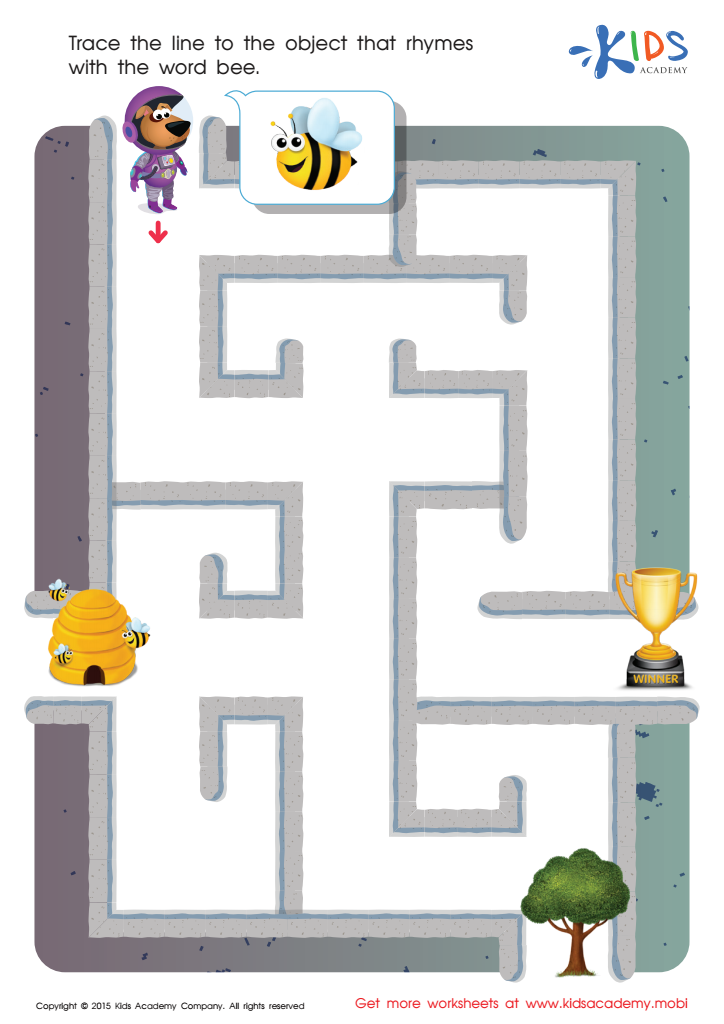
Bee Rhyming Words Worksheet
Download our new vocab builder worksheet and help our pup find rhymes. See how easy it is to trace the root between words! Make learning fun with our collection of English materials and worksheets. Get them now on our web site.
Bee Rhyming Words Worksheet
Worksheet
Join Kids Academy for Free
Who is primarily going to use this learning content?





.jpg)

Comprehension skills are crucial for children aged 3-6 as they lay the groundwork for future reading and academic success. During early childhood, children are not just learning to read words; they are also developing the ability to understand and interpret what they read. Strong comprehension skills facilitate deeper engagement with texts, enhance vocabulary acquisition, and improve critical thinking abilities.
Parents and teachers should care about these skills because they directly influence a child's confidence and motivation to read. When children can comprehend stories and content, they become more enthusiastic readers, fostering a lifelong love for literature. Moreover, strong comprehension abilities correlate with greater academic achievement across subjects, as understanding written material is essential in all areas of learning.
Furthermore, engaging with stories and answering questions about them helps develop language skills, boosts social-emotional growth by allowing children to explore different perspectives, and encourages imaginative thinking. By promoting effective comprehension strategies, such as questioning, predicting, and summarizing, both parents and teachers provide children with essential tools for navigating their educational journey successfully. Investing in comprehension skills at this young age ultimately creates a strong foundation for personal and academic growth.