Sentence construction Normal Reading Worksheets for Ages 3-6
5 filtered results
-
From - To
Enhance your child's reading and language skills with our Sentence Construction Normal Reading Worksheets, designed specifically for ages 3-6. These engaging worksheets provide a fun and interactive way for young learners to build sentences, improving their vocabulary and comprehension. With vibrant illustrations and kid-friendly activities, children will enjoy practicing their sentence structure in a playful environment. Our worksheets cater to various learning levels, ensuring that every child can progress at their own pace. Perfect for homeschooling, classroom settings, or additional practice at home, these resources will support your child's literacy development while fostering a love for reading. Explore our collection today!
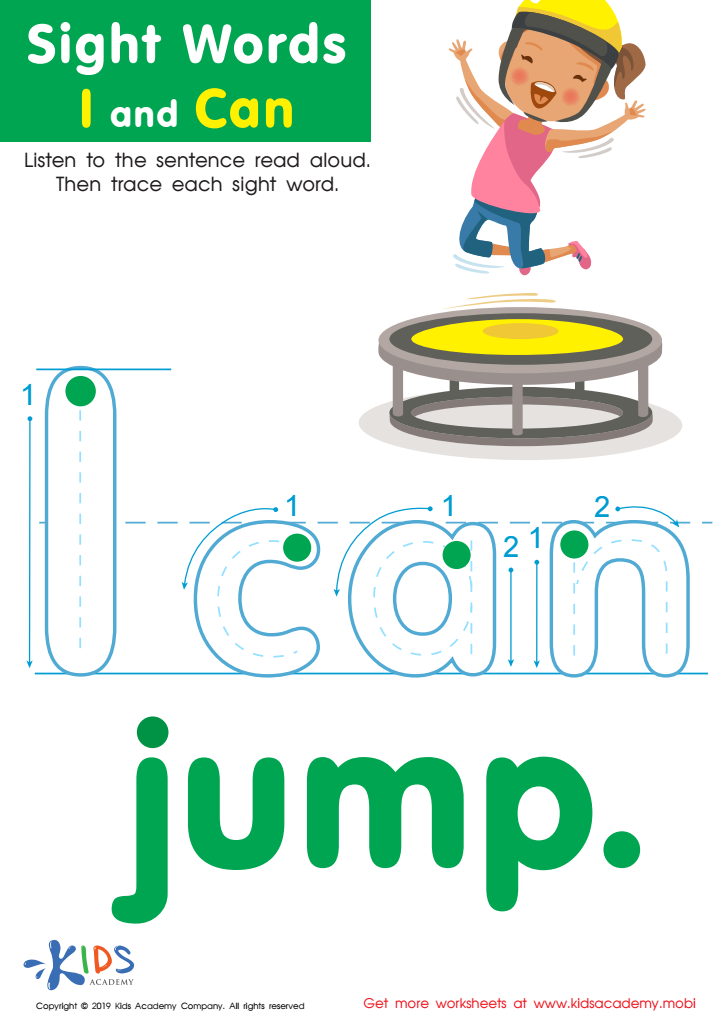
Sight Words I Can Worksheet
 Assign to My Students
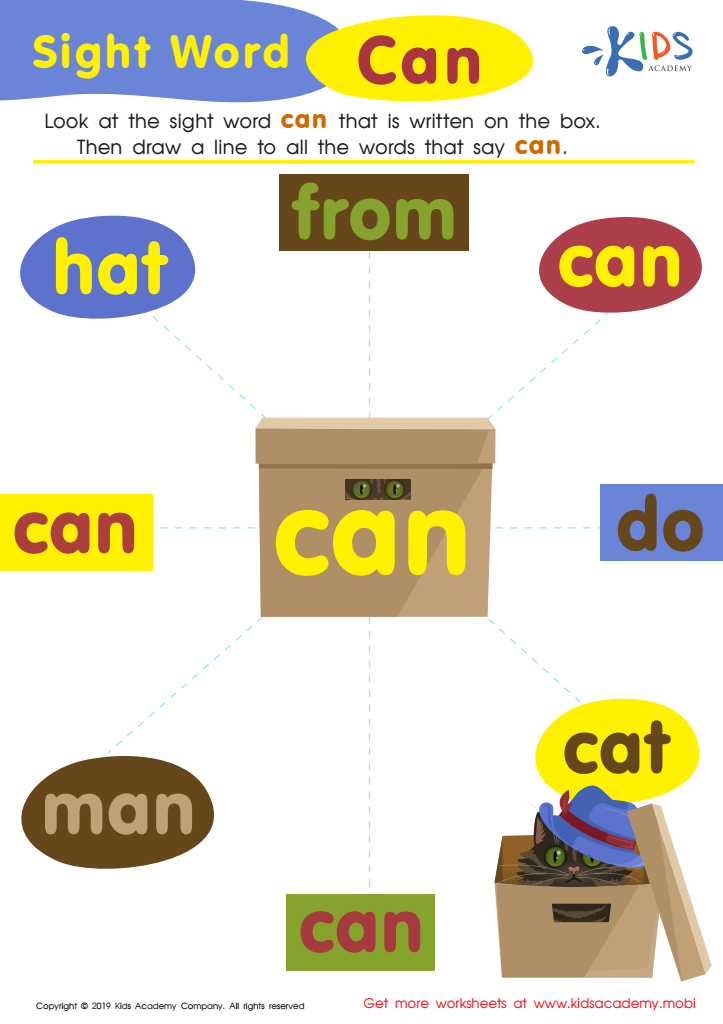
Sight Word Can Worksheet
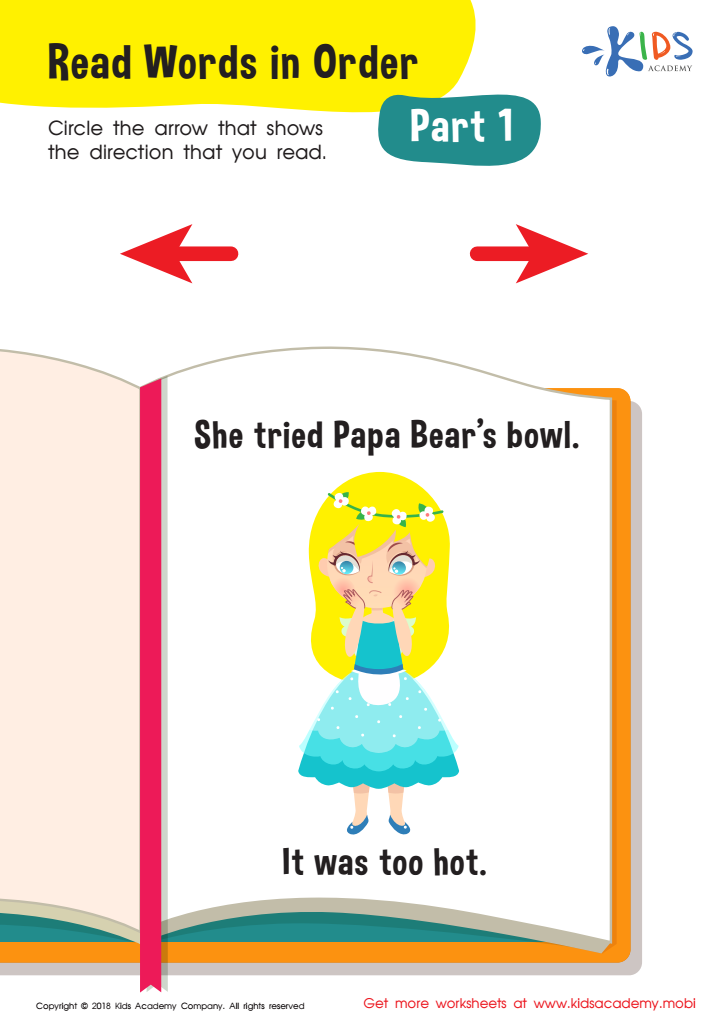
Read Words Order Part 1 Worksheet
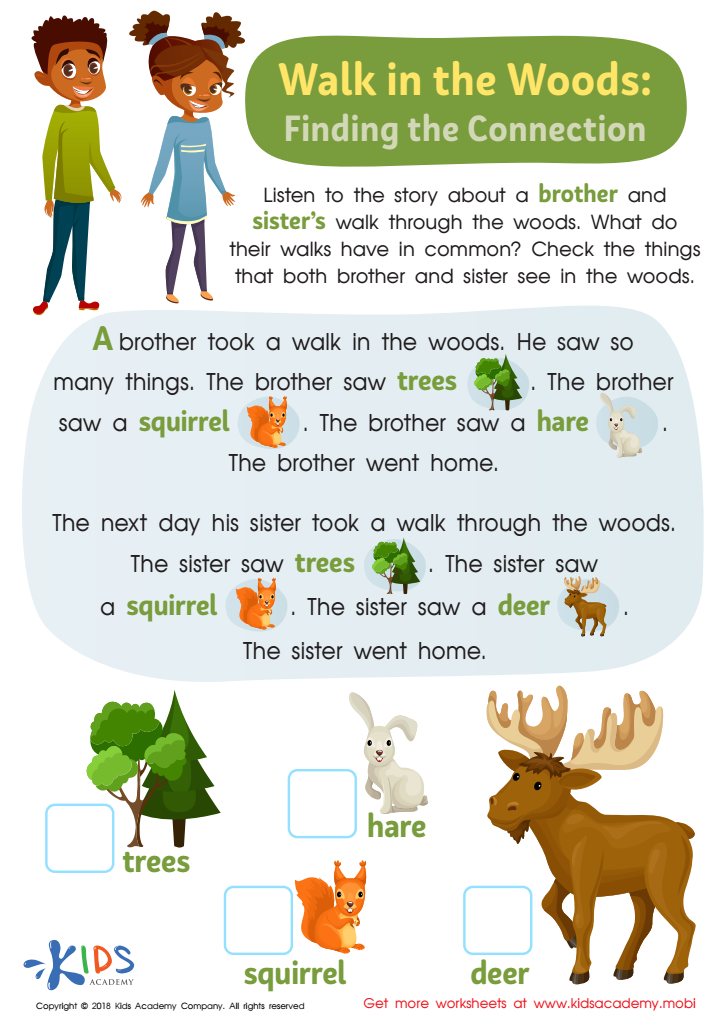
Walk In the Woods: Finding Connections Worksheet
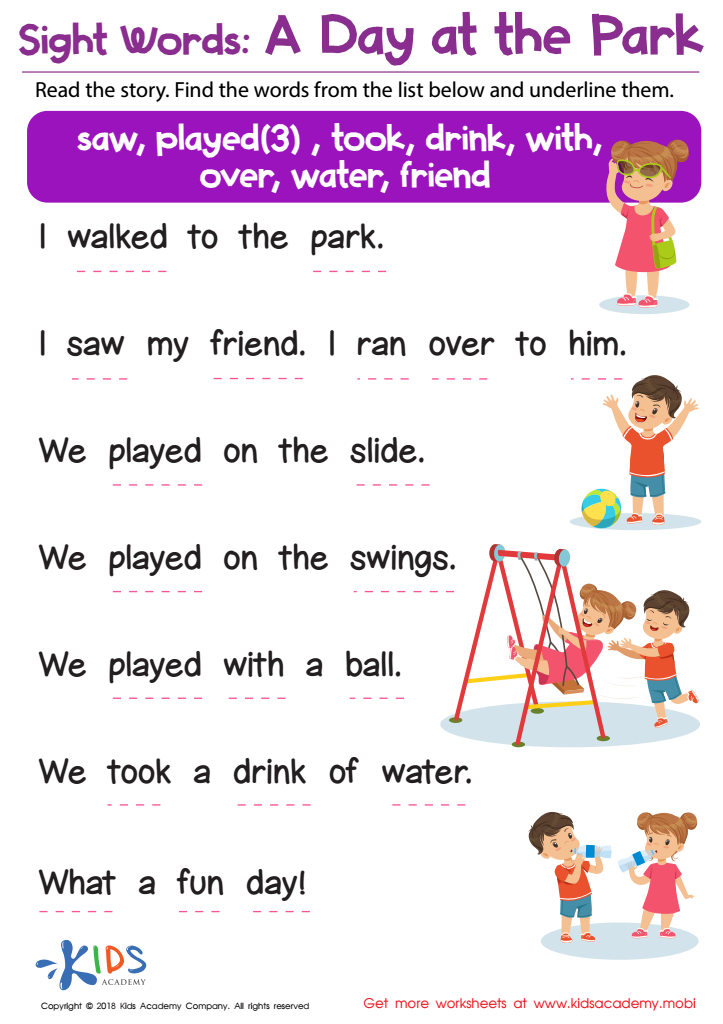
Sight Words: A Day at the Park Worksheet







Parents and teachers should care about sentence construction and normal reading for children aged 3-6 because these foundational skills significantly influence a child's overall literacy development and cognitive growth. During these early years, children are actively absorbing language, and forming sentences helps them make sense of the world around them. By encouraging sentence construction, adults support children's ability to express their thoughts and feelings clearly, building their communication skills.
Moreover, engaging in normal reading activities introduces young learners to vocabulary, grammar, and sentence structure in a meaningful context. It fosters a love for reading and instills critical thinking skills as children learn to comprehend and analyze stories. This early exposure is crucial for their future academic success; children who start learning these skills at a young age tend to perform better in school.
Additionally, involvement in reading and sentence construction encourages bonding opportunities between children and adults, as shared reading sessions promote emotional security and social skills. When parents and teachers prioritize these activities, they are not only enhancing their children's language capabilities but also nurturing their creativity and imagination. Ultimately, early emphasis on these skills lays a robust foundation for lifelong learning and literacy development.








