
Vocabulary enhancement Normal Reading Fiction Worksheets for Ages 3-6
9 filtered results
Difficulty Level
Grade
Age
-
From - To
Subject
Activity
Standards
Introducing our engaging "Vocabulary Enhancement Normal Reading Fiction Worksheets" designed specifically for children aged 3-6! These interactive and colorful worksheets promote language development through fun fictional stories, vibrant illustrations, and relatable characters. Aimed at enhancing vocabulary, they encourage young learners to identify words, understand their meanings, and explore usage in context. Each worksheet is crafted to stimulate imagination and foster a love for reading while reinforcing essential literacy skills. Perfect for both home and classroom use, these resources ensure a delightful learning experience, setting a solid foundation for lifelong language proficiency. Start nurturing your child's vocabulary skills today!
Favorites
With answer key
Interactive
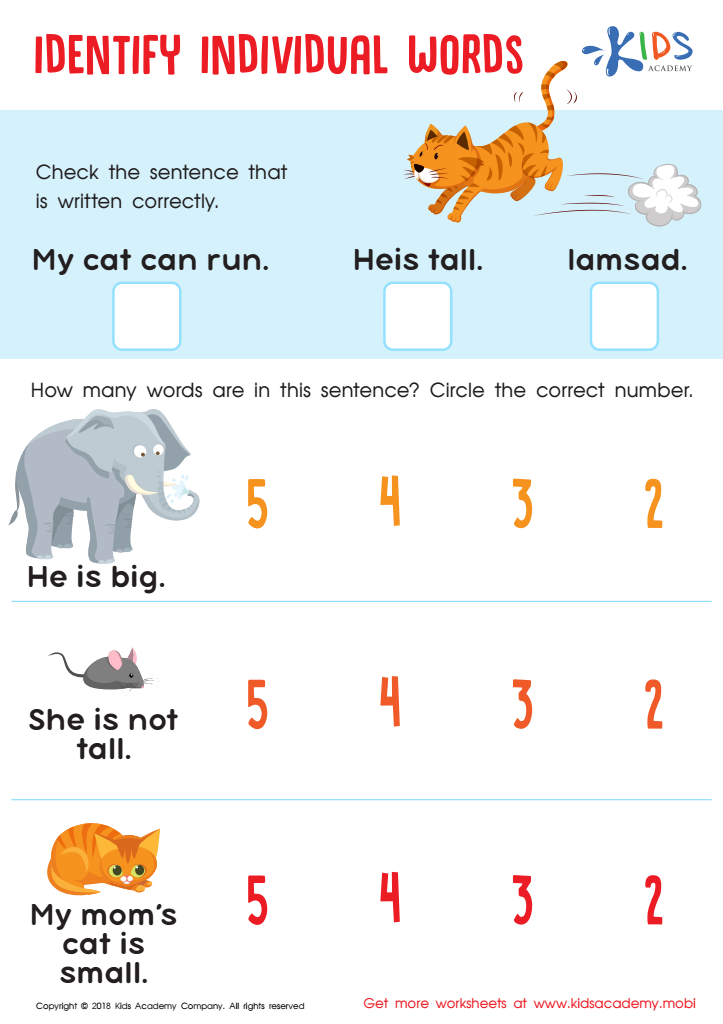
Identify Individual Words Worksheet
Does your child have trouble constructing sentences? Check out this worksheet! It will help them identify words that make up sentences and assess how well they can read and answer questions. The first part tests how well they can recognize a written sentence. The second part has them read questions and circle the correct number of words. Give it a try!
 Assign to My Students
Identify Individual Words Worksheet
Worksheet
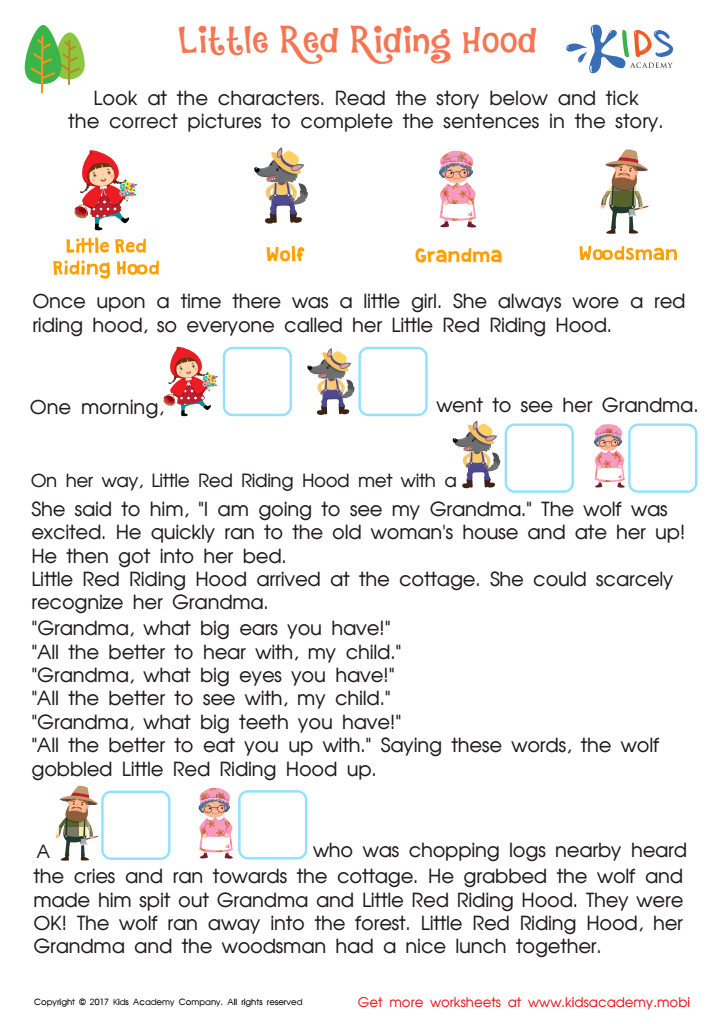
Little Red Riding Hood Printable
Give them this worksheet to practice.
Help your child strengthen their reading skills with this worksheet. It asks them to read Little Red Riding Hood and fill in the missing words using context clues from the text. Encourage your child to look at the surrounding words to determine the answer and get the best results!
Little Red Riding Hood Printable
Worksheet
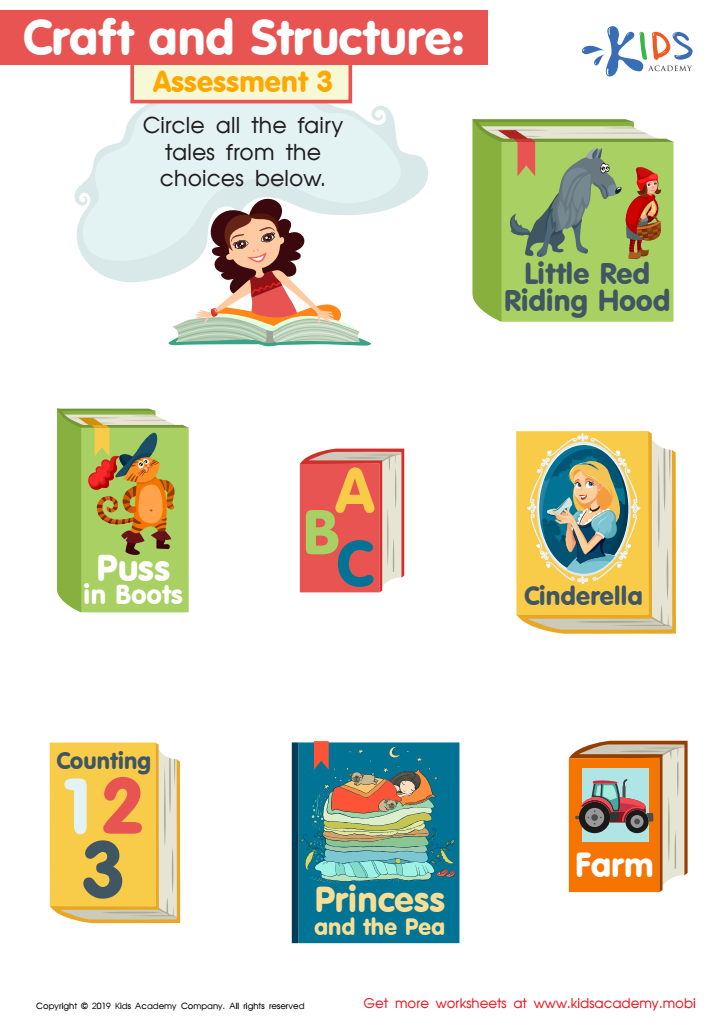
Craft and Structure: Assessment 3 Worksheet
Before starting the worksheet, ask your kids to recall their favorite bedtime stories. What characters and events can they remember? Four popular children's stories are hidden among pictures of other objects - help them search and circle the fairy tales in this PDF.
Craft and Structure: Assessment 3 Worksheet
Worksheet
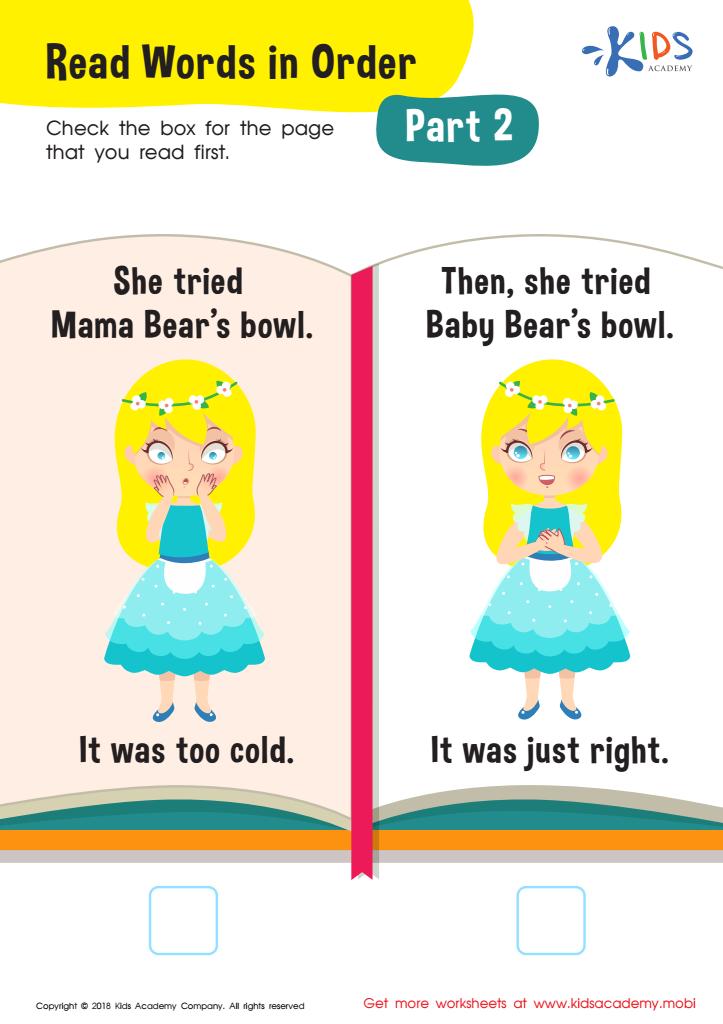
Read Words Order Part 2 Worksheet
Help your students make progress with reading by using this easy worksheet. It includes two pictures with short sentences your child should be able to read. Ask them to read these out loud, and if they're struggling, help them. Then, they should check the box that shows the page they'd read first.
Read Words Order Part 2 Worksheet
Worksheet
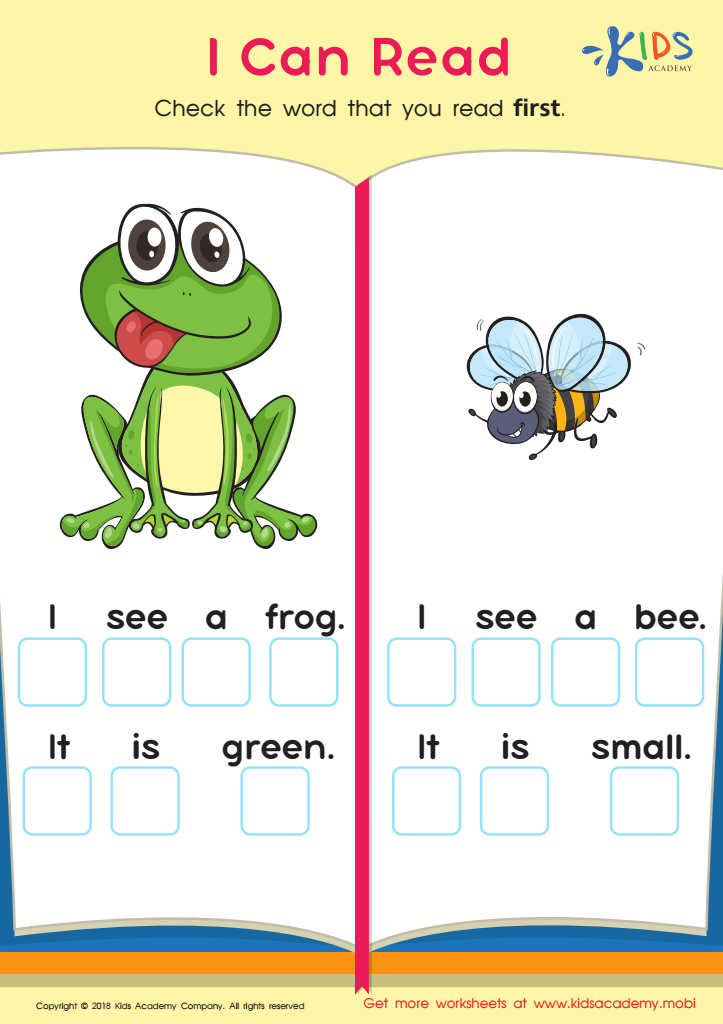
I Can Read Worksheet
Test your child's reading skills with this fun worksheet. See how well they know one-letter, two-letter, and five-letter words. Ask your little one to read the sentences and tick the word they identify first. It's a great way to track their progress and help them become more confident readers.
I Can Read Worksheet
Worksheet
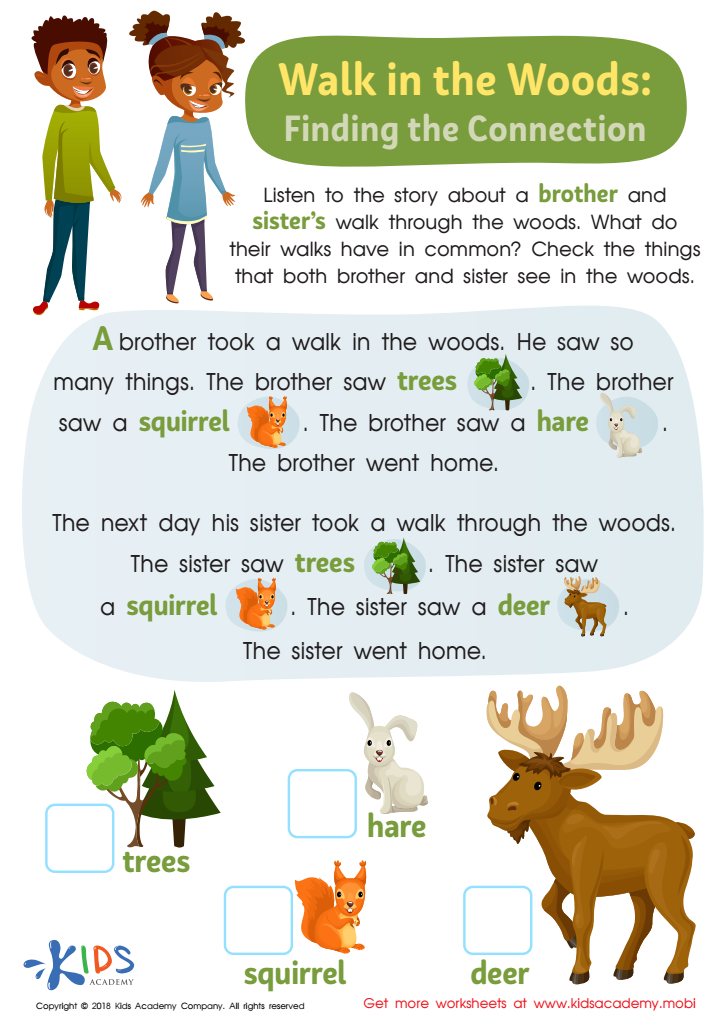
Walk In the Woods: Finding Connections Worksheet
Brother and sister took a walk in the woods to connect with nature and get some exercise. As they went, they noted different things like birds and plants, which they share in this story. Read it to your little ones, and help them check off the items the two saw. It's a great way to learn about nature and enjoy the outdoors.
Walk In the Woods: Finding Connections Worksheet
Worksheet
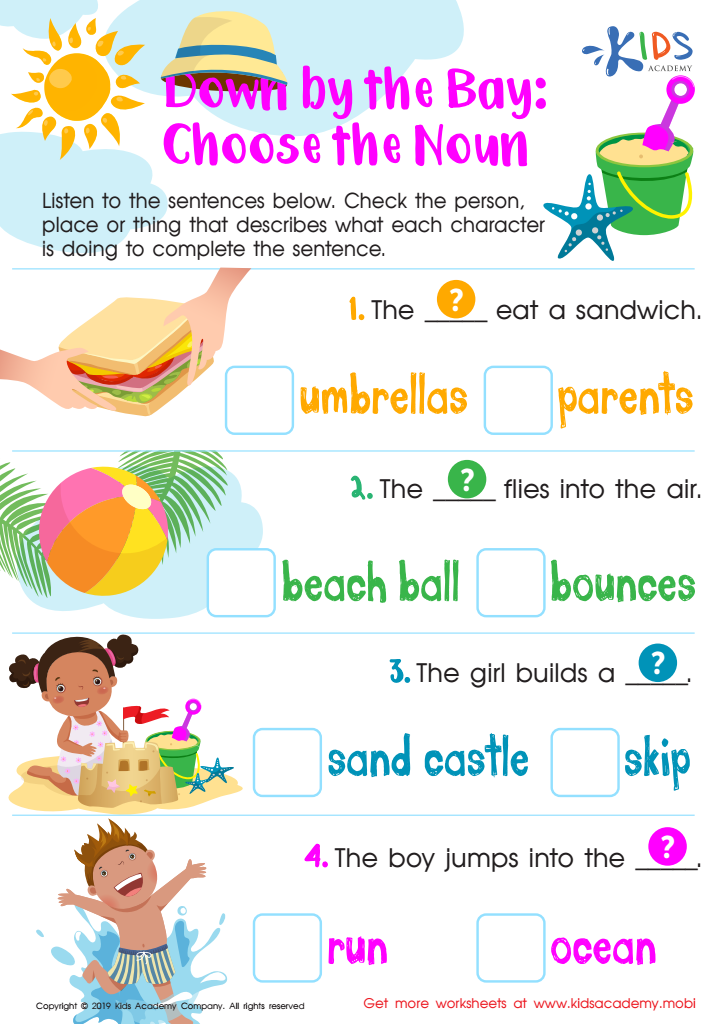
Down by the Bay: Choose the Noun Worksheet
Teach your child the basics of speaking and constructing English, like the parts of speech. Nouns are especially important; they are names of people, animals, objects, places, or things. Go through this worksheet with your kids and have them identify the nouns in the sentences. This exercise will help them understand the concept better.
Down by the Bay: Choose the Noun Worksheet
Worksheet
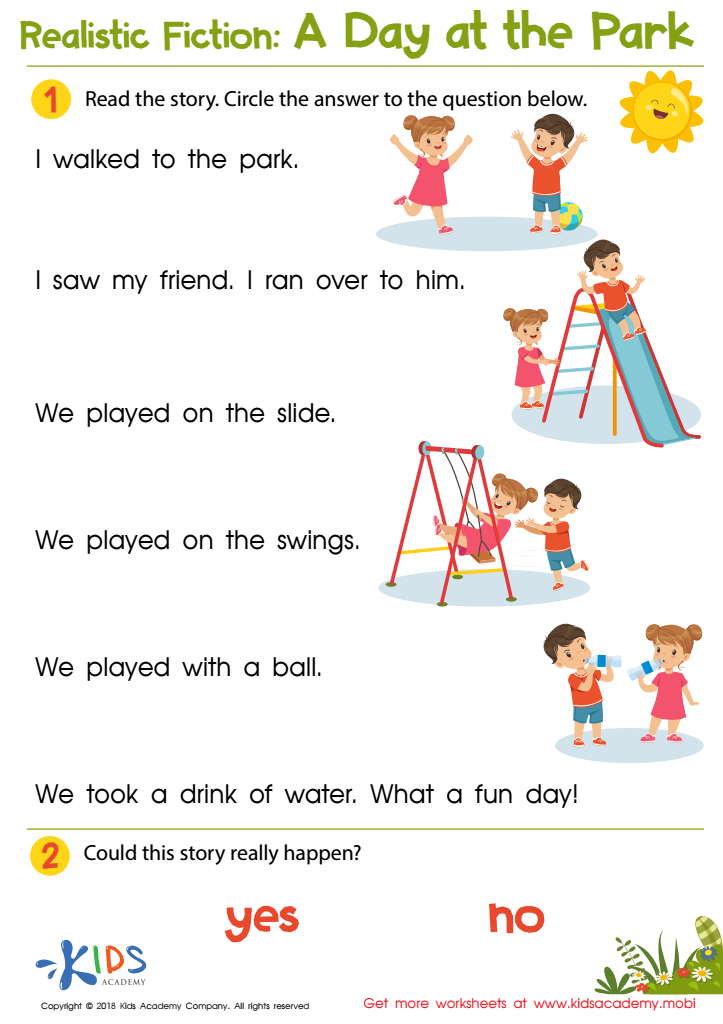
A Day at the Park Worksheet
Kids as young as preschool-age can be taught to evaluate stories! Use this fun worksheet about a day at the park. Read each sentence aloud, looking at the pictures. Ask your child if the events in the story could happen in real life - if yes, circle yes, otherwise circle no. When finished, discuss with them the genre, realistic fiction.
A Day at the Park Worksheet
Worksheet
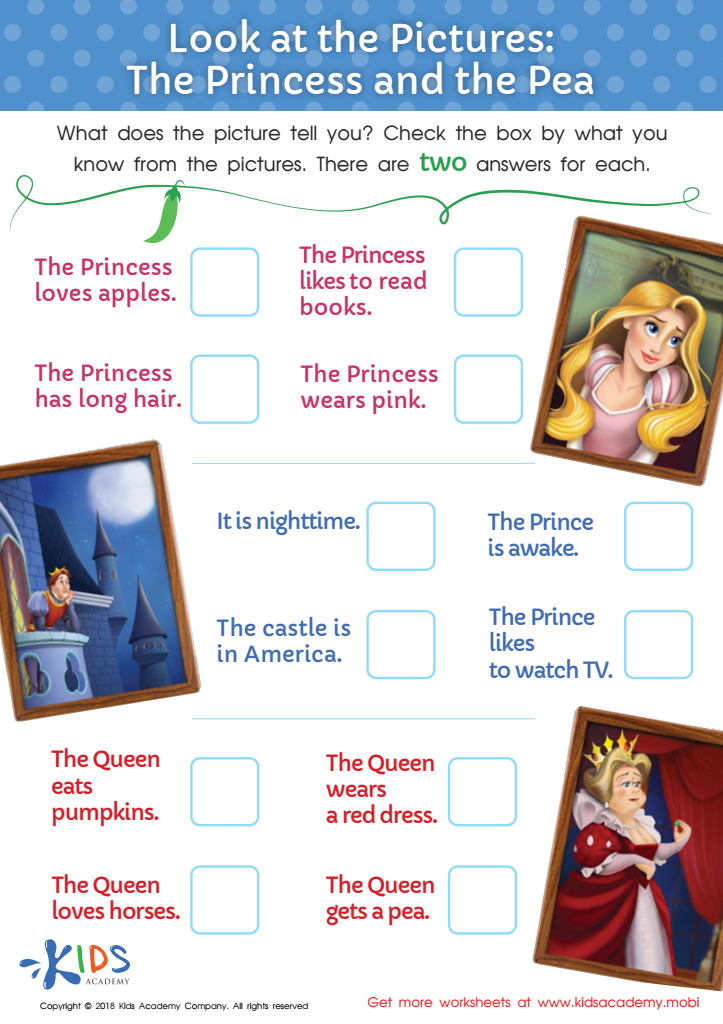
Look at the Pictures: The Princess and the Pea Worksheet
Early readers can benefit from picture clues to understand stories and text. Looking at images helps them learn the meaning of words and comprehend events. Use this worksheet on The Princess and the Pea to let students observe and learn from the pictures. It's a great way to help them comprehend early reading materials.
Look at the Pictures: The Princess and the Pea Worksheet
Worksheet
Join Kids Academy for Free
Who is primarily going to use this learning content?







.jpg)
Vocabulary enhancement through normal reading fiction is crucial for children aged 3-6, as it lays the foundation for their language development and cognitive skills. During these formative years, children are incredibly receptive to new words and concepts. Engaging with fiction allows them to encounter varied vocabularies in context, making it easier to understand and remember words. Stories introduce them to different characters, settings, and emotions, enriching their lexical knowledge and helping them develop social and emotional comprehension.
Moreover, reading fiction stimulates imagination and creativity, encouraging children to express themselves verbally. It also fosters a love for reading, which is vital for lifelong learning. High-quality fiction can spark curiosity, prompting children to ask questions and engage in discussions, further enhancing their vocabulary and communication skills.
For parents and teachers, understanding the importance of vocabulary enhancement through reading fiction translates to promoting effective literacy practices. Regular reading sessions can be incorporated into daily routines, creating opportunities for bonding and shared experiences. By prioritizing this aspect of early education, parents and teachers can empower children with the necessary tools to succeed academically and socially. Ultimately, fostering a strong vocabulary early on sets the stage for healthier communication skills and improved academic performance throughout their lives.







