
Animal identification Normal Science Worksheets for Ages 3-6
4 filtered results
Difficulty Level
Grade
Age
-
From - To
Subject
Activity
Standards
Introduce your little ones to the fascinating world of animals with our Animal Identification Normal Science Worksheets, perfect for children ages 3-6! These engaging and educational worksheets help young learners develop essential cognitive and observational skills while having fun with a variety of animal-themed activities. Each worksheet is designed to encourage curiosity and boost confidence as kids identify and learn about different animals, their habitats, and characteristics. Guided by vibrant images and easy-to-follow instructions, our worksheets make early science learning enjoyable and accessible for preschoolers and kindergarteners. Explore our collection today and inspire a lifelong love for nature and wildlife!
Favorites
With answer key
Interactive
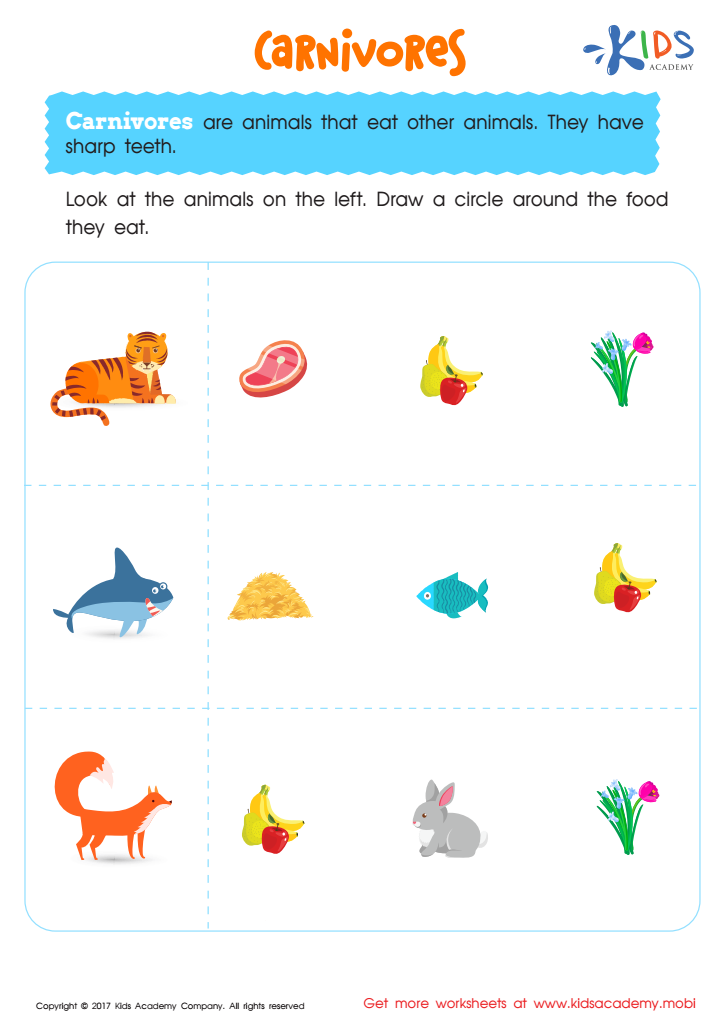
Carnivores Worksheet
Boost their vocabulary and help them explore the incredible world of carnivores.
 Assign to My Students
Carnivores Worksheet
Worksheet
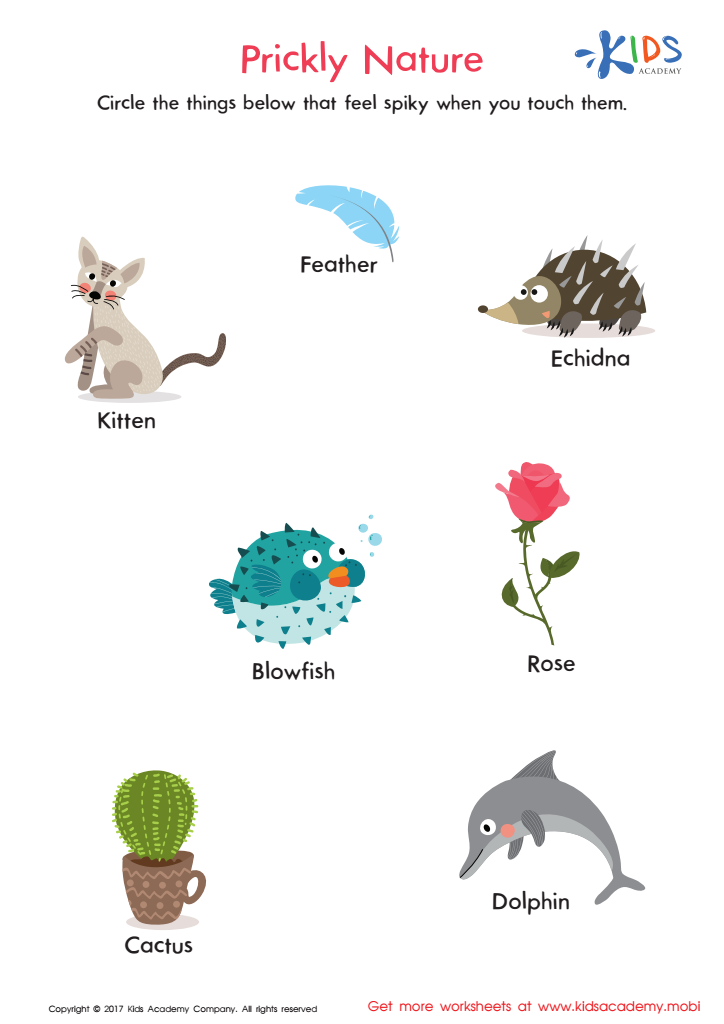
Prickly Nature Worksheet
Help your child stay safe and enhance critical thinking skills with this prickly nature worksheet. It can help them recognize spiky objects in their environment by teaching them to differentiate between prickly and soft textures. Plus, your kid will learn how to admire and avoid them. Get started today!
Prickly Nature Worksheet
Worksheet
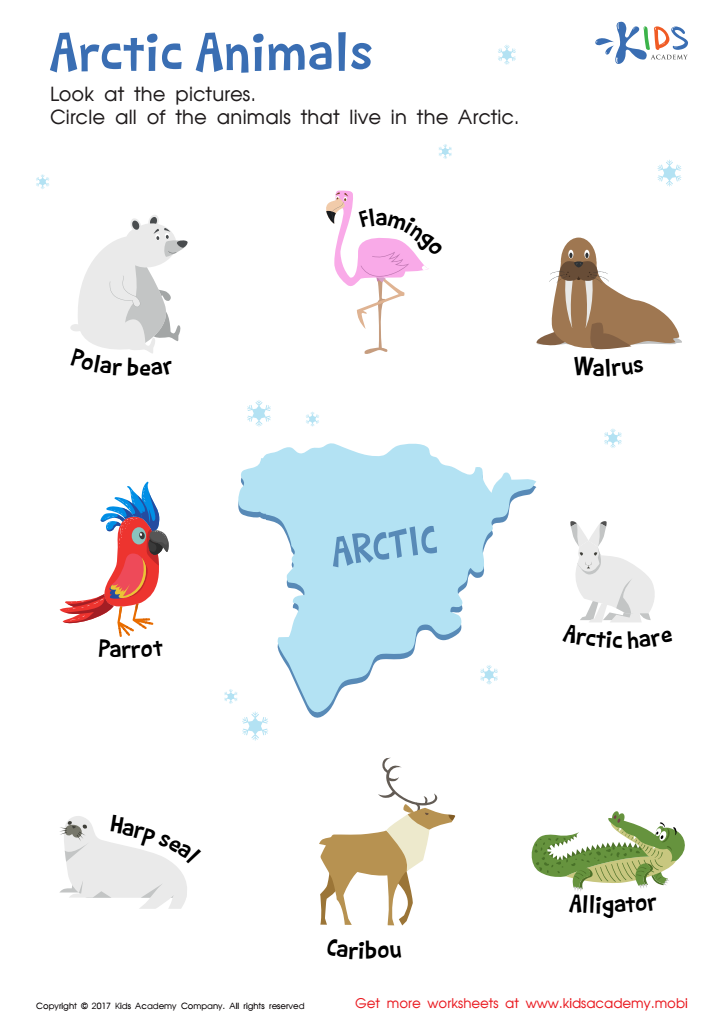
Arctic Animals Worksheet
Kids love animals and this worksheet is a great way to teach them where they live. It reinforces classification skills and introduces new animals, like the Arctic hare. Use it to discuss the Arctic climate and how these animals live, then ask your child where other animals live to keep the conversation going.
Arctic Animals Worksheet
Worksheet
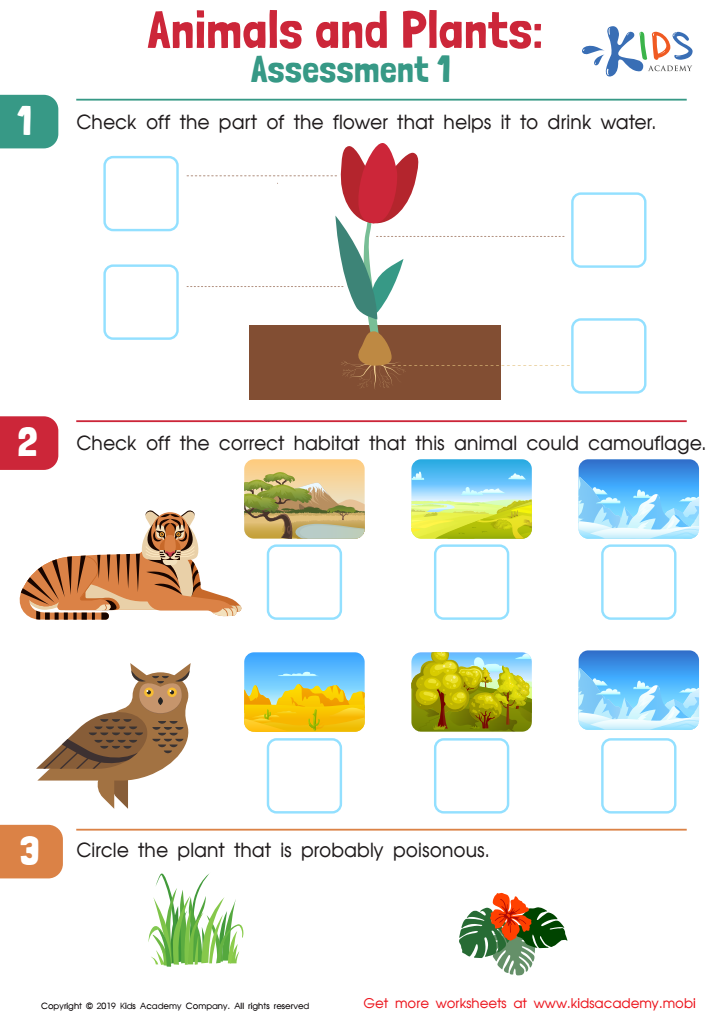
Animals and Plants: Assessment 1 Worksheet
Do you want to easily assess your child's understanding of basic science concepts? This colorful PDF offers a free opportunity for them to test their knowledge about parts of a flower, poisonous plants, animal habitats and more! Bright pictures make it fun and easy for you to see what they know.
Animals and Plants: Assessment 1 Worksheet
Worksheet
Join Kids Academy for Free
Who is primarily going to use this learning content?








Introducing animal identification and basic science concepts to young children (ages 3-6) is crucial for multiple developmental reasons. At this formative stage, children are naturally curious about the world around them, and fostering this curiosity can set a solid foundation for lifelong learning. Understanding the basics of animal identification can enhance a child's observational skills and attention to detail, as they learn to recognize different species, patterns, and characteristics.
From an educational standpoint, this early introduction to science can foster a sense of wonder and excitement about the natural world. It encourages children to ask questions, explore their environment, and develop early scientific thinking skills. In addition, animal identification helps build vocabulary and language skills as children are introduced to new words and concepts related to different species and their habitats.
Socially and emotionally, learning about animals can teach empathy and compassion. Understanding that animals have needs and feelings similar to humans can foster a sense of responsibility and kindness towards living beings. It also integrates well with outdoor activities, promoting physical activity and a connection with nature. Altogether, animal identification and normal science concepts are not just about memorizing facts; they are about creating well-rounded, inquisitive, and compassionate future citizens.







