
Science vocabulary expansion Normal Science Worksheets for Ages 3-6
3 filtered results
Difficulty Level
Grade
Age
-
From - To
Subject
Activity
Standards
Explore the exciting world of science with our Science Vocabulary Expansion Normal Science Worksheets for ages 3-6! Designed to foster an early love for science, these engaging and educational worksheets help young learners expand their vocabulary through fun and interactive activities. Our expertly crafted worksheets cover a range of fundamental science topics, making it easy for kids to grasp new concepts. Each worksheet is tailored to enhance learning skills, encourage curiosity, and build confidence. Start your child's scientific journey today with our comprehensive and accessible resources—because every young mind deserves to discover the wonders of science!
Favorites
With answer key
Interactive
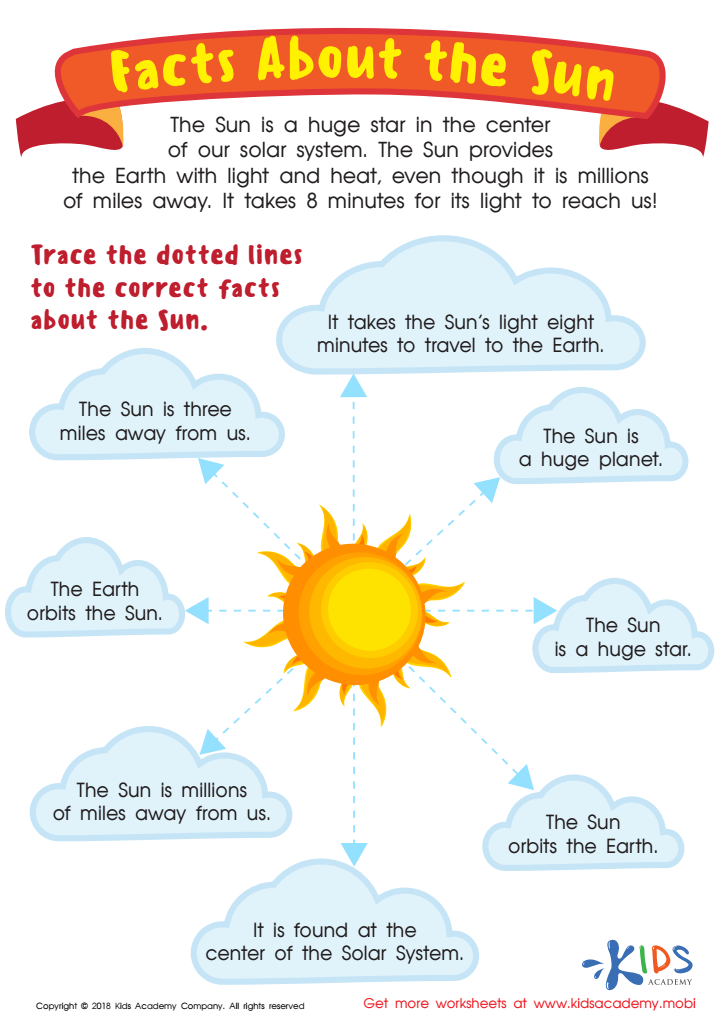
Facts About the Sun Worksheet
Long ago humans thought the Earth was the center of the solar system, but we now know it's really the sun! Use this science worksheet to review basic facts about the sun with your early learner. Have them recall prior knowledge about space before tackling the "true or false" questions. Trace from the sun in the center to the true facts in the clouds.
 Assign to My Students
Facts About the Sun Worksheet
Worksheet
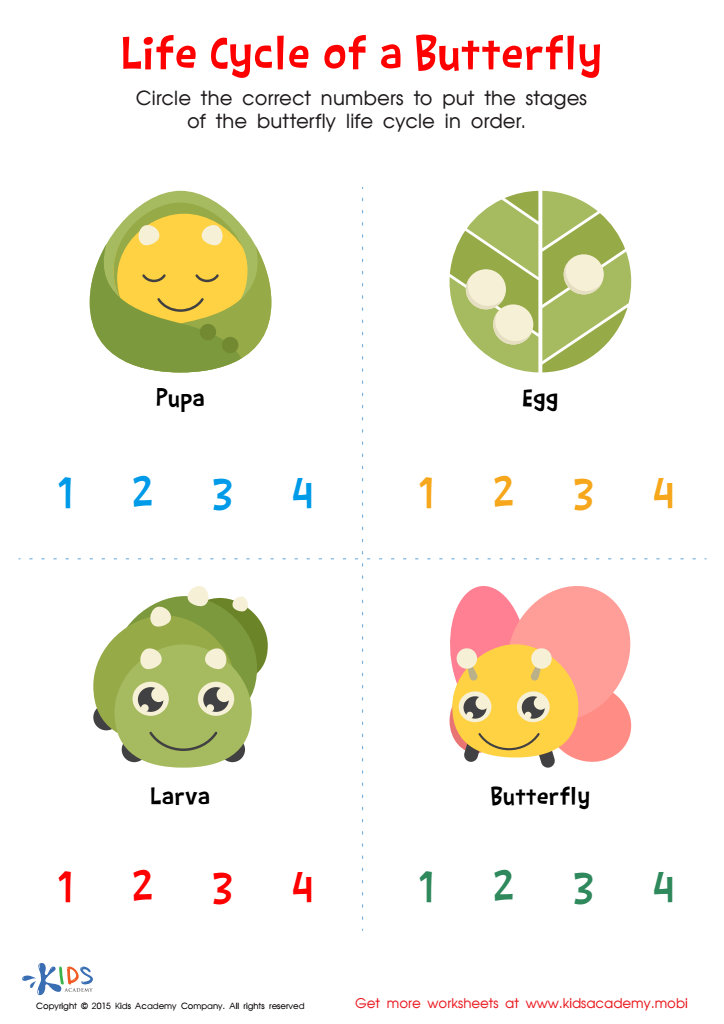
Life Cycle of Butterfly Printable
Kids and grownups alike marvel at the beauty of butterflies. With this printable worksheet, kids can review the life cycle of these favorite insects and strengthen cognitive and problem solving skills. From egg to butterfly, kids will order the stages and use the best strategy to solve it. Guide them as they work and they'll learn multiple skills.
Life Cycle of Butterfly Printable
Worksheet
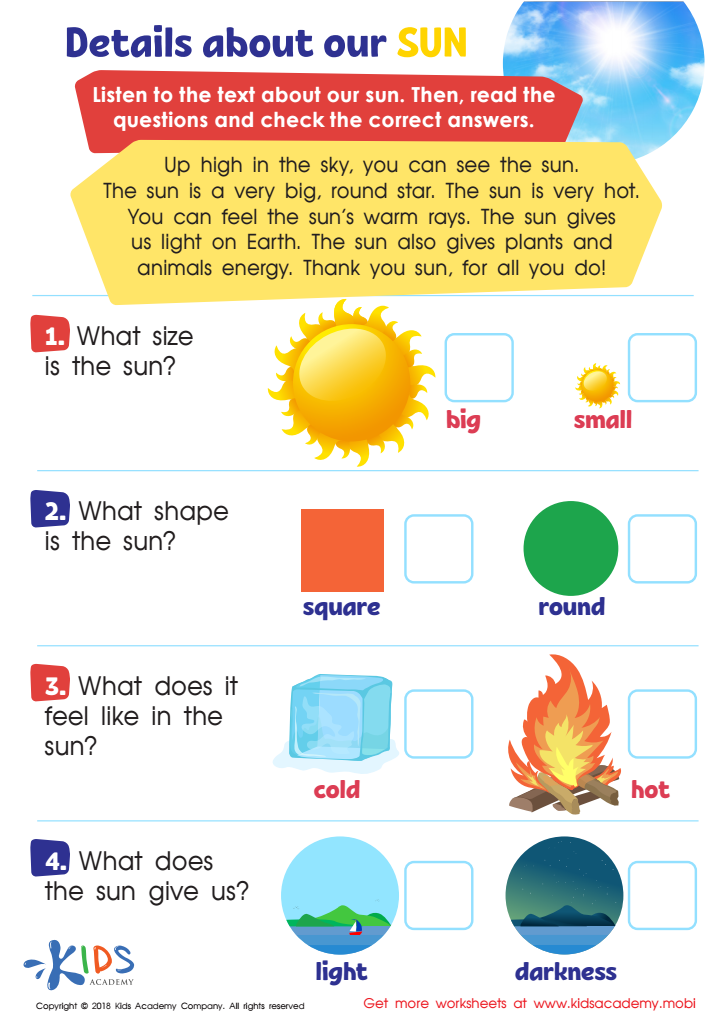
Details About Our Sun Worksheet
Teach your kindergartners about the sun with this worksheet. Read the informative text to them, then ask the questions and help them mark the right answers. Discover what your student knows about this big glowing ball of fire in the sky.
Details About Our Sun Worksheet
Worksheet
Join Kids Academy for Free
Who is primarily going to use this learning content?







.jpg)
Expanding science vocabulary for children ages 3-6 is crucial because it sets a strong foundation for their overall cognitive development and academic success. At this formative stage, young brains are exceptionally adept at absorbing new information, creating an optimal period for introducing complex concepts in a digestible way. By incorporating scientific terms and ideas into regular conversations and activities, parents and teachers can spark children's natural curiosity about the world and encourage critical thinking.
Science vocabulary provides children with the language to articulate their observations and inquiries, fostering better communication skills. This not only helps in science-related subjects but also enhances their ability to describe and engage with their everyday experiences. Contextual learning, where terms like "experiment," "observe," "measure," or "predict" are used in playful, real-life scenarios, makes these words meaningful and memorable for young minds.
Additionally, an early grasp of science vocabulary prepares children for more formal learning in school. They are more likely to feel confident and interested in science classes, leading to higher engagement and achievement in the subject. The joy and confidence gleaned from understanding and using science vocabulary can inspire a lifelong love of learning and discovery.
In essence, investing in the expansion of science vocabulary for young children empowers them to better explore, understand, and interact with the world around them, setting a trajectory for future educational success and a curious, informed perspective on life.







