Categorizing objects Normal Physical Science Worksheets for Ages 3-6
3 filtered results
-
From - To
Discover engaging "Categorizing Objects Normal Physical Science Worksheets" designed specifically for ages 3-6. These interactive sheets enhance critical thinking and early science skills by encouraging children to classify and organize various objects. Perfect for preschoolers and kindergarteners, each worksheet presents colorful images and straightforward activities to help young learners understand similarities and differences in the world around them. By sorting items into categories such as colors, shapes, or uses, children build foundational skills in observation and analysis. Ideal for both classroom and home learning, these worksheets make science fun and accessible for young minds.
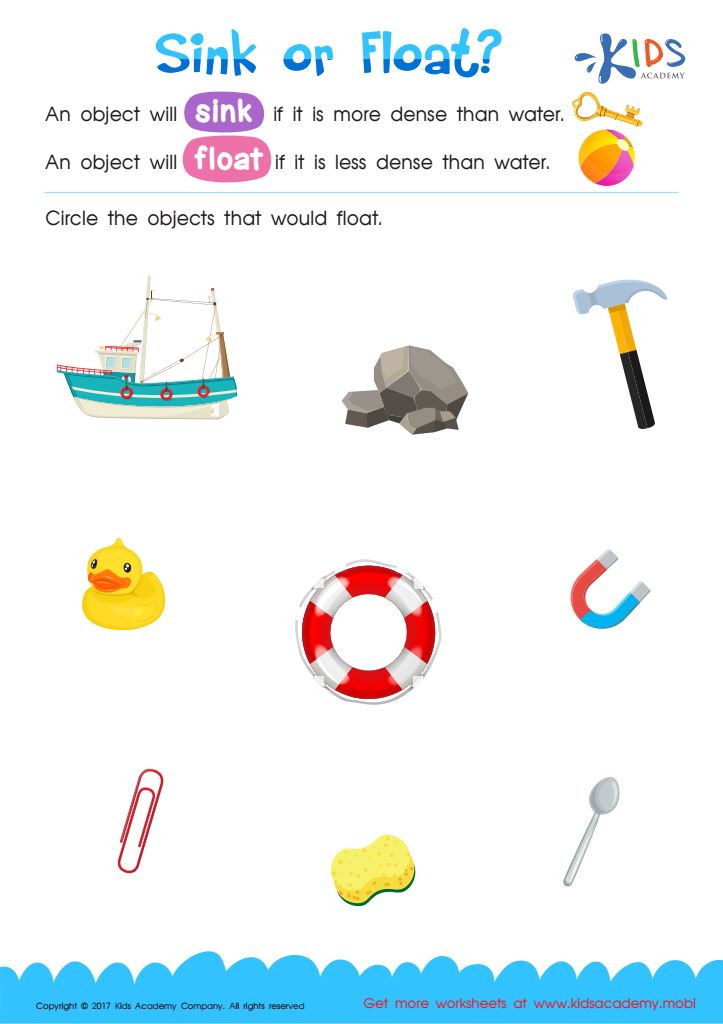
Sink or Float Printable
 Assign to My Students
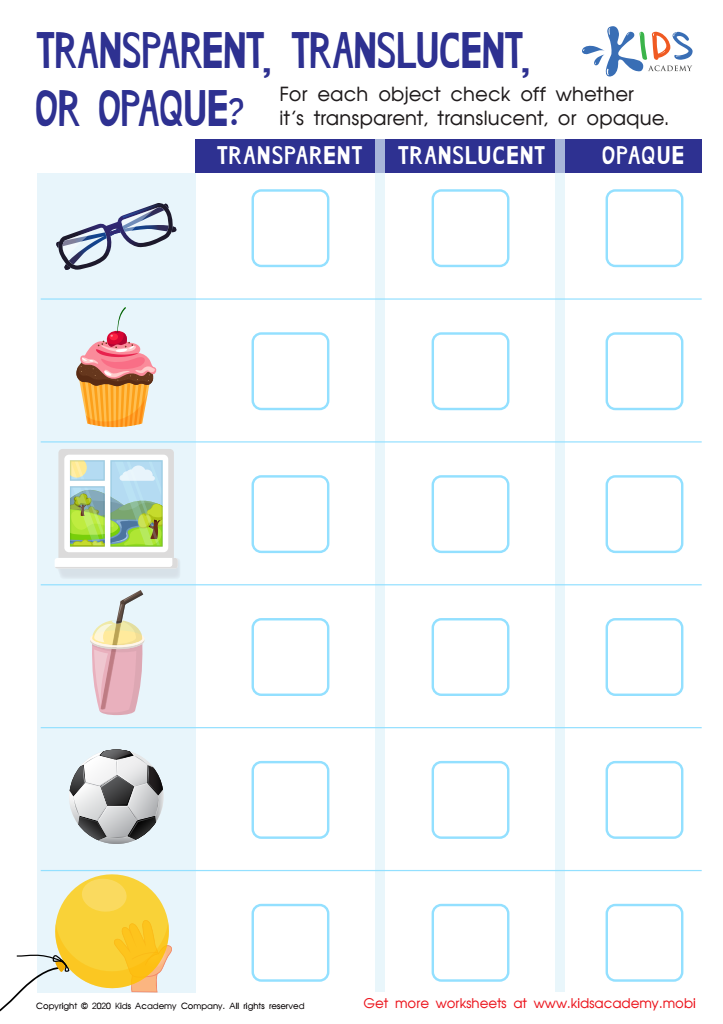
Transparent, Translucent, or Opaque Worksheet
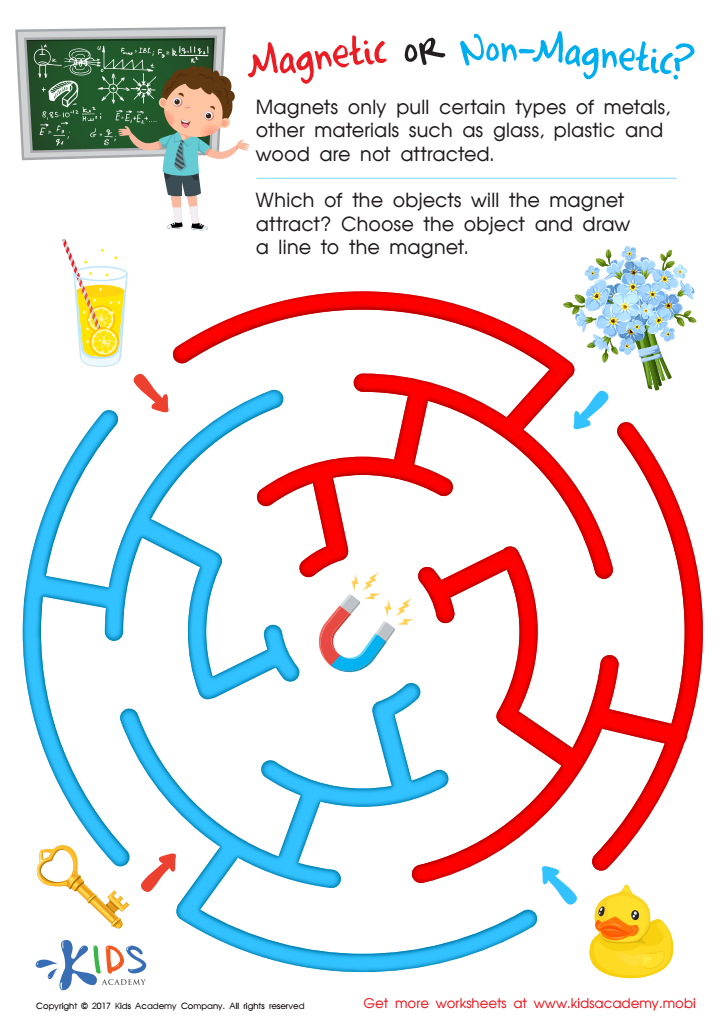
Magnetic or Non–Magnetic Worksheet






Parents and teachers should pay close attention to teaching young children, aged 3-6, how to categorize objects in normal physical science because it lays a critical foundation for cognitive development and scientific thinking. At this age, children's brains are rapidly developing, and they are eager to explore and make sense of the world around them. Categorizing objects based on observable characteristics such as size, shape, color, and function encourages them to pay attention to details and to organize their thoughts systematically.
By learning to sort and classify, children enhance their problem-solving skills and their ability to make predictions. These activities also foster language development, as kids learn new vocabulary to describe different attributes and relationships between objects. Moreover, categorization is a key component in early mathematical concepts, such as grouping, counting, and comparing.
Engaging in categorization tasks strengthens children's ability to recognize patterns and sequences, which are fundamental skills in science and other academic subjects. It also builds a basis for higher-order thinking skills, such as analysis and synthesis, which will be essential throughout their education.
In essence, teaching children to categorize objects is more than just a simple activity; it’s a foundational tool that supports future learning and intellectual growth, bridging their natural curiosity with structured learning experiences.







