Spatial awareness Normal Space Worksheets for Ages 3-6
3 filtered results
-
From - To
Enhance your child's spatial awareness with our Normal Space Worksheets designed for ages 3-6. At Kids Academy, our engaging and educational worksheets help young learners grasp the concept of space and their body's relationship to it. These activities promote crucial skills such as understanding directions, recognizing shapes and patterns, and improving hand-eye coordination. Perfect for early STEM education, our worksheets make learning fun and interactive, setting the foundation for future academic success. Visit Kids Academy to discover our wide range of expertly crafted worksheets that boost spatial awareness and make early learning a delightful experience!
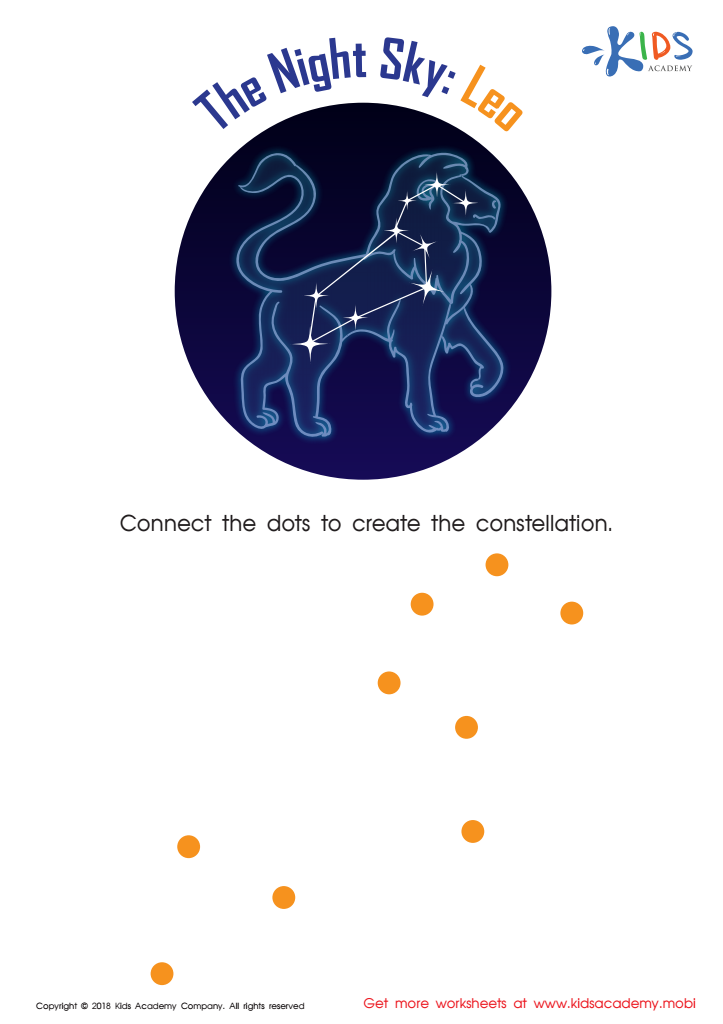
The Night Sky: Leo Worksheet
 Assign to My Students
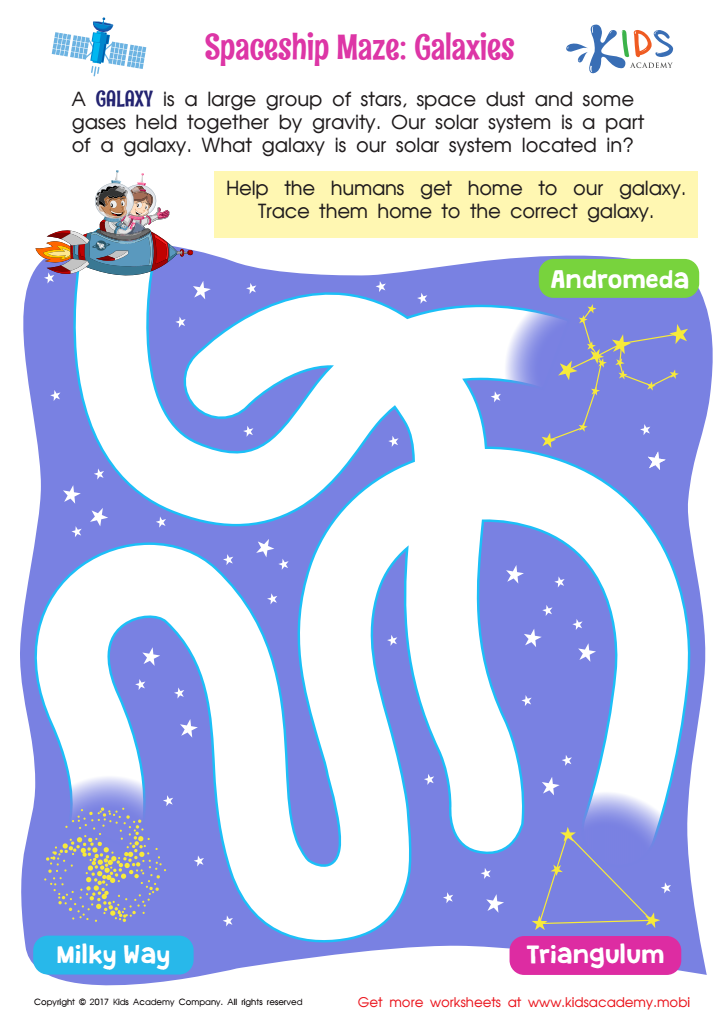
Spaceship Maze: Galaxies Worksheet
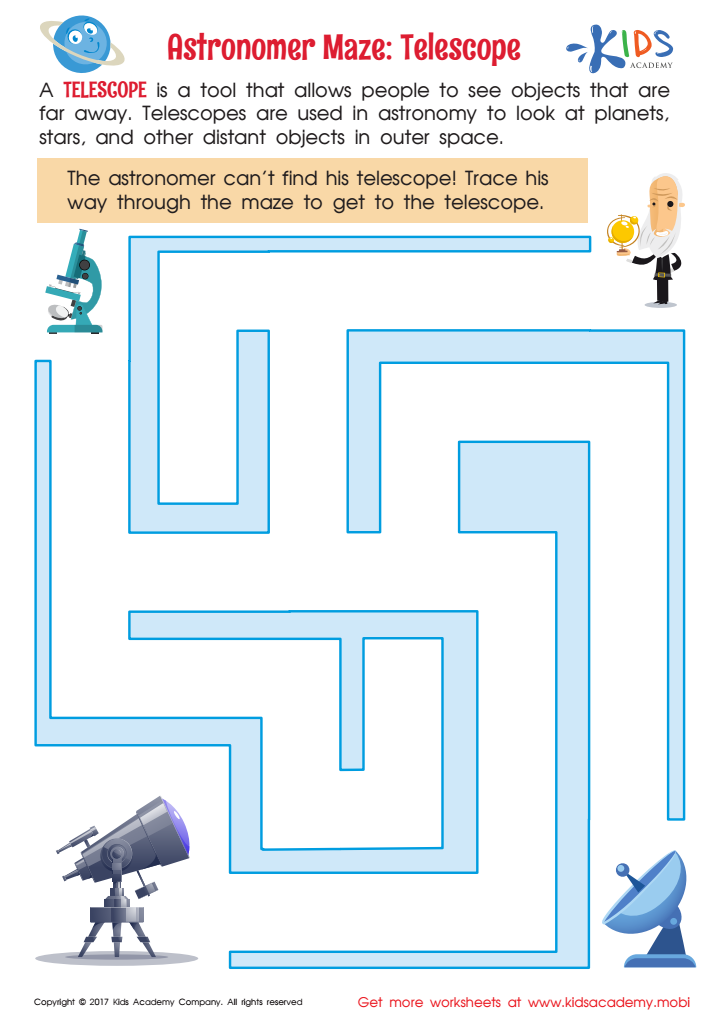
Astronomer Maze: Telescope Worksheet





%20(1).jpg)

Spatial awareness is crucial for children aged 3-6 because it forms the foundation for learning and daily functioning. During this developmental stage, kids begin to understand their position in space and how objects relate to each other and themselves. This ability is fundamental for activities like walking, running, and climbing, ensuring they can safely navigate their environment.
Moreover, spatial awareness is directly linked to academic success. In math, it aids in grasping concepts like shapes, sizes, and patterns. It enhances their ability to perform tasks such as puzzles or building with blocks, fostering problem-solving skills and creativity. For early writing skills, understanding spatial positioning on paper—like the top, bottom, left, and right—helps children learn to form and align letters correctly.
From a social perspective, good spatial awareness helps children interact more confidently with peers in play settings, improving their cooperation and communication skills. It reduces accidents, like bumping into others, contributing to a safer and more harmonious classroom or home environment.
Therefore, parents and teachers should actively nurture spatial skills through activities like drawing, playing with shape sorters, or simple games like hide-and-seek. Encouraging these skills ensures children develop a well-rounded foundation for future learning and everyday tasks.







