Cognitive Development Normal Community Worksheets for Ages 3-6
3 filtered results
-
From - To
Discover our engaging "Cognitive Development Normal Community Worksheets" designed specifically for children aged 3-6. These worksheets aim to enhance essential cognitive skills through fun and interactive activities related to community themes. Your little learners will explore concepts like problem-solving, critical thinking, and understanding their environment. By participating in these exercises, children will build a solid foundation for future learning while enjoying themselves in the process. Tailored to suit early learners, these resources promote cognitive growth, encourage creativity, and foster social awareness. Visit our site to access these valuable worksheets and support your child's cognitive development in a community context!

Let's Look! Assessment Worksheet
 Assign to My Students
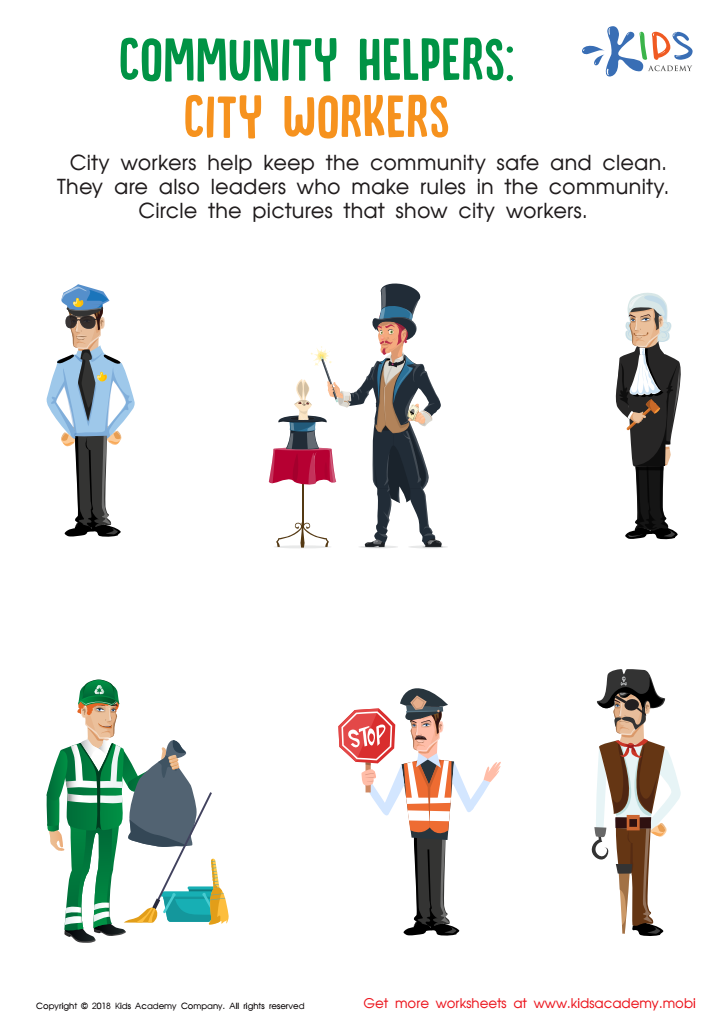
City Workers Community Helpers Worksheet
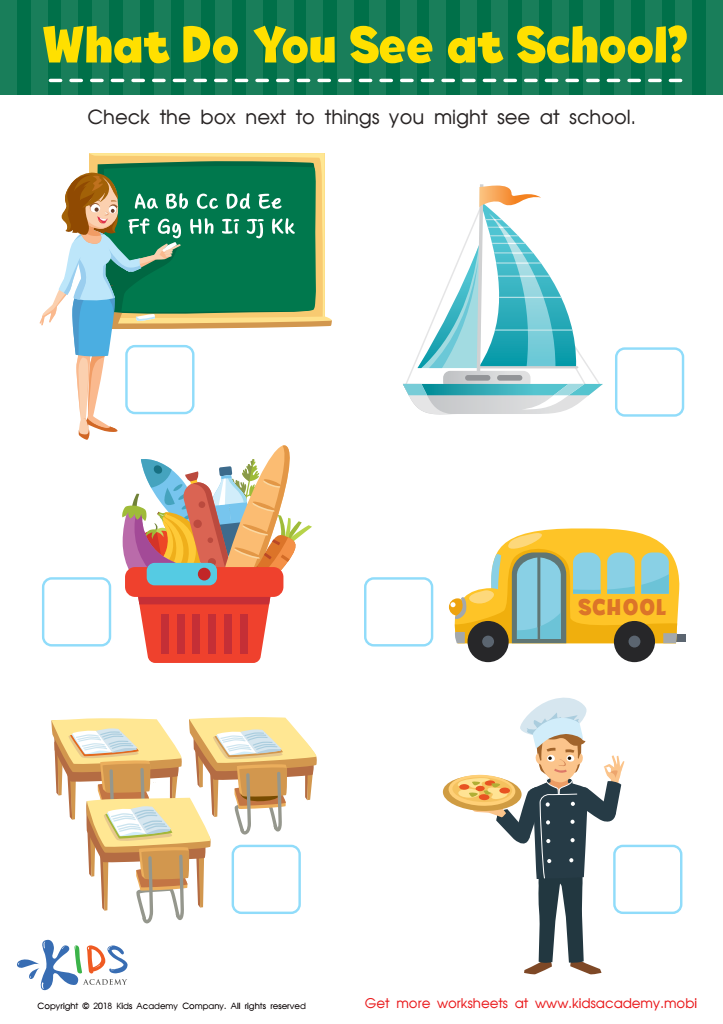
What Do you See at School? Worksheet








Cognitive development from ages 3 to 6 is a critical stage that lays the foundation for a child's future learning and overall well-being. Parents and teachers should care about this developmental period as it is when children experience substantial growth in memory, problem-solving, and language skills. During these formative years, children begin to understand concepts such as numbers, shapes, and basic logic, all of which are essential for academic success.
Furthermore, children's interactions with their environment and caregivers play a vital role in cognitive growth. Engaging, stimulating activities that encourage exploration and curiosity help to enhance their cognitive skills. Parents and teachers can influence a child's brain development through play-based learning, which fosters creativity and critical thinking.
Moreover, a strong foundation in cognitive development contributes to emotional and social growth. Children who develop good cognitive skills are better equipped to navigate relationships, make decisions, and adapt to new situations. By supporting cognitive development, parents and teachers not only enhance academic outcomes but also cultivate resilient, independent learners who will thrive throughout their educational journey and beyond. Investing in these early experiences is essential, as they shape a child’s lifelong learning path and quality of life.