Color Identification Normal Community Worksheets for Ages 3-6
3 filtered results
-
From - To
Discover our engaging Color Identification Normal Community Worksheets designed for children ages 3-6. These printable resources help young learners explore and identify colors through fun and interactive activities centered around community themes. By connecting colors to familiar community elements, children enhance their cognitive skills while enjoying hands-on learning. Our worksheets are carefully crafted to support early childhood education, fostering creativity and critical thinking. Perfect for home or classroom use, these worksheets encourage collaborative learning and provide a solid foundation in color recognition. Dive into a colorful world of possibilities that promotes exploration, understanding, and a love for learning!
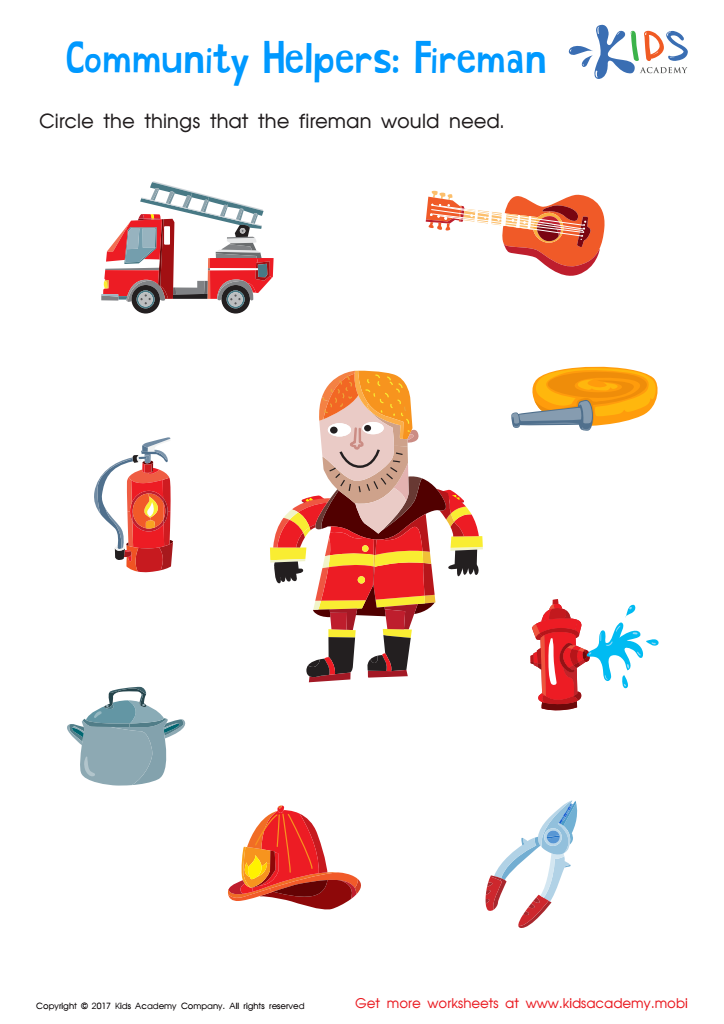
Fireman Worksheet
 Assign to My Students
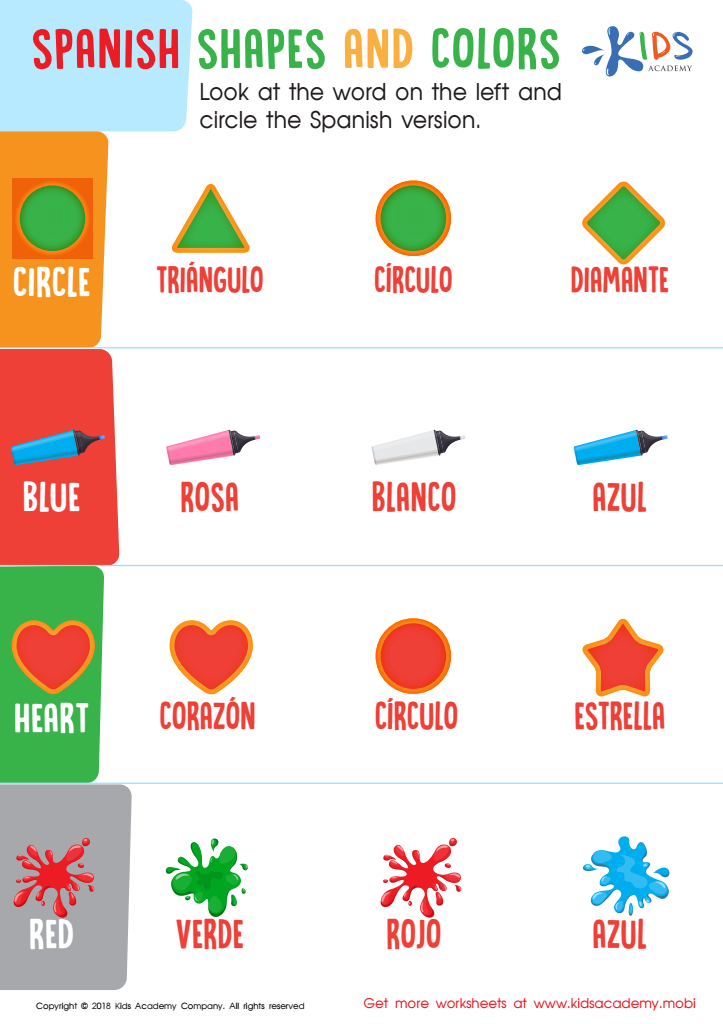
Spanish Shapes and Colors Worksheet
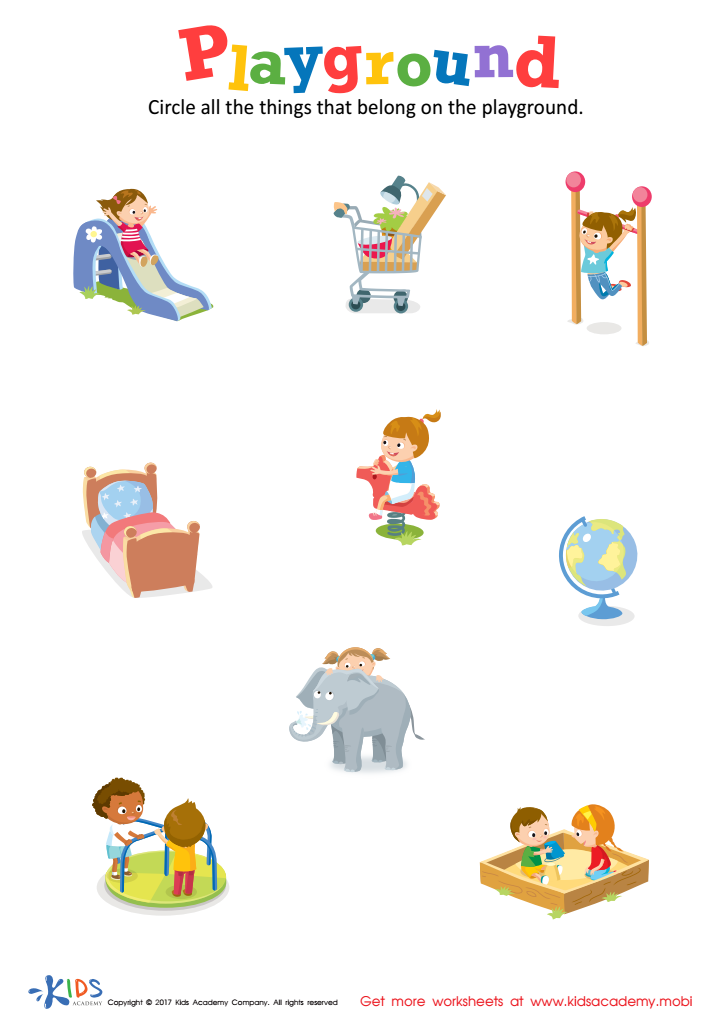
Playground Worksheet







Color identification is a crucial aspect of early childhood education, particularly for children aged 3-6. Parents and teachers should care about this developmental milestone as it serves as a foundation for various cognitive skills, including language development, memory, and problem-solving abilities. Recognizing colors allows children to categorize and make sense of the world around them, fostering their observational skills and encouraging creativity.
Moreover, engaging in color identification helps support social-emotional growth. Children often bond over shared activities, and learning colors can play a key role in interactive games and discussions, thereby boosting communication skills and cooperation. Furthermore, acquiring color vocabulary enhances children's ability to express themselves and articulate their thoughts more clearly.
In addition to cognitive and emotional benefits, color identification can also facilitate critical thinking. Teachers and parents can use colors as a springboard to discuss sorting, patterns, and comparisons. Incorporating color-related activities into playtime instills a sense of joy and excitement in learning, making it a fun and engaging experience.
Overall, prioritizing color identification in early education empowers parents and teachers to foster a rich learning environment, paving the way for future academic success and social interactions.