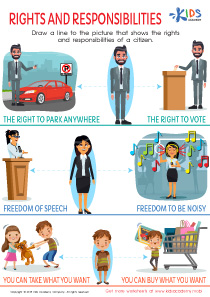
Vocabulary development Normal Community Worksheets for Ages 3-6
4 filtered results
-
From - To
Enhance your child's vocabulary skills with our engaging Vocabulary Development Normal Community Worksheets designed for ages 3-6. Our carefully crafted worksheets encourage young learners to explore essential community concepts and terms through fun, interactive activities. Kids will enjoy colorful illustrations and relatable scenarios that stimulate their imagination while promoting language acquisition. Perfect for pre-school and kindergarten settings, these worksheets support early literacy by encouraging word recognition and contextual understanding. Foster a love for learning and strengthen your child’s communication skills with our curriculum-aligned resources, making vocabulary building both enjoyable and educational. Discover the joy of learning through community exploration today!

Let's Go to the Library! Worksheet
 Assign to My Students
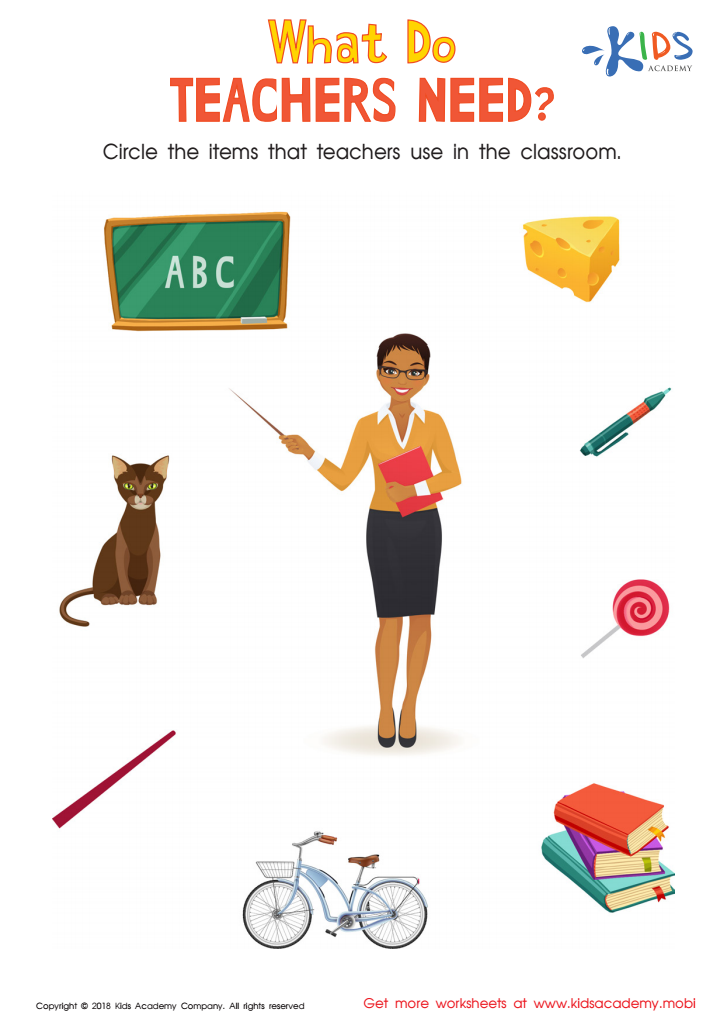
What Do Teachers Need Worksheet
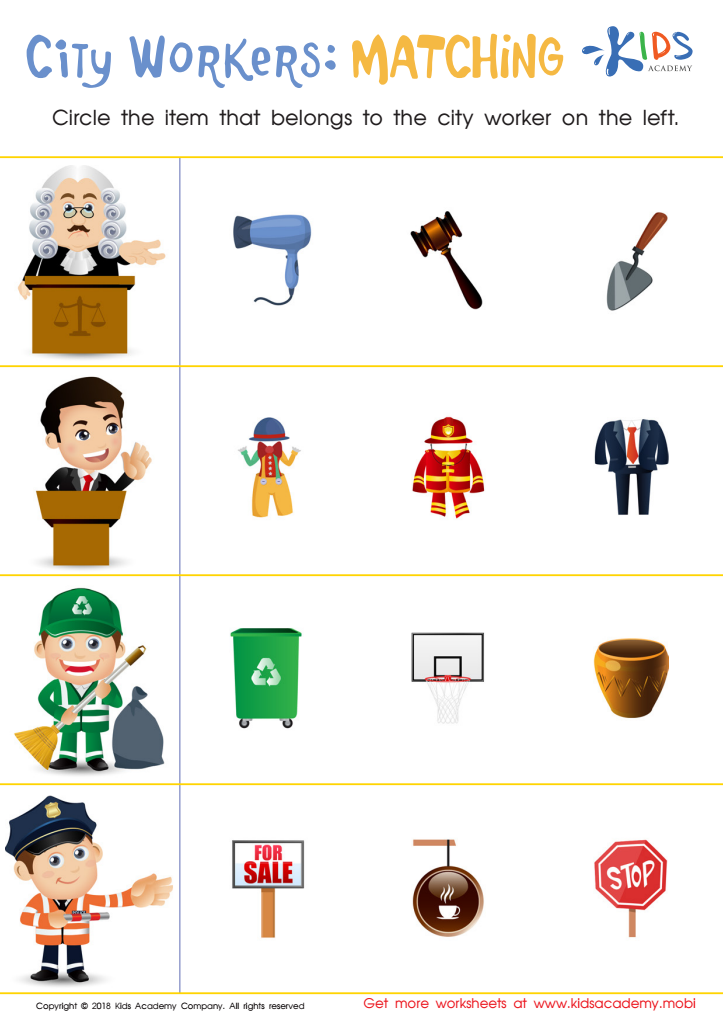
City Workers: Matching Worksheet
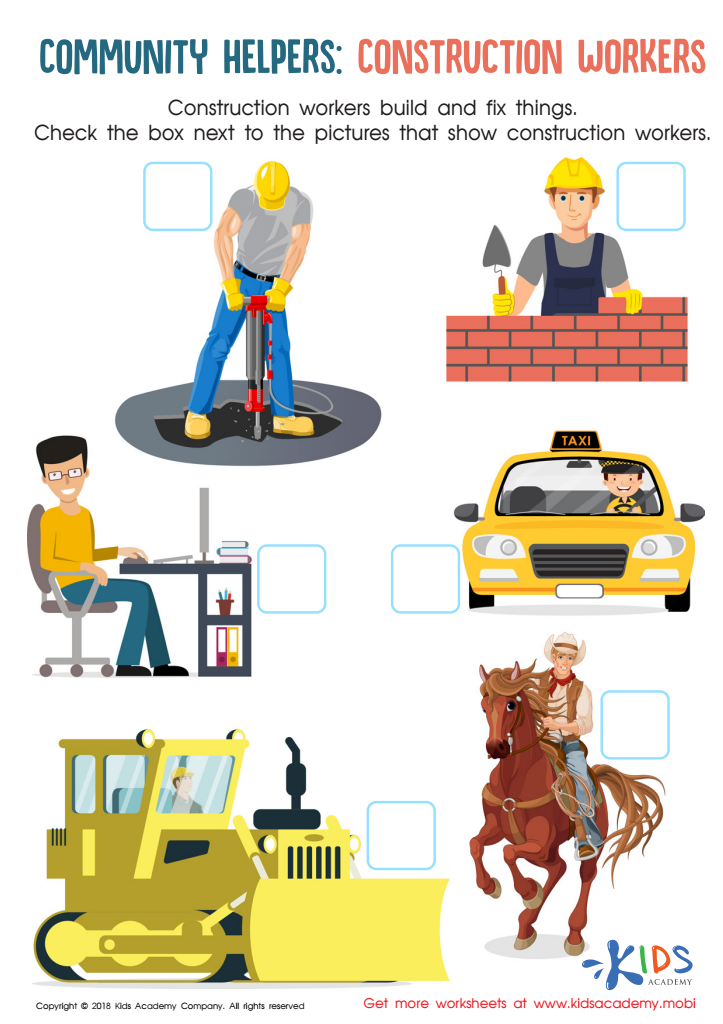
Construction Workers Community Helpers Worksheet








Vocabulary development during the crucial ages of 3 to 6 plays a pivotal role in a child's overall cognitive, social, and emotional growth. During these formative years, children are like sponges, absorbing language and concepts from their surroundings. A robust vocabulary is not just about knowing words; it lays the foundation for reading comprehension, critical thinking, and effective communication.
Parents and teachers should care about this aspect of development because a rich vocabulary enables children to express themselves more clearly and confidently, fostering positive interactions with peers and adults. As children learn new words, they also learn to categorize their experiences, improving their understanding of the world around them. A well-developed vocabulary also enhances a child’s motivation to engage with books and storytelling, which is crucial for literacy skills.
Moreover, children with larger vocabularies often perform better academically as they progress through school, leading to more significant opportunities in adulthood. When parents and teachers prioritize vocabulary development through reading, conversation, and playful learning, they are investing in a child's success and well-being. By nurturing this critical skill, they support children's abilities to navigate social situations, solve problems, and thrive in various environments throughout their lives.