Phonics Skills Normal Consonant Blends Worksheets for Ages 3-7
4 filtered results
Difficulty Level
Grade
Age
-
From - To
Subject
Activity
Standards
Discover our engaging Phonics Skills Normal Consonant Blends Worksheets, specifically designed for children ages 3-7. These interactive resources help young learners master consonant blends, laying a solid foundation for reading and writing. Our worksheets feature fun activities incorporating colorful illustrations and practical exercises that capture children's attention while boosting their phonics skills. Perfect for classrooms or at-home learning, these worksheets encourage repetition and reinforce crucial literacy concepts. By practicing consonant blends in a playful way, kids will enhance their vocabulary and confidence in reading. Unlock your child’s potential with our thoughtfully crafted phonics worksheets, designed to make learning enjoyable!
Favorites
With answer key
Interactive
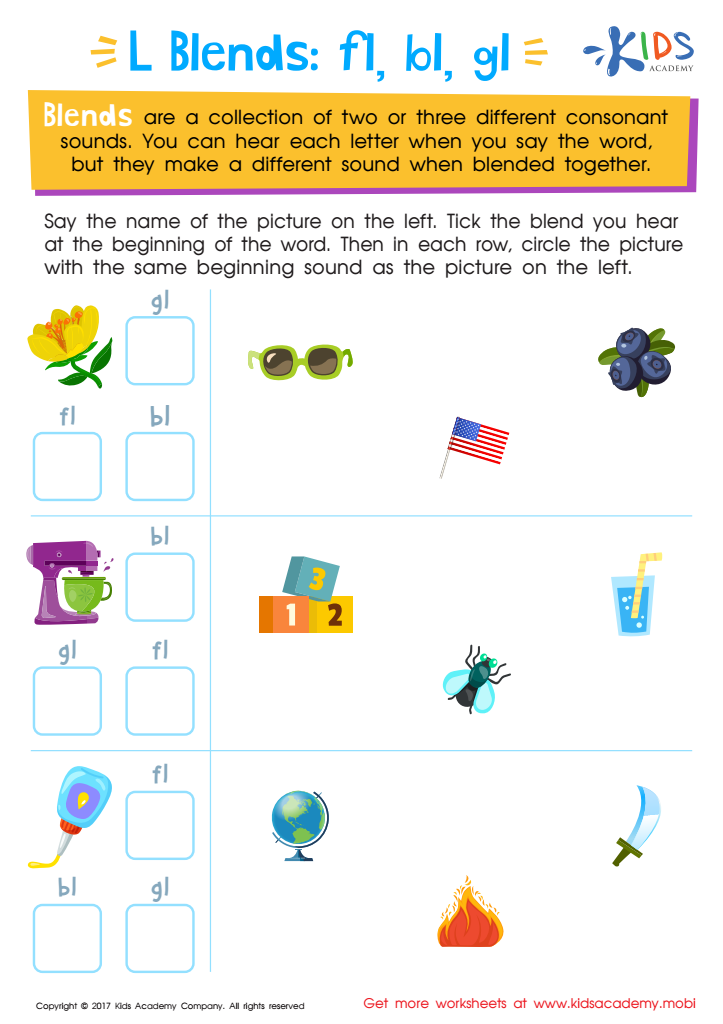
Blending Consonants: "Fl", "Bl" and "Gl" Printable
Help your child master consonant blends Fl, Bl, and Gl with this printable worksheet. Find words associated with the pictures and learn to better understand the difference between consonant blends. Vibrant images motivate and aid in learning. Download now for improved phonics success!
 Assign to My Students
Blending Consonants: "Fl", "Bl" and "Gl" Printable
Worksheet
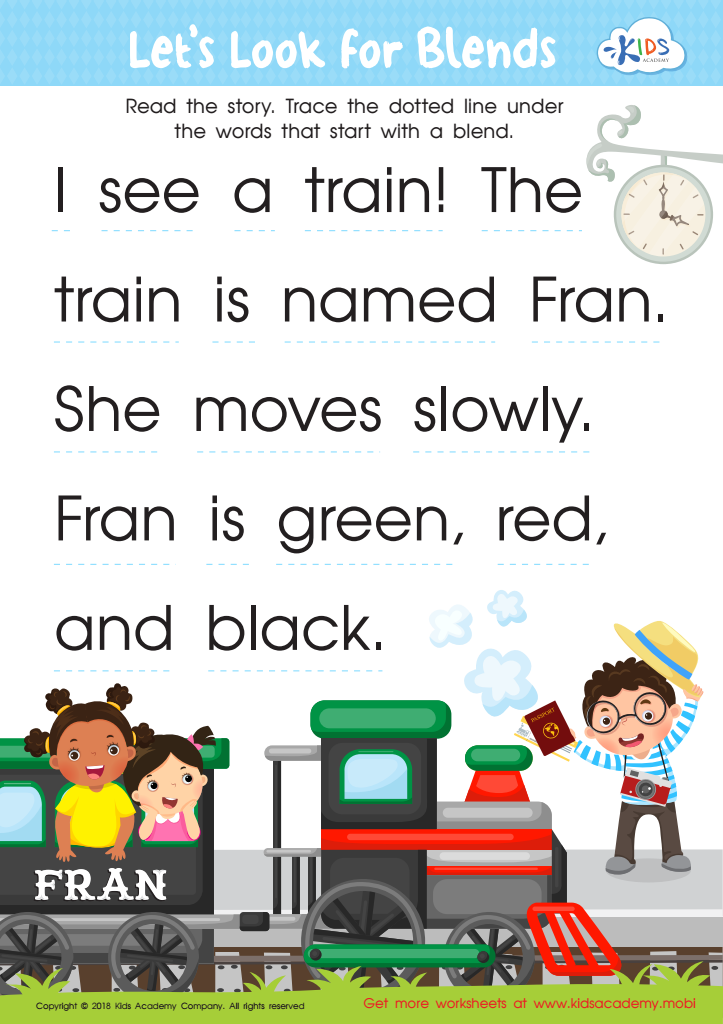
Let's Look for Blends Worksheet
Does your child love trains? Get them to read the story or help them read it aloud. Ask them to trace the words that start with blends on the dotted lines. This exercise will help them improve their blend-identifying skills!
Let's Look for Blends Worksheet
Worksheet
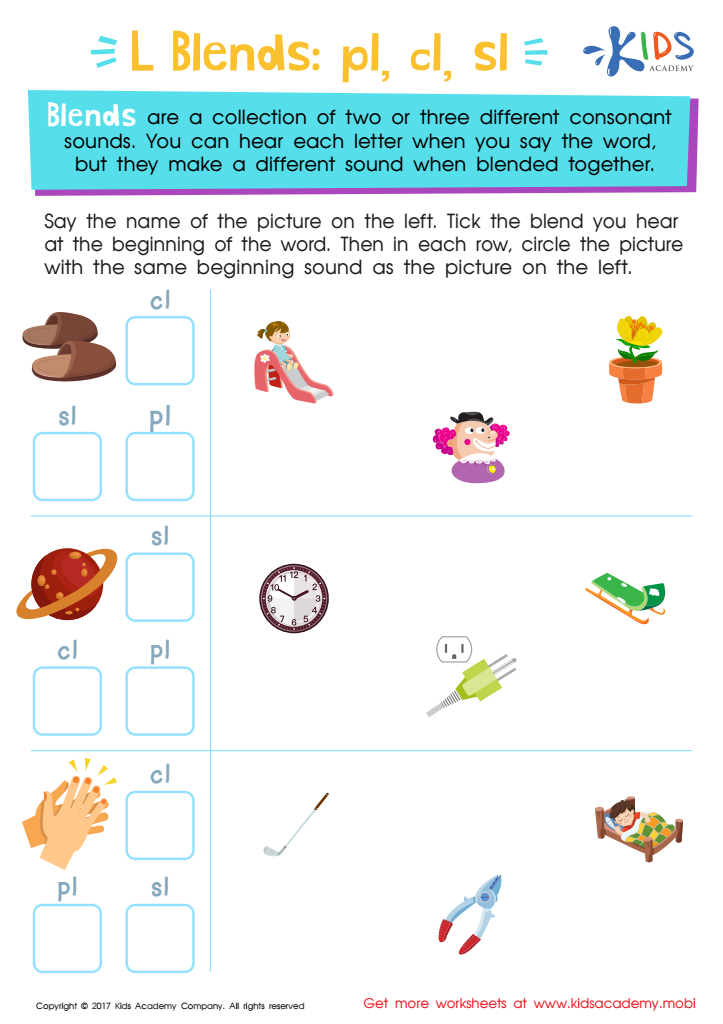
L Blends: "Pl", "Cl" and "Sl" Printable
This printable worksheet will help your child recognize and identify the Pl, Cl, and Sl consonant blends, sound them out, and identify them in print. Improve your child's reading and writing skills with fun and colorful phonics practice!
L Blends: "Pl", "Cl" and "Sl" Printable
Worksheet
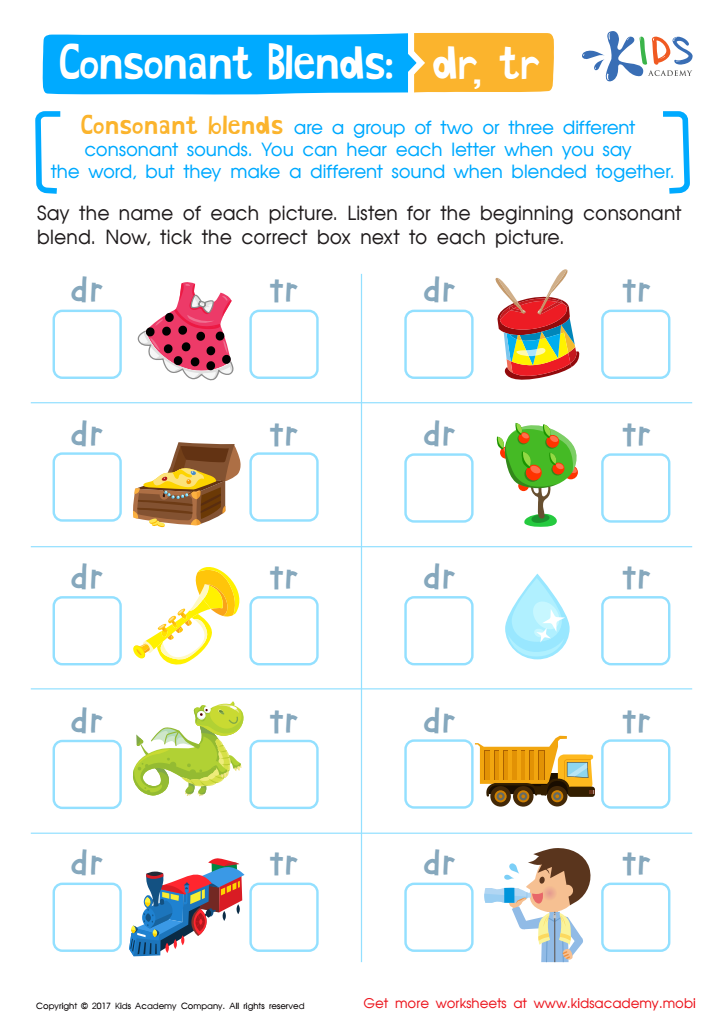
Consonant Blends: "Dr" and "Tr" Printable
Pictures of the words provide a visual cue, and sound-outs help with auditory cues.
Consonant Blends: "Dr" and "Tr" Printable
Worksheet
Join Kids Academy for Free
Who is primarily going to use this learning content?





Phonics skills, particularly normal consonant blends, play a crucial role in early literacy development for children aged 3-7. These blends, which consist of two or three consonants that appear together in a word (like "bl" in "blue" or "str" in "street"), are foundational for reading and spelling. Understanding blends not only enhances children's phonemic awareness but also improves their ability to decode and recognize words, significantly impacting reading fluency.
Parents and teachers should prioritize phonics skills because they directly contribute to effective communication and academic success. Mastery of consonant blends enables children to blend sounds more efficiently, promoting greater confidence in their reading abilities. Early exposure to these skills can prevent future reading difficulties, fostering a love for books and learning.
Moreover, phonics knowledge is linked to literacy achievement and overall cognitive development. As children learn to read words containing blends, they build a robust vocabulary, increase comprehension, and enhance their writing skills. By focusing on consonant blends, parents and teachers can lay a strong foundation for lifelong literacy, supporting each child's educational journey and opening doors to opportunities in the future. Therefore, cultivating these essential skills during critical early years is vital.