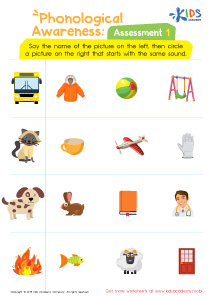
Sound Association Normal Consonants Worksheets for Ages 3-7
3 filtered results
-
From - To
Explore our engaging Sound Association Normal Consonants Worksheets designed specifically for children ages 3-7. These worksheets help young learners develop phonemic awareness by associating consonant sounds with familiar objects and images. Each activity fosters essential literacy skills through playful, interactive practices that make learning fun and effective. Children can practice identifying and pronouncing normal consonant sounds, enhancing their understanding of letter-sound relationships in a supportive, stimulating environment. Ideal for preschool and early grade teachers, these resources are perfect for at-home learning or classroom activities. Enjoy a journey into the world of sounds, letters, and language with our thoughtfully crafted worksheets!
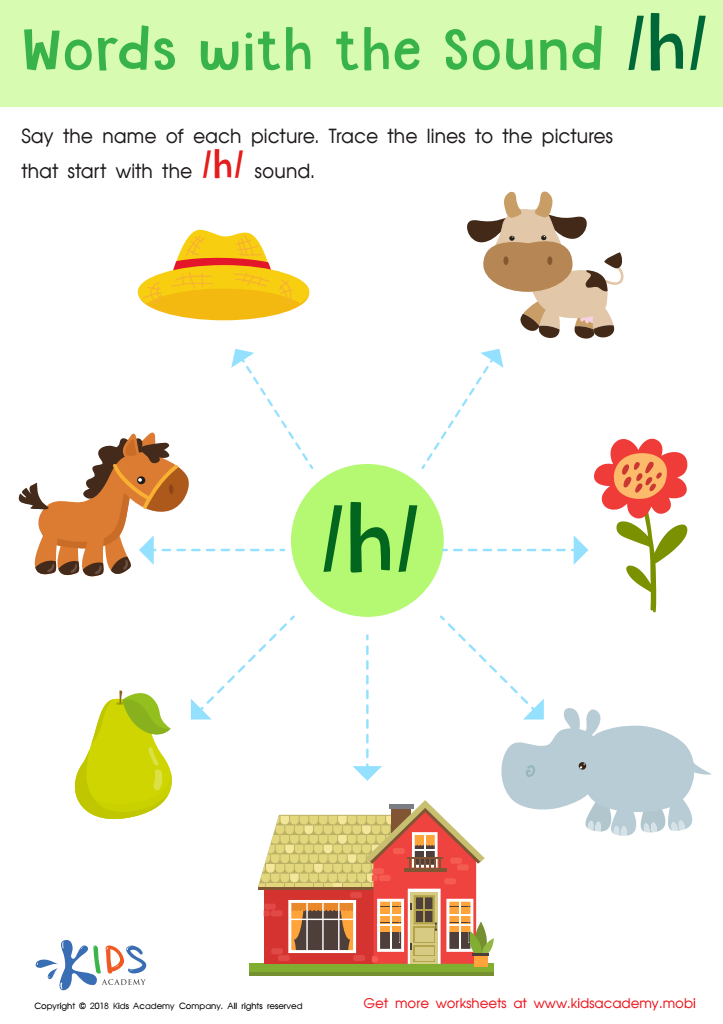
Words with sound h Reading Worksheet
 Assign to My Students
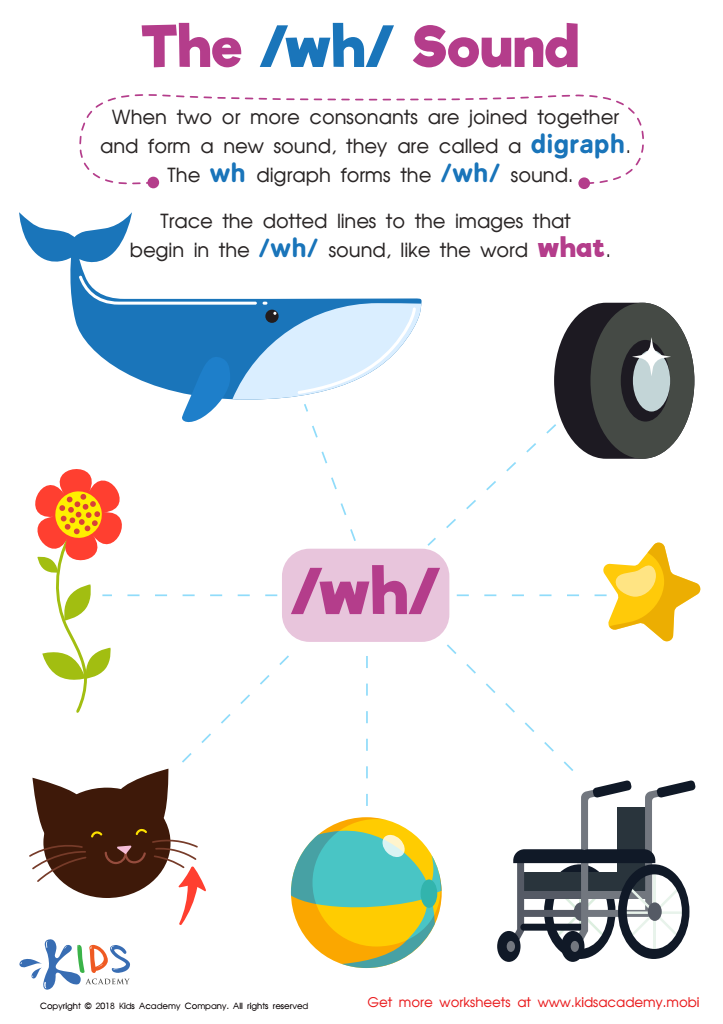
The /wh/ Sound Worksheet
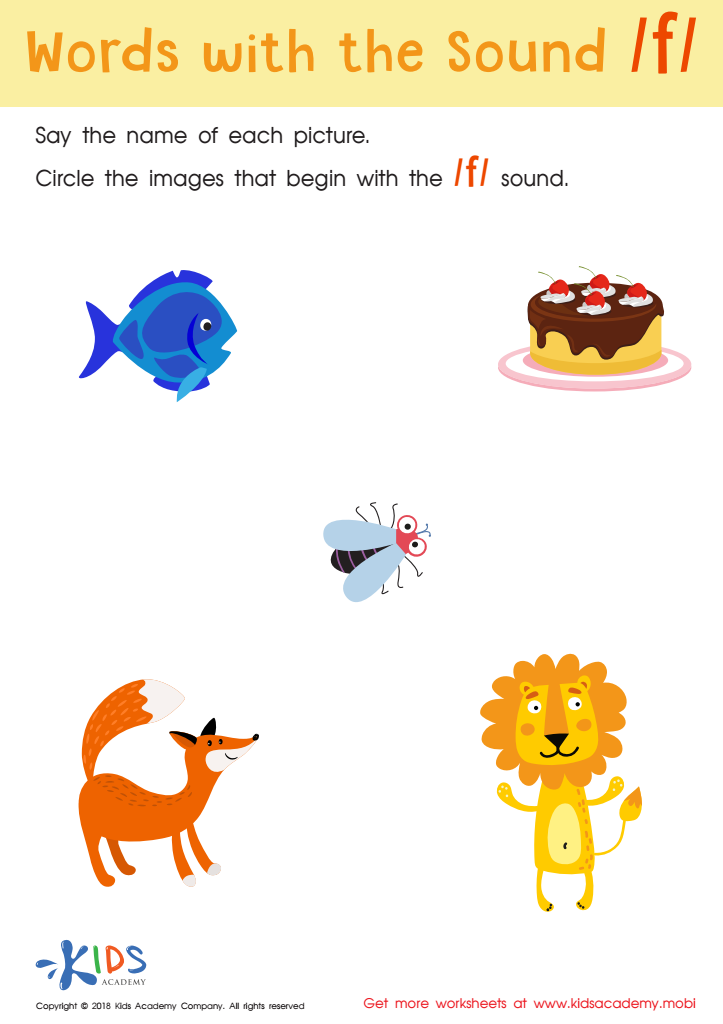
Words with sound f Reading Worksheet



Sound Association with Normal Consonants is crucial for children aged 3-7 as it lays the foundation for their literacy development, language skills, and overall communication abilities. During this developmental stage, children are naturally curious about sounds and words, making it an ideal time to introduce them to the relationship between letters and their corresponding sounds.
Understanding consonant sounds helps children decode written language, which is essential for reading. When children grasp sound associations, they can blend sounds to form words, enhancing their phonics skills. This early reading competency promotes confidence and fosters a love for books, which can lead to better academic performance in later years.
Furthermore, sound association aids in vocabulary expansion and improves spelling abilities. By recognizing consonant sounds, children can articulate their thoughts clearly, enhancing their verbal communication skills. This is crucial not just for academic success but also for social interactions.
Parents and teachers play an instrumental role in this process, as they can provide engaging activities that reinforce sound-letter links. By focusing on normal consonants, they can create a supportive learning environment that encourages children to explore language, thus setting the stage for effective communication and lifelong learning.