Sound recognition Normal Consonants Worksheets for Ages 3-7
3 filtered results
-
From - To
Introduce your child to the exciting world of language with our Sound Recognition Normal Consonants Worksheets designed for ages 3-7. These engaging, interactive worksheets help young learners identify and differentiate common consonant sounds, building a strong foundation for reading and writing. Each activity is thoughtfully crafted to improve phonemic awareness, boost listening skills, and enhance pronunciation. With clear instructions and playful designs, our worksheets turn learning into a fun adventure. Perfect for both classrooms and at-home practice, these resources support early literacy development. Download today and watch your child’s confidence and skills soar!
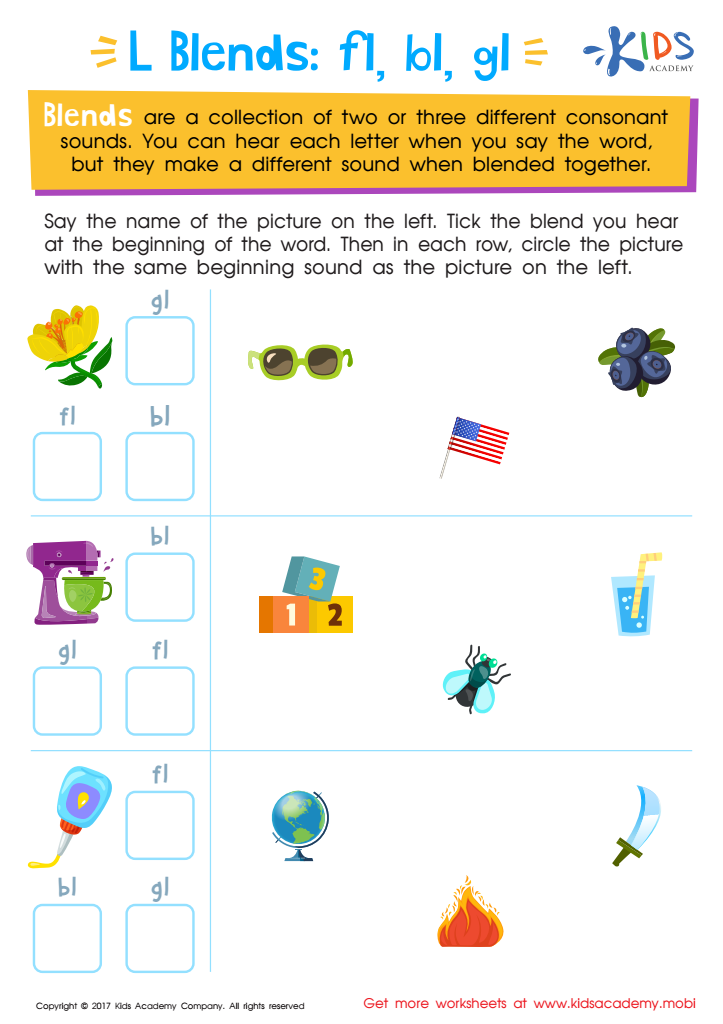
Blending Consonants: "Fl", "Bl" and "Gl" Printable
 Assign to My Students
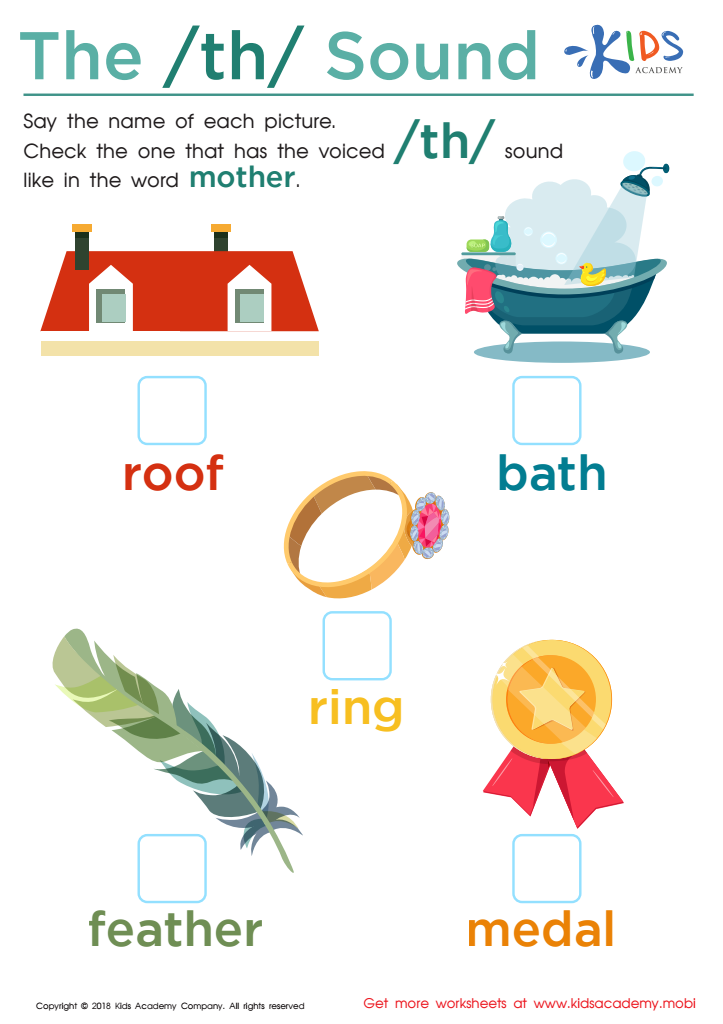
The /th/ Sound Worksheet
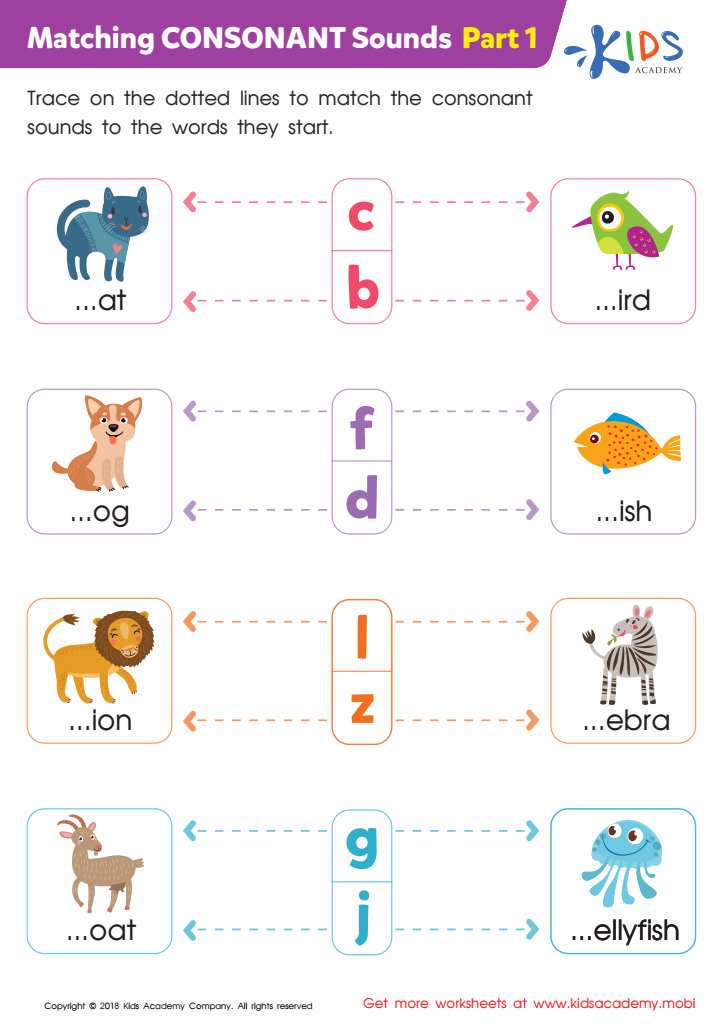
Matching Consonant Sounds: Part 1 Worksheet



Sound recognition, particularly of normal consonants, is foundational in children's early literacy and language development, making it crucial for parents and teachers to prioritize this skill for ages 3-7. During this critical period, children's brains are highly receptive to new information, and mastering consonant sounds helps them decode words, paving the way for successful reading and writing skills.
Phonemic awareness — the ability to hear, identify, and manipulate individual sounds in spoken words — begins with recognizing consonants. This skill enables children to link sounds to letters, making sense of the alphabetic principle, which is fundamental for phonics. When children can confidently recognize and reproduce consonant sounds, they are better equipped to blend these sounds, aiding them in word formation and spelling.
Furthermore, sound recognition enriches vocabulary and comprehension. By clearly distinguishing between different sounds, children not only articulate words more accurately but also understand subtle differences in meaning between similar-sounding words. This enhances both their speaking and listening abilities, promoting clearer communication and better social interactions.
Neglecting consonant sound recognition may lead to difficulties in reading, writing, and even listening, potentially impacting academic performance and self-esteem. By supporting children's learning of consonant sounds through interactive reading, songs, and engaging phonics activities, parents and teachers lay a strong linguistic foundation, essential for lifelong learning and communication.






