Filters

55 filtered results

Clear all filters
Favorites
With answer key
Interactive

55 filtered results

Difficulty Level

Grade


Check out this FREE Trial Lesson on Alphabet for age 3-7!

F

Favorites
With answer key
Interactive
  • 3-7
  • Fine Motor Skills
  • Alphabet
  • Normal
Uppercase Letters Y Z Worksheet

Uppercase Letters Y Z Worksheet

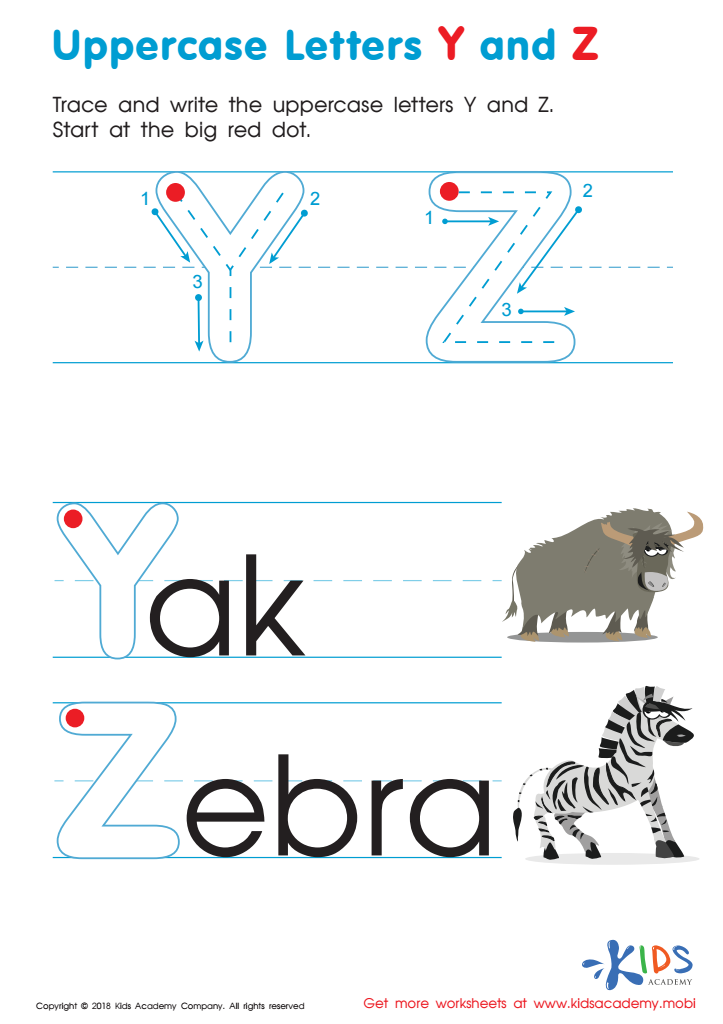
Help your child learn their ABCs with this fun tracing activity! They must trace and write Y and Z in uppercase form, starting from the red dot. Kids will love the fun images for extra engagement. Guiding their hand carefully will help them practice and perfect their writing skills.
Uppercase Letters Y Z Worksheet
Worksheet
Letter A Coloring Page

Letter F Coloring Sheet

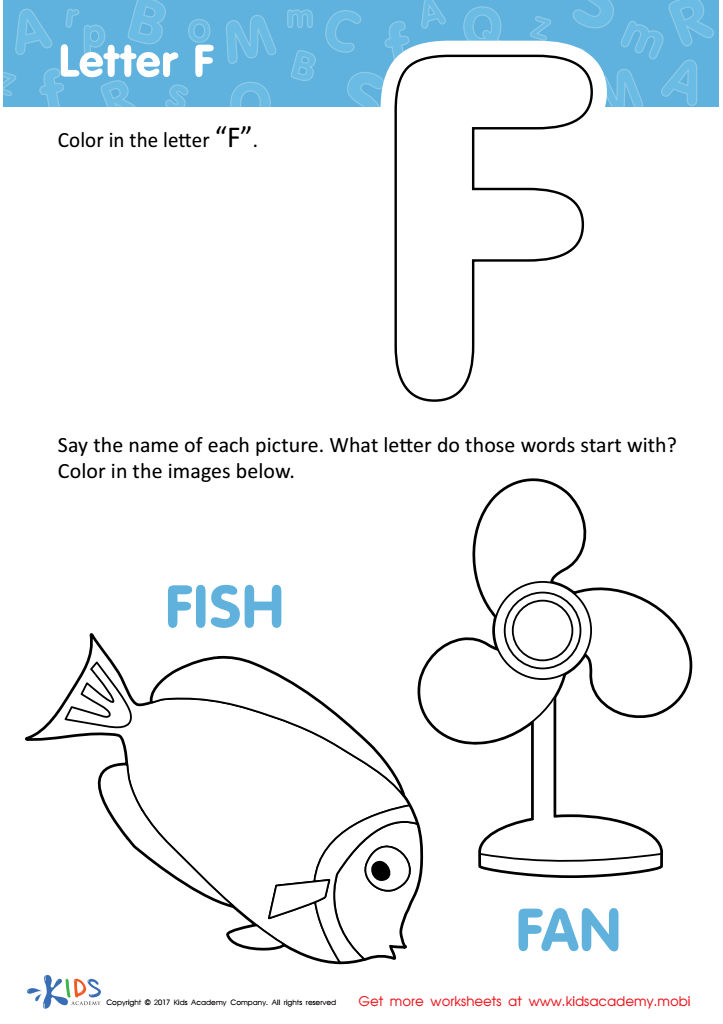
Coloring pages help kids learn to recognize letters and sounds. Our "F" page has kids color a fish and a fan. It's a great way to introduce them to the letter "F" using words they already know.
Download (PDF)
Assign to My Students
Letter F Coloring Sheet
Worksheet
Lowercase Letters v w x Worksheet

Lowercase Letters v w x Worksheet

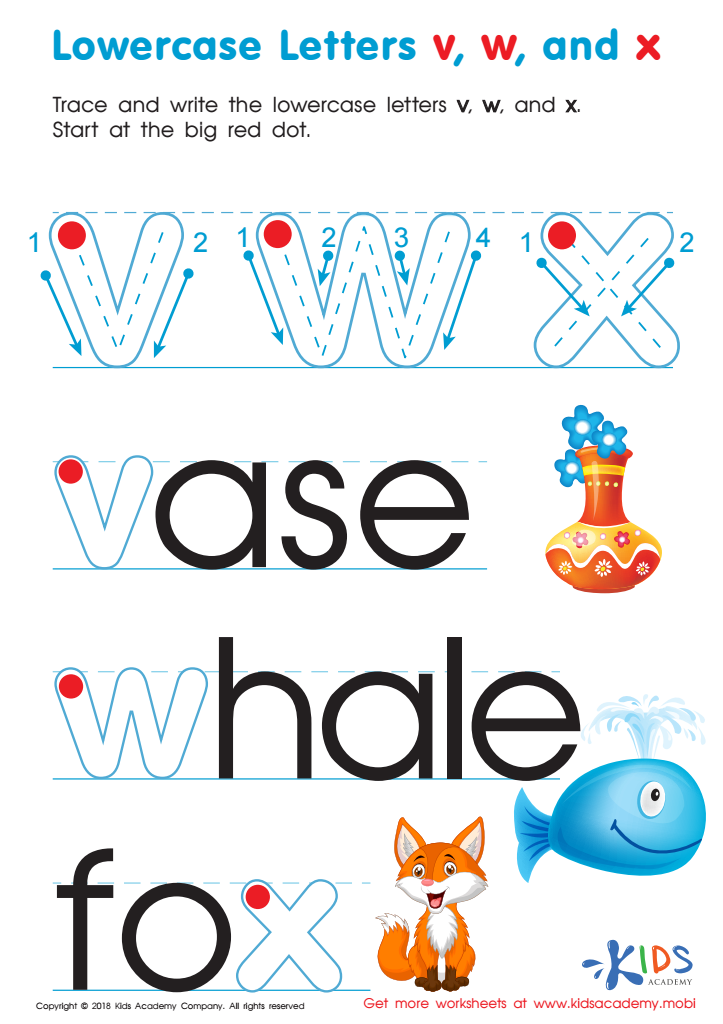
Help your child learn to write lowercase letters v, w, and x, starting at the big red dot. This activity will help them develop writing skills and correctly identify the letters. Guide them as they trace the letters and enjoy watching them improve!
Lowercase Letters v w x Worksheet
Worksheet
Letter N Coloring Page

Letter N Coloring Sheet

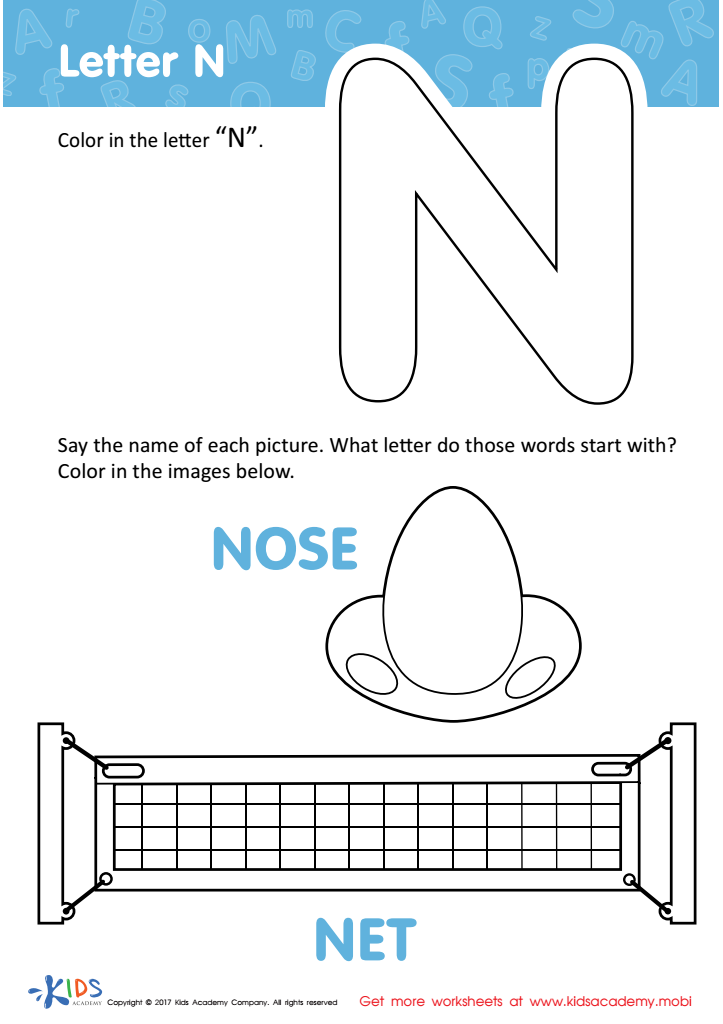
Let your child get creative and learn the alphabet with this letter "N" coloring page! It's a fun way to recognize the letter, featuring a body part all kids know. Coloring and reinforcing recognition of "N" will help your child have fun while learning!
Download (PDF)
Assign to My Students
Letter N Coloring Sheet
Worksheet
1, 2 or 3? Worksheet

1, 2 or 3? Worksheet

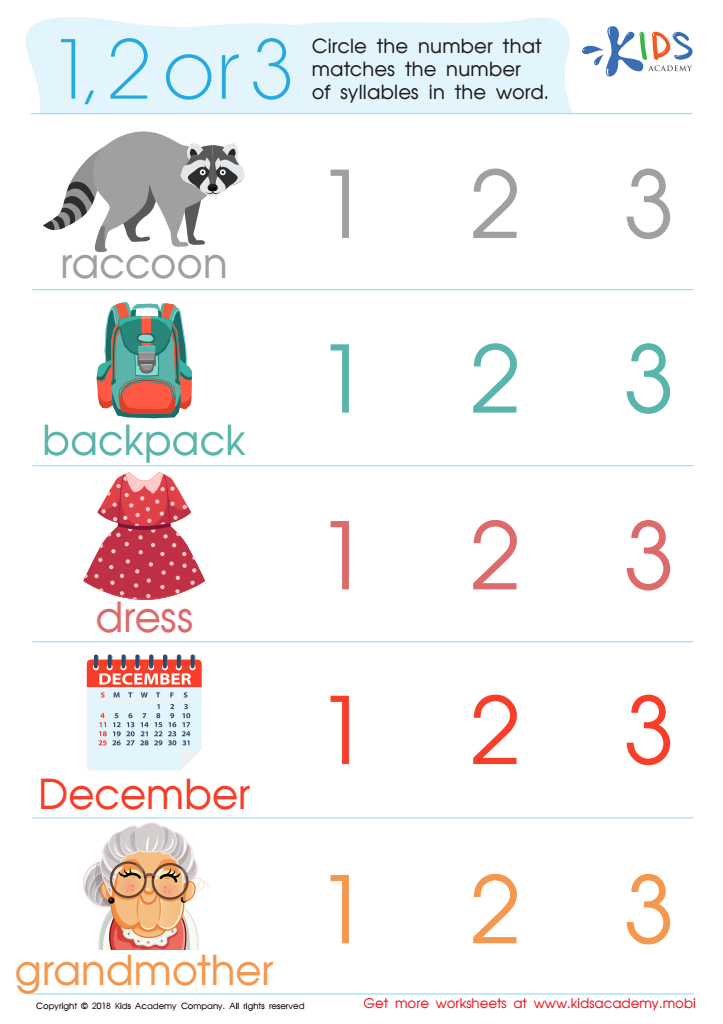
Do your kids know about syllables? Test their understanding with this worksheet. Read the words aloud and ask them to say them with you. Help them circle the number that matches the number of syllables in each word. Perfect for expanding knowledge or testing how much they've already learned.
1, 2 or 3? Worksheet
Worksheet
letter d worksheets
letter d worksheets

Letter D Tracing Page

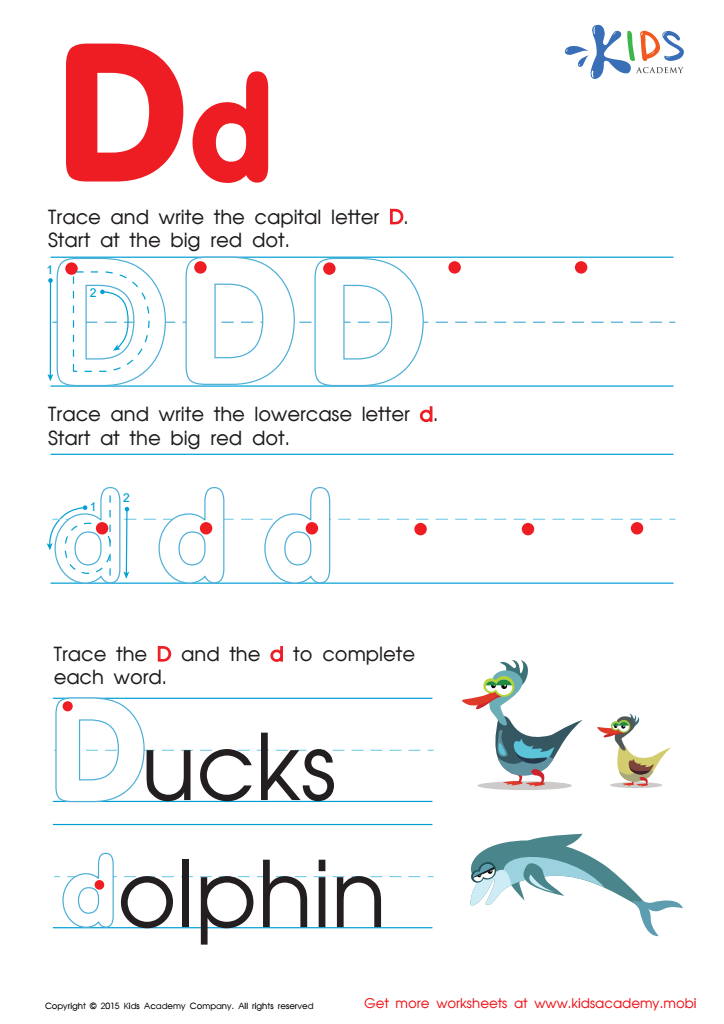
Trace and write capital and lowercase letter "D" with our free printable alphabet worksheet! Be careful not to mix up "b" and "d" - just look at the ducks and write their first letter. The dolphin wants to join the fun too - do you like dolphins? Get more fun worksheets and activities at Kids Academy!
Letter D Tracing Page
Worksheet
Uppercase Letters V, W, and X Worksheet


Uppercase Letters V, W, and X Worksheet

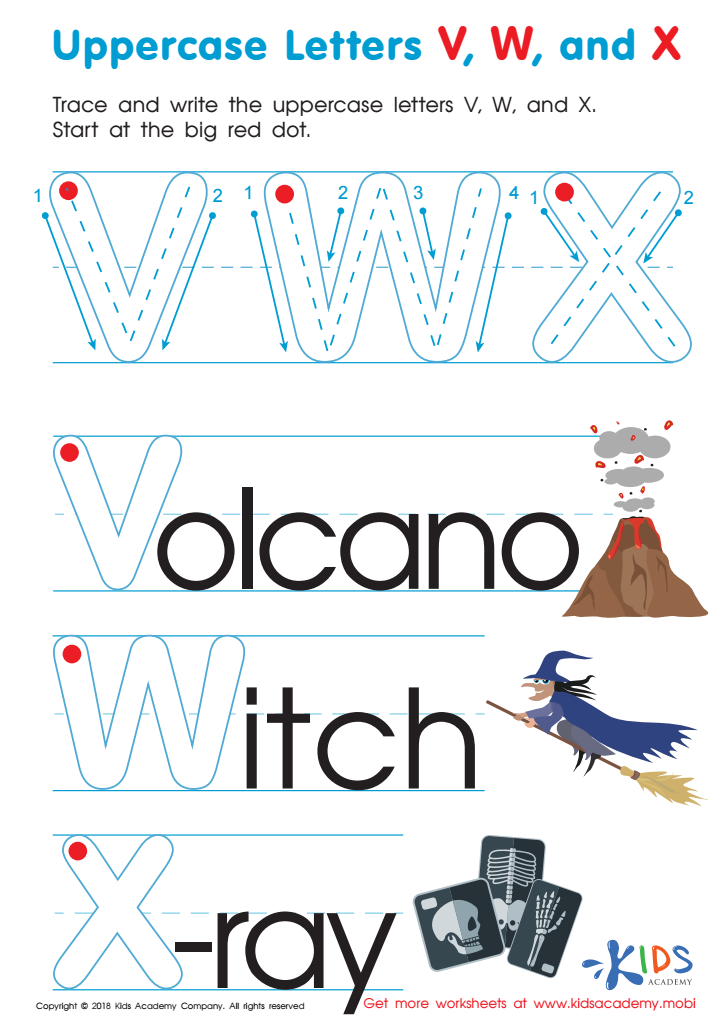
This worksheet is perfect for kids struggling to write uppercase letters V, W, and X. Warm up their brains first by having them name words starting with these letters. Then, help them trace and write each letter from the big red dot. With your assistance, they will quickly sharpen their writing skills.
Uppercase Letters V, W, and X Worksheet

Worksheet


... 2 3

Fine motor skills are crucial for children aged 3-7 as they form the foundation for various developmental milestones, including handwriting, self-care, and engaging in everyday tasks. Parents and teachers should prioritize the development of these skills, particularly related to normal alphabet formation, since they play a significant role in children's academic success and confidence.

At this stage, children learn to manipulate objects with precision, which impacts their ability to hold a pencil correctly, draw letters, and ultimately write words. Through engaging activities such as coloring, cutting, or crafting, children can improve their dexterity and hand-eye coordination. When fine motor skills are developed effectively, it enhances children’s readiness for school tasks, fostering a positive learning environment.

Moreover, mastering these skills offers children a sense of achievement, which boosts their self-esteem and encourages a love for learning. Additionally, good fine motor skills can aid children in social interactions, as they engage in cooperative play involving shared tasks. By focusing on fine motor skill development, parents and teachers not only contribute to immediate learning but also help lay the groundwork for lifelong skills that enable children to navigate their world confidently and independently.