Sound-letter association Normal Alphabet Worksheets for Ages 3-7
3 filtered results
-
From - To
Explore our engaging Sound-Letter Association Normal Alphabet Worksheets designed for children ages 3-7. These interactive resources help young learners develop vital language skills by connecting sounds with corresponding letters. Our worksheets feature vibrant illustrations and fun activities that make learning enjoyable and effective. Practice identifying initial sounds, tracing letters, and increasing phonemic awareness with challenging yet age-appropriate exercises. Perfect for home or classroom use, these worksheets foster a strong foundation in literacy while keeping little ones entertained. Help your child embark on an exciting alphabet adventure today and watch their confidence soar as they master the building blocks of reading!
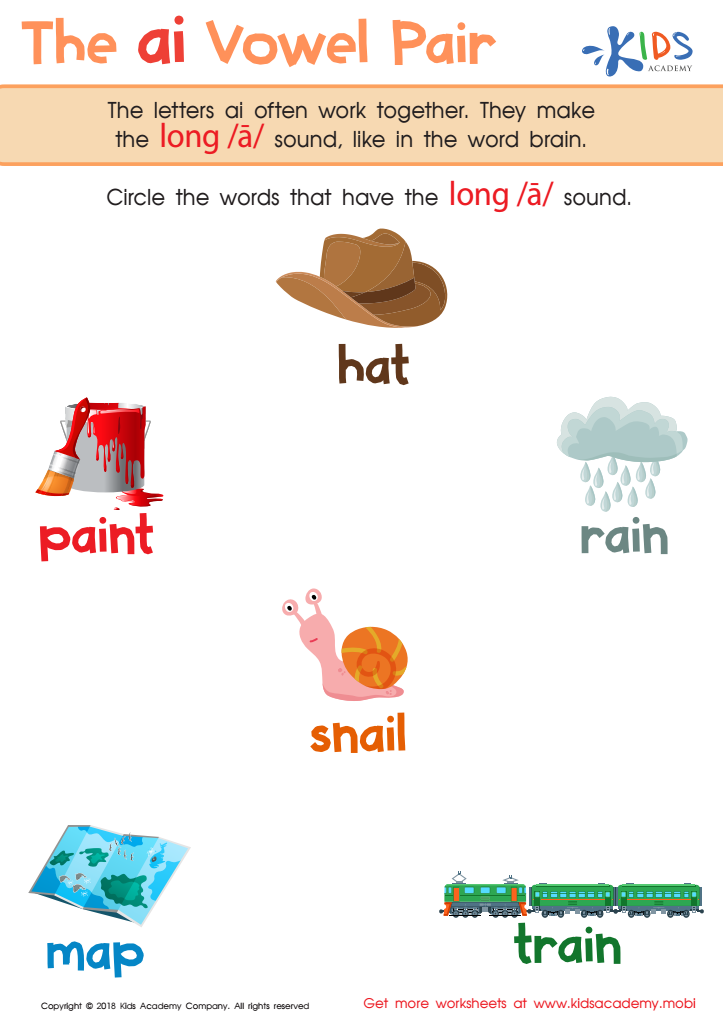
The AI Vowel Pair Worksheet
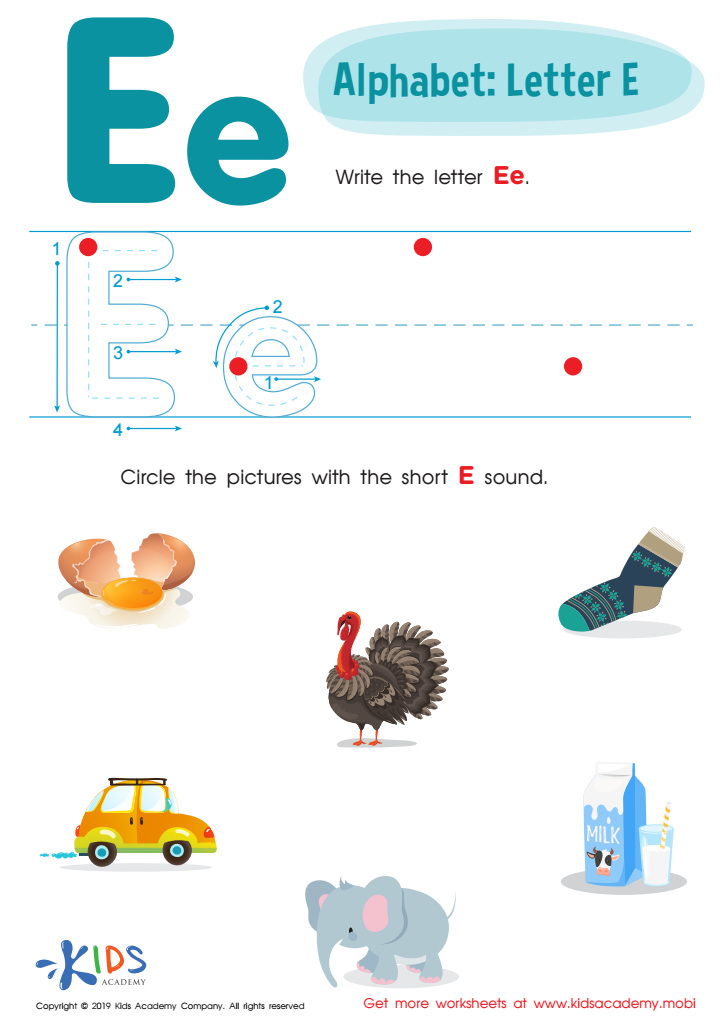
Letter E Tracing Worksheet

Letter J Coloring Sheet
 Assign to My Students







Sound-letter association is a crucial element of early literacy development for children aged 3-7. It refers to the relationship between phonemes (the sounds of spoken language) and graphemes (the letters or combinations of letters representing those sounds). Understanding this association lays the foundation for reading and writing, making it essential for parents and teachers to prioritize it in early education.
Firstly, mastery of sound-letter associations helps young learners decode words, which is vital for reading fluency. When children can confidently connect letters with their corresponding sounds, they are better equipped to sound out unfamiliar words, thus improving their reading skills.
Secondly, sound-letter association fosters confidence and encourages a love for reading. As children gain proficiency, they are more likely to engage with literature and participate in discussions around it.
Moreover, it supports overall language development, enhancing vocabulary and communication skills. Children who grasp sound-letter relationships tend to perform better in spelling and writing, further reinforcing their literacy capabilities.
In summary, prioritizing sound-letter association at a young age ensures children develop essential reading and writing skills, leading to academic success and a lifelong appreciation for books and learning. It empowers parents and teachers to create responsive literacy environments that nurture young minds.







